Woman, 61, Shares Her $45,000 Facial Transformation—and the Photos Spark a Debate
A Dramatic Change Three Months After Surgery
At 61, Helen wanted her reflection to better match the energy she felt inside. After undergoing an extensive facial rejuvenation operation in Beverly Hills, the South African-born hairdresser has attracted attention for before-and-after photographs showing a striking change in her appearance.
The operation reportedly cost $45,000 and lasted nine and a half hours. It involved several procedures addressing different areas of her face and neck, rather than a facelift alone.
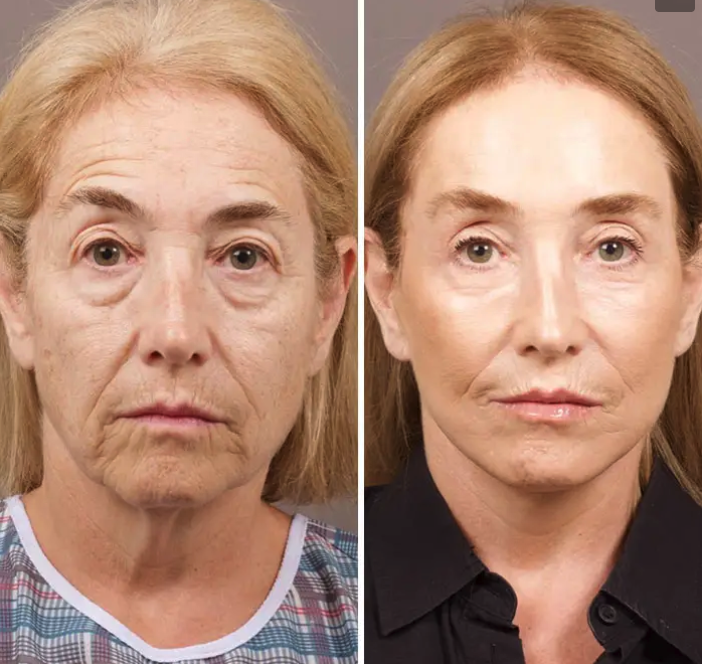
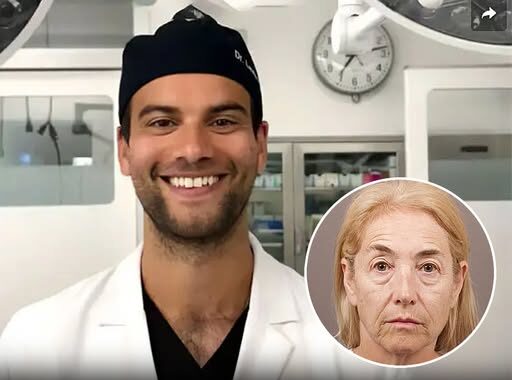
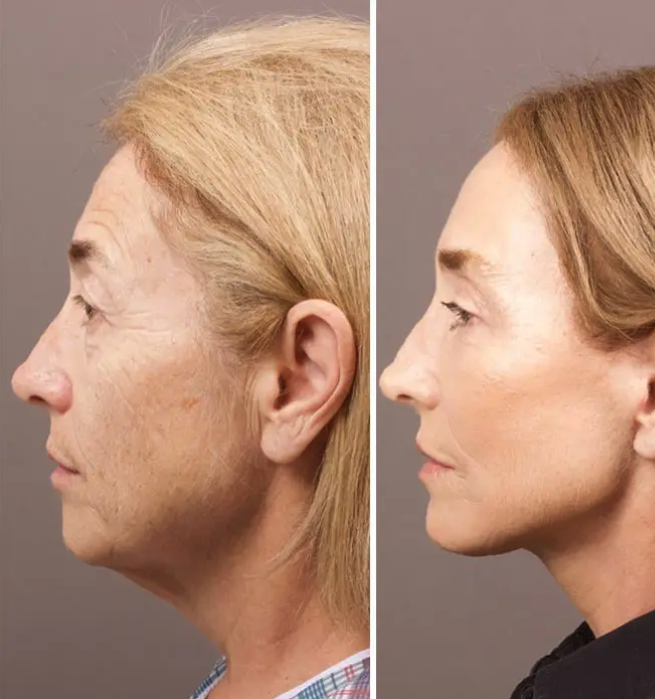
Her surgeon, Dr. Marc Levin, shared photographs on Instagram comparing Helen’s appearance before surgery with her results three months into recovery. Viewers quickly began commenting on her more defined jawline, smoother-looking skin and refreshed appearance.
For many, the most impressive part was that Helen remained recognizable. Rather than focusing only on how much younger she appeared, several commenters praised what they considered a natural-looking result.
However, the photographs also prompted a different conversation. Some viewers questioned the financial cost of cosmetic surgery and the expectations placed on women as they grow older.
Helen’s own response was more personal. She described being delighted with the outcome and grateful that her appearance now felt closer to how she saw herself.
Why Helen Decided to Make the Change
Speaking in a video shared through Levin’s Instagram account, Helen explained that her decision began with a growing disconnect between her outward appearance and her inner sense of vitality.
“I looked at the outside of myself, and I thought, ‘Oh my God, what is happening to me over here?’ It didn’t match how I was feeling on the inside,” she said.
Her explanation offered a more individual perspective than the dramatic photographs alone could provide. For Helen, the operation was connected to how she felt when looking in the mirror.
Three months after surgery, she described the difference with a comparison that captured her excitement.
“I feel like I look like my daughter,” Helen said.
She also left a message thanking her surgeon beneath his post.
“How fortunate am I to have the best and most caring surgeon. I’m just so grateful.”
Those comments reflect Helen’s satisfaction with her own experience. They do not establish how another person would feel about the same procedures, but they help explain why she welcomed the changes so enthusiastically.
While strangers debated the photographs, Helen’s account remained focused on a straightforward goal: feeling more comfortable with her appearance.
Seven Procedures Formed One Surgical Plan
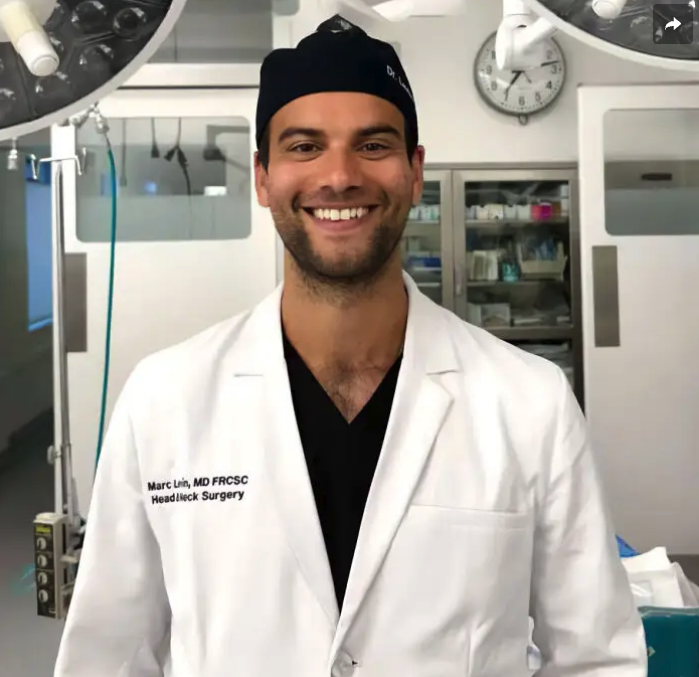
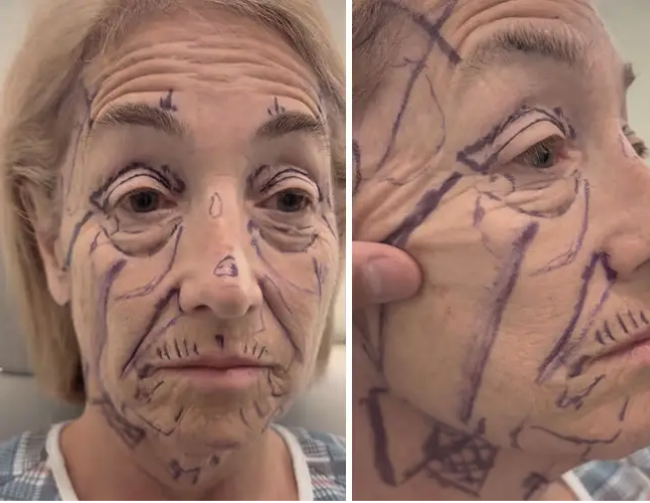
According to Levin, Helen underwent seven procedures during the lengthy operation. The combination addressed facial contours, eyelids, skin texture and areas where she had lost volume.
The plan included an extended deep-plane facelift and neck lift, together with an endoscopic brow lift. These were accompanied by upper eyelid surgery and a lower eyelid procedure involving fat repositioning.
Facial fat grafting was also included to address lost volume. Full-face CO2 laser resurfacing targeted skin texture and fine lines, while earlobe rejuvenation and reduction completed the treatment plan.
The range of procedures is an important part of understanding the photographs. Although the transformation has often been described simply as a facelift, the reported result followed a much broader operation.
Several areas changed together. Her jawline and neck appeared more defined, her cheeks looked fuller, and the lines around her mouth appeared softer in the shared images.
Her upper eyelids also appeared less heavy, while her brows looked more elevated. These visible differences helped draw attention to the overall transformation.
However, photographs capture appearance at a particular moment. They cannot independently establish every aspect of a surgical outcome or convey the full experience of undergoing and recovering from multiple procedures.
The Surgeon Emphasized Preserving Her Features
Levin’s enthusiasm was clear in the caption accompanying the photographs.
“WHAT. A. TRANSFORMATION!!!!” he wrote.
He described the outcome as “true comprehensive undetectable facial rejuvenation,” emphasizing his intention to refresh Helen’s appearance while maintaining her recognizable features.
That description represents the surgeon’s assessment of his work. The word “undetectable” expresses his aesthetic goal rather than an independently established measurement of the result.
Nevertheless, the emphasis on preserving Helen’s identity was echoed by several viewers. Their praise centered on the impression that she looked refreshed without losing the characteristics that made her look like herself.
“Love that she still looks like herself,” one commenter wrote.
Another added: “Absolutely incredible. Looks so natural. One of the best results I’ve ever seen.”
The response illustrates how people can value both noticeable change and familiarity. In Helen’s case, admirers felt the photographs showed a substantial difference while retaining her individual appearance.
Others pointed out that she had been beautiful before surgery, offering a reminder that appreciation for the outcome did not require dismissing how she had looked previously.
Why Viewers Started Calling Him a Magician
The reported price and the contrast between the photographs inspired plenty of playful reactions. Some commenters compared Levin’s work to magic, using humor to express their surprise.
“A magician for real, man made $45,000 disappear AND took 20 years off her face,” one person joked.
Another suggested: “I think the word they are looking for is ‘sorcerer’, actually…”
The suggestion that Helen looked decades younger was a subjective reaction, not a clinical finding. Still, it captured the sense of surprise that helped the photographs attract attention.
Before-and-after images place two moments directly beside each other. Viewers can immediately compare details that might otherwise be harder to notice across separate photographs.
In this case, the comparison encouraged people to examine Helen’s neck, eyelids, cheeks and facial contours. The result became a discussion about the overall impression created by several changes together.
Yet the operation itself was far removed from the speed of an online reaction. Behind the images was a nine-and-a-half-hour procedure followed by months of recovery.
Calling the result magic may have been an affectionate compliment, but Helen’s experience involved a substantial commitment of time and money.
Recovery Was Part of the Transformation
The photographs were shared at approximately three months after surgery. That timing matters because they show Helen during her recovery rather than immediately after leaving the operating room.
Levin has explained that facial rejuvenation results develop over time. In discussing recovery, he has described early changes settling over the first few weeks, with results becoming clearer after several months and more subtle changes continuing afterward.
Those descriptions should be understood as his explanation of the recovery process. They are not a fixed timetable for every patient or every combination of procedures.
Helen’s treatment involved several areas of her face and neck, making it especially important to distinguish the visible outcome from the process that preceded it.
The shared photographs offer a view of her appearance at one stage. They do not show every appointment, adjustment or private moment involved in reaching that point.
Her positive comments nevertheless provide a clear account of how she felt about the result at the time. She expressed happiness with her appearance and appreciation for the care she received.
The Cost Prompted a Wider Conversation About Aging
Not every response celebrated the transformation. Some viewers were less interested in the technical result than in the social expectations surrounding cosmetic surgery.
“The most impressive transformation would be a society where women don’t feel pressured to spend thousands just to remain attractive,” one commenter wrote.
That criticism raised a broader question about the relationship between personal choice and cultural pressure. A woman may be satisfied with an individual decision while others question the standards that influence how aging is discussed.
The reported $45,000 cost also became part of the debate. For some viewers, it represented an extraordinary investment in appearance, prompting disagreement about priorities and access.
However, the photographs cannot reveal every influence behind Helen’s decision. Her own explanation was that she wanted her outward appearance to reflect how she felt inside.
Public reactions do not have to erase that personal account. Equally, her satisfaction does not settle the wider discussion about why youthful appearance receives so much attention.
Helen’s transformation brought those perspectives together: admiration for a noticeable result, questions about expensive cosmetic procedures, and a woman expressing happiness with a choice she made for herself.
For Helen, the most meaningful response appears to be the one she experiences when looking in the mirror. Three months after surgery, she described a reflection that felt more closely aligned with the person she believed herself to be.