
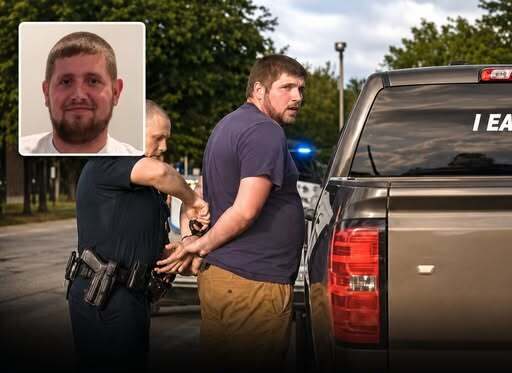
Florida Traffic Stop Over Vulgar Bumper Sticker Became a Free Speech Fight
A Crude Decal, a Deputy’s Demand, and a Constitutional Line
A routine traffic stop in Florida quickly turned into a national debate over free speech, personal responsibility, and the limits of government authority.
At the center of the controversy was Dillon Shane Webb, a young driver whose rear window displayed a vulgar bumper sticker. The message was crude, direct, and impossible to miss, but Webb believed it was also protected by the First Amendment.
The stop took place in Lake City, where a deputy noticed the decal and confronted Webb about it. What might have ended as a brief roadside exchange soon escalated into a legal battle over whether offensive language on a vehicle could be treated as a crime.
The deputy focused on the possibility that children or families might see the wording. Webb did not deny that the sticker was vulgar, but he refused to accept that someone else’s offense gave the government the right to silence him.
His response was blunt and defiant.
“It’s not my job to raise your kids.”
The Refusal That Led to Handcuffs
During the stop, Webb was asked to change or remove part of the decal. He refused, arguing that the sticker was an expression of speech, not a criminal act.
To Webb, the issue was not whether the words were polite or appropriate. The issue was whether the government could force a citizen to censor himself simply because others might be offended.
The roadside disagreement soon became more serious. Webb was placed in handcuffs and charged with obscenity and resisting.
The arrest drew attention because it raised a larger question: can offensive speech in public be punished simply because it makes people uncomfortable?
For Webb and his supporters, the answer was no. They viewed the arrest as an example of government overreach, especially because the speech involved a decal on a private vehicle rather than a direct threat or targeted harassment.
Why the Case Drew National Attention
The story spread quickly because it touched on one of the most sensitive areas of American public life: the boundary between offensive speech and protected speech.
Many people may have disliked Webb’s bumper sticker. Some may have found it inappropriate for public roads. But the legal issue was not whether the words were tasteful.
The issue was whether the state had the power to punish him for displaying them.
That distinction became the heart of the case. Free speech protections often apply most clearly when the speech is unpopular, rude, or offensive. If only polite speech were protected, constitutional rights would mean far less in moments of conflict.
Webb’s situation became a reminder that free speech disputes do not always begin in courtrooms, universities, or political rallies. Sometimes they begin during an ordinary traffic stop, with one citizen refusing to back down.
Prosecutors Dropped the Charges
Days after the arrest, prosecutors reversed the case.
The charges against Webb were dropped after officials acknowledged that the bumper sticker, while crude, was protected speech under the First Amendment.
That decision changed the meaning of the entire incident. What began as a criminal case became a public example of constitutional limits.
The legal system ultimately recognized that the government could not punish Webb simply for displaying words that others might find offensive.
His attorney described the situation as an act of courage, framing Webb as an ordinary person who forced the state to recognize the boundary it could not cross.
A Small Sticker With a Larger Message
The case became memorable not because the sticker was elegant or admirable, but because the principle behind the dispute was larger than the words themselves.
Free speech often becomes most important when the speech is uncomfortable. The protection is not tested by agreeable statements. It is tested when someone says something others dislike and the government is tempted to intervene.
Webb’s refusal turned a traffic stop into a constitutional lesson.
He did not argue that people had to like his sticker. He argued that they did not have the right to make the government remove it for them.
That distinction became the defining point of the case.
The Roadside Moment That Became a Legal Reminder
In the end, the Florida traffic stop became more than a dispute over a vulgar decal.
It became a reminder that constitutional rights are often defended in ordinary places by ordinary people. A roadside conversation, a refusal to comply, and a pair of handcuffs turned into a broader debate about speech, authority, and personal freedom.
Webb’s sticker may have been crude, but the legal outcome was clear.
Offense alone is not a crime.
The case showed that the First Amendment does not protect only polished, polite, or popular speech. It also protects speech that irritates, shocks, or offends.
For Webb, the message on his rear window became a confrontation with the state. For many watching afterward, the dropped charges became a reminder that free speech survives only when people are willing to defend it, even in uncomfortable moments.