
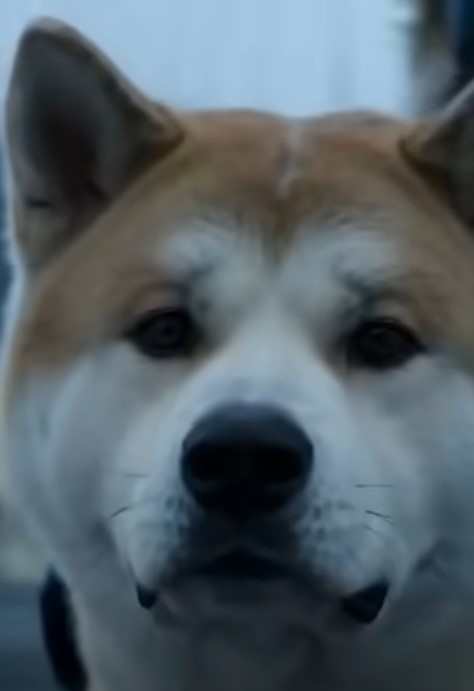
I’ve spent my entire life trusting engineers, schedules, and structural safety, but the morning my seventy-pound rescue Akita violently pinned my seven-year-old granddaughter to the concrete dock, everything I knew about the world went out the window.
My name is Arthur. I’m sixty-four, a retired contractor living just outside of Seattle, Washington. For decades, I lived by logic. You look at the blueprints, you follow the rules, you trust the concrete beneath your boots.
But logic almost got my granddaughter killed.
It started three years ago when my daughter brought home Kuma. Kuma was a rescue Akita, a massive bear of a dog with a thick brindle coat and eyes that carried way too much history. He was found chained in a junkyard somewhere in eastern Oregon, half-starved and terrified of loud noises.
At first, I didn’t want him in the house. Akitas are fiercely loyal, but they are also incredibly powerful and notoriously stubborn. When you mix that with a traumatic past, you get a wild card. And I didn’t like wild cards around my granddaughter, Lily.
Lily was four when Kuma arrived. She was a tiny, fragile little thing with bright blonde hair and a laugh that could cut through the gloomiest Seattle winter. I was terrified the dog would snap at her.
Instead, Kuma adopted her.
From day one, that massive dog shadowed Lily everywhere. If she was watching cartoons, he was a rug at her feet. If she was playing in the yard, he was patrolling the fence line. He never barked. He never growled. He just watched.
Fast forward to last Tuesday. It was Lily’s seventh birthday, and I had promised to take her to the San Juan Islands for a long weekend. Just the two of us, and of course, Kuma.
The morning was bitter cold. A thick marine layer hung over the Puget Sound, wrapping the Anacortes ferry terminal in a dense, freezing fog. The air smelled of diesel exhaust, salt, and wet asphalt.
We were walk-on passengers. I held two tickets in my left hand, a steaming cup of bad terminal coffee in my right, and Lily had a firm grip on Kuma’s thick nylon leash.
The terminal was packed. Hundreds of commuters, tourists, and families were bundled up in heavy coats, shuffling forward in a massive herd toward the loading gates. Over the loudspeakers, a crackling voice announced that the ferry was ready for boarding.
“Come on, Grandpa! We’re gonna miss it!” Lily tugged at my jacket, her eyes wide with excitement.
I smiled, tossing my half-empty coffee into a nearby trash can. “Hold your horses, kiddo. The boat isn’t going anywhere without us.”
We merged into the crowd moving toward the massive steel loading ramp. The ramp is a huge, heavy metal bridge that connects the concrete pier to the deck of the ferry, suspended by thick steel cables and hydraulic lifts.
We were about fifty feet away from the ramp when Kuma stopped.
He didn’t just slow down. He threw his entire seventy-pound body into reverse, his paws skidding loudly against the damp concrete.
Lily stumbled backward, nearly dropping the leash. “Kuma! Come on, silly!”
I chuckled, thinking the dog was just startled by the loud blast of the ferry’s horn echoing through the fog. “Come here, buddy. It’s just a big boat.”
I reached down and grabbed the handle of his harness, giving it a firm tug.
Kuma didn’t budge. He dropped his belly to the freezing ground, his claws digging into the pavement.
“Alright, enough of this,” I muttered, feeling a flush of embarrassment as the crowd of people began to part around us, shooting us annoyed glances.
I pulled harder. Kuma let out a low, vibrating rumble from deep in his chest. It wasn’t a growl directed at me, or at Lily.
He was staring dead ahead at the steel ramp.
His ears were pinned flat against his massive skull. The hackles on his back—the thick ridge of fur along his spine—were standing straight up. He was trembling. Not a light shiver from the cold, but a violent, full-body tremor.
“Grandpa, what’s wrong with him?” Lily asked, her voice tinged with worry.
“He’s just being stubborn,” I said, my frustration mounting. I glanced around. The line of passengers was moving steadily onto the ramp. We were holding up the stragglers.
A group of teenagers in beanies walked past us, pointing at Kuma.
“Look at that big baby,” one of them snickered.
“He needs to be carried!” another laughed.
I felt the heat rising in my cheeks. “Kuma, stand up. Now,” I commanded, using my sternest contractor voice. The voice that usually made my crew snap to attention.
Kuma ignored me.
Suddenly, Lily stepped forward, trying to walk past the dog to reach the boarding line. “I’ll pull him, Grandpa.”
Before she could take two steps, Kuma exploded.
He lunged forward, letting out a sharp, panicked bark, and slammed his heavy shoulder directly into Lily’s chest.
Lily shrieked as she was knocked backward, landing hard on the concrete dock.
Before I could even react, Kuma stood over her. He didn’t bite. He didn’t bare his teeth at her. But he planted his massive front paws on either side of her little body, physically pinning her to the ground, absolutely refusing to let her move toward that metal bridge.
CHAPTER 2
My heart slammed into my ribs. The sight of this massive, powerful predator standing over my tiny granddaughter sent a jolt of pure, unadulterated panic straight through my nervous system.
“Hey!” I roared, dropping our duffel bag.
I grabbed Kuma’s harness with both hands, bracing my boots against the concrete, and yanked with everything I had. It was like trying to move a concrete block.
Lily was crying now, more from the shock of falling than actual pain, but the sound of her tears made the blood pound in my ears.
“Get off her!” I shouted, completely losing my temper.
The crowd around us had stopped completely. The laughter from the teenagers faded, replaced by gasps and nervous murmurs. People were staring. A woman in a red puffy coat covered her mouth. A man in a business suit took a step toward us, looking like he was debating whether to intervene.
“Is your dog okay, man?” the guy in the suit asked, his voice tight.
“He’s fine, he’s just spooked,” I grunted, my face burning with a mixture of rage and profound public humiliation.
I managed to drag Kuma back roughly two feet. He fought me every single inch. His claws made terrible scratching sounds against the pavement. He wasn’t looking at me. He wasn’t looking at Lily.
His dark, amber eyes were locked onto the massive steel loading ramp, which was now crowded with about thirty passengers walking toward the ferry deck.
Kuma let out another sound. It wasn’t a growl, and it wasn’t a bark. It was a high-pitched, desperate whine. A sound of absolute, primal terror.
I reached down and hoisted Lily to her feet. I brushed the dirt off her pink winter coat, checking her for scrapes.
“I’m sorry, peanut,” I breathed, my hands shaking. “I don’t know what’s gotten into him.”
I looked down at the dog. “You are ruining this trip,” I hissed at him.
I was so angry I was shaking. We were the last ones on the dock. The ferry workers in their neon yellow vests were starting to look in our direction, gesturing for us to hurry up. The heavy diesel engines of the boat were humming loudly, vibrating the concrete beneath our feet.
“Sir, we need to close the boarding gate in two minutes,” a young deckhand called out, walking over with a clipboard.
“We’re coming!” I yelled back.
I made a decision. If he wouldn’t walk, I would drag him. And if I couldn’t drag him, I’d carry him.
I stepped in front of Kuma, grabbing his leash close to the collar, and pulled upward, trying to force him onto his feet.
He dug his heels in so hard his collar choked him, making him gag. But still, he refused to take a single step toward that ramp.
The teenagers who had laughed earlier were now looking on with pity. “Maybe he gets seasick,” one of them joked weakly.
“Just leave him in the car, buddy,” an older guy called out from the ramp.
I felt completely helpless. I was a grown man being held hostage by a rescue dog in front of two hundred people. I looked at Lily. Tears were streaming down her face, ruining the excitement of her birthday trip.
“Please, Kuma,” Lily sobbed, reaching out to pet his head. “Don’t be scared.”
When Lily touched him, Kuma turned his head. He licked her hand frantically, his tail tucked completely between his legs. But when I pulled the leash toward the ferry, his body turned to stone again.
I sighed, feeling utterly defeated. The embarrassment had drained away, leaving only exhaustion.
“Alright,” I muttered, looking at the deckhand. “We’re not going to make it. My dog is having a panic attack.”
The deckhand nodded sympathetically. “Sorry, man. You can catch the 10:15.”
I turned away from the ferry, gently pulling Kuma toward the terminal building.
The very second I turned my back to the water and faced the parking lot, the tension vanished from Kuma’s body. The hackles on his back smoothed down. He let out a massive, heavy pant, and immediately began trotting beside me, leaning his heavy body against my leg as if to say, Thank you.
I was furious. I ignored him, holding Lily’s hand as we walked away from the boarding area, trying to ignore the stares of the people on the upper deck of the boat who were watching our pathetic retreat.
We were about fifty yards away, almost at the glass doors of the terminal.
That was when the sound hit.
CHAPTER 3
It didn’t sound like a crash. It sounded like a gunshot.
A sharp, violent CRACK that echoed across the water, so loud and concussive that I felt it in my chest.
I froze. The entire terminal froze.
For one split second, the world went completely silent. Even the seagulls stopped crying.
Then came the screeching.
It was a hideous, metallic wail—the sound of tons of heavy steel bending and tearing against its own weight. It sounded like a massive beast dying in the fog.
I spun around.
Through the thick, grey mist, my eyes locked onto the boarding gate we had just walked away from.
The massive steel loading ramp—the bridge connecting the dock to the ferry, the bridge that was just holding thirty people—was twisting at a sickening angle.
“Oh my god,” a woman near me screamed.
The heavy steel cables suspending the left side of the ramp had snapped. I watched in absolute, paralyzed horror as the thick wire ropes whipped through the air like lethal snakes, striking the metal superstructure with the force of an explosion.
The ramp dropped on one side, tilting violently.
The people on the ramp didn’t even have time to scream. The angle became too steep, too fast. I saw the older man who had told me to leave my dog in the car. He was clinging frantically to the metal handrail, his legs dangling over the freezing, dark water below.
Then, with a deafening, groaning roar, the right-side cables gave way.
The entire metal bridge collapsed.
It plummeted straight down, smashing into the concrete edge of the dock before plunging into the icy waters of the Puget Sound. A massive geyser of grey water shot twenty feet into the air.
The sound of the impact was apocalyptic.
And then, the screaming started.
It wasn’t just one person. It was a chorus of sheer, absolute terror. People in the water. People on the deck of the ferry who had just watched their loved ones fall. People on the dock running blindly toward the edge.
“Lily!” I gasped, instinctively dropping to my knees and pulling my granddaughter tightly into my chest. I wrapped my arms around her, burying her face in my shoulder so she couldn’t see.
My heart was beating so fast my vision blurred.
I looked down at the spot where we were standing just three minutes ago. The spot where Kuma had pinned Lily to the ground.
If we had kept walking. If I had been stronger and managed to drag him. If the deckhand hadn’t told us the gate was closing.
We would have been exactly in the middle of that ramp when the cables snapped.
We would have been crushed beneath tons of steel in freezing water.
I looked at Kuma.
The massive Akita was standing perfectly still beside us. He wasn’t shaking anymore. He wasn’t whining. He was staring calmly toward the water, his ears perked up, watching the chaos unfold with an almost unnatural stillness.
He knew.
Somehow, by some unexplainable, impossible instinct, this dog knew that massive structure was going to fail before a single bolt popped. He felt the vibration in the concrete. He heard the microscopic straining of the steel cables before human ears could detect it.
He didn’t freeze because he was scared of the water.
He froze because he was protecting his pack.
Sirens erupted from every direction. The terminal workers were sprinting toward the broken ramp with life rings and ropes. The deafening blast of the ferry’s emergency horn shattered the foggy air.
I sat there on the cold concrete, clutching my granddaughter, trembling so violently I couldn’t stand up.
CHAPTER 4
The next few hours were a blur of flashing red and blue lights, thermal blankets, and shouting paramedics.
The Coast Guard arrived within minutes. Firetrucks, ambulances, and police cruisers flooded the terminal parking lot. Divers were in the water almost immediately.
Miraculously, by some absolute grace of God, nobody died.
The water was shallow enough near the dock that the ramp didn’t sink completely to the bottom. Several people suffered broken legs, severe lacerations, and hypothermia from the freezing Puget Sound water, but they pulled every single person out alive.
We were ushered inside the terminal building along with the rest of the shocked witnesses.
I sat on a plastic bench, an orange thermal blanket wrapped around my shoulders, holding Lily on my lap. She was quiet, her small hands buried deep in Kuma’s thick neck fur.
Kuma laid at our feet, resting his heavy head across my boots.
A police officer, a young guy with a notepad and a pale face, walked over to take our statement. He asked where we were when the collapse happened.
When I told him we were trying to board but my dog refused to let us cross, the officer stopped writing. He slowly lowered his pen and looked down at Kuma.
“He stopped you?” the officer asked, his voice hushed.
“He pinned her to the ground,” I said, my voice cracking. Tears finally welled up in my eyes, spilling hot down my weathered cheeks. “I was so angry at him. I tried to drag him onto that ramp. The people were laughing at us. If… if he had listened to me…”
I couldn’t finish the sentence. The thought of Lily tumbling into that freezing water beneath crushing steel choked the air right out of my lungs.
The officer didn’t say anything. He just crouched down, slowly extending his hand. Kuma gave it a polite sniff, then went back to resting his chin on my boots.
“Good boy,” the officer whispered. “You’re a really good boy.”
The news spread through the terminal fast.
The very same people who had been rolling their eyes and laughing at the stubborn dog half an hour ago were now walking past us in stunned silence.
The woman in the red puffy coat walked up to us. She was shivering, holding a cup of tea, her face stained with tears. She looked at Kuma, then looked at me.
“I thought he was just misbehaving,” she sobbed quietly. “I’m so sorry. He saved your lives.”
I couldn’t speak. I just nodded.
We didn’t go to the San Juan Islands that day. We drove back home in complete silence.
When we walked through the front door of our house, the warmth of the living room felt different. Everything felt different. I looked at the walls I had built, the roof I had repaired, the life I had tried to control with logic and rules.
I realized then how fragile it all was.
That night, for the first time ever, I didn’t make Kuma sleep on his dog bed in the hallway.
When Lily went to sleep, Kuma hopped up right onto the foot of her bed. I walked in to check on them. The massive, seventy-pound rescue dog was curled into a ball, his chin resting protectively over Lily’s ankles.
I sat on the edge of the mattress. I reached out and buried my hands in his thick brindle fur.
“I’m sorry,” I whispered to him in the dark. “I’m so sorry I doubted you.”
Kuma opened one dark amber eye, let out a soft sigh, and closed it again.
I spent sixty years trusting structural integrity, building codes, and schedules. But from that day forward, I made a new rule for myself, and for my family.
If Kuma doesn’t want to go somewhere, we don’t go.
Because sometimes, the things that can save your life aren’t found in a blueprint. Sometimes, they are found in the fiercely loyal heart of a dog who refuses to move.
CHAPTER 2
My heart didn’t just drop; it felt like it was suddenly seized by a cold, iron fist. The sight of this massive, seventy-pound apex predator standing over my tiny, fragile granddaughter sent a jolt of pure, unadulterated panic straight through my central nervous system.
Time seemed to slow down to a crawl. The ambient noise of the ferry terminal—the deep, vibrating hum of the massive diesel engines, the squawking of the seagulls overhead, the dull murmur of hundreds of impatient commuters—all of it faded into a muffled, underwater blur.
All I could see was Kuma.
His thick, brindle-colored legs were planted squarely on either side of Lily’s small chest. His head was lowered, his heavy jaws hovering just inches from her face.
“Hey!” I roared.
The sound tore out of my throat before my brain even had time to process what was happening. It wasn’t my normal voice. It was a guttural, primal sound, born out of pure terror and protective instinct.
I dropped the heavy canvas duffel bag I was carrying over my shoulder. It hit the damp concrete dock with a dull, heavy thud. I didn’t care what was inside it. I didn’t care about the ferry tickets fluttering out of my hand and blowing away in the biting wind coming off the Puget Sound.
I lunged forward, boots scraping aggressively against the pavement.
I grabbed Kuma’s thick nylon tactical harness with both hands. I braced my feet shoulder-width apart, digging the rubber soles of my work boots into the rough concrete, and yanked backward with every single ounce of strength I had left in my sixty-four-year-old body.
It was like trying to rip a fire hydrant out of the sidewalk.
Akitas are not like Golden Retrievers or Labradors. They aren’t soft, pliable family dogs. They are an ancient breed, genetically hardwired for hunting bears in the brutal, snowy mountains of northern Japan. Their bone density is incredible. Their muscle mass is concentrated low to the ground.
When an Akita decides to plant its feet and drop its center of gravity, you are no longer dealing with a domestic pet. You are dealing with a boulder with a heartbeat.
He didn’t move an inch.
“Get off her!” I shouted, the panic rapidly morphing into a white-hot, blinding rage.
Lily started to cry. It wasn’t a scream of pain, but a high-pitched, breathless wail of sudden shock. She was completely confused, staring up at the belly of the giant dog that had been her best friend and protector for the last three years.
The sound of her tears made the blood pound violently in my ears. The thumping in my temples synced up with the heavy vibrations of the ferry engines idling just fifty yards away.
“Kuma, move!” I screamed, twisting the handle of his harness, trying to throw him off balance.
Nothing. He was an absolute statue.
The crowd around us, which had been shuffling forward in a monotonous, zombified morning commute, suddenly ground to a complete halt.
The laughter from the group of teenagers a few yards away abruptly died in their throats. The annoyed sighs of the commuters behind us turned into sharp, sudden gasps.
I could feel their eyes on me. Hundreds of them. The collective gaze of a massive crowd is a physical weight, and it was pressing down on my shoulders, making my face burn hot despite the freezing thirty-degree air swirling around the dock.
The Pacific Northwest is famous for its polite, passive-aggressive distance. People generally mind their own business. But this was different. This looked like a wild animal attacking a child.
A woman in a red puffy winter coat took a sudden step backward, her hands flying up to cover her mouth in horror.
A tall man in a sharp grey business suit dropped his briefcase and took two slow, hesitant steps toward us. His eyes were darting rapidly between my struggling form, the crying little girl on the concrete, and the massive, unblinking dog.
“Hey, buddy,” the guy in the suit called out, his voice tight and nervous. “Do you need some help? Is your dog okay?”
“He’s fine!” I snapped back, my voice dripping with venom. “He’s just spooked. Mind your own business!”
I immediately regretted the harshness in my tone, but my adrenaline was completely redlining. I was terrified, I was exhausted, and above all, I was experiencing a level of profound public humiliation that I hadn’t felt since I was a teenager.
I was Arthur. I was a man who had spent forty years running commercial construction sites. I managed heavy machinery, poured thousands of tons of concrete, and commanded crews of fifty hardened, rough-and-tumble contractors. I built things that touched the Seattle skyline. I was a man of logic, authority, and control.
And right now, I was utterly powerless against a rescue dog in front of an audience of two hundred strangers.
I shifted my grip on the harness, grabbing the thick collar around his neck. I pulled up, trying to choke him just enough to make him stand.
I managed to drag Kuma backward roughly two feet.
He fought me for every single microscopic millimeter. His thick, black claws scraped violently against the pavement, making a terrible, screeching sound that sent shivers down my spine.
As I dragged him off Lily, I realized something that made my blood run cold.
He wasn’t looking at me.
He wasn’t looking at Lily.
Even as I dragged him backward by his neck, his dark, amber eyes were locked dead ahead. He was staring with unblinking, laser-like focus at the massive steel loading ramp connecting the dock to the ferry.
The ramp was currently packed with about thirty passengers, all bundled up in coats and scarves, completely oblivious to the drama unfolding behind them. They were walking across the heavy metal grating, their rolling suitcases clacking rhythmically against the steel.
Kuma let out a sound I had never heard him make in the three years we had owned him.
It wasn’t a growl. It wasn’t a bark.
It was a high-pitched, desperate, vibrating whine that originated from deep within his massive chest. It was a sound of absolute, primal terror. The kind of sound a wild animal makes right before a forest fire sweeps through the valley.
His entire body was shuddering. Not a light shiver from the damp, coastal cold. It was a violent, full-body tremor. The thick ridge of fur along his spine—his hackles—was standing straight up, making him look twice his normal size.
I reached down and grabbed Lily by the arm, hoisting her roughly to her feet.
I brushed the dirt and wet grime off her pink winter coat, my hands shaking uncontrollably. I checked her face, her hands, her knees. No blood. No torn fabric. Just pure shock.
“I’m sorry, peanut,” I breathed, my chest heaving as I tried to catch my breath. “I don’t know what’s gotten into him. I’m so sorry.”
She wiped her nose with the back of her mitten, her bright blue eyes wide and frightened. “Why is he being mean, Grandpa?”
“He’s not being mean,” I lied through my teeth, glaring down at the dog. “He’s being a bad boy. A very, very bad boy.”
I looked down at Kuma. My rage was bubbling over.
“You are ruining this trip,” I hissed at him, my voice low and dangerous. “Do you understand me? You are ruining her birthday.”
Kuma didn’t flinch. He didn’t look up at me with those guilty, sorrowful eyes dogs usually get when they know they’ve misbehaved. He just continued to stare at the heavy metal bridge, his ears pinned flat against his skull.
The line of passengers had almost completely disappeared onto the ferry. We were the absolute last ones left on the concrete pier.
The ferry workers, dressed in bright, neon-yellow high-visibility jackets, were standing near the hydraulic controls of the ramp. They were starting to point at us, their walkie-talkies buzzing with static.
A young deckhand, barely out of his twenties, started walking toward us. He held a clipboard in his hand and looked extremely unamused.
“Sir,” the deckhand called out, his voice echoing through the dense fog. “We need to close the boarding gate in exactly two minutes. You need to board now, or wait for the next vessel.”
“We’re coming!” I yelled back, my voice cracking slightly.
I looked at the ramp. It was a massive piece of engineering. Thousands of pounds of industrial steel, suspended by thick, braided wire cables, hovering over the dark, freezing waters of the Puget Sound.
I had spent my entire life around structures exactly like that. I trusted the welds. I trusted the bolts. I trusted the math that kept it in the air.
I looked back down at the dog.
I made a final, desperate decision. If he wouldn’t walk, I would drag him all the way across that steel plate. I was not going to let a junkyard dog dictate the schedule of my granddaughter’s birthday weekend.
I stepped in front of Kuma. I wrapped the thick nylon leash twice around my gloved hand. I squared my shoulders, bent my knees, and leaned my entire body weight backward toward the ferry.
I pulled.
The collar dug deep into the thick flesh of Kuma’s neck. He gagged, a wet, choking sound that made the crowd around us wince in collective sympathy.
But he didn’t take a single step forward.
Instead, he dropped his belly flat onto the freezing concrete. He splayed all four of his legs out to the sides, maximizing his surface area against the ground. He turned himself into an anchor.
“Just leave him in the car, buddy!” an older man yelled from the upper deck of the ferry, leaning over the white metal railing. “The dog doesn’t want to go!”
“Maybe he gets seasick,” one of the teenagers from earlier joked, though the humor was entirely gone from his voice.
I felt completely, utterly defeated.
My muscles burned. My lungs burned from the freezing air. My pride was completely shattered.
I was a grown man, a former boss of men, being held hostage by a rescue dog while two hundred people watched me fail.
I looked at Lily. The bright, infectious excitement that had been glowing in her eyes since she woke up at five in the morning was entirely gone. It was replaced by a dull, confused sadness. Tears were tracking silently down her red, cold cheeks.
This was supposed to be a core memory. We were supposed to be eating bad cafeteria food on the ferry right now, looking out the windows for Orca whales in the grey water.
Instead, we were a public spectacle.
Lily took a small, hesitant step toward the dog. “Please, Kuma,” she sobbed softly, reaching out with a tiny, pink-mittened hand to pet his massive head. “Don’t be scared. We’re right here.”
The moment Lily’s hand touched his fur, Kuma’s entire demeanor shifted slightly.
He didn’t stand up, but he turned his head away from the metal ramp for the first time. He looked up at Lily. He began to lick her mitten frantically, desperately, his tail tucked so far between his legs it was touching his stomach.
It was an apology. I could see it in his eyes. He was begging her to understand.
But the second I applied even a fraction of an ounce of tension to the leash, pulling in the direction of the water, his body instantly turned back into a block of solid concrete.
I let out a long, heavy sigh. The fight drained out of me completely, leaving behind a hollow, bitter exhaustion.
I dropped the tension on the leash.
“Alright,” I muttered quietly, mostly to myself.
I looked up at the young deckhand with the clipboard. He was standing about ten feet away now, looking at me with a mixture of annoyance and genuine pity.
“We’re not going to make it,” I told him, my voice completely flat. “My dog is having some kind of panic attack. We can’t cross.”
The deckhand nodded, tapping his pen against his clipboard. “Sorry, man. You can catch the 10:15 crossing. The terminal building is heated. You might want to get him inside.”
He turned on his heel and walked briskly back toward the massive steel ramp, lifting his walkie-talkie to his mouth to give the clear signal to the captain.
I reached down and picked up my dropped duffel bag. It felt ten times heavier than it had five minutes ago. I grabbed Lily’s small hand in mine. It was freezing cold.
“Come on, kiddo,” I said gently, trying to force a reassuring smile onto my face. “We’ll get some hot cocoa inside and try again later. Okay?”
Lily just nodded silently, refusing to look at me.
I turned my back to the water. I faced the large, glass doors of the terminal building and the massive, grey parking lot beyond it.
I gave the leash a tiny, effortless tug.
The very second—the absolute microsecond—that my back was turned to the ferry, and we were walking in the opposite direction of the steel ramp, the invisible spell was broken.
The extreme, vibrating tension vanished from Kuma’s body.
He popped up off the concrete as if he weighed absolutely nothing. The thick ridge of fur along his spine immediately smoothed down flat. He let out a massive, heavy pant, shaking his head violently so his collar jingled loudly in the quiet air.
He immediately began trotting happily beside me. He pressed his heavy, warm shoulder against my leg as we walked, matching my pace perfectly. He looked up at me, his mouth open in what almost looked like a dog’s version of a smile.
It was as if he was saying, Thank you. Good job.
I was absolutely furious.
I completely ignored him. I didn’t look down at him. I just kept my eyes locked on the glass doors of the terminal building, walking as fast as Lily’s little legs could carry her.
I wanted to get away from the water. I wanted to get away from the hundreds of judgmental eyes burning holes into the back of my jacket from the upper decks of the ferry.
I felt like a massive failure. I couldn’t even control my own family pet.
We were about fifty yards away from the edge of the dock. We were almost to the curb of the drop-off zone.
I could hear the massive, groaning hydraulic gears of the ramp beginning to engage behind us, preparing to lift the heavy steel bridge away from the boat.
That was when the sound hit.
CHAPTER 3
It didn’t sound like a crash. It sounded like a cannon firing at point-blank range right next to my eardrum.
A sharp, violent, concussive CRACK ripped through the thick morning fog. It was so incredibly loud that I actually felt the shockwave punch me right in the center of my chest.
I stopped dead in my tracks. The entire terminal stopped.
For one split second, the world went completely, terrifyingly silent. The deep hum of the ferry engines seemed to vanish. Even the seagulls circling overhead stopped crying. It was the kind of absolute, vacuum-sealed silence that only exists in the microsecond between a catastrophic event and the human brain processing it.
Then came the screeching.
It was a hideous, metallic wail. It was the unmistakable sound of tons of heavy industrial steel bending, buckling, and tearing against its own massive weight. It sounded like a prehistoric beast dying in the mist.
I spun around, my heavy work boots slipping slightly on the damp asphalt.
Through the thick, grey marine layer, my eyes locked instantly onto the boarding gate we had just walked away from. The exact spot where I had been fighting with my dog less than sixty seconds ago.
The massive steel loading ramp—the heavy metal bridge connecting the concrete pier to the deck of the ferry—was twisting at a sickening, impossible angle.
“Oh my god,” a woman standing near the drop-off curb screamed, dropping her luggage.
I had spent forty years in commercial construction. I know how steel is supposed to behave. I know about load-bearing limits, tensile strength, and shear force. Structural steel doesn’t just bend. When it fails, it fails violently.
The thick, braided wire cables suspending the left side of the ramp had completely snapped under tension.
I watched in absolute, paralyzed horror as the massive wire ropes whipped through the cold air like lethal, steel snakes. They struck the metal superstructure of the loading gantry with the force of an artillery shell, sending showers of bright orange sparks into the dreary morning sky.
With the left cables gone, the ramp immediately dropped on one side, tilting violently toward the dark, freezing water.
The people on the ramp—the thirty-odd commuters, tourists, and families who had just walked past us—didn’t even have time to scream. The angle of the heavy metal grating became too steep, too incredibly fast.
I saw the tall man in the sharp grey business suit who had offered to help me just moments before. He dropped his briefcase, his arms flailing wildly as he desperately grabbed for the metal handrail. His fingers slipped. I watched his body slide hard against the heavy steel grating, tumbling toward the gap between the ship and the dock.
Then, with a deafening, groaning roar that shook the pavement beneath my feet, the right-side cables gave way.
The entire metal bridge collapsed.
Thousands of pounds of steel plummeted straight down. The heavy lip of the ramp smashed against the concrete edge of the dock, shattering the masonry and sending chunks of cement flying into the air like shrapnel.
Then, the massive structure plunged directly into the icy, churning waters of the Puget Sound.
A colossal geyser of dark, grey water shot twenty feet into the air, raining down over the side of the ferry and splashing onto the lower car deck. The sound of the final impact was apocalyptic. It was a heavy, watery boom that rattled the glass windows of the terminal building behind me.
And then, the screaming started.
It wasn’t just one person. It was a chorus of sheer, absolute, unfiltered terror. It came from the people floundering in the freezing water. It came from the passengers on the upper deck of the ferry who had just watched their loved ones disappear over the edge. It came from the people on the concrete dock running blindly toward the massive gap where the bridge used to be.
“Lily!” I gasped.
Pure instinct took over. I dropped to my knees on the cold, wet asphalt and pulled my granddaughter fiercely into my chest. I wrapped my heavy winter jacket completely around her tiny body, burying her face deep into my shoulder so she couldn’t look.
I covered her ears with my large, calloused hands, trying desperately to block out the horrific sounds echoing across the water.
My heart was beating so fast my vision literally blurred around the edges. I couldn’t breathe. It felt like someone had poured ice water directly into my veins.
I looked up, staring blankly at the spot where we were standing just three minutes ago. The exact spot where Kuma had pinned Lily to the ground.
My brain, wired by decades of estimating distances and calculating timelines on job sites, instantly ran the horrifying math.
We had been walking at a steady pace before Kuma stopped us. If he hadn’t dropped his weight. If he hadn’t fought me. If I had been just a little bit stronger and managed to drag him across that concrete line. If the deckhand hadn’t walked over and told us the gate was closing.
We would have been exactly in the middle of that ramp when the cables snapped.
We would have been caught right in the center of the collapse. We would have been thrown into the freezing, dark water, trapped beneath tons of sinking, twisting industrial steel. I was sixty-four years old. Lily was seven. With heavy winter coats and boots on, neither of us would have stood a chance. We would have been crushed, or we would have drowned.
The realization hit me so hard I actually felt physically nauseous. I choked back a dry heave, pulling Lily even tighter against my chest.
Slowly, shakily, I looked to my right.
Kuma was sitting there.
The massive, seventy-pound Akita was sitting perfectly still on the wet asphalt beside us. He wasn’t shaking anymore. He wasn’t whining. His tail wasn’t tucked between his legs.
He was sitting tall and proud, his thick chest puffed out against the cold wind. His dark amber eyes were locked onto the water, watching the absolute chaos unfold at the dock with an unnatural, eerie stillness. His ears were perked up, swiveling slightly to track the sounds of the sirens that were just beginning to wail in the distance.
He wasn’t panicking. He wasn’t pulling on the leash to run away from the noise.
He knew.
Somehow, by some unexplainable, utterly impossible sixth sense, this junkyard rescue dog knew that massive steel structure was going to fail before a single bolt popped.
Maybe he felt a microscopic vibration in the concrete that my work boots couldn’t detect. Maybe his ears picked up the ultra-high-frequency straining of the braided wire cables stretching beyond their load limit before human ears could hear it. Maybe it was something deeper. Something ancient and primal that we humans have entirely lost touch with.
Whatever it was, he didn’t freeze because he was scared of the loud boat horn. He didn’t drop his weight because he was acting like a stubborn brat.
He fought me, he embarrassed me, and he physically knocked my granddaughter to the ground because he was protecting his pack.
He saw a death trap, and he absolutely refused to let us walk into it.
“Oh my god,” I whispered, my voice breaking into a ragged sob. I reached out with a trembling hand and grabbed a fistful of the thick, brindle fur on the back of his neck.
Kuma didn’t look at me. He just leaned his heavy, warm body against my hip, keeping his eyes firmly on the perimeter, acting as a physical shield between the disaster and my granddaughter.
The terminal was descending into absolute pandemonium.
Ferry workers in neon-yellow vests were sprinting toward the broken edge of the concrete pier, carrying bright orange life rings, ropes, and long poles. The deafening, repetitive blast of the ferry’s emergency horn shattered the foggy air, signaling a man-overboard crisis.
People were running in every direction. Some were sprinting toward the water to try and help. Others were running toward the glass doors of the terminal building, terrified that the concrete dock itself might collapse beneath their feet.
A young woman carrying a toddler ran past us, crying hysterically, her phone pressed tight against her ear. A man in a Seattle Seahawks beanie was shouting for someone to call 911, even though everyone already had their phones out.
“Grandpa?” Lily’s muffled voice came from inside my jacket. She was shivering violently. “Grandpa, what was that noise? Are we going on the boat?”
“No, peanut,” I choked out, fighting hard to keep my voice steady. “We’re not going on the boat today. Everything is okay. I’ve got you. Grandpa’s got you.”
I forced myself to stand up. My knees popped loudly, and my legs felt like they were made of wet sand. I kept Lily tucked firmly under my left arm, essentially carrying her on my hip so she wouldn’t look toward the water.
I gripped Kuma’s leash tightly in my right hand. I didn’t need to pull him this time. He stayed perfectly glued to my right leg, matching my slow, unsteady pace as we moved away from the drop-off curb and toward the entrance of the terminal.
The air was filled with the harsh smell of diesel fuel, disturbed saltwater, and the distinct, metallic odor of freshly torn steel.
As we walked through the automatic glass doors of the terminal building, the sheer volume of the chaos outside was slightly muffled, replaced by the echoing sounds of panicked voices inside the large waiting area.
People were pressing themselves against the massive floor-to-ceiling windows, pointing and gasping as they watched the rescue efforts unfold outside.
I found an empty plastic bench near the back wall, far away from the windows, near a row of vending machines. I sat down heavily, resting Lily on my lap. She wrapped her arms around my neck, burying her face in the collar of my flannel shirt.
Kuma immediately laid down directly across our feet, resting his heavy chin on my left boot. He let out a long, heavy sigh, his dark eyes scanning the crowded room, constantly evaluating the threat level.
Sirens began to erupt from every direction. The wailing sound of police cruisers, heavy fire engines, and screaming ambulances rapidly converged on the Anacortes ferry terminal. The flashing red and blue strobe lights cut through the thick morning fog, painting the white walls of the waiting room in frantic, rhythmic bursts of color.
Through the glass doors, I could see first responders sprinting toward the dock. Men and women in heavy turnout gear, carrying massive trauma bags and ropes. The Coast Guard was already responding; I could hear the deep, thumping roar of a heavy helicopter approaching rapidly from the south.
I sat there on that hard plastic bench, clutching my granddaughter, trembling so violently I couldn’t stop my teeth from chattering.
A terminal worker, an older woman with a kind face and a name tag that read ‘Martha’, walked hurriedly over to us. She was carrying a stack of foil emergency thermal blankets.
“Are you folks alright?” she asked, her voice tight with anxiety. She quickly draped a crinkling silver blanket over my shoulders, tucking it carefully around Lily. “Were you on the ramp? Are you hurt?”
“No,” I managed to say, my voice sounding like gravel. “No, we… we weren’t on it. We were right behind it.”
Martha looked down at Kuma. The dog didn’t growl, but he watched her hands carefully as she tucked the blanket around us.
“Thank God,” she whispered, her eyes wide. “They’re pulling people out of the water right now. It’s… it’s a miracle it didn’t happen ten minutes later when the cars were boarding. It would have dragged them straight to the bottom.”
The thought made my stomach completely drop out. I pulled the thermal blanket tighter around Lily.
“Did everyone survive?” I asked, dreading the answer.
“I don’t know,” Martha said, shaking her head. “The Coast Guard divers are in the water. The paramedics are setting up a triage tent in the parking lot. Just stay here, sir. Don’t go back outside.”
She hurried off to hand out more blankets to a group of wet, shivering people who had just been escorted through the doors.
I sat back against the wall. The adrenaline was finally starting to crash, leaving behind a profound, bone-deep exhaustion.
I looked down at the massive, brindle rescue dog resting quietly at my feet.
I thought about the first day my daughter brought him home. I thought about how angry I was. I remembered standing in the kitchen, pointing at this huge, traumatized animal, telling my daughter that he was dangerous. Telling her that an Akita with a mysterious, abusive past was a liability. A wild card that had no place in a home with a tiny little girl.
I remembered watching him pace the fence line, never barking, always watching. I had mistaken his quiet vigilance for hostility. I had mistaken his stubbornness for stupidity.
I had been so incredibly blind.
I reached down, slipping my hand under the thermal blanket, and rested my palm flat on top of Kuma’s broad, muscular head. His fur was coarse and cold from the damp air outside.
He didn’t move, but he slowly turned his eyes up to look at me.
We stayed like that for a long time. The chaos swirled around us. Paramedics rushed in and out of the building. Police officers began taping off sections of the terminal. The intercom crackled with emergency announcements.
But in our little corner, by the vending machines, there was only the quiet, steady breathing of a seven-year-old girl, and the unblinking gaze of the dog who had just saved her life.
I knew my life was divided into two distinct chapters now. Everything that happened before this cold Tuesday morning, and everything that would happen after.
Because I knew, sitting there in that chaotic terminal, that I would never look at the world the same way again. I would never trust the blueprints entirely. I would never just assume that the concrete was solid, or that the steel would hold.
And I would never, as long as I lived, ever doubt this dog again.
“I’m sorry,” I whispered, the words barely audible over the noise of the crowd.
Kuma closed his eyes, leaning his heavy head harder against my boot.
It was going to be a long time before we were allowed to leave. The police would need statements. The Coast Guard would need witnesses.
But none of that mattered. We were safe. We were on solid ground.
And as I sat there, listening to the wailing sirens and the shouting voices outside, I realized that the greatest piece of structural integrity I had ever encountered in my sixty-four years of life wasn’t made of steel, or concrete, or braided wire.
It was made of fur, bone, and absolute, unbreakable loyalty.
CHAPTER 4
The wait inside the terminal building felt like an eternity suspended in ice.
Time had lost all meaning. The digital clock on the wall above the ticketing counter read 9:15 AM, but my brain absolutely refused to accept that only thirty minutes had passed since we walked away from the boarding gate. It felt like I had aged ten years since I threw my coffee away.
Outside the heavy glass doors, the Anacortes ferry terminal had been completely transformed from a sleepy, foggy commuter hub into a chaotic military staging ground.
Through the massive floor-to-ceiling windows, I watched the flashing strobes of emergency vehicles paint the thick mist in frantic, rhythmic bursts of red and blue. The deafening thwack-thwack-thwack of a Coast Guard Jayhawk helicopter vibrated the glass, hovering low over the dark waters of the Puget Sound.
They were still pulling people out.
Every few minutes, the automatic doors would slide open, letting in a bitter gust of freezing, salt-laced wind. And with the wind came the victims.
Paramedics rushed them inside, their heavy boots squeaking loudly on the wet linoleum floors. The people who had been on that steel ramp were wrapped tightly in thick, foil-lined emergency blankets, shivering so violently their teeth sounded like castanets.
Some were bleeding from deep lacerations where the jagged, torn metal had sliced through their heavy winter coats. Others were completely pale, their lips tinted a terrifying shade of blue from the sheer, bone-chilling shock of the thirty-degree saltwater.
I watched a man on a stretcher being wheeled past us. His leg was bent at a sickening, unnatural angle. He was moaning loudly, his hands clenching the rails of the gurney.
I pulled Lily tighter against my chest.
I wrapped my thick flannel shirt completely around her head to block her view. I didn’t want her to see the blood. I didn’t want the sounds of their pain to become a permanent fixture in her seven-year-old brain.
“Keep your eyes closed, peanut,” I whispered into her blonde hair. “Just keep resting. We’re going to go home soon.”
Lily didn’t say a word. She just nodded against my collarbone, her small hands tightly gripping the fabric of my jacket. She was terrified.
And right beneath my boots, acting as a massive, impenetrable wall of fur and muscle, was Kuma.
The seventy-pound rescue Akita hadn’t moved an inch since we sat down on this hard plastic bench. He was lying completely flat on the cool floor, his heavy chin resting comfortably across the toes of my work boots.
But he wasn’t sleeping.
His dark, amber eyes were wide open, tracking every single person who walked past us. His ears swiveled like radar dishes, picking up the sounds of the paramedics, the crying victims, the crackling police radios. He was entirely calm, completely composed, but intensely alert.
He had switched from the panicked, desperate animal on the dock back into the silent, stoic guardian of my granddaughter.
About an hour into the ordeal, a uniformed police officer walked through the sliding doors. He looked young, maybe late twenties, with a pale face and a tight jaw. He was holding a wet notepad and a pen. He was moving systematically through the room, speaking to everyone who had a thermal blanket.
He was taking witness statements.
I watched him approach the vending machines where we were sitting. He looked exhausted, wiping rain and sea spray from his forehead.
“Excuse me, sir,” the officer said gently, stopping a few feet away from our bench. He looked down at Lily, then down at Kuma. He kept a respectful distance, clearly wary of the massive dog. “Are you folks alright? Do you need a medic?”
“No,” I replied, my voice sounding incredibly raspy. I cleared my throat. “No, we’re physically fine. Just a little shaken up.”
The officer nodded, clicking his pen. “I’m Officer Miller. I need to take a brief statement for the incident report. Can you tell me exactly where you were when the loading gantry failed?”
I took a slow, deep breath. The memory of the metal snapping was still echoing loudly in my skull.
“We were walking away from it,” I said slowly. “We were right there. On the concrete pier. About fifty yards away, heading back toward the building.”
Officer Miller frowned, looking at his notepad. “You were heading back? Were you not planning to board the 8:45 vessel?”
“We had tickets,” I explained, gesturing vaguely toward the doors. “We were in line. We were supposed to be right in the middle of that crowd. We were the last ones to the gate.”
“What made you turn back?” he asked, his pen hovering over the paper. “Did you hear the cables straining? Did you see structural damage?”
I looked at him. I looked at the pen, the badge, the serious expression on his face. He was looking for a logical answer. He was looking for an engineering failure. A visible warning sign.
I looked down at Kuma.
“My dog,” I said quietly.
Officer Miller blinked. “Excuse me?”
“My dog stopped us,” I said, the words feeling heavy on my tongue. “He wouldn’t walk onto the ramp. I tried to pull him. I tried to drag him by his collar. But he threw his weight down and absolutely refused to move.”
The officer stared at me, his pen completely still.
“He physically knocked my granddaughter to the ground to keep her from walking forward,” I continued, tears suddenly welling up in my eyes. I didn’t try to hide them. I was too exhausted for pride. “I was so angry at him. I yelled at him. The people in line were laughing at us. But he wouldn’t let us cross.”
Officer Miller slowly lowered his notepad. He looked down at the massive, brindle dog resting quietly on my boots.
“He stopped you,” the officer repeated, his voice hushed with disbelief. “Right before the collapse?”
“Less than two minutes before the cables snapped,” I choked out, a hot tear finally spilling over my eyelashes and tracking down my weathered cheek. “If he had listened to me… if I had been strong enough to drag him… we would have been in the water.”
The thought hit me all over again, slamming into my chest like a physical blow. The crushing weight of the steel. The freezing water filling my lungs. The absolute inability to save my tiny granddaughter in the dark depths of the Puget Sound.
I couldn’t breathe for a second. I buried my face in Lily’s shoulder, taking a ragged, gasping breath.
Officer Miller didn’t write anything down. He didn’t ask another question.
He just slowly, carefully crouched down on one knee. He extended his hand, palm up, toward Kuma’s face.
Kuma lifted his heavy head from my boots. He sniffed the officer’s hand politely, a quick, gentle puff of air against the man’s fingers. Then, satisfied, the dog placed his chin right back down on my leather boots.
“Good boy,” Officer Miller whispered, his own voice cracking slightly. “You’re a really, really good boy.”
The officer stood up, gave me a silent, respectful nod, and walked away to interview the next family.
As the morning dragged on, the chaos inside the terminal slowly began to organize itself. The severely injured were transported to the local hospital. The uninjured passengers were being organized onto buses or told to wait for their vehicles to be cleared from the holding lanes.
News spread fast in a crowded room.
I don’t know who overheard my conversation with the police officer. Maybe it was the terminal worker who gave us the blankets. Maybe it was the people sitting on the bench next to us. But somehow, the story of the stubborn Akita made its way through the crowd.
The atmosphere around us changed.
The people who had been rolling their eyes at me on the dock, the people who had groaned impatiently when Kuma held up the boarding line, were now walking past our bench with entirely different expressions.
Nobody laughed. Nobody pointed.
Instead, they looked at us with stunned, quiet reverence.
I recognized a woman walking toward us. She was wearing a red puffy winter coat. She was the one who had covered her mouth in horror when Kuma pinned Lily to the ground, thinking the dog was attacking her.
She was clutching a styrofoam cup of hot tea with both hands. Her face was streaked with running mascara, and she was shivering noticeably.
She stopped in front of our bench. She looked at Kuma for a long, silent moment. Then, she looked up at me.
“I thought he was just misbehaving,” she sobbed quietly, her shoulders shaking. “I judged you. I thought you had a dangerous animal.”
“He’s a rescue,” I said softly, my hand resting instinctively on Kuma’s thick neck. “He’s just very protective.”
“I was on the middle of the ramp when he started fighting you,” she whispered, a fresh wave of tears spilling down her face. “I kept walking. I was right near the edge when it fell. I barely managed to grab the railing on the boat side. I almost died.”
She took a shaky step forward and looked down at Lily, who was peeking out from under my jacket.
“I’m so sorry I judged him,” the woman cried, wiping her eyes with the sleeve of her puffy coat. “He saved your lives. He knew. I swear to God, he knew.”
I just nodded, my throat too tight to speak.
She wasn’t the only one.
A teenager in a beanie—one of the kids who had laughed and told me to carry the “big baby”—walked past us later. He had a thick white bandage wrapped around his forearm, and his clothes were soaking wet under a foil blanket.
He stopped, looked at Kuma, and gave me a silent, solemn nod before walking away to find his friends.
The mockery was gone. The judgment was gone. In its place was a profound, unspoken respect for an animal that possessed an instinct we humans had completely lost.
By noon, the authorities finally cleared the walk-on passengers to leave the terminal.
We didn’t go to the San Juan Islands that weekend. The ferry service was suspended indefinitely, and even if it wasn’t, the sheer thought of walking onto another metal bridge over deep water made my stomach violently churn.
We walked out to the parking lot in silence.
The heavy marine fog had turned into a steady, freezing Pacific Northwest drizzle. The rain washed the salt spray off the windshield of my old Ford pickup truck as I unlocked the doors.
I opened the heavy passenger door for Kuma. Usually, I had to command him to jump up into the cab. Today, I didn’t say a word. He hopped up easily, circling twice on the seat before laying down heavily.
I strapped Lily into her booster seat in the back. She was exhausted, emotionally drained, and still clutching her pink mittens.
I climbed into the driver’s seat and started the engine. The heater roared to life, blasting warm air into the freezing cab.
We drove back to Seattle in absolute, complete silence.
I didn’t turn on the radio. I didn’t try to make small talk with Lily. I just drove. My hands gripped the steering wheel so tightly my knuckles were completely white.
My mind was racing.
I spent sixty-four years of my life living entirely by logic. I was a man of concrete, steel, and mathematics. You look at the blueprints, you calculate the load-bearing limits, you follow the safety regulations, and you trust the structure.
I believed that the world was ordered. I believed that humans had conquered their environment through engineering.
But as I drove down Interstate 5, listening to the rhythmic slapping of the windshield wipers, I realized how incredibly arrogant that worldview was.
Logic almost got my granddaughter killed today.
Math and engineering completely failed. The steel snapped. The cables broke. The humans in charge of inspecting that bridge missed a fatal, microscopic flaw.
The only thing that saved us was a junkyard dog with a traumatic past. An animal that didn’t know how to read a blueprint or calculate tensile strength. An animal that simply listened to the ancient, primal warnings of the earth.
I looked over at the passenger seat.
Kuma was fast asleep. His heavy head was resting against the center console, close to my arm. His thick chest was rising and falling in a steady, calming rhythm. He looked entirely peaceful. He had done his job. He had protected his pack, and now he was resting.
I reached out with my right hand and gently rested it on his back. I kept it there for the entire hour-long drive home.
When we finally pulled into the driveway of our small suburban house, the reality of the day fully crashed down on me.
My daughter, Sarah, was standing on the front porch. She was entirely frantic. She had seen the breaking news on the local television station. She knew we were supposed to be on that exact ferry.
Before I even put the truck in park, she was running down the wet driveway in her socks.
I opened the door, and she practically tackled me, sobbing hysterically.
“Dad! Oh my god, Dad!” she cried, burying her face in my shoulder. “I’ve been calling your cell phone for three hours! It went straight to voicemail! I thought you were dead!”
“I lost my phone on the dock,” I said quietly, hugging her back with a fierce, desperate strength. “I dropped the bag. I’m sorry, sweetie. I’m so sorry.”
I pulled back and looked her in the eyes.
“We didn’t get on the ramp,” I told her, my voice trembling. “We weren’t on it.”
Sarah looked confused, tears streaming down her face. “Why? You said you were running late. You said you were rushing to make it.”
I looked past her, toward the open door of the truck.
Lily had unbuckled herself and climbed out. She was standing in the driveway, completely exhausted. And right beside her, leaning his massive body against her small legs, was Kuma.
“He stopped us,” I whispered to my daughter.
Sarah looked at the dog. She looked back at me, trying to process the magnitude of what I was saying.
“He pinned her to the concrete,” I explained, the memory making my chest tighten again. “He wouldn’t let us take another step. Sarah, the cables snapped thirty seconds later. If he hadn’t fought me, I would have walked you daughter right off the edge of that pier.”
Sarah let out a sharp, breathless gasp. She covered her mouth, her eyes widening in sheer terror as the realization hit her.
She turned away from me. She ran to her daughter, dropping to her knees on the wet concrete driveway, and pulled Lily into a crushing hug. She kissed Lily’s face, her hair, her hands, crying uncontrollably.
Then, Sarah turned to Kuma.
She threw her arms around the massive Akita’s thick neck. She buried her face in his wet, brindle fur, sobbing loudly into his shoulder.
“Thank you,” she cried, kissing the top of his heavy head. “Thank you. Oh my god, thank you, Kuma.”
Kuma didn’t pull away. He just licked the tears off her cheek, his tail wagging slowly, heavily, in a steady rhythm of comfort.
That night, the dynamic in our house completely changed.
For the three years we had owned Kuma, I had treated him like an unpredictable liability. I kept him at arm’s length. I enforced strict boundaries. He had a designated dog bed in the hallway, and he was absolutely never allowed on the furniture.
I was the contractor. I set the rules.
But when the sun went down, and the house grew quiet, I realized that those rules no longer mattered.
Lily was terrified to go to sleep. Every time she closed her eyes, she heard the sound of the metal tearing. She was crying softly in her bedroom, clutching her stuffed animals, afraid of the dark.
I walked down the hallway to check on her.
Kuma was not on his dog bed.
I pushed the door to Lily’s room open.
The massive, seventy-pound rescue dog had completely bypassed his hallway bed. He had hopped right up onto the foot of Lily’s small, twin-sized mattress.
He was curled into a tight, protective ball, his chin resting heavily across Lily’s ankles. He was acting as a physical anchor, keeping her safe, keeping the nightmares away.
Lily’s breathing had slowed down. Her crying had stopped. With the weight of her giant protector resting on her legs, she finally felt safe enough to fall asleep.
I stood in the doorway for a long time, just watching them in the dim glow of the hallway nightlight.
I didn’t yell at him to get off the bed. I didn’t enforce the rules.
Instead, I walked quietly into the room and sat down softly on the edge of the mattress.
I reached out in the dark. I buried both of my hands deep into Kuma’s thick, coarse fur. I felt the heavy, steady thud of his massive heart beating against my palms.
“I’m sorry,” I whispered to him in the silence of the room. The words felt completely inadequate, but they were all I had. “I’m so sorry I doubted you. I’m sorry I pulled your leash.”
Kuma didn’t lift his head. He just opened one dark amber eye, looked at me for a split second, let out a long, soft sigh, and closed his eye again.
He had forgiven me hours ago. That’s the thing about dogs. They don’t hold grudges. They don’t care about your ego or your pride. They only care about the pack.
I sat there for another hour, just listening to the two of them breathe.
I thought about the man I was yesterday. The man who trusted concrete, steel, and schedules above all else. The man who thought he could control his environment with logic and rules.
That man died on the dock in Anacortes.
I learned a harsh, unforgettable lesson that morning. I learned that the world is incredibly fragile, and that human engineering is far from infallible.
But more importantly, I learned to trust the things I cannot measure with a tape measure or calculate on a blueprint.
I still live just outside of Seattle. I still love my granddaughter more than anything in this world. But I have a new rule in my life, and it is the most important rule I have ever made.
If Kuma stops walking, I stop walking.
If Kuma doesn’t want to go somewhere, we do not go.
Because I spent decades trusting my brain to keep my family safe, but it was the fiercely loyal heart of a junkyard rescue dog that actually did.
Sometimes, the strongest structural integrity in the world isn’t made of steel cables or poured concrete. Sometimes, it has four paws, a brindle coat, and a stubbornness that absolutely refuses to let you walk into the dark.