
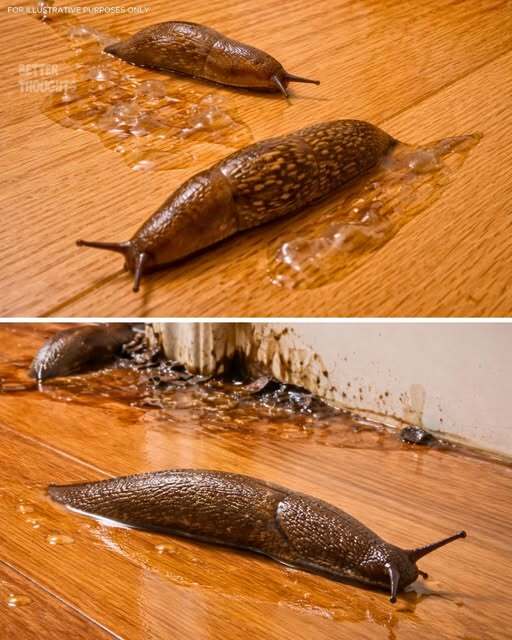
Slimy Trails Indoors May Be Warning of a Hidden Moisture Problem
Why Indoor Slugs Should Not Be Ignored
A slimy trail stretching across a kitchen floor or hallway may look like a minor household nuisance, but it can point to a larger issue developing inside the home.
Slugs do not usually enter dry, well-sealed indoor spaces without a reason. Their presence often suggests that moisture, shelter, and an accessible entry point are available somewhere nearby.
The slug itself is not normally the main concern. What matters more is the environment that allowed it to move indoors and remain active.
When slugs repeatedly appear inside a home, they may be revealing damp conditions under floors, behind walls, around foundations, or close to doors and windows. Those conditions can create problems that are far more serious than the visible trail left behind.
Moisture Is Often the Main Attraction
Slugs depend on damp environments. Dry air and dry surfaces make movement difficult for them, while moisture allows them to travel, hide, and remain active for longer periods.
For that reason, indoor sightings may be connected to leaking pipes, wet basements, poor ventilation, or areas where water collects and does not dry properly.
A small amount of hidden moisture may be enough to create a suitable path. Water does not need to be visibly pooling on the floor for a damp space to attract slugs.
Moisture can remain beneath flooring, inside wall cavities, around plumbing connections, or near the lower edges of exterior walls. These concealed areas may stay wet even when the visible room appears dry.
Slugs may follow these damp routes until they reach an open section of the home. Once inside, they can cross kitchens, hallways, utility areas, and other rooms while leaving a clear trail behind them.
What the Trails Can Reveal
A slime trail can provide useful clues about where the slug entered and where it traveled. Instead of immediately cleaning the trail without examining it, homeowners can first look at its direction.
The path may lead toward a door frame, window edge, wall opening, cabinet base, pipe entry point, or gap near the floor. These locations can reveal weak areas in the home’s outer barrier.
Slugs are capable of squeezing through very narrow openings. Hairline gaps around doors, windows, and foundations may be large enough for them to pass through.
Their appearance can therefore act as an informal map of small breaches that might otherwise remain unnoticed. A trail may begin at a crack that is difficult to see during an ordinary inspection.
When several slugs enter through the same area, the pattern becomes even more important. Repeated trails in one room or along one wall may indicate a consistent route rather than a random indoor encounter.
Hidden Dampness Can Lead to Larger Problems
Excess moisture does more than attract slugs. It can also support mold growth, wood damage, unpleasant odors, and gradual deterioration in parts of the home that are difficult to inspect.
Damp building materials may weaken over time. Floors, lower walls, and enclosed spaces can remain affected long before visible damage appears in the living area.
Poor ventilation can make the situation worse by preventing moisture from escaping. A room that remains humid may provide a suitable environment for slugs while also allowing dampness to persist.
Basements and other low areas can be especially vulnerable because water may collect there or move toward them from surrounding parts of the property.
A leaking pipe can also create a steady source of moisture. Even a slow leak may keep nearby materials damp enough to attract slugs and encourage long-term problems.
For this reason, removing the animal without checking the surrounding area may leave the real issue untouched. Another slug may appear if the conditions remain unchanged.
Start by Identifying the Damp Area
The first step is to examine the room where the trail was found. Attention should be given to areas that feel damp, smell musty, or appear discolored.
Spaces under sinks, behind appliances, along baseboards, near basement walls, and around plumbing lines deserve careful inspection. These are common places where moisture can remain unnoticed.
Homeowners should also check whether the trail repeatedly appears after rain, after water is used in a nearby room, or during periods when ventilation is limited.
These patterns may help narrow down the source. A trail that appears in the same place can be more useful than a single sighting because it may indicate a stable entry route.
Drying the visible floor is helpful, but the investigation should continue if the area becomes damp again. Persistent moisture usually means that water is still entering, leaking, or failing to evaporate.
Seal the Small Openings Slugs Use
After moisture is addressed, cracks and gaps should be examined. Openings around exterior doors, window frames, foundations, and utility lines can provide direct access to indoor spaces.
Even a very small breach may be enough. Slugs can flatten their bodies and move through narrow spaces that may not seem significant during a quick visual check.
Door thresholds should fit closely, and damaged seals should not leave open sections near the floor. Window edges and lower wall joints should also be checked for separation.
Foundation cracks and gaps where pipes or cables enter the building may create additional routes. Closing these openings helps prevent slugs from returning while also improving the home’s overall protection from outside moisture.
Sealing should be done after the damp condition is corrected whenever possible. Closing an opening without solving trapped moisture could leave the underlying problem hidden.
Improve Drainage and Airflow
Water should move away from the home rather than collect near the foundation. Poor drainage can keep soil and lower walls wet, creating a suitable environment for slugs close to possible entry points.
Areas where water regularly gathers should be examined. Standing moisture near the structure can increase dampness around cracks, doors, and foundation edges.
Indoor airflow is also important. Damp rooms need enough ventilation to allow surfaces and materials to dry.
Basements, enclosed utility spaces, and rooms with limited air movement may hold moisture longer than expected. Improving ventilation can make these areas less attractive to slugs.
Dry conditions remove one of the main reasons the animals enter and remain inside. They also reduce the risk of moisture-related damage continuing unnoticed.
Food and Trash Can Encourage Indoor Activity
Although moisture is often the central issue, accessible food and waste can make an indoor space more inviting. Kitchens and storage areas should be kept clean and dry.
Food should be stored in closed containers, and trash should remain tightly covered. Spills and crumbs should be removed rather than left overnight.
These steps do not replace repairs to leaks or cracks, but they help remove additional conditions that may support unwanted indoor activity.
A clean floor also makes new trails easier to detect. If another slug appears, the fresh trail may help show whether the original entry point has been successfully sealed.
Remove Slugs Without Ignoring the Cause
Slugs found indoors can be gently collected and moved away from the living area. The immediate goal is to remove them without treating their presence as the entire problem.
Killing the visible slug does not repair a leaking pipe, dry a damp basement, improve ventilation, or close a foundation gap.
That is why a complete response should focus on the environment. The animal is evidence that suitable conditions exist somewhere along its route.
Once those conditions are removed, indoor sightings should become less likely. A dry, clean, and properly sealed home offers fewer opportunities for slugs to enter and survive.
Repeated Sightings Deserve Closer Attention
A single slug may enter through an open door or temporary gap, but repeated sightings should be taken more seriously.
Multiple trails, regular nighttime appearances, or slugs returning to the same room may indicate that moisture and access points remain available.
In these cases, the home should be checked beyond the most obvious surfaces. The source may be under flooring, behind cabinets, near pipes, or inside a lower wall area.
The absence of visible water does not necessarily mean the space is dry. Dampness can remain hidden while still creating conditions that support slugs, mold, and gradual material damage.
Paying attention early can prevent a small warning sign from becoming a larger repair problem.
A Small Visitor Can Provide an Early Warning
Indoor slugs are easy to dismiss because they move quietly and often disappear before morning. Their slime trails may be the only evidence that they crossed the room.
However, those trails can reveal moisture, weak seals, drainage concerns, or poor airflow before the damage becomes obvious.
Responding quickly means looking beyond the animal and examining the conditions that brought it inside. Drying damp areas, repairing leaks, improving ventilation, sealing cracks, managing drainage, and containing food and trash all help address the problem at its source.
These actions protect more than the floor where the trail appeared. They can help reduce the risk of mold, rot, structural deterioration, and poor indoor air quality linked to ongoing dampness.
Slugs may be unwelcome visitors, but their presence can serve as a useful warning. By following the trail and correcting the conditions behind it, homeowners may discover and resolve a hidden problem before it causes more serious damage.