
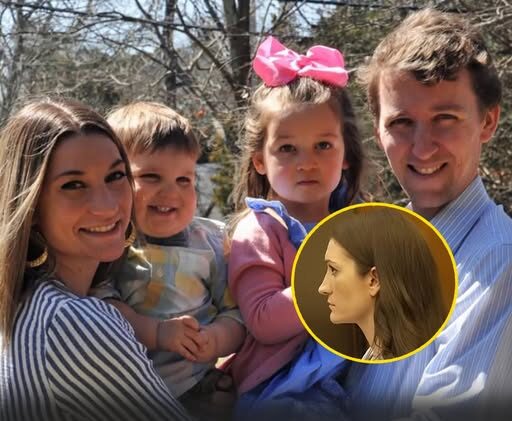
The Clancy Case Forces a Difficult Reckoning Over Mental Illness, Intent, and Family Tragedy
A Devastating Case Raises Questions About Postpartum Psychosis, Criminal Intent, and the Limits of Forgiveness
A quiet residential street in Duxbury became the setting for a family tragedy that continues to raise painful questions about criminal responsibility, mental illness, medical treatment, and the limits of forgiveness.
Patrick Clancy returned to a scene that would permanently divide his life into a before and an after. A door was locked, a window was open, and a bloodied knife was found inside the home.
In the basement were the couple’s three young children. Exercise bands had been placed around their necks, and the events inside the house left the entire family shattered.
The children’s mother, Lindsay Clancy, survived but was left paralyzed. She now maintains that a male voice instructed her to kill the children, placing her state of mind at the center of the criminal case.
A Case Defined by Two Conflicting Explanations
The legal dispute is built around two sharply different interpretations of what happened inside the Clancy home.
One view presents the deaths as the result of deliberate actions carried out with awareness, preparation, and purpose. The other describes a mother experiencing such a profound psychological collapse that she could no longer understand reality or control her behavior.
Those competing accounts create a question that cannot be answered by examining the physical evidence alone. The case also requires an examination of Lindsay’s mental condition, the medications she had been prescribed, her behavior before the deaths, and her statements afterward.
Prosecutors contend that the sequence of events reveals planning rather than confusion. They have focused on timing, preparation, and Lindsay’s own words as indications that she understood what she was doing.
Her defense is expected to emphasize severe mental illness, including the possibility that postpartum psychosis had disconnected her from reality. Her claim that she heard a male voice ordering her to act is central to that argument.
Patrick Clancy’s Position Adds Another Layer
Patrick Clancy lost all three of his children in a single winter evening. Despite that unimaginable loss, he has refused to describe his wife as a monster.
His public position has made the case even more emotionally complicated. He is both the grieving father of the children and the husband of the woman accused of killing them.
Rather than expressing only anger, Patrick has spoken from a position of forgiveness. That response does not decide any legal question, but it has shaped how the tragedy is understood outside the courtroom.
His forgiveness suggests that he views Lindsay’s actions through the lens of illness rather than cruelty. It reflects his belief that the person responsible for the children’s deaths may not have been acting with a stable or rational mind.
For many observers, his stance is difficult to comprehend because the loss is so severe. Yet Patrick’s response demonstrates how grief can exist alongside compassion, confusion, and a continuing attachment to the person accused.
The Role of Postpartum Psychosis
Postpartum psychosis is being presented as a major element in the explanation of Lindsay’s condition. The argument is not simply that she was distressed, exhausted, or emotionally overwhelmed.
Instead, the defense narrative describes a mind that had deteriorated to the point that ordinary judgment and recognition of reality may have been lost.
Lindsay’s statement about hearing a male voice is significant because it suggests that she may have experienced commands she believed were real. Whether jurors accept that account, and what legal meaning they give it, will be critical.
The case therefore turns on more than whether Lindsay performed the physical acts. The central issue is whether she possessed the mental capacity required to understand those acts and recognize their nature at the time.
That distinction is essential because criminal responsibility depends not only on conduct but also on intent, awareness, and the ability to distinguish reality from a severe psychological distortion.
Questions Surrounding Prescribed Medications
Patrick has also directed attention toward Lindsay’s medical care and the combination of medications she had been prescribed before the deaths.
He argues that she was spiraling while taking multiple prescriptions and that the treatment intended to help her may instead have intensified her psychological decline.
His lawsuit against her healthcare providers expands the tragedy beyond the criminal proceedings. It raises questions about whether warning signs were recognized, whether her condition was properly understood, and whether the medications contributed to her worsening state.
The lawsuit does not erase the events inside the home, nor does it automatically determine Lindsay’s legal responsibility. It represents Patrick’s effort to understand how his family reached such a devastating point.
From his perspective, the tragedy may have developed through a combination of severe postpartum illness and a complicated medical response that failed to stop her decline.
That position places healthcare decisions under scrutiny while leaving the jury to consider a separate question: what Lindsay understood and intended during the fatal events.
Prosecutors Emphasize Preparation and Timing
Prosecutors reject the idea that the deaths can be explained entirely as uncontrolled behavior caused by mental illness.
They argue that the evidence points toward a planned series of actions. Preparation, timing, and the circumstances inside the house are being used to support the claim that Lindsay acted knowingly.
Under that interpretation, the locked door, open window, knife, and condition in which the children were discovered form part of a deliberate sequence rather than a sudden, disorganized episode.
Prosecutors also rely on Lindsay’s statements as evidence of awareness. They maintain that her words and conduct demonstrate that she was capable of understanding what she had done.
Their case asks jurors to separate the existence of mental health struggles from the legal standard required to excuse criminal responsibility.
A person may be seriously ill and still understand an action, prosecutors contend. The jury must therefore determine not merely whether Lindsay was unwell, but whether her illness removed her ability to recognize reality and comprehend her conduct.
The Defense Faces a Difficult Burden
The defense must explain behavior that resulted in the deaths of three children while showing that the actions were not the product of a calculating mind.
That requires jurors to look beyond the horror of the outcome and focus closely on Lindsay’s psychological state.
Her paralysis and the circumstances following the deaths are part of the broader tragedy, but they do not by themselves establish what she understood beforehand.
The defense must connect her mental deterioration, the prescribed medications, the claim of a commanding male voice, and the possibility of postpartum psychosis into a coherent account of lost reality.
The challenge is especially difficult because planning can appear inconsistent with psychosis. Prosecutors may argue that organized actions show awareness, while the defense may maintain that a person experiencing delusions can still carry out a sequence of actions while operating within a false reality.
Jurors will have to decide which explanation best fits the limited but deeply disturbing facts presented to them.
A Husband’s Forgiveness Does Not Decide the Law
Patrick’s forgiveness carries enormous emotional weight, but the criminal case cannot be resolved by his feelings alone.
He may believe that illness transformed his wife into someone who was no longer capable of rational judgment. Prosecutors may still argue that the evidence proves legal intent.
The difference reflects the separate roles of personal forgiveness and public justice. A grieving husband may search for compassion and meaning, while the legal system must evaluate evidence under established standards.
Patrick’s position may influence how the public views Lindsay, but jurors are required to decide the case based on the evidence and the law.
His lawsuit against the healthcare providers also cannot determine the verdict. Even if aspects of Lindsay’s treatment are questioned, the jury must independently assess her mental capacity during the deaths.
Three Children Remain at the Center
The legal arguments are complex, but the case begins with the deaths of three small children.
Discussions of medications, psychosis, intent, planning, and responsibility can become highly technical. Behind every argument, however, is a family that lost three young lives in its own home.
Patrick’s grief is inseparable from the criminal proceedings. He must live with the deaths of his children, his wife’s condition, and the continuing dispute over whether the tragedy was driven by illness or intention.
Lindsay must face the allegations while living with paralysis and the consequences of what occurred. Her claim that she was responding to a male voice will be tested against evidence suggesting preparation and awareness.
The children cannot be reduced to evidence in a legal debate. Their deaths are the reason the questions of responsibility and mental capacity carry such extraordinary importance.
Jurors Confront an Extraordinary Decision
The jury’s task is not simply to choose between sympathy and punishment. Jurors must decide what was happening inside Lindsay’s mind when the children were killed.
They must consider whether her actions reflected a plan formed by someone who understood reality, or whether a severe postpartum psychiatric condition had destroyed her ability to recognize the meaning of her behavior.
Evidence of preparation may support the prosecution’s account. Evidence of psychological collapse, medication use, and reported commands from a male voice may support the defense.
Neither conclusion removes the tragedy. A finding of criminal responsibility would not restore the children, and a finding based on severe mental illness would not make their deaths less devastating.
The verdict will determine Lindsay’s legal fate, but it may not provide Patrick or the wider family with a complete explanation of how their lives were destroyed.
A Crossroads of Grief, Medicine, and Justice
The Clancy case has become more than a criminal proceeding. It is a painful examination of how the legal system responds when extreme violence and serious mental illness appear in the same home.
It also raises difficult questions about medical care, prescribed medications, warning signs, and whether a family in crisis received the protection it needed.
Patrick’s forgiveness stands beside the prosecution’s insistence on accountability. His belief in his wife’s illness exists beside evidence that prosecutors say demonstrates planning.
The jury must navigate those opposing realities without allowing emotion alone to determine the outcome.
At the center is a question with consequences far beyond one verdict: whether Lindsay Clancy acted with a calculating awareness of her choices or had fallen so deeply into psychosis that the world she perceived was no longer real.
Whatever decision is reached, the case will remain a devastating story of three children, a grieving father, a severely injured mother, and a family destroyed during one winter evening in Duxbury.