
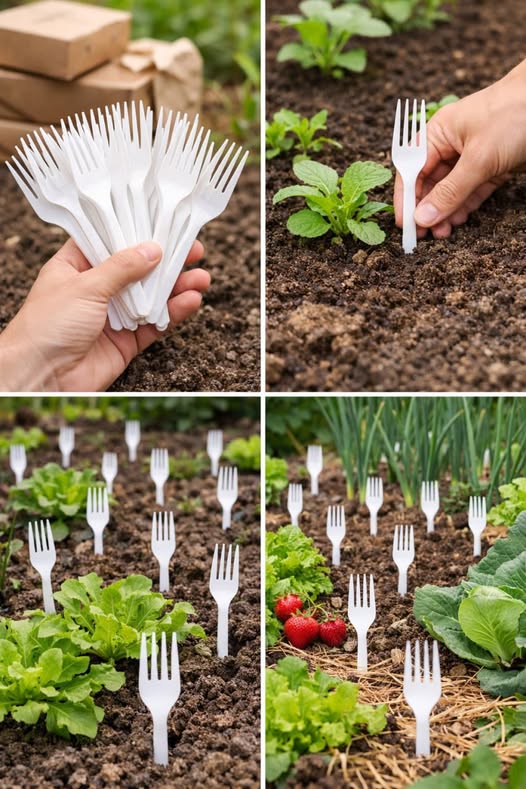
Why Gardeners Are Placing Plastic Forks in Their Vegetable Gardens
A Creative Trick Gaining Attention Among Gardeners
In recent years, gardeners have become increasingly creative when it comes to protecting their vegetable gardens and maintaining healthy plants. With many people turning to home gardening as a way to grow fresh food and spend more time outdoors, simple and affordable solutions are becoming more popular.
One surprisingly simple trick that has been gaining attention is placing plastic forks in the soil of vegetable gardens. At first glance, it may seem unusual to see forks sticking upright in garden beds, but many gardeners say this method can help solve several common gardening problems.
The idea is both practical and inexpensive, demonstrating how everyday household items can serve unexpected purposes in the garden.
Why Animals Are Attracted to Garden Soil
Vegetable gardens often contain freshly turned soil, compost, and moisture, all of which can attract animals. Squirrels, rabbits, raccoons, cats, and some birds are naturally curious and may explore garden beds in search of food, insects, or a comfortable place to dig.
Unfortunately, their digging and scratching can damage newly planted vegetables or delicate seedlings. When plants are just beginning to grow, even small disturbances can affect their roots and slow their development.
This is where the plastic fork trick comes into play.
How Plastic Forks Help Protect Garden Beds
Gardeners place plastic forks in the soil with the tines facing upward, creating a simple barrier across the surface of the garden bed.
The forks make the ground feel less comfortable for animals that want to walk or dig in the soil. Because animals prefer soft and open areas, they usually avoid locations where the surface feels uneven or difficult to navigate.
The forks do not harm the animals. Instead, they act as a gentle deterrent that encourages them to look elsewhere.
Protecting Fragile Seedlings
One of the biggest advantages of this method is protecting young plants during the early stages of growth. When vegetables are first planted, they are extremely fragile.
A single step from an animal or a quick digging motion can easily uproot small seedlings.
By placing forks around these plants, gardeners create a protective zone that reduces the chances of accidental damage.
This simple barrier helps ensure that seedlings have the chance to grow strong before facing the normal challenges of outdoor gardening.
Discouraging Cats from Using Garden Beds
Many gardeners also struggle with cats using their garden beds as litter areas. Cats are naturally drawn to loose soil because it resembles the soft ground they prefer for burying waste.
This behavior can create sanitation issues and may affect edible plants growing nearby.
Plastic forks placed throughout the garden bed disrupt the smooth surface that cats prefer. The uneven spacing makes it difficult for them to find a comfortable spot to dig.
As a result, cats typically move on to other areas where the ground feels more suitable.
A Low-Cost and Accessible Solution
Another reason this technique has become popular is its affordability. Plastic forks are inexpensive and easy to find. Many people already have disposable forks left over from takeout meals, picnics, or events.
Instead of throwing them away, gardeners can give these items a second life by using them in their garden beds.
This approach not only saves money but also helps reduce waste by reusing materials that might otherwise end up in the trash.
Using Forks as Plant Markers
Plastic forks can also serve another useful purpose in the garden: labeling plants. Gardeners sometimes write the names of vegetables or herbs on the handles of the forks using a permanent marker.
By placing the labeled forks next to the plants, they create simple and inexpensive markers that help keep track of what has been planted.
This can be especially helpful in larger gardens where many crops grow close together.
Helping Reduce Bird Disturbance
Some birds are attracted to freshly planted seeds and may scratch at the soil while searching for food. The presence of plastic forks can help discourage this behavior.
The forks create both a visual and physical obstacle that makes it harder for birds to land directly on the soil surface.
Although this method may not stop all birds completely, many gardeners report that it significantly reduces the amount of disturbance in newly planted beds.
Easy to Adjust Throughout the Growing Season
One of the biggest advantages of the plastic fork method is its flexibility. As plants grow larger and become more established, the forks can easily be moved or removed.
Gardeners can reposition them wherever new seedlings are planted or where animal activity becomes noticeable.
This adaptability makes the technique useful throughout the entire gardening season.
Supporting Healthy Soil Conditions
Another subtle benefit is that the forks can help discourage people and animals from stepping directly on garden beds.
When fewer feet walk across the soil, it remains loose and well-aerated.
Loose soil allows plant roots to grow more freely and improves the movement of water, air, and nutrients through the ground.
Healthy soil structure plays an important role in the overall success of a vegetable garden.
Placing Forks Safely in the Garden
Although this trick is simple, it is important to place the forks carefully. Gardeners should space them evenly and ensure they remain visible while working in the garden.
Brightly colored plastic forks can make them easier to see and reduce the chance of accidentally stepping on them.
Keeping the forks visible ensures that they remain both effective and safe to use.
A Great Example of Garden Resourcefulness
The plastic fork method highlights an important aspect of gardening: creativity. Many experienced gardeners enjoy finding practical solutions using everyday materials instead of relying on expensive equipment.
Small ideas can sometimes make a big difference when it comes to protecting plants and maintaining a productive garden.
By experimenting with simple techniques, gardeners can often discover methods that work well in their own outdoor spaces.
A Simple Idea With Practical Benefits
The growing popularity of the plastic fork trick shows how shared knowledge can help gardening communities learn from one another.
Through online discussions, social media, and word of mouth, gardeners continue to exchange helpful ideas that make gardening easier and more enjoyable.
Placing plastic forks in a vegetable garden may look unusual at first, but the reason behind it is surprisingly clever.
For many gardeners, this simple and affordable technique has become an effective way to protect plants, discourage unwanted digging, and keep vegetable beds thriving throughout the growing season.