
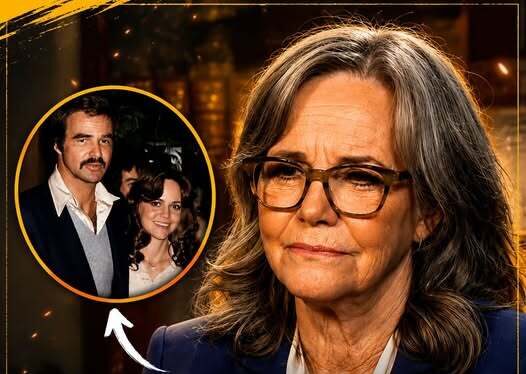
Burt Reynolds Called Sally Field the Love of His Life, but She Chose 30 Years of Silence
A Hollywood Romance That Ended Long Before the Feelings Disappeared
Burt Reynolds called her “the love of my life.”
Sally Field never spoke to him again.
Their relationship began with the excitement of a major Hollywood production and quickly became one of the entertainment industry’s most recognizable romances. On screen, they appeared playful, passionate, and perfectly matched.
Behind the cameras, however, the relationship was far more complicated. What began as an intense connection eventually became painful enough for Field to step away completely.
For approximately three decades, Reynolds continued to speak about the woman he believed he should have married. Field chose a different response, maintaining a silence that continued until his death in 2018.
They Met While Making “Smokey and the Bandit”
Reynolds and Field met while working together on “Smokey and the Bandit,” the film that would make their chemistry visible to millions of viewers.
At the time, both performers were building important careers. Reynolds was developing the charming, confident screen presence that made him one of Hollywood’s biggest stars, while Field was working to move beyond the television roles that had first made her famous.
Reynolds strongly supported Field’s involvement in the movie. When producers questioned whether she was glamorous or attractive enough for the role, he defended her and fought for her casting.
His belief in her helped place Field in a project that would become closely associated with both of them. Their natural connection gave the movie an energy that could not easily be manufactured.
Audiences saw humor, attraction, and affection between their characters. The connection was not limited to their performances, because the two actors had also begun falling in love away from the cameras.
Reynolds Had Admired Field Before They Met
Reynolds later explained that his interest in Field had begun before they worked together. He remembered seeing her during her early career as a young television star.
By the time they met professionally, he was already drawn to her. The production gave him the opportunity to know the person behind the familiar face he had watched years earlier.
Their attraction developed quickly. The romance carried the intensity of two successful performers working closely together while surrounded by the pressure and excitement of a major film.
For Reynolds, Field became more than a co-star. She became the woman he would continue to describe as the most important romantic relationship of his life.
For Field, the relationship also carried great emotional significance. Yet her later memories revealed that the experience was not as joyful or balanced as it may have appeared publicly.
Their On-Screen Chemistry Hid a Difficult Reality
Moviegoers responded strongly to Reynolds and Field as a couple. Their performances appeared effortless, and their playful energy helped define the appeal of “Smokey and the Bandit.”
Their off-screen relationship was equally intense, but it also became emotionally exhausting. The qualities that made the romance feel exciting at first eventually contributed to its instability.
Reynolds was one of the most visible men in Hollywood. His fame, confidence, and public image placed him at the center of enormous attention.
Field later described feeling that she became smaller while she was with him. Rather than existing fully as her own person, she felt increasingly absorbed into his powerful personality and public world.
The relationship placed her beside a man whose reputation often dominated every room. As his celebrity grew, she struggled to maintain a separate sense of identity.
Field Said She Stopped Existing Within the Relationship
Field later reflected on how deeply the relationship affected her. She said she stopped “existing” during those years.
That description revealed how much of herself she believed she had surrendered while trying to maintain the romance. Her needs, independence, and confidence became increasingly difficult to protect.
The relationship was not simply a glamorous partnership between two stars. It involved emotional pressure, insecurity, and behavior that Field experienced as controlling.
She felt overshadowed by Reynolds and trapped within a dynamic that placed his personality, career, and expectations above her own.
Although the public often viewed them as a perfect Hollywood couple, Field’s private experience was marked by confusion and emotional discomfort.
The difference between the public image and private reality made the relationship especially difficult. Fans celebrated the romance, while Field felt herself disappearing inside it.
Rumors of Infidelity Deepened the Pain
Field also faced persistent rumors that Reynolds had been unfaithful. Whether discussed privately or repeated publicly, those claims damaged her confidence and trust.
She later described feeling humiliated and foolish. The attention surrounding Reynolds made the situation more painful because the possible betrayals were not confined to their private lives.
Being connected to a famous man meant that rumors could circulate widely. Field had to manage her personal hurt while knowing that strangers were also discussing the relationship.
The uncertainty created a damaging emotional environment. Instead of feeling secure, she was left questioning what was true and how much of the relationship she could trust.
The combination of control, public pressure, and suspected infidelity gradually weakened the bond that had once seemed so powerful.
The Romance Lasted About Five Years
Reynolds and Field remained together for approximately five years. During that time, they became one of Hollywood’s most closely watched couples.
The relationship included professional collaboration, public appearances, intense affection, and repeated emotional conflict.
They shared experiences that permanently connected their personal histories. Yet the strength of that connection was not enough to make the relationship healthy or sustainable.
Eventually, Field ended the romance. Walking away meant leaving someone who had been important to her while also recovering the part of herself she believed had been lost.
The breakup did not erase the emotional significance of their time together. It did, however, create two very different responses to the relationship’s end.
Reynolds Continued Talking About Her
After the relationship ended, Reynolds continued to discuss Field publicly. He repeatedly expressed regret and described her as the woman he had never truly stopped loving.
As the years passed, his language became even more emotional. He blamed himself for losing her and suggested that his own behavior had destroyed the relationship.
He looked back on their years together as a missed opportunity. In his version of the story, Field represented the great love he had failed to protect.
Reynolds’ public declarations kept the romance alive in the minds of fans. Even decades after the breakup, interviews about his life often returned to the subject of Sally Field.
His regret became part of his public identity. The famous actor who had appeared confident and carefree continued to carry sadness over the woman who had left.
Field Refused to Reopen the Relationship
Field responded differently. Rather than participating in a public conversation about reconciliation, she maintained her distance.
She did not speak with Reynolds for 30 years. Even as he discussed her in interviews and described his enduring love, she refused to reestablish contact.
Her silence was not evidence that the relationship had meant nothing. It reflected her decision to protect herself from a bond she considered emotionally damaging.
Reynolds’ public regret did not erase Field’s private memories. His desire to reconnect could not undo the control, humiliation, and confusion she associated with their years together.
For Field, distance appears to have been necessary. Speaking with him again might have reopened emotions she had worked hard to place in the past.
His Public Declarations Did Not Change Her Decision
Reynolds continued to express affection long after the two had gone their separate ways. His comments reached Field through interviews, headlines, and public discussion.
He described her as the woman he should have married and admitted that he had made mistakes. His statements presented the relationship as the defining romantic loss of his life.
However, Field did not allow those declarations to determine her response. She did not owe him renewed access simply because he publicly expressed regret.
Their different perspectives reveal how two people can remember the same relationship in very different ways.
Reynolds focused on the love he had lost. Field remembered both the love and the damage that accompanied it.
His longing did not cancel her pain. Her silence did not mean that she had forgotten him.
Field Addressed the Relationship in Her Memoir
Field eventually discussed Reynolds in her memoir, offering a more complicated view than the romantic version often repeated in Hollywood stories.
She described him as confusing, complicated, and hurtful. At the same time, she acknowledged that he had played an undeniably important role in her life.
Her account did not reduce Reynolds to a villain, nor did it transform their relationship into a perfect lost romance.
Instead, she presented a connection filled with contradictions. There was affection, attraction, and shared history, but there was also pain, imbalance, and emotional damage.
That complexity explains why she could recognize his importance while refusing to speak with him again.
Field did not deny that she had loved Reynolds. She rejected the belief that love alone required her to return to a relationship that had harmed her.
Reynolds Died Before They Reconciled
Reynolds died in 2018 without rebuilding his relationship with Field. The silence between them remained in place until the end of his life.
His death closed the possibility of another conversation, private apology, or direct reconciliation.
For decades, he had spoken about the relationship as unfinished. Field had chosen to leave it closed.
When he died, public attention once again turned toward their history. Many people wondered whether Field shared the intense feelings Reynolds had repeatedly expressed.
Her response showed that the truth was more complicated than either complete rejection or romantic longing.
Field Finally Spoke With Honesty After His Death
Following Reynolds’ death, Field acknowledged that he would always hold a place in her personal history and her heart.
Her words recognized the importance of the years they had shared without rewriting the painful parts of the relationship.
She did not pretend that their connection had been insignificant. Reynolds had influenced her life, her memories, and her emotional development.
At the same time, she maintained the boundaries that had defined the previous three decades. Her affection did not require her to deny the reasons she had stayed away.
The relationship remained part of her history, but it was not a history she had been willing to relive.
A Great Love Can Still Leave Lasting Wounds
The story of Burt Reynolds and Sally Field is often described as a tragic Hollywood romance. That description captures only part of what happened.
There was love between them, but love existed alongside control, insecurity, public embarrassment, and emotional pain.
Reynolds’ regret may have been sincere. His later understanding of his mistakes may also have been genuine.
However, regret does not automatically repair the damage created during a relationship. The person who was hurt has the right to decide whether reconciliation is safe or desirable.
Field’s choice to remain silent demonstrated that forgiveness, memory, and renewed contact are not the same thing.
She could understand Reynolds’ importance without inviting him back into her life. She could preserve meaningful memories while protecting herself from old patterns.
Hollywood Remembered the Romance Differently
Fans continued to celebrate Reynolds and Field as one of cinema’s most memorable couples because of the chemistry captured in “Smokey and the Bandit.”
Their performances created an image of carefree romance that remained popular long after their real relationship ended.
Movies preserve people at a particular moment. On screen, Reynolds and Field remain young, playful, and deeply connected.
Real life continued beyond those scenes. The actors grew older, followed separate paths, and developed very different interpretations of their shared past.
Reynolds remembered the woman he wished he had kept. Field remembered a relationship in which she felt she had lost herself.
Both memories could exist at the same time, even though they led to opposite choices.
Why Sally Field Never Answered the Phone
Reynolds’ attempts to reach Field were shaped by longing and regret. Field’s refusal to respond was shaped by experience.
She knew the emotional cost of their relationship in a way that outsiders could not fully understand.
Public declarations may have made Reynolds appear romantic, but they also placed Field in a difficult position. Each statement invited strangers to question why she would not reconnect with a man who claimed to love her so deeply.
Her silence was an answer. It showed that she did not want the relationship reopened, regardless of how beautifully Reynolds described it in later years.
She had already lived through the romance and its consequences. She did not need to repeat that experience to satisfy public expectations.
A Love Story Without a Traditional Ending
Burt Reynolds and Sally Field did not reunite, rebuild their friendship, or share a final public conversation.
Their story ended with distance rather than reconciliation. That ending may feel incomplete to fans who prefer romances to conclude with forgiveness and reunion.
For Field, however, the separation may have provided the closure she needed. Her decision allowed her to move forward without returning to a relationship that had once overwhelmed her identity.
For Reynolds, the relationship remained a source of lasting regret. He continued to describe Field as the defining love of his life until his final years.
Their memories never fully aligned. He looked back and saw the woman he had lost, while she looked back and remembered why she had to leave.
He Remained in Her Heart but Outside Her Life
Field’s final reflections revealed the emotional truth at the center of the story.
Reynolds mattered to her. Their years together could not be erased, and the connection they shared remained part of her personal history.
Yet importance does not always lead to reconciliation. Some people remain emotionally significant even when allowing them back into one’s life would be harmful.
Field carried the memory of Reynolds without restoring the relationship. Her silence protected the life she had built after leaving him.
Reynolds continued to love the version of their story he wished had ended differently. Field accepted that the relationship had left wounds too deep to reopen.
Their romance began beneath the excitement of movie cameras and became one of Hollywood’s most famous love stories. It ended not with a dramatic reunion, but with three decades of silence and the difficult understanding that even a great love may not be safe to revisit.