
Rebecca Luna’s Final Decision Sparked a Painful Debate About Dignity, Illness, and Control
A Final Message That Left Viewers Stunned
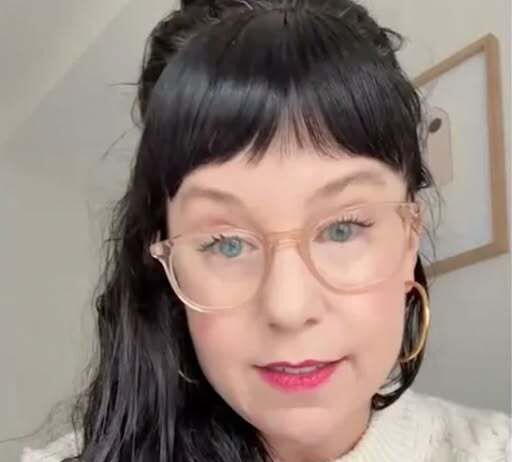
Rebecca Luna faced the camera with a calmness that made her announcement even more difficult to hear.
The 49-year-old mother, TikTok creator, abuse survivor, and advocate knew how she wanted the final chapter of her life to unfold. She told her audience that she had chosen a date to die through medical assistance in dying, a legal option available to eligible patients in Canada.
For the thousands of people who had followed her story online, the announcement was devastating.
Rebecca was not discussing an uncertain possibility or speaking vaguely about the future. She was sharing a decision she had already made after confronting an illness that was steadily taking away her memory, independence, and ability to feel secure within her own body.
Her final message quickly became more than a personal farewell. It opened an emotional public conversation about suffering, personal autonomy, medical choice, and the meaning of dignity near the end of life.
A Diagnosis That Changed Everything
Rebecca was still in her 40s when she learned that she had young-onset Alzheimer’s disease.
At an age when many parents are preparing for graduations, career changes, family milestones, and new phases of adulthood, she was forced to confront the gradual loss of abilities most people assume they will keep for decades.
The illness began reshaping her daily life and her expectations for the future.
Memory loss was only one part of the experience. As the disease progressed, Rebecca also faced the erosion of her independence and the painful awareness that she could no longer fully trust her own mind.
The condition threatened more than her ability to remember names, conversations, or familiar routines. It affected her sense of personal safety and her confidence in navigating the world around her.
For someone who had already survived abuse and fought through other serious challenges, losing control over her own thoughts and decisions carried an especially heavy emotional weight.
Choosing the Remaining Parts of Her Life
Rebecca’s decision to pursue medical assistance in dying was not presented as an impulsive act.
She described it as a deliberate effort to preserve control over the few things the illness had not yet taken from her.
She wanted to determine the time, the place, and the people who would be near her at the end.
As Alzheimer’s continued to narrow her choices, those remaining decisions became deeply important. Rebecca understood that waiting could eventually leave her unable to communicate clearly or participate fully in choices about her own care.
Her decision reflected a desire to act while she still recognized herself, understood her circumstances, and could express what she wanted.
To Rebecca, controlling the end of her life was connected to preserving her dignity. She did not describe the choice as surrendering to despair, but as drawing a boundary around suffering that she no longer wished to endure.
That distinction became central to how many followers understood her story.
A Life Shared With Unusual Honesty
Rebecca had built an online presence through direct and deeply personal storytelling.
Known on TikTok as @wheredidrebeccago, she spoke openly about experiences that many people struggle to discuss even in private.
Her content addressed trauma, abuse, addiction, illness, recovery, and the complicated process of trying to rebuild a life after surviving painful circumstances.
She did not present herself as someone untouched by hardship.
Instead, she allowed viewers to see the uncertainty, grief, fear, and courage involved in facing conditions that could not be easily fixed.
That honesty created a strong connection with her audience. Many followers did not simply see her as a content creator. They viewed her as someone who had invited them into the most vulnerable parts of her life.
Her openness made the announcement of her planned death feel intensely personal, even to people who had never met her.
The Meaning Behind Her Final Choice
Rebecca’s decision forced viewers to consider the difference between living and simply remaining alive while a degenerative illness removes one ability after another.
For her, the question was not limited to how many days she might have left.
It was also about what those days would look like, how much independence she would retain, and whether she would still be able to recognize the people and experiences that gave her life meaning.
Young-onset Alzheimer’s created a future in which the person Rebecca understood herself to be could gradually disappear, even while her body remained present.
She chose not to wait until every decision had been transferred to someone else.
Her approach was rooted in the belief that dignity included the ability to decide when suffering had exceeded what she was willing to accept.
That belief did not remove the grief surrounding her choice. Her family, friends, and followers still faced the reality of losing her.
However, Rebecca made it clear that grief alone could not determine what she should be required to endure.
Her Final Days Away From Social Media
After sharing so much of her life publicly, Rebecca spent her last days away from the constant attention of social media.
She stepped back from followers and focused on the people closest to her.
The final period of her life was not shaped by views, comments, or online reaction. It was centered on family, privacy, presence, and the limited time she had chosen to preserve.
That decision reflected the same sense of control that had guided her larger choice.
Rebecca had used the internet to explain her journey, but she did not allow the internet to take possession of her final moments.
Her audience received a farewell, while her loved ones received her remaining time.
The contrast between her public honesty and private ending became one of the most powerful elements of her story.
A Decision That Divided and United Viewers
Rebecca’s announcement prompted reactions shaped by grief, compassion, personal belief, and fear.
Some viewers saw her choice as a courageous assertion of autonomy in the face of an incurable and progressive condition.
Others struggled with the idea that a person who was still communicating, creating content, and spending time with family could legally choose to die.
Many people found themselves holding both reactions at once.
They respected Rebecca’s reasoning while wishing that another path could have protected her from the suffering she feared. They understood her need for control while feeling devastated that her illness had reduced her options so severely.
The emotional conflict surrounding her case revealed why discussions about assisted dying remain so difficult.
They involve more than law or medicine. They touch on family bonds, spiritual beliefs, disability, fear, compassion, personal freedom, and different understandings of what makes life bearable.
The Question of Who Gets to Decide
Rebecca’s story placed one central question before the public: who should have the final authority over suffering that cannot be transferred to another person?
Family members may experience the loss, but they do not live inside the patient’s body or mind.
Doctors may assess medical circumstances, but they do not personally carry the fear of losing memory, identity, and independence.
Followers may feel close to someone through years of videos, but they still see only the portions of life that were shared with them.
Rebecca believed the person living through the illness should retain a meaningful voice in deciding when the burden had become too great.
Her choice challenged the expectation that endurance is always the only acceptable form of courage.
For Rebecca, courage also meant acknowledging her limits and saying “enough.”
More Than a Viral Farewell
Rebecca Luna’s final video reached people because of its emotional weight, but her legacy cannot be reduced to a single announcement.
She had already spent years showing how trauma and illness could reshape a person’s life without completely silencing that person’s voice.
She spoke about experiences that are often hidden by shame, fear, or social judgment.
Her willingness to discuss abuse and addiction gave others permission to examine their own pain more honestly.
Her openness about Alzheimer’s also revealed how a neurological illness can affect someone far younger than many people expect.
By documenting her changing condition, Rebecca gave viewers a personal understanding of what it meant to lose confidence in one’s own memory and independence.
Her final decision became part of that larger pattern of honesty.
She did not hide the outcome she had chosen or allow others to create a more comfortable version of her story.
A Debate Without a Simple Resolution
Rebecca’s death did not settle the questions surrounding medical assistance in dying.
Instead, it made those questions more immediate and human.
Her story showed that a person can love family, value life, and still decide that the progression of a serious illness has created suffering they are unwilling to continue.
It also showed how one person’s private medical choice can cause deep emotional consequences for an entire community.
There is no response to Rebecca’s story that removes every contradiction.
Respecting her autonomy does not erase the sadness of her death. Questioning the choice does not necessarily mean dismissing the suffering that led her to it.
Her experience exists in the difficult space between those positions.
That is why her story continues to affect people who followed her journey and those who encountered her only through the final chapter.
The Legacy Rebecca Left Behind
Rebecca Luna left behind a record of survival, vulnerability, and determination.
She had endured abuse, confronted addiction, raised a family, built a public platform, and faced a devastating diagnosis while still trying to explain her experience in her own words.
When her illness threatened to take away that voice, she used it while she still could.
Her last days were spent with loved ones rather than an online audience, but the message she left continued far beyond that private circle.
She asked people to consider whether dignity can include the right to determine the limits of one’s own suffering.
She also demonstrated that discussions about death do not always come from a lack of love for life. In some cases, they emerge from a desire to protect identity, choice, and connection before illness removes them completely.
Rebecca knew how she wanted her story to end.
The people who watched her could not change that ending, but they were left to confront the difficult questions it raised about compassion, autonomy, and what a dignified final chapter can mean.