
Why Some Tree Trunks Are Painted White and What the Protective Coating Really Means
The Simple Reason This White Coating Can Protect a Tree’s Life
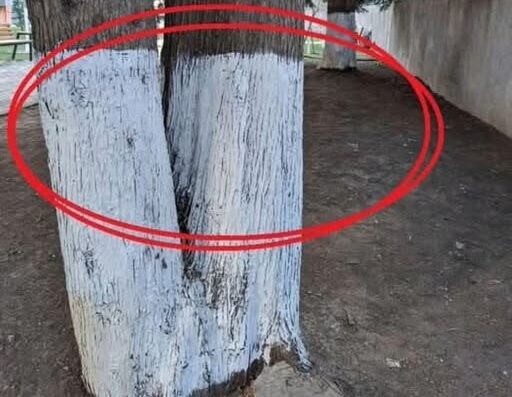
A row of trees with bright white trunks can look unusual the first time someone notices it. The repeated markings may appear decorative, or they may seem like a code used by road crews, property owners, or landscaping teams.
In reality, the white coating often serves a practical purpose. It is applied to help protect vulnerable bark from environmental damage, especially during periods when daytime sunshine and nighttime cold create sudden changes in temperature.
The method is simple, but the problem it addresses can be serious. Young trees and trees with relatively thin bark may suffer lasting injuries when their trunks repeatedly heat during the day and rapidly cool after sunset.
The Hidden Threat Behind Winter Sunlight
Winter is usually associated with freezing temperatures, snow, wind, and dormant plants. However, direct sunlight can still be surprisingly strong, particularly on clear days when rays strike one side of a tree trunk for several hours.
As the exposed bark absorbs sunlight, the temperature of that section can rise. The tissue beneath the bark may temporarily warm and become more active, even while the surrounding air remains cold.
The danger increases when the sun disappears. Temperatures can fall rapidly at night, forcing the warmed tissue to cool much faster than the rest of the tree.
This sudden shift places stress on the trunk. The affected bark and the living tissue beneath it may contract unevenly, creating damage that is not always visible immediately.
Over time, the injured area can split. The resulting cracks may run vertically along the trunk and become larger as the tree continues to experience changing weather conditions.
How Sunscald Damages a Tree
This type of temperature-related bark injury is commonly described as sunscald. It can leave long, rough cracks along the trunk, often on the side receiving the strongest sunlight during the day.
The damage is more than a cosmetic problem. Bark forms an important protective layer around a tree, helping shield the living tissues that move water and nutrients between the roots, branches, and leaves.
When the bark splits, that protective barrier becomes weaker. The exposed area may struggle to heal, particularly if the crack continues expanding during repeated cycles of warming and freezing.
A damaged trunk can also interfere with healthy growth. Young trees may develop slowly, become misshapen, or lose sections of bark before they are mature enough to withstand severe seasonal conditions.
In more serious cases, the injury can contribute to the decline of the tree. A large damaged section may prevent the trunk from functioning normally and can leave the plant vulnerable to additional problems.
The cracks may also create openings where disease can enter. Once protective bark has been broken, the injured tissue becomes more difficult for the tree to defend.
Why Young Trees Face Greater Risk
Not every tree responds to winter sunlight in the same way. Mature trees with thick, established bark often have more natural insulation than newly planted or young trees.
A younger trunk usually has thinner bark and less protection against sudden temperature changes. Because the tree is still developing, damage to its main trunk can affect its future shape, stability, and overall health.
Newly planted trees may also be adjusting to unfamiliar soil and weather conditions. Their roots are still becoming established, leaving them with fewer resources to recover from serious bark injuries.
This makes preventive care especially important during the early years of growth. Protecting the trunk can give a young tree more time to mature and develop stronger bark.
The white coating is therefore often seen on trees that have recently been planted beside roads, in orchards, around public spaces, or on properties where long-term growth is important.
Why the Coating Is White
The color is a key part of the protective effect. White surfaces reflect a greater amount of sunlight than dark surfaces, which tend to absorb more heat.
When a tree trunk is coated in white, less solar energy is absorbed by the bark. The trunk remains cooler during bright winter days, reducing the difference between daytime and nighttime temperatures.
This does not keep the tree warm. Instead, it helps prevent one side of the trunk from becoming excessively warm while the surrounding environment remains cold.
By limiting daytime heating, the coating reduces the severity of the temperature drop after sunset. The bark is less likely to experience the abrupt change that can lead to cracking.
The idea is similar to using a reflective covering on a surface exposed to intense sunlight. The white layer redirects part of the incoming light instead of allowing the underlying material to absorb all of it.
A Protective Layer Made From Diluted Paint
The white material is often a diluted form of latex paint. It can be applied with a brush or sprayed carefully onto the lower section of the trunk.
Diluting the paint helps create a lighter coating rather than a thick decorative finish. The goal is to provide reflection and protection without covering the bark with an unnecessarily heavy layer.
The application usually focuses on the main trunk, where temperature-related cracks can create the greatest harm. A consistent coating helps ensure that sunlight is reflected across the exposed surface.
The treatment may be renewed once a year as the previous layer fades or as the tree grows. Regular maintenance keeps the protective effect in place during the periods when the bark is most vulnerable.
The process can be completed by brushing the mixture onto each trunk or by using spraying equipment when many trees must be treated. Either method can create the same recognizable white appearance.
More Than a Decorative Tradition
Because the painted trunks often form neat, repeating rows, people may assume the color was chosen to make a roadside, garden, or orchard look uniform. The visual result can be striking, but appearance is not the primary reason for the treatment.
The coating represents an attempt to reduce environmental stress before visible damage occurs. Once a major crack has formed, protecting and restoring the affected area can be much more difficult.
Preventive care is particularly useful because sunscald may develop quietly. A tree can appear healthy while the tissue beneath its bark is already being weakened by repeated temperature changes.
By the time a deep split becomes noticeable, the injury may already have affected a significant part of the trunk. Painting it beforehand is intended to lower that risk.
The method also explains why many trees in the same location are treated at once. They are exposed to similar sunlight, nighttime temperatures, and seasonal conditions, so planters apply protection across the entire group.
What the White Trunks Do Not Necessarily Mean
White paint on a trunk does not automatically mean that a tree is diseased, dying, or scheduled for removal. It can indicate the opposite: someone is actively trying to preserve it.
The markings are also not necessarily evidence of vandalism. When the coating is applied carefully and consistently to several trees, it is often part of an organized maintenance practice.
People unfamiliar with the technique may mistake the pale bands for road markings or property boundaries. However, the location of the paint on the bark and its repeated use across multiple trunks reflect its protective role.
The coating should therefore be understood as a form of seasonal care. It is intended to support the tree while it faces conditions it cannot avoid or control.
Protection Against Rapid Temperature Swings
The central purpose of the white layer is to make temperature changes less extreme. It does not eliminate cold weather, prevent frost, or stop every possible source of bark damage.
Instead, it addresses the specific problem caused when sunlight strongly warms one part of the trunk before temperatures fall again. Reducing that daytime heat helps the bark cool more gradually and evenly.
This matters because a tree cannot move away from direct sunlight or shelter itself when conditions change. Once planted, it must endure the full cycle of each day and night.
A simple reflective coating gives the trunk an additional barrier against those repeated shifts. It functions like a shield between the bark and the strongest rays of the sun.
For a young tree facing its first winters, that protection may be especially valuable. Avoiding an early injury allows the trunk to become thicker and better prepared for future seasons.
A Small Step With Long-Term Importance
Painting a trunk white may appear minor compared with watering, pruning, or planting, but bark protection can influence a tree’s ability to grow for years. The trunk is the central connection between the roots below and the branches above.
Damage in that area can affect the entire plant. A healthy trunk supports the movement of moisture and nutrients while helping the tree remain upright and stable.
Protecting the bark during vulnerable stages is therefore an investment in the tree’s future. The white layer may only remain visible for a limited period, but the damage it helps prevent could otherwise last much longer.
The method is also easy to recognize once its purpose is understood. Rows of pale trunks no longer look mysterious or unnatural; they show that someone anticipated a seasonal danger and acted before it became irreversible.
The Quiet Message Behind the White Paint
Every white-painted trunk tells a simple story of prevention. The tree cannot defend itself from every sharp swing between winter sunshine and nighttime freezing, so people provide an extra layer of protection.
The coating reflects harsh rays, limits overheating, and reduces the stress created when temperatures suddenly plunge. In doing so, it helps protect the bark from cracks that can weaken growth and create openings for disease.
What initially looks like an unusual pattern along a road or across a field is therefore a practical response to a largely hidden problem. It is not merely paint placed on wood for appearance.
It is a protective measure designed to give vulnerable trees a stronger chance of surviving winter, continuing to grow, and reaching maturity without suffering avoidable trunk damage.
Once the purpose is clear, those white bands take on a different meaning. They are visible signs of careful maintenance, standing quietly between fragile bark and the damaging extremes of the season.