
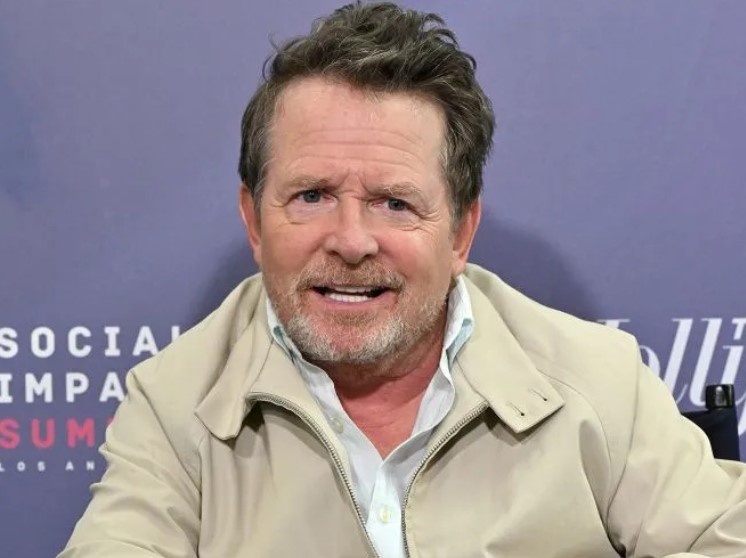
Michael J. Fox Returns to Acting in a Powerful Role After Years Away From the Screen
The Beloved Actor Steps Back Into the Spotlight While Continuing His Parkinson’s Journey
Michael J. Fox has returned to acting after spending several years away from regular screen work, taking on a role that carries deep personal significance.
The celebrated actor appears in the third season of Shrinking alongside Harrison Ford, whose character, Dr. Paul Rhoades, is living with Parkinson’s disease.
For viewers who have followed Fox’s life and career, the appearance represents far more than another television role.
It is a reminder of his remarkable comic timing, enduring talent, and determination to keep engaging with life despite the physical challenges he has faced for decades.
Fox has lived with Parkinson’s disease since he was diagnosed at the age of 29, during one of the most successful periods of his acting career.
Although the condition eventually forced him to reduce his workload, he has continued to find new ways to perform, advocate, and connect with the audience that supported him throughout his journey.
A Diagnosis at the Height of His Career
Fox was already one of Hollywood’s most recognizable stars when he learned that he had Parkinson’s disease.
The diagnosis arrived at a time when his career was flourishing and his future appeared filled with professional possibilities.
He knew little about the condition and initially struggled to understand how deeply it might affect his work and personal life.
Parkinson’s gradually created physical obstacles that made the demands of acting more difficult.
Movement, balance, speech, and the ability to remember and deliver dialogue consistently became increasingly challenging.
Accepting the reality of the diagnosis was not immediate.
Fox needed time to process what the disease meant and how it would change the life he had imagined for himself.
Eventually, he chose to confront the condition directly rather than allowing fear or self-pity to define him.

Rejecting Pity and Choosing Gratitude
Fox has often spoken honestly about the hardship of living with Parkinson’s disease.
He has never tried to pretend that the condition is easy, but he has also resisted the idea that his life should be viewed only through tragedy.
During a 2023 presentation of a nonfiction film about his life, Fox described the complicated relationship between struggle and gratitude.
“Parkinson’s sucks, but it’s a great life, so thank you for it,” the actor said back in 2023 during the showing of the nonfiction film featuring his life. “Pity is a benign form of abuse. I can feel sorry for myself, but I don’t have time for that. There is stuff to be learned from this, so let’s do that and move on,” he continued.
The statement reflected the philosophy that has guided much of his public life.
Fox does not deny the pain, frustration, or limitations created by Parkinson’s.
Instead, he focuses on what can still be learned, experienced, and shared.
He has also expressed deep appreciation for the fans who continued supporting him after his diagnosis became public.
“My fans have basically given me my life. I wanted to give these people who have done so much for me my time and gratitude. It was great for me to hear from all of you.”
Adapting to New Physical Challenges
Fox has explained that his physical condition can change from one day to the next.
Each morning may bring a different set of challenges, requiring him to adjust his expectations and plans.
Speaking about his daily life, he said, “I wake up and get the message of what the day is gonna be like, and I try to adjust to it.
“I keep getting new challenges physically, and I get through it,” he continued. “I roll around in a wheelchair a lot, and it took some getting used to.”
Using a wheelchair represented another major adjustment for an actor whose early career was often defined by energy, physical comedy, and constant movement.
Fox has approached that transition with the same practical honesty he has shown throughout his illness.
He acknowledges what has changed without allowing those changes to erase the rest of his identity.
Humor has remained one of his most reliable tools.
Fox has described embracing a darker but amusing perspective that helps him move through uncomfortable conversations and difficult moments.
Parkinson’s Has Become Part of His Life
After living with the condition for more than three decades, Fox no longer views Parkinson’s as a separate crisis that must be reconsidered every day.
It has become part of his ordinary reality.
“After 35 years or something since I’ve been diagnosed, this is just my life, and I don’t think about it much,” he said.
That does not mean the disease has become easy or insignificant.
It means Fox has spent years learning how to live alongside it rather than treating every symptom as a new interruption.
His perspective has evolved from the shock of an early diagnosis to a form of acceptance shaped by experience.
He continues facing difficulties, but he no longer allows Parkinson’s to consume every thought or define every conversation.

A Meaningful Role in Shrinking
Fox’s return to acting comes through a role in the third season of Shrinking.
The series features Harrison Ford as Dr. Paul Rhoades, a therapist who is managing Parkinson’s disease while continuing his professional and personal life.
In the newly released trailer, Fox’s character is shown sitting in a waiting room at a medical facility beside Paul.
Fox’s character asks why Paul is there.
Paul answers directly, “Parkinson’s.”
Fox’s character then jokes that he is only there for a haircut.
The perfectly timed response creates a moment of laughter between the two characters.
The exchange reflects Fox’s ability to bring humor into a conversation that could easily become heavy or uncomfortable.
It also mirrors the way he has used comedy throughout his real life to confront the disease without allowing it to control the emotional tone of every moment.
Reuniting With Bill Lawrence
Fox’s appearance on Shrinking also reunites him with series co-creator Bill Lawrence.
The two previously worked together on the ABC sitcom Spin City.
Fox starred in the series for four seasons before leaving in 2000 as the early effects of Parkinson’s became more difficult to manage.
His departure from the show represented a major turning point in his career.
He was no longer able to maintain the demanding schedule of a weekly television comedy in the same way he once had.
Fox later returned to one of Lawrence’s productions with a memorable two-episode appearance on Scrubs in 2004.
His performance demonstrated that the disease had not taken away his ability to create a compelling and humorous character.
Fox Personally Asked to Be Part of the Series
Fox reportedly became interested in Shrinking after learning that Harrison Ford’s character was dealing with Parkinson’s disease.
Rather than waiting for an invitation, he contacted Lawrence himself.
He wanted to know why he had not been asked to participate in a series that included a storyline so closely connected to his own experience.
Lawrence responded positively and welcomed the possibility of Fox joining the cast.
The decision gave Fox an opportunity to contribute directly to a story involving Parkinson’s while working again with a creator who understood his abilities and history.
His involvement also adds another layer of authenticity to the series.
Fox brings decades of lived experience to a role that can address illness with both honesty and humor.
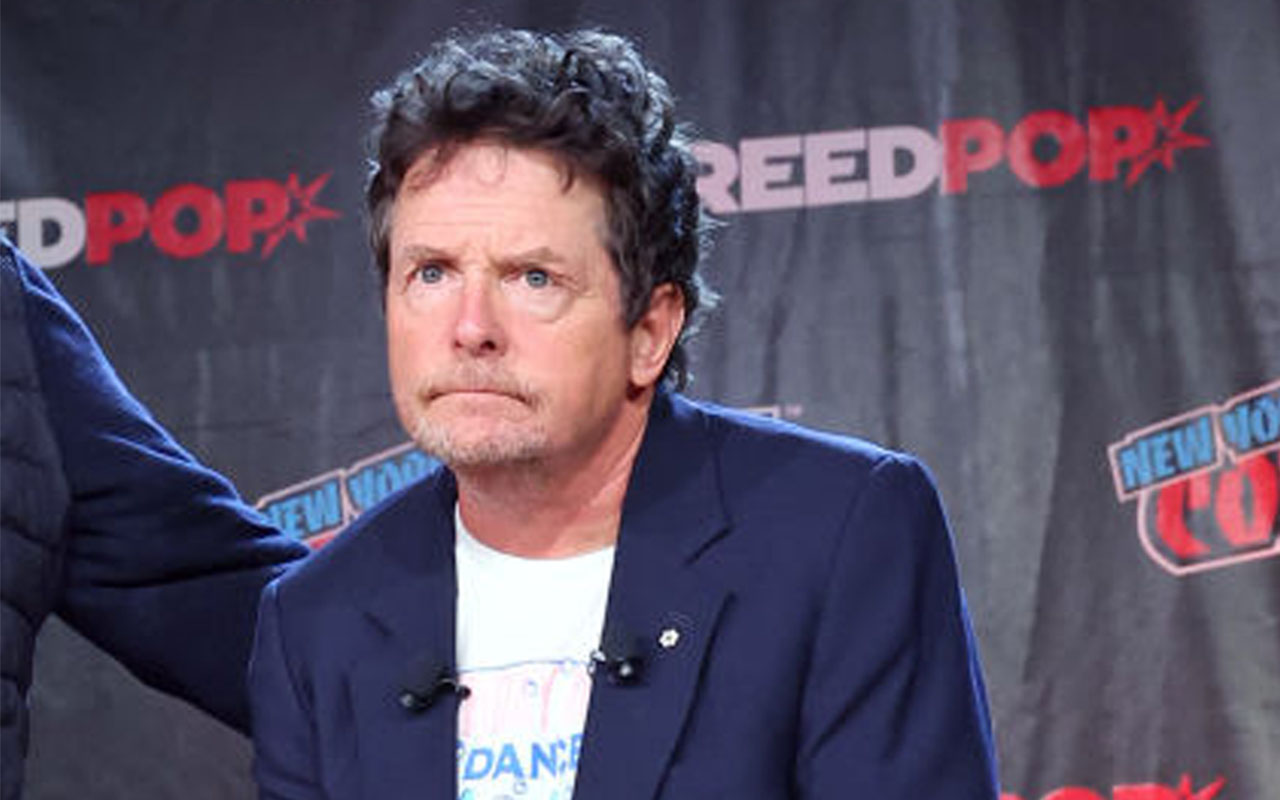
Acting Again Has Given Him New Energy
Fox has described his return to acting as more than a professional opportunity.
He believes it has added meaning and excitement to his life at a time when he did not necessarily expect to return to a major production.
In a recent interview, Fox said the decision to perform again has “really prolonged my life and made my life interesting in a way that I didn’t think it would be to this point.”
The statement reveals how deeply creative work remains connected to his sense of purpose.
Acting gives him another reason to engage, prepare, collaborate, and challenge himself.
Although his physical condition influences which roles are possible, Fox does not consider himself permanently retired.
“I’m not retired from acting,” he explained, “but if I didn’t act again, it would be for a very good reason. I let Parkinson’s make decisions for me.”
The comment shows that he is not forcing himself to meet expectations created by his earlier career.
He evaluates each opportunity based on what his health allows.
Parkinson’s may determine whether he accepts a particular role, but it does not erase his identity as an actor.
Five Years Focused on Advocacy and Research
During the years when he stepped away from acting, Fox devoted much of his attention to the Michael J. Fox Foundation for Parkinson’s Research.
He founded the organization in 2000.
The foundation became central to his public mission as he shifted from full-time entertainment work toward advocacy and research support.
Fox used his fame to draw attention to Parkinson’s disease and the urgent need for improved treatments.
His openness helped many people better understand the condition and gave visibility to patients and families facing similar struggles.
The work also allowed Fox to turn a deeply personal diagnosis into a larger effort intended to benefit others.
Rather than retreating completely from public life, he redirected his energy toward a cause that had transformed his own future.
The Challenges Parkinson’s Created for Acting
Fox has been candid about why stepping away from regular acting became necessary.
In his 2020 memoir No Time Like the Future: An Optimist Considers Mortality, he described how changes in speech created serious difficulties.
An actor must be able to memorize dialogue, deliver it reliably, and respond to scene partners with precise timing.
As Fox’s symptoms progressed, remembering lines consistently became more difficult.
The challenge was especially painful because his career had been built on rapid dialogue, physical performance, and exact comedic rhythm.
He could no longer assume that the abilities he once relied upon would be available in the same way each day.
This uncertainty made full-time acting increasingly demanding.
Fox did not leave because he had lost his passion for the work.
He stepped back because his body and memory had begun setting limits he could not safely ignore.
A Return Built Around His Present Reality
Fox’s role in Shrinking does not require him to pretend Parkinson’s is absent.
The condition is part of the scene and the humor.
This allows him to perform within his current reality rather than attempting to recreate the physical style of his younger years.
The waiting-room exchange with Harrison Ford demonstrates how naturally Fox can still command attention.
A brief joke becomes powerful because it carries the weight of his personal history.
Audiences know that the humor is not coming from someone observing Parkinson’s from a distance.
It comes from a man who has lived with the condition for more than 35 years and refuses to surrender his ability to laugh.
His Comedy Remains an Essential Strength
Fox became internationally loved in part because of his exceptional comic instincts.
He could communicate panic, confidence, confusion, and warmth with a change of expression or a perfectly timed pause.
Parkinson’s changed many aspects of his physical performance, but it did not remove his understanding of comedy.
The new role allows him to use that skill in a way shaped by experience.
His humor is no longer only about entertainment.
It has become a method of confronting fear, discomfort, and public misunderstanding.
By joking about a medical situation, Fox does not minimize the seriousness of Parkinson’s.
He demonstrates that people living with illness can still be funny, complicated, creative, and fully engaged with the world around them.
Why His Return Means So Much to Fans
For longtime fans, seeing Fox act again carries significant emotional meaning.
Many viewers first encountered him through roles filled with youthful energy and optimism.
They later watched him reveal his diagnosis, leave major television work, and dedicate himself to Parkinson’s advocacy.
His return therefore connects several stages of his public life.
It honors the performer audiences remember while acknowledging the person he has become.
The appearance does not erase the difficulties he faces.
It shows that meaningful work can continue even when it must take a different form.
Fans are not celebrating because Fox has defeated Parkinson’s.
They are celebrating because he continues creating, adapting, and showing that illness does not automatically end a person’s contribution.
A Career Defined by More Than One Challenge
Michael J. Fox’s legacy was already secure long before this return.
His performances made him one of the most recognizable and admired actors of his generation.
His public honesty about Parkinson’s later transformed him into an influential advocate and source of encouragement.
The role in Shrinking brings those identities together.
He appears not only as a skilled actor, but also as a person whose lived experience gives the performance unusual depth.
Fox has spent decades adjusting to a condition that repeatedly creates new obstacles.
He has used wheelchairs, changed his professional routines, confronted difficulties with speech and memory, and accepted that some decisions must be made around his symptoms.
Yet he continues looking for reasons to remain curious and connected.
A Powerful Reminder of Resilience
Fox’s acting return is ultimately not a story about pretending nothing has changed.
Everything has changed.
His body works differently, his career follows a different rhythm, and each new project must account for realities that did not exist when he was first diagnosed.
What remains is his ability to make audiences feel something.
A short scene, a direct exchange, and one carefully delivered joke are enough to remind viewers why he became so beloved.
His presence also offers a broader message about living with a progressive condition.
Resilience does not always mean overcoming an illness or returning to the exact life a person once had.
Sometimes it means adapting honestly, accepting help, finding humor, and continuing to participate whenever possible.
Michael J. Fox has never hidden the fact that Parkinson’s disease has taken important things from him.
He has also refused to let those losses erase everything that remains.
By stepping back into acting, he has given fans another memorable performance and himself another meaningful chapter.
His return stands as a reminder that talent can evolve, purpose can survive enormous change, and a difficult life can still be a deeply valuable one.