
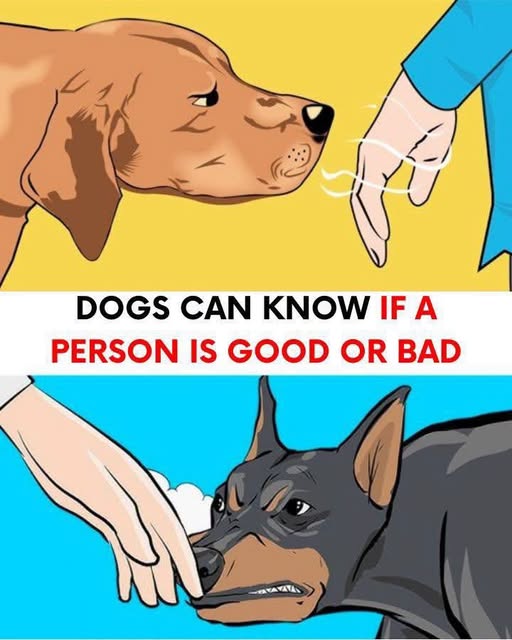
Dogs May Understand Human Trust, Emotions, and Intentions Better Than We Realize
Dogs Are Constantly Watching the People Around Them
Dogs may appear to spend their days resting, playing, eating, and waiting for attention, but they are also quietly observing the people around them. They notice patterns in human behavior that often escape our own attention.
A dog watches who behaves consistently, who offers comfort, who creates tension, and who treats its trusted person with respect. These observations can influence whether the animal approaches someone warmly or chooses to keep its distance.
This ability is not based on human language. Dogs cannot understand every sentence spoken around them, but they can gather information from facial expressions, body posture, tone of voice, movement, and repeated actions.
Over time, those details help dogs form expectations about the people in their environment. Someone who behaves calmly and predictably may be accepted, while a person whose actions seem threatening or unreliable may be treated with caution.
What looks like a simple reaction may therefore be the result of careful observation. A dog’s response to a person can reflect much more than whether that individual has offered food or affection.
Trust Can Be Built or Lost Through Experience
Trust is central to the relationship between humans and dogs. Animals learn which people provide safety, food, guidance, and emotional stability, and they remember how those individuals behave over time.
When a person repeatedly gives a reliable signal, a dog learns that following it produces an expected result. The animal becomes more willing to respond because experience has shown that the person can be trusted.
If that signal repeatedly leads to disappointment or confusion, the dog may begin to hesitate. It can adjust its behavior after discovering that a person’s guidance is not dependable.
This change does not mean the dog is holding a grudge in the same way a person might. It means the animal has learned from experience and is using that information to make future decisions.
A dog that has been misled may become slower to follow the same person’s gestures or instructions. Its trust can weaken because the connection between the human signal and the expected outcome has been damaged.
That ability to revise expectations shows that dogs are not simply responding automatically. They are paying attention to whether human behavior remains consistent.
Dogs Remember More Than Commands and Routines
Many people think of canine memory mainly in terms of familiar commands, feeding schedules, walking routes, and household rules. However, dogs also appear to remember emotional experiences connected to particular people and situations.
A person who repeatedly behaves gently may become associated with safety. Someone who creates fear or tension may be remembered differently, even if that person later attempts to appear friendly.
Dogs may not recall events as detailed verbal stories, but they can retain associations. A voice, movement, location, or facial expression can remind them of how a previous interaction felt.
These memories help guide future behavior. The dog may approach, avoid, freeze, become alert, or seek protection depending on what it has learned.
This is one reason first impressions can matter, but repeated behavior matters even more. A single calm interaction may not erase a long pattern of unpredictability.
Likewise, trust that has been built through patience and consistency can become remarkably strong. Dogs often respond most confidently to people whose actions remain stable over time.
They Notice How Other People Treat Their Favorite Human
Dogs do not only evaluate how people behave toward them. They also observe how others interact with the humans to whom they are closely attached.
A dog may watch a conversation, disagreement, greeting, or tense exchange without appearing to participate. Yet the animal can still notice changes in posture, voice, movement, and emotion.
If another person treats the dog’s trusted human warmly, the animal may become more relaxed and receptive. If someone behaves harshly or creates visible distress, the dog may respond with caution or avoidance.
This response can look like a quiet judgment. The dog is not listening to every argument or deciding who is morally correct, but it can recognize whether an interaction appears supportive, threatening, or emotionally uncomfortable.
The animal’s loyalty may influence how it reacts afterward. It may remain close to its person, watch the other individual carefully, or refuse friendly contact from someone connected to a negative experience.
These choices are rooted in observation rather than words. The dog responds to what it has seen and felt during the interaction.
Body Language Often Speaks Louder Than Words
Humans rely heavily on speech, but dogs gather much of their information through nonverbal communication. They pay close attention to details people may not realize they are revealing.
A tense jaw, stiff posture, rapid movement, lowered head, direct stare, or shaking hand can all communicate emotion. Dogs can notice these changes even when a person’s words sound calm.
This may explain why it can be difficult to hide fear or discomfort from a familiar dog. The person may insist that everything is fine, while the animal responds to a body that tells a different story.
Dogs also recognize changes in routine and energy. A normally active person who becomes unusually quiet may attract the dog’s attention before anyone says that something is wrong.
The animal may move closer, rest its head nearby, remain unusually still, or follow the person from room to room. These behaviors can feel like a direct response to emotional pain.
Dogs do not need a detailed explanation to recognize that their human is behaving differently. Observation gives them enough information to respond.
Facial Expressions Provide Important Information
The human face changes constantly, often revealing emotion before words are spoken. Dogs that live closely with people become familiar with these expressions and may learn what they usually mean.
A relaxed face can signal safety, while narrowed eyes or a tightened expression may indicate anger or stress. Tears, trembling lips, and lowered eye contact can suggest sadness or fear.
Dogs may respond differently depending on what they see. Some approach gently when a familiar person appears upset, while others become quiet and stay close without demanding attention.
Their reactions are not always dramatic. Comfort can take the form of simple presence, such as sitting beside someone or refusing to leave the room.
Because dogs observe the same people repeatedly, they become familiar with their normal expressions. This makes unusual emotional changes easier for them to detect.
The more closely bonded the relationship becomes, the more meaningful those subtle signals may be to the animal.
Tone of Voice Can Reveal Hidden Emotion
Words are only one part of human speech. Tone, speed, volume, and rhythm can communicate feelings even when the actual sentence appears neutral.
Dogs are highly responsive to these vocal changes. A soft, steady tone often produces a different reaction from a sharp, loud, or uncertain voice.
A person may use friendly words while speaking with tension or irritation. The dog may react to the emotional quality of the voice rather than the positive meaning of the words.
This can make dogs seem unusually skilled at detecting insincerity. They are not necessarily understanding deception in a complex human sense, but they can recognize when signals do not match.
If the voice sounds welcoming while the body remains rigid and threatening, the dog receives conflicting information. It may hesitate rather than trusting the spoken invitation.
Consistency between words, tone, and action helps dogs feel secure. Mixed signals can create uncertainty and make an animal more cautious.
Dogs Learn Which People Are Predictable
Predictability is important to a dog’s sense of safety. Animals tend to feel more comfortable when they understand what will happen after a particular signal or behavior.
A person who uses clear commands and follows them with consistent actions becomes easier for the dog to understand. The relationship becomes stable because the animal knows what to expect.
Unpredictable behavior can have the opposite effect. Someone who shifts suddenly between affection, anger, attention, and rejection may be difficult for the dog to interpret.
The animal may begin watching that person more carefully. It might avoid close contact, react nervously to sudden movements, or wait for additional clues before approaching.
This does not mean dogs demand perfection. People can make mistakes without destroying a relationship.
However, repeated inconsistency teaches the animal that caution may be necessary. Trust grows most strongly when behavior remains fair, calm, and dependable.
Some Dogs Respond to Emotional Distress With Comfort
One of the most meaningful parts of living with a dog is the way the animal may respond during moments of sadness, fear, or emotional exhaustion. Many owners describe dogs approaching them precisely when comfort is needed most.
The dog may sit close, press against the person’s body, place its head on a lap, or remain nearby in silence. It may reduce playful behavior and adopt a calmer presence.
These actions can feel deeply personal because they arrive without explanation or request. The animal appears to recognize distress and respond through companionship.
A dog does not need to understand the cause of the sadness. It may not know whether the person is grieving, worried, disappointed, or overwhelmed.
What it can recognize is that the person’s behavior, expression, breathing, or voice has changed. That change becomes the signal that something is wrong.
By remaining close, the dog offers the kind of support available to it. The comfort comes not from advice, but from steady presence.
Protective Behavior Can Grow From Attachment
Dogs may also become alert when they believe their trusted person is facing danger. Their protective responses can range from standing nearby to placing themselves between the person and a perceived threat.
This behavior is influenced by the dog’s temperament, training, history, and relationship with the person. Not every dog reacts in the same way.
Some may bark or move forward, while others become still and watchful. A cautious dog may simply refuse to approach someone it does not trust.
The response often depends on the signals the animal receives. A stranger’s posture, movement, voice, or treatment of the owner may shape how the dog reacts.
Protective behavior should not automatically be interpreted as proof that another person is dangerous. Dogs can misunderstand situations just as humans can.
Even so, their reactions show how closely they monitor the emotional and physical environment surrounding the people they love.
A Dog’s Rejection May Be Based on Past Experience
When a dog avoids a person, many owners wonder whether the animal has detected something hidden. The explanation may be less mysterious but still meaningful.
The person may resemble someone connected to a previous frightening experience. Their voice, clothing, movement, scent, or manner of approaching may trigger caution.
The dog may also have watched that individual behave harshly toward someone else. Even without being targeted directly, the animal can form a negative association.
In other cases, the person may simply move too quickly, stare too directly, or enter the dog’s space without allowing time for a comfortable introduction.
The dog’s reaction should therefore be observed carefully rather than treated as unquestionable evidence about a person’s character.
What can be said is that the animal is responding to information it considers important. Its discomfort has a cause, even when that cause is not immediately obvious.
The Human-Dog Bond Is Built Through Daily Behavior
The relationship between people and dogs develops through thousands of ordinary moments. Feeding, walking, playing, resting, speaking, and responding to mistakes all contribute to the bond.
Dogs learn who provides safety and who respects their boundaries. They notice whether affection is offered patiently or demanded without warning.
They also learn whether a person remains calm during confusion. Gentle correction can strengthen trust, while frightening reactions can make the animal uncertain.
Over time, these experiences create a deep pattern of familiarity. The dog comes to understand the person’s routines, moods, gestures, and expectations.
The human also learns to recognize the dog’s signals. A change in posture, appetite, movement, or attention can communicate needs that cannot be spoken.
The strongest bonds are therefore built through mutual observation. Each side learns how to understand the other without relying entirely on words.
Dogs May See What Humans Try to Hide
People often attempt to conceal sadness, anxiety, anger, or fear from those around them. Familiar dogs may still notice that something has changed.
The animal may detect tension in the body, a shift in routine, an unusual silence, or a different tone of voice. These details can reveal emotion even when the person tries to behave normally.
This sensitivity can create the feeling that a dog sees through its owner. It responds not to the explanation being offered, but to the physical and emotional signals that are harder to control.
That experience can be comforting and unsettling at the same time. It suggests that the animal is paying attention even when everyone else accepts the surface appearance.
The dog does not need to expose the hidden feeling or demand an explanation. It may simply remain nearby.
That quiet companionship can feel like recognition without judgment.
Trusting a Dog Does Not Mean Ignoring Human Judgment
A dog’s response to someone can provide useful information, but it should not become the only basis for judging another person. Animals can react strongly to unfamiliar scents, movements, clothing, voices, or previous associations.
A cautious reaction may reveal that the dog is uncomfortable, but it does not always prove that the person has harmful intentions.
Owners can respect the animal’s boundaries while still evaluating the situation carefully. Forcing contact is rarely necessary when a dog is showing clear hesitation.
Allowing distance, reducing pressure, and observing future interactions can help clarify whether the discomfort fades or remains.
The dog’s behavior should be treated as information rather than a final verdict. It is one part of a larger picture.
Even so, repeated changes in a normally calm dog may deserve attention, especially when they occur around the same person or situation.
A Form of Loyalty Expressed Without Words
Dogs cannot explain what they have noticed, but their choices often reveal where they feel safe. They approach some people, avoid others, and remain close to those they trust.
Their loyalty is expressed through actions rather than promises. It can appear in the decision to wait by a door, follow someone through the house, or sit beside a person during a difficult night.
It can also appear in watchfulness. A dog may quietly monitor a tense room or position itself near the person it considers family.
These behaviors help explain why the bond between humans and dogs feels deeper than simple affection. The animal is not only receiving care; it is participating in the relationship through attention and response.
Dogs learn our routines, recognize our emotional changes, and adjust their behavior based on what they experience. They may understand far more about our daily lives than we realize.
To be watched by a trusted dog can feel like being seen without needing to explain anything.
What Dogs Teach Us About Honesty and Consistency
Dogs respond best to people whose signals match their actions. They learn to trust calm voices supported by gentle behavior and clear guidance followed by predictable results.
When words, tone, and behavior conflict, the animal may become uncertain. It notices the difference even when the person assumes the message was convincing.
This offers a simple lesson about the relationship humans build with animals. Trust cannot be created through commands alone.
It grows through repeated honesty, patience, fairness, and consistency. Every interaction becomes part of what the dog learns about the person.
Dogs may forgive mistakes, but they also adapt to patterns. Their behavior changes when experience teaches them to be confident or cautious.
The more dependable a person becomes, the more secure the dog is likely to feel.
They May Know More Than We Think
Dogs are not mind readers, and their reactions should not be treated as supernatural proof of hidden motives. However, their ability to observe human behavior is often far more advanced than people expect.
They notice small changes in faces, voices, posture, movement, and routine. They remember which signals were reliable and which experiences created fear or comfort.
They watch how others treat the people they love. Their willingness to approach, avoid, comfort, or protect can reflect the information they have gathered over time.
This makes the human-dog relationship more than a simple exchange of food and affection. It becomes a bond built through constant observation, emotional awareness, and shared experience.
A dog may not understand every secret, conflict, or intention in human terms. Yet it can often recognize when behavior feels safe, consistent, caring, or threatening.
That quiet understanding is one reason dogs hold such a powerful place in human life. They listen beyond words, respond to what actions reveal, and offer loyalty that can make a person feel truly known.