
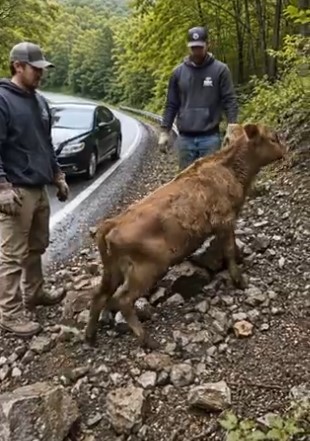
Farmer Hears Faint Cries and Finds a Young Calf Trapped Beneath Heavy Rocks
A Quiet Afternoon Turns Into an Urgent Rescue
Dust covered the young calf’s pale coat as it struggled beneath a pile of heavy stones in the countryside. One side of its body was pressed against the ground, leaving the frightened animal unable to stand or pull itself free.
The calf called out again and again, sending weak cries across the nearby pasture. With no one immediately in sight, it could do little more than wait and hope that someone would hear.
Each attempt to escape drained more of its strength. The stones were too large to move, and the calf’s efforts only caused its legs to scrape against the dry ground.
Eventually, the animal stopped struggling. It remained alert but exhausted, conserving what little energy it had left beneath the weight of the rocks.
The Calf Waits Alone Near the Hillside
Time passed slowly in the quiet field. The afternoon sun grew warmer, and the air above the pasture became still.
Birds continued chirping in the trees as if nothing unusual had happened. From beneath the rocks, the calf watched every movement around it and occasionally called out again.
The young animal appeared to have been caught after several stones shifted down the nearby slope. The loose rocks had formed an uneven pile, trapping part of its body before it could move away.
There was no clear path for the calf to escape. The more it moved, the more unstable the surrounding stones could become.
Its only chance was for someone to hear the cries and stop long enough to investigate.
A Farmer Notices an Unusual Sound
A farmer was driving a tractor through a nearby field when he heard something faint near the rocky edge of the property.
At first, the sound blended into the ordinary noises of the countryside. As he continued forward, however, he realized it was not coming from a bird or a piece of equipment.
He slowed the tractor and listened again.
The cry came from the direction of the hillside.
The farmer turned off the engine, climbed down, and began following the sound on foot. The field became quiet once the tractor stopped, making the calf’s calls easier to locate.
Within moments, he reached the base of the slope and saw the trapped animal.
The Farmer Assesses the Dangerous Situation
Several large rocks had moved down the hill and settled around the calf. One heavy stone pinned part of the animal’s body, while smaller rocks blocked the surrounding space.
The calf looked frightened but remained conscious and responsive. It turned its head toward the farmer as he approached.
Rather than immediately grabbing the nearest stone, the farmer paused to study the area.
He understood that moving one rock carelessly could cause another to slide. A sudden shift might injure the calf further or place the rescuer in danger.
The hillside itself also needed to be examined. Loose soil and unstable stones could make the entire area hazardous.
The farmer walked carefully around the pile, checking which rocks were resting securely and which ones appeared likely to move.
Why Careful Observation Matters During Animal Rescues
Helping a trapped animal often begins with patience rather than speed. A frightened animal may move suddenly, and heavy objects can shift in unpredictable ways.
The farmer knew that the calf’s safety depended on removing the rocks in the correct order. Trying to lift the largest stone first could destabilize the entire pile.
He also considered his own safety. Even a strong person can be seriously injured by a large rock that rolls or slips unexpectedly.
After studying the position of the stones, he decided that the rescue required another set of hands and stronger equipment.
He contacted a nearby neighbor and asked for assistance.
A Neighbor Arrives With Tools
The neighbor reached the field within minutes, bringing sturdy work gloves and a strong lifting bar.
The two men inspected the trapped calf together and discussed the safest way to proceed.
They agreed to begin with the smaller rocks surrounding the animal. Removing these pieces would create more room and reduce pressure without disturbing the largest stone too soon.
They also watched the hillside above them for any sign of movement.
The calf remained still as the men positioned themselves carefully around the pile.
The Rescue Begins One Rock at a Time
The farmers started by lifting and rolling away the smallest stones. Each piece was moved slowly and placed far enough from the slope that it could not roll back toward the animal.
They avoided sudden movements and regularly checked the calf’s position.
As the space around its body widened, the calf appeared to relax. It stopped attempting to pull away and remained calm while the men worked.
The rescuers continued clearing the stones one at a time. Some could be lifted by hand, while others required the metal bar for leverage.
The process was slow, but rushing could have made the situation more dangerous.
Gradually, the smaller rocks disappeared from around the calf.
One Heavy Stone Remains
After the surrounding debris had been removed, one large rock still trapped the animal.
The stone was too heavy for either farmer to move alone. Its uneven position also meant that lifting it incorrectly could cause it to fall back toward the calf.
The two men placed the lifting bar beneath one side of the rock. One stabilized the tool while the other prepared to guide the stone away.
They communicated clearly before applying pressure.
Working together, they raised the heavy rock just enough to reduce the weight on the calf.
Once there was sufficient space, they carefully shifted the stone away from the animal and secured it on stable ground.
The calf was finally free.
The Young Animal Tries to Stand
The farmer stepped back and gently encouraged the calf to move.
At first, the animal remained on the ground. After being trapped and exhausted for so long, it appeared uncertain about using its legs.
The men gave it time rather than trying to pull it upright.
Slowly, the calf stretched one leg and then another. It shifted its weight, lifted its head, and began pushing itself from the ground.
After a few careful movements, the young animal stood.
It remained unsteady for several seconds, but it was able to support its own weight.
The Farmer Watches for Signs of Injury
The calf took several cautious steps across the grass while the rescuers watched closely.
Its movements were slow at first, and it stopped briefly to regain its balance.
The men looked for obvious signs of serious injury, including an inability to place weight on a leg or unusual movement on the side that had been trapped.
The calf appeared tired and covered in dirt, but it continued walking.
There were no immediate signs that it had suffered a severe injury.
The farmers remained nearby in case the animal collapsed or needed additional help.
Fresh Water Helps the Calf Recover
Fresh water was brought to the edge of the field.
The calf drank quietly and remained near the rescuers as it rested. After the long period beneath the rocks, the water helped it recover from exhaustion and the warm afternoon conditions.
Several minutes later, the calf began moving more normally.
Its balance improved, and its steps became steadier.
Once the men were confident that it could walk safely, the young animal was allowed to return toward the pasture.
It soon rejoined the nearby herd.
The Hillside Is Examined for Future Danger
After the calf was safe, the farmer returned to the rocky slope.
He wanted to understand what had caused the stones to move and whether the same area could trap another animal.
Loose rocks can shift after periods of heavy rain, erosion, or changes in the soil. Even a slope that appears stable can become dangerous over time.
The farmer marked the unstable section so animals and people could avoid it.
He also arranged for the larger stones to be secured and for the hillside to be examined more closely.
Preventing another accident became an important part of completing the rescue.
Why Heavy Rocks Should Not Be Moved Alone
Finding an animal trapped under rocks can create an immediate urge to act. However, large stones should not be moved without first checking whether the area is stable.
A heavy rock may shift suddenly, roll downhill, or cause the rest of the pile to collapse.
Trying to lift it alone can also result in back, hand, or leg injuries. The rescuer may become trapped or unable to continue helping the animal.
Whenever possible, additional assistance should be requested. Strong tools can provide leverage, while another person can stabilize the object and watch for movement.
If the animal appears badly injured or the rocks cannot be safely controlled, trained rescue professionals may be needed.
Human safety remains essential because an injured rescuer cannot continue helping the trapped animal.
Remaining Calm Can Protect the Animal
Trapped animals are often frightened and unpredictable. They may kick, bite, or struggle when someone approaches, even when that person is trying to help.
The calf in this case remained unusually calm once the rescue began. The slow movements of the farmers likely helped prevent additional panic.
Loud shouting or rushed handling could have caused the animal to thrash beneath the rocks.
Instead, the men created space carefully and allowed the calf to remain still.
Patience reduced the chance of injury and made it easier to complete the rescue safely.
When Professional Help May Be Necessary
Not every trapped animal can be freed with basic tools and assistance from a neighbor.
If the rocks are extremely large, the slope is unstable, or the animal appears seriously hurt, emergency services or animal rescue specialists may be required.
Wild animals may also react differently from livestock. A trapped deer or another frightened animal can become dangerous when approached too closely.
In those situations, keeping a safe distance and contacting trained professionals may provide the best outcome.
Photographs and a clear description of the location can help responders understand what equipment they may need.
The goal should always be to free the animal without creating a second emergency.
A Small Decision Makes a Major Difference
The rescue began because the farmer noticed a faint sound and chose not to ignore it.
He could easily have continued driving the tractor and assumed the noise came from somewhere else.
Instead, he stopped the machine, listened carefully, and followed the cries toward the hillside.
That simple decision allowed the calf to receive help before exhaustion, heat, or the weight of the rocks caused a more serious outcome.
The neighbor’s willingness to arrive quickly also played an important role. Together, the two men had the strength, tools, and awareness needed to move the rocks safely.
Young Calf Found Beneath Rocks Needs Help pic.twitter.com/BChucJf8f3
— Animal Rescue Stories (@AnimalStory5) August 2, 2026
Compassion and Teamwork Restore the Quiet
Once the calf returned to the herd, the countryside gradually became peaceful again.
The tractor could be heard in the distance, birds returned to the surrounding trees, and the frightening cries near the hillside disappeared.
The rocks had been cleared from the animal.
The unstable area had been marked.
The calf was once again grazing beside the herd, dusty but safe.
What began as an ordinary afternoon became a reminder of the difference careful attention can make.
The rescue did not require panic or reckless strength. It required observation, patience, teamwork, and a willingness to stop when something did not sound right.
As the sun lowered over the fields, the farmer looked toward the pasture one last time.
The young calf stood peacefully among the other animals.
Sometimes changing a life begins with something simple: hearing a cry for help and choosing not to walk away.