
Why Some Eggs Have Red Spots Inside: What They Mean and Whether They Are Safe
A Surprising Discovery When Cracking an Egg
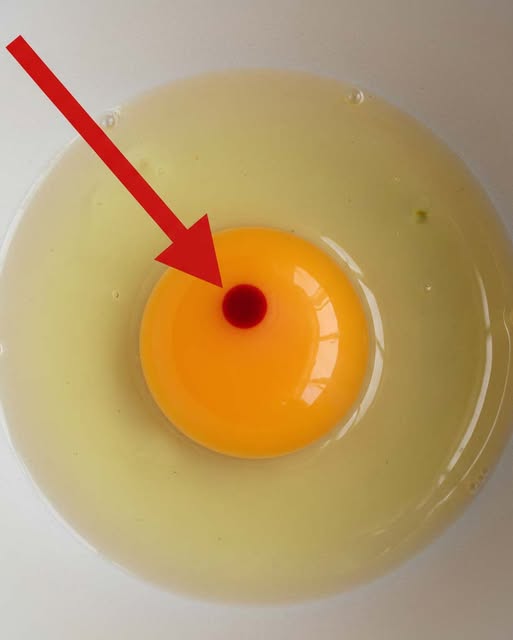
Many people have experienced the moment of cracking open a fresh egg only to notice a tiny red or reddish-brown speck floating in the egg white or resting on the yolk. The sight can immediately raise concerns. Some wonder if the egg contains blood, if it has gone bad, or if it could cause illness.
Although the appearance may seem alarming at first, the explanation is usually simple and harmless. In most cases, the small red spot is a natural occurrence that happens during the formation of the egg inside the hen.
Understanding why these spots appear can help remove unnecessary worry and make it easier to decide whether the egg can still be used in cooking.
What Blood Spots Actually Are
A blood spot forms when a small blood vessel inside the hen’s ovary or reproductive tract breaks during the process of ovulation. As the yolk is released and begins forming into an egg, a tiny drop of blood may enter the developing egg.
This small amount of blood eventually becomes visible as a red or rust-colored speck on the yolk or within the egg white.
In other cases, what appears to be a blood spot may actually be a “meat spot.” Meat spots are tiny pieces of tissue from the hen’s reproductive tract. These spots tend to appear brown, gray, or tan rather than bright red.
Both blood spots and meat spots occur naturally and are not signs of disease or contamination.
Not an Embryo or Fertilized Egg
One of the most common misunderstandings about these spots is the belief that they indicate a fertilized egg or a developing embryo. In reality, this is not the case.
Most eggs sold in grocery stores come from hens that have never been in contact with a rooster. Without fertilization, an embryo cannot form.
A blood spot is simply the result of a tiny blood vessel breaking during egg formation. It is not related to fertilization and does not mean a chick was beginning to develop.
Why Blood Spots Sometimes Reach Consumers
Commercial egg producers use a process known as candling to inspect eggs before they are packaged. During candling, eggs pass over bright lights that allow workers or machines to detect internal defects.
If a noticeable blood spot is detected, the egg is usually removed before it reaches the store. However, extremely small spots can sometimes go unnoticed during this inspection process.
As a result, it is still possible for an occasional egg with a tiny spot to appear in a carton purchased from a grocery store.
Factors That Increase the Chances of Blood Spots
Several factors can increase the likelihood of blood or meat spots appearing inside eggs. One of the most common influences is the age of the hen. Older hens tend to produce eggs with these spots more frequently than younger hens.
Nutrition can also play a role. For example, a deficiency in certain nutrients, such as vitamin A, may increase the chances of a blood vessel breaking during egg formation.
Genetics can also affect how often a hen produces eggs with visible spots. Some breeds are more prone to this occurrence than others.
Environmental stress may contribute as well. Changes in temperature, lighting, or living conditions can occasionally influence egg production and increase the likelihood of small internal spots.
Why Brown Eggs Show Spots More Often
Blood spots are often reported more frequently in brown eggs than in white eggs. This does not necessarily mean they occur more often in brown eggs.
The difference mainly comes from visibility during inspection. Brown shells are darker, which makes it harder to detect tiny internal spots during the candling process.
White eggs, on the other hand, allow more light to pass through the shell, making internal irregularities easier to spot before packaging.
Are Eggs With Blood Spots Safe to Eat?
In most cases, eggs that contain a small blood spot are completely safe to eat as long as the egg itself is fresh and properly stored.
The presence of a blood spot does not indicate bacterial contamination, nor does it change the nutritional value of the egg.
From a food safety perspective, the egg remains safe to cook and consume. Many people simply remove the spot with the tip of a spoon or knife before cooking if they find the appearance unappetizing.
Once removed, the rest of the egg can be used normally in recipes such as scrambled eggs, baked goods, or omelets.
Signs That an Egg Should Be Discarded
Although a blood spot itself is not dangerous, other signs can indicate that an egg has spoiled or become contaminated.
An egg should be thrown away if it produces a strong unpleasant smell when cracked open. A sulfur-like odor is one of the most recognizable signs of spoilage.
Eggs should also be discarded if the egg white or yolk appears greenish, gray, or unusually fluorescent. These color changes can indicate deterioration or bacterial activity.
A slimy texture or leaking shell can also suggest that the egg has gone bad. In these cases, the problem is not the blood spot itself but the overall condition of the egg.
When a Spot Might Be Cause for Concern
Most blood spots are extremely small and appear as a single dot on the yolk or within the white. However, there are situations when the egg should not be used.
If the spot is unusually large or appears mixed throughout the egg rather than forming a small speck, it may be best to discard it.
Other warning signs include a watery or sticky texture that seems abnormal compared to a typical egg. Eggs that were cracked before refrigeration or left unrefrigerated for extended periods should also be thrown away.
These issues relate to spoilage or contamination rather than the blood spot itself.
Nutritional Impact of Blood Spots
From a nutritional standpoint, the small red speck inside the egg does not significantly affect the egg’s composition.
The spot may contain trace amounts of hemoglobin and iron, along with tiny amounts of cells from the hen’s reproductive system. However, the quantities are extremely small.
Eggs already contain similar proteins and nutrients throughout the yolk and white. As a result, the presence of the spot does not meaningfully change the egg’s nutritional profile.
For most people, the decision to remove the spot is based purely on appearance rather than health concerns.
A Natural Part of Egg Production
Eggs are natural products produced by living animals, and occasional variations are normal. Blood spots are simply one of the minor irregularities that can appear during the biological process of egg formation.
Even in modern farming systems with strict quality control, it is still possible for small spots to occur. The inspection processes used in commercial egg production remove most of them, but not every tiny speck can be detected.
This is why consumers may occasionally encounter one while preparing food at home.
Understanding the Reality Behind the Red Speck
The appearance of a red or brown speck inside an egg can be surprising, but it rarely indicates a problem. In most situations, it is simply the result of a tiny blood vessel breaking during egg formation.
These spots are not embryos, do not indicate fertilization, and are not signs of illness or contamination.
As long as the egg is fresh and shows no signs of spoilage, it can still be safely used in cooking.
Conclusion
Finding a small red spot inside an egg may initially cause concern, but the explanation is usually straightforward. Blood spots and meat spots are natural occurrences that happen during the biological process of egg formation in hens.
They do not indicate disease, fertilization, or contamination. In most cases, the egg remains perfectly safe to eat once the spot is removed.
These tiny imperfections simply highlight the natural origins of eggs and remind us that they are produced through a biological process rather than manufactured in a controlled environment.
With proper storage and normal food safety practices, eggs with small spots can still be enjoyed as part of everyday cooking and meals.