
What the Circular Indentation on a Plastic Milk Jug Is Really Designed to Do
That Round Dent Is Not a Manufacturing Mistake
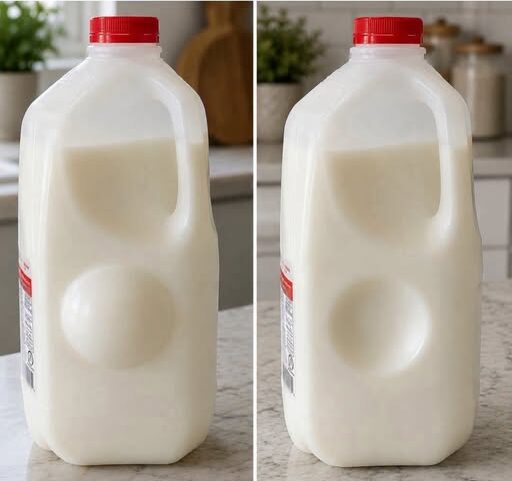
If you have ever looked closely at a plastic gallon milk jug, you may have noticed a large circular indentation molded into one side.
At first glance, it can look like an accidental dent, a decorative feature, or simply a strange result of the manufacturing process.
In reality, that circular shape is an intentional part of the container’s design.
It helps the thin plastic jug deal with changes in pressure, temperature, handling, and transportation while allowing manufacturers to keep the container lightweight.
Plastic Milk Jugs Need to Be Both Light and Strong
Milk containers are designed to hold a relatively heavy liquid while using as little packaging material as practical.
A full gallon jug places considerable weight and pressure on its plastic walls.
If the container were simply made thicker everywhere, it could become more expensive to manufacture and heavier to transport.
Instead, the shape of the container itself can help provide strength.
The molded circular indentation is one feature that allows the jug to remain relatively thin while still handling everyday stresses.
The Circle Gives the Plastic Room to Flex
Plastic is not completely rigid.
It can expand, contract, bend, and flex slightly when exposed to changes in temperature or internal pressure.
The circular indentation provides an area where part of the jug can move without forcing the entire container to distort.
That flexibility can be useful as milk travels through different environments between production, transportation, refrigeration, and a consumer’s home.
Instead of having completely flat walls that resist every change, the molded area gives the container a controlled place to flex.
Temperature Changes Can Affect the Container
Milk is normally kept cold, but the temperature surrounding the jug can still change during its journey.
A container may move between refrigerated storage areas, delivery vehicles, grocery-store coolers, shopping carts, and household refrigerators.
Temperature changes can influence both the liquid and the air inside the jug.
The plastic itself can also respond slightly to warmer or colder conditions.
The circular indentation helps the jug accommodate some of those small changes without requiring a heavier container.
The Design Can Also Respond to Pressure Changes
The air space inside a milk jug does not always remain under exactly the same conditions.
As temperatures change, the pressure inside the container can also change.
A flexible section in the wall gives the packaging somewhere to move when those forces act on it.
Rather than behaving like a completely rigid container, the jug can adjust slightly.
The circle therefore functions as part of the jug’s overall pressure-management design.
Why a Flat Wall Would Behave Differently
A large, completely flat piece of thin plastic can bend unpredictably when pressure is applied.
Adding molded shapes changes how forces travel through the material.
The circular indentation introduces structure into what would otherwise be a broad flat surface.
That can help the jug maintain its shape while still preserving enough flexibility to respond to stress.
It is a simple example of how geometry can make packaging stronger without simply adding more material.
The Circle Can Help With Everyday Bumps
Milk jugs are handled repeatedly before they reach a kitchen refrigerator.
They move through filling equipment, packaging areas, delivery systems, store shelves, shopping carts, vehicle trunks, and homes.
During that process, containers can experience small bumps and impacts.
The molded indentation gives the wall another way to absorb and distribute some of those forces.
This does not make the jug indestructible, but it helps the lightweight plastic cope with normal handling.
The Goal Is Efficient Packaging
Packaging engineers often try to accomplish several things at the same time.
A container needs to protect its contents, remain convenient to carry, survive transportation, and use materials efficiently.
The milk jug’s circular indentation contributes to those goals without requiring an additional component.
It is simply molded into the jug during manufacturing.
That makes it a particularly efficient solution.
Using Less Plastic Has Several Advantages
A lighter jug requires less plastic than a thicker container of the same general size.
Reducing the amount of material can make individual containers lighter and more economical to manufacture.
The savings on one jug may appear small, but milk is packaged and transported in very large quantities.
Small reductions in material can therefore become significant when repeated across enormous numbers of containers.
The molded circle helps designers obtain useful strength and flexibility without simply making every wall thicker.
Lighter Containers Are Easier to Transport
The weight of the milk itself represents most of the load in a full container, but packaging weight still matters when large numbers of jugs are shipped together.
If every container required substantially more plastic, the total amount of packaging material moving through the distribution system would increase.
A lightweight design makes transportation more efficient while still providing enough structure for ordinary handling.
This is one reason seemingly minor packaging features can have an important purpose.
Why the Circle Sometimes Changes Shape
Consumers may occasionally notice that the circular section appears more pronounced than usual.
Because the area is designed to flex, changes in pressure inside the jug can sometimes cause it to move outward.
A noticeable change in that part of the container can therefore indicate that the internal conditions are different from when the jug was originally packaged.
However, the appearance of the circle by itself does not identify the cause.
Does a Bulging Circle Mean the Milk Is Spoiled?
Not necessarily.
A circular indentation that has moved outward can be associated with increased pressure inside the container, but that alone does not prove the milk has spoiled.
Pressure can be influenced by more than one factor, including temperature changes.
For that reason, it would be misleading to use the position of the circle as a guaranteed freshness indicator.
The feature is primarily part of the container’s structural design rather than a dedicated spoilage warning system.
The Jug Should Be Considered as a Whole
If a container looks unusually swollen, damaged, leaking, or otherwise different from normal, the entire condition of the package should be considered.
The circular area is only one part of the jug.
Its movement can reveal that the container has experienced internal pressure, but it cannot explain exactly why that pressure changed.
In other words, the shape can provide information without providing a complete diagnosis of what is happening inside.
The Design Works Without Moving Parts
One of the clever aspects of the indentation is its simplicity.
There is no valve, mechanical device, or additional piece attached to the jug.
The function comes entirely from the shape of the plastic.
By modifying the geometry of the wall, manufacturers can influence how the container behaves when subjected to stress.
This makes the feature inexpensive and practical for a product that is produced in extremely large numbers.
Small Packaging Details Often Have Large Purposes
Consumers encounter molded shapes on bottles and containers every day without thinking much about them.
Ridges, curves, recessed panels, handles, and reinforced corners can all affect the way a container performs.
These features may improve strength, make the package easier to hold, reduce the amount of material required, or help it respond to pressure.
The round indentation on a milk jug belongs to this same category of functional design.
Its Shape Helps Distribute Stress
A container does not experience force in only one place.
When it is lifted by the handle, placed on a shelf, packed next to other jugs, or bumped during transport, stress moves through different sections of the plastic.
Molded shapes can help prevent one broad area from carrying that stress in an inefficient way.
The circular panel contributes structure while remaining capable of movement.
That combination of reinforcement and flexibility is particularly useful in thin plastic packaging.
Why Manufacturers Do Not Simply Make Jugs Much Thicker
Making a container extremely thick would certainly make it more rigid, but it would also require additional material.
That would increase manufacturing needs and packaging weight.
For a commonly purchased product like milk, efficient use of plastic matters.
Good packaging design therefore tries to achieve the necessary performance using shape as well as material thickness.
The circular indentation is one example of that approach.
The Feature Helps the Jug Remain Familiar and Practical
Consumers expect gallon milk jugs to be lightweight enough to lift comfortably while still feeling sturdy when full.
They also need to fit efficiently inside refrigerators and store coolers.
The jug’s familiar shape reflects a balance between these demands.
The circular panel may look insignificant, but it contributes to that balance by helping the thin wall maintain useful structural characteristics.
It Is Better Described as Packaging Engineering Than a Secret Trick
Online explanations sometimes present everyday product features as mysterious hidden secrets.
In reality, the milk jug indentation is interesting precisely because its purpose is practical rather than mysterious.
It demonstrates how manufacturers can use simple shapes to solve several packaging problems at once.
The feature supports flexibility, strength, impact management, and material efficiency without changing how consumers use the product.
The Circle Is Not a Built-In Freshness Gauge
Because the indentation can move when pressure changes, it is easy to assume it was specifically designed to warn consumers when milk has gone bad.
That interpretation goes too far.
A bulging section may indicate increased pressure, but the circle alone cannot establish whether the milk is spoiled.
Its primary role is structural.
Any visible movement is better understood as the flexible part of the packaging responding to conditions inside the jug.
Why This Simple Design Is Effective
The best packaging features often attract little attention because they perform their job quietly.
Most people can carry a milk jug from the grocery store to the refrigerator without ever thinking about how its walls handle the weight and pressure inside.
The round indentation helps make that ordinary experience possible.
It adds useful structure without adding another material or component.
It can flex when conditions change.
And it helps a relatively thin container withstand the normal stresses associated with distribution and everyday use.
A Small Circle With an Important Job
The next time you see the circular indentation on the side of a plastic milk jug, there is no need to wonder whether the container was accidentally dented at the factory.
The shape is intentional.
It gives the plastic wall controlled flexibility, helps the container manage pressure and temperature changes, and contributes to its ability to absorb ordinary bumps.
At the same time, the design helps manufacturers create a strong container without relying on unnecessarily thick plastic.
If the circle moves outward noticeably, it can reflect increased pressure inside the jug, but that observation alone should not be treated as proof that the milk has spoiled.
What looks like a simple round dent is actually an efficient piece of packaging engineering.
It is a small reminder that even the most ordinary household products can contain thoughtful design choices that most people never notice.