
Charles Manson’s Troubled Early Life and the Path That Led to the Manson Family Murders
The teenager in the photograph would later become one of America’s most notorious criminals
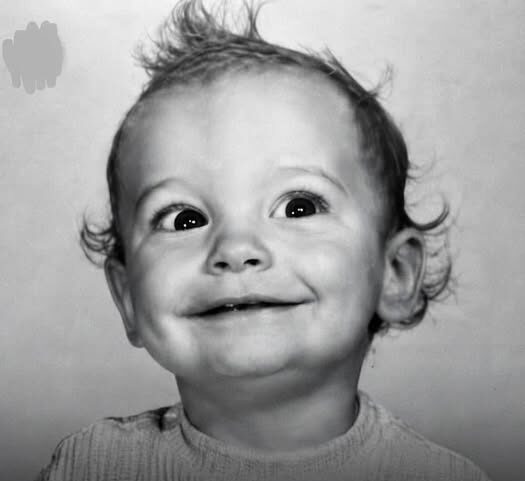
The boy pictured at age 15 was Charles Manson, long before his name became permanently associated with manipulation, violence, and one of the most infamous murder cases in modern American history.
His early life was marked by instability, neglect, criminal behavior, and repeated stays in reform institutions.
Those experiences did not excuse what came later, but they formed the difficult background of a man who would eventually build a powerful hold over a group of followers and direct them toward deadly acts.
His childhood was shaped by instability
Manson grew up without the kind of stable family structure that might have provided consistency during childhood.
Neglect and repeated exposure to trouble became part of his early life, and by adolescence he was already moving through a cycle of delinquency and institutional confinement.
Instead of progressing through an ordinary teenage life, he repeatedly encountered reform schools and correctional environments.
That pattern continued into adulthood.
Reform schools became a recurring part of his youth
By the time he was still very young, Manson had already developed a record of criminal behavior.
Repeated stays in reform schools failed to create lasting stability.
He frequently returned to illegal activity, reinforcing a cycle in which institutions, escape attempts, and further offenses became part of his life.
The image of Manson at 15 therefore captures a period when many of the patterns that would define his adulthood were already emerging.
Crime followed him into adulthood
Manson did not leave his criminal behavior behind as he grew older.
Instead, he continued accumulating trouble with the law and spent significant periods in custody.
His adult life before the Manson Family was already deeply shaped by criminal activity.
He learned how to survive inside institutions, how to manipulate others, and how to adapt his behavior depending on the people around him.
Those abilities later became central to the influence he exercised over his followers.
He also tried to pursue music
At one stage, Manson attempted to build a future through music.
He wanted recognition as a musician and hoped to find success in the entertainment world.
Those ambitions ultimately failed to develop into the career he wanted.
The disappointment surrounding his unsuccessful music efforts became part of the broader frustration and resentment that characterized his later years.
He began gathering followers around him
Over time, Manson attracted a group of young followers who became known as the Manson Family.
He did not lead them through conventional authority.
Instead, his influence was based on manipulation, charisma, psychological pressure, and an ability to convince others that he possessed unusual insight into the world around them.
For some followers, he became more than simply a leader.
He positioned himself as someone whose ideas should be accepted without serious challenge.
The Manson Family became increasingly isolated
The group developed into a closed environment centered around Manson’s personality and beliefs.
As his control grew, followers became increasingly dependent on his interpretations of events.
That isolation made it easier for him to reinforce extreme ideas and encourage loyalty to himself above outside relationships or ordinary social expectations.
The group’s identity became closely tied to Manson’s worldview.
Manson developed an apocalyptic ideology
One of the most disturbing elements of Manson’s influence was the ideology he promoted to his followers.
He developed an apocalyptic and racist belief system in which he imagined widespread racial conflict and social collapse.
He presented these ideas as though they were part of an unavoidable future.
His followers were encouraged to see themselves as participants in a larger historical event rather than as ordinary individuals responsible for their own decisions.
That distorted framework became central to the crimes that followed.
His beliefs were built around manipulation and fear
Manson’s power over the group depended on convincing followers that his interpretation of reality was correct.
He used fear, loyalty, and emotional dependence to strengthen his position.
The more followers accepted his worldview, the easier it became for him to demand behavior that would otherwise have seemed unthinkable.
This manipulation was one of the most important features of the Manson Family.
The group’s crimes were not random acts committed without influence.
They emerged from an environment shaped by Manson’s control.
The events of 1969 made the group infamous
In 1969, members of the Manson Family carried out a series of murders that shocked the public and permanently changed the way Manson was viewed.
Among the victims was actress Sharon Tate, who was killed along with several others.
The following night, Leno and Rosemary LaBianca were also murdered.
These killings became some of the most notorious crimes of the era.
The brutality of the murders, combined with the strange ideology surrounding the group, made the case especially disturbing.
Sharon Tate became one of the most recognized victims
Sharon Tate was a young actress whose career was still developing when she was killed.
Her death became one of the most widely remembered elements of the Manson case.
The murders were especially shocking because they seemed to strike without an ordinary personal motive between the victims and the attackers.
That sense of unpredictability contributed to widespread fear.
The LaBianca murders deepened public horror
The killing of Leno and Rosemary LaBianca added another layer of fear to the case.
The fact that the murders occurred on consecutive nights made it clear that the violence was not an isolated incident.
Investigators eventually connected the crimes to members of the Manson Family.
As the case developed, attention increasingly focused on Manson’s role as the person exerting influence over the group.
Manson did not need to personally carry out every act
One of the defining aspects of the case was Manson’s ability to control others.
His power did not depend on personally committing every violent act himself.
Instead, prosecutors focused on his role in directing, encouraging, and manipulating followers into carrying out crimes.
That distinction became central to understanding why he could be held responsible even when others physically committed the murders.
The trial became a national spectacle
The legal proceedings surrounding Manson and his followers drew enormous public attention.
Manson’s appearance, behavior, and statements became part of the spectacle surrounding the case.
He embraced the attention and increasingly presented himself as an outsider standing against society.
His followers also demonstrated the extent of their loyalty, reinforcing the impression that Manson had built an unusually powerful psychological hold over them.
He was convicted and sentenced to life in prison
Manson was ultimately convicted for his role in the murders.
He received a life sentence and spent the remainder of his life in prison.
The conviction ended any possibility of him returning to ordinary public life.
From that point forward, he became known primarily as the leader associated with the Manson Family killings.
His notoriety continued behind bars
Even while imprisoned, Manson remained a figure of public fascination.
Interviews, photographs, and discussions of the case kept his name in circulation for decades.
He often used attention to reinforce his image as a provocative and unpredictable figure.
That ongoing visibility contributed to the unusual longevity of his notoriety.
Few convicted criminals remained as recognizable to the public over such a long period.
The mythology around Manson often overshadowed the victims
Over time, Manson became the subject of books, documentaries, films, and repeated media coverage.
That attention sometimes risked turning him into a symbol larger than the actual crimes.
But the central reality of the case remained the people who were killed and the families whose lives were permanently changed.
The fascination surrounding Manson should never obscure the fact that his influence helped produce real violence and irreversible loss.
His image became part of American criminal history
Manson’s face eventually became instantly recognizable.
Photographs of him as an adult are associated with long hair, intense expressions, and the disturbing persona he cultivated.
That is why images of him as a teenager can be particularly striking.
The young boy in those photographs does not yet resemble the notorious figure he would become.
Instead, he appears as a teenager still years away from worldwide infamy.
The photograph at 15 creates a disturbing contrast
Looking at Manson at age 15 creates a powerful contrast between childhood and adulthood.
At that age, the future was not yet visibly written across his face.
No photograph could fully reveal the manipulation, extremism, criminal behavior, and violence that would later define his name.
The image instead captures a moment before his transformation into one of the most infamous cult leaders in American history.
His early hardship did not determine his later crimes
Manson’s childhood included neglect, instability, and repeated exposure to criminal environments.
Those circumstances are important when examining his development.
But they do not make his later actions inevitable.
Many people endure difficult childhoods without becoming violent leaders or manipulating others into committing murder.
His later decisions, ideology, and exploitation of followers remained his responsibility.
The Manson Family showed the danger of extreme personal control
One of the lasting lessons of the case is the destructive potential of intense psychological manipulation.
Manson persuaded followers to abandon ordinary boundaries and accept his increasingly extreme beliefs.
Once loyalty to the group became stronger than loyalty to outside reality, followers became vulnerable to actions they might otherwise never have considered.
The case remains a disturbing example of how charisma and isolation can be used to distort judgment.
He remained imprisoned until the end of his life
Manson never returned to freedom.
He remained incarcerated for decades after his conviction.
His prison years far outlasted the brief period in which the Manson Family committed the crimes that made him notorious.
Yet those events continued defining his public identity until his death.
Charles Manson died in 2017 at age 83
Manson died in 2017 at the age of 83.
His death was caused by cardiac arrest related to colon cancer.
By then, he had spent most of his adult life either inside correctional institutions or living on the margins of society.
His final decades were spent in prison, where he remained associated with crimes committed nearly half a century earlier.
His legacy remains one of manipulation, extremism, and violence
Charles Manson’s life is remembered not because of his failed music ambitions or his troubled youth, but because of the deadly influence he exercised over the people who followed him.
He created a closed world built around his own authority and an apocalyptic, racist ideology.
That influence culminated in the 1969 murders of Sharon Tate and others, followed by the killings of Leno and Rosemary LaBianca.
The case became one of the darkest criminal stories of its era.
The boy in the photograph and the man he became seem almost impossible to connect
A photograph of Manson at 15 offers a glimpse of someone before history attached a notorious meaning to his name.
At that age, he was already living through neglect, crime, and reform institutions, but the most infamous chapters of his life were still years away.
He would go on to become a manipulative cult leader, gather the Manson Family around him, promote an extremist worldview, and help set in motion murders that shocked the world.
He was convicted, sentenced to life, and remained imprisoned until his death in 2017.
The contrast between the teenager in the photograph and the criminal figure remembered today remains unsettling precisely because it shows how dramatically a life can change over time.