
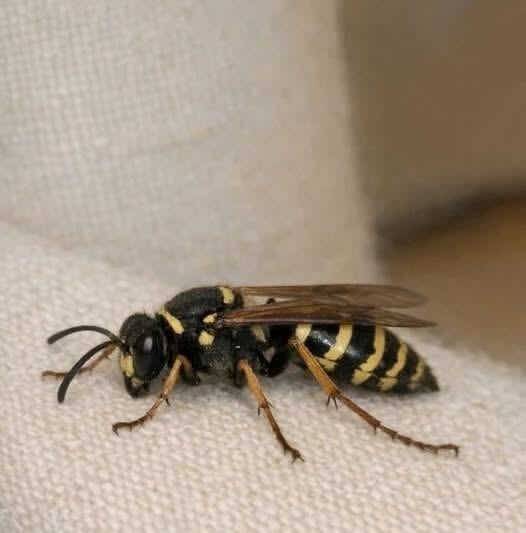
What It May Mean When You Find a Large Wasp Crawling Inside Your Home
One Indoor Wasp Does Not Automatically Mean There Is a Nest
Finding a large wasp crawling across a floor, window, wall, or piece of furniture can be unsettling, especially when there is no obvious explanation for how it entered the house.
The first concern many people have is whether a nest might be hidden somewhere inside the building.
Fortunately, seeing a single wasp indoors does not necessarily mean an entire colony is living inside the walls, attic, roof, or another concealed part of the home.
Wasps can enter houses accidentally through a variety of ordinary openings.
An open window or door may be enough to allow one inside, particularly during warmer weather when insects are active around homes.
Wasps Can Enter Through Surprisingly Small Openings
A wasp does not need a wide-open doorway to find its way indoors.
Small cracks, vents, gaps around windows, and other openings around the structure can provide possible entry points.
Because these openings may be difficult to notice, a homeowner might discover the insect without ever seeing the moment it came inside.
The wasp may then remain indoors while attempting to find another way out.
Windows are particularly noticeable areas because an insect that enters a room may naturally move toward the light coming through the glass.
This can make it appear as though the wasp emerged from somewhere inside the house when it may simply have entered from outdoors earlier.
An Open Door Can Be Enough
Doors are another common opportunity for insects to enter.
During warm weather, people may repeatedly open exterior doors while moving between the house, yard, patio, garage, or other outdoor areas.
A wasp flying nearby can slip inside quickly and remain unnoticed.
Once indoors, it may land somewhere quiet before becoming visible later.
This delay can make the discovery seem more mysterious than it really is.
By the time someone notices the insect, the door through which it entered may have been closed for hours.
Wasps May Also Be Carried Indoors Accidentally
Not every wasp found in a house necessarily flew inside on its own.
In some situations, an insect may be brought indoors without anyone realizing it.
Wasps can potentially be carried inside on clothing, bags, firewood, or other objects that have spent time outdoors.
A wasp resting on an item may remain hidden until the object has already been brought into the house.
It can then crawl away and appear somewhere completely different.
This is one reason a single indoor wasp can be difficult to trace back to a particular entry point.
Firewood and Outdoor Items Deserve a Quick Check
Items stored outside can provide temporary places for insects to rest or hide.
Firewood is one example because pieces may contain cracks, uneven surfaces, and sheltered spaces.
Bags, outdoor equipment, and other belongings can also provide places where a wasp may remain unnoticed.
Checking these items before bringing them inside can help reduce accidental insect visitors.
The inspection does not need to be complicated.
A quick visual check can sometimes be enough to notice an insect before the item enters the home.
The Time of Year Can Matter
Indoor wasp sightings may become more noticeable toward the end of the warm season.
During this period, wasps may remain active around homes while searching for food, shelter, or places protected from increasingly cool conditions.
That activity can increase the chance that one eventually finds its way inside.
A single wasp discovered during this time may therefore be an accidental visitor rather than evidence of a hidden colony.
The surrounding circumstances matter more than the presence of one insect alone.
Why One Wasp Usually Is Not Enough to Assume an Infestation
It is understandable to become concerned after seeing a large wasp inside a familiar room.
Because wasps are commonly associated with nests and colonies, discovering even one can immediately raise questions about how many others might be nearby.
However, one isolated sighting provides limited information.
The insect may simply have entered through an open window, slipped through a gap, or been carried inside on something from outdoors.
Without additional signs, there is generally no reason to immediately conclude that wasps have established a nest somewhere in the building.
Repeated Sightings Are More Important
The situation becomes more noteworthy when wasps appear repeatedly in the same location.
Seeing one insect once is very different from noticing several over a short period of time.
Repeated sightings can justify taking a closer look around the area.
Attention can be given to nearby openings, roof spaces, wall cavities, and other locations where insects might potentially enter or shelter.
The goal is not to assume there is definitely a nest, but to determine whether there is a recurring source that deserves attention.
Look for Patterns Rather Than Panicking Over One Sighting
Patterns can provide more useful information than a single event.
If wasps repeatedly appear near the same window, wall, ceiling area, or room, there may be an opening nearby that allows them to enter.
If sightings remain isolated and do not continue, the original insect may have simply been an accidental visitor.
Observing where and how often wasps appear can therefore help determine whether further inspection is necessary.
This approach can prevent unnecessary alarm while still allowing a potential problem to be noticed early.
Check Windows and Doors for Gaps
Reducing access points is one of the simplest ways to lower the chances of wasps entering the home.
Windows and doors can be checked for openings that allow insects to pass through.
Screening can provide an additional barrier while still allowing fresh air into the house.
Damaged or poorly fitting screens may be less effective, so areas where insects could slip around them are worth noticing.
Doors that remain open for extended periods may also create opportunities for wasps and other insects to enter.
Small Cracks Can Be Worth Sealing
Cracks and gaps around the exterior of the home can also provide possible access points.
Some may be obvious, while others are easy to overlook because they are located near fixtures, vents, roof areas, or building joints.
Sealing unnecessary gaps can help reduce the number of ways insects can enter.
This can be useful even when there is no active wasp problem because the same openings may allow other unwanted insects indoors.
Regularly checking the exterior of the home can therefore serve as a simple preventive measure.
Vents and Other Openings May Need Attention
Vents are another part of a building that can provide access while still being necessary for airflow.
Because they cannot simply be sealed shut, they may need appropriate screening or other protection that still allows them to function properly.
If indoor wasps repeatedly appear near a particular vent, that pattern may be worth investigating.
The same is true for other structural openings that connect indoor and outdoor spaces.
Again, the appearance of one wasp does not prove anything by itself, but repeated activity can provide useful clues.
Inspect Items Before Bringing Them Indoors
Preventive habits can also extend beyond the structure of the house itself.
Outdoor items should be checked before being brought inside, especially if they have been sitting undisturbed for some time.
Firewood, bags, clothing, and similar objects may occasionally provide temporary resting places for insects.
A quick inspection can reduce the possibility of carrying a wasp indoors unknowingly.
This can be particularly useful when outdoor insect activity is high.
What to Do After Finding a Single Wasp
If only one wasp has been discovered, the most important thing is to remain aware of whether additional insects appear.
There is usually no need to immediately assume that walls need to be opened or that a major infestation exists.
Instead, look around the nearby area for obvious openings or other possible ways the insect could have entered.
Windows, doors, cracks, and vents can all be considered.
If no further wasps appear, the event may have been completely isolated.
Repeated Activity Can Justify a More Careful Inspection
If wasps continue appearing, particularly in the same room or area, a closer inspection may be appropriate.
Roof spaces and wall cavities are among the places that may be considered when trying to determine whether insects are repeatedly entering from a concealed location.
Nearby structural openings can also be checked.
The key difference is frequency.
One wasp can enter accidentally.
Repeated appearances make it more reasonable to investigate whether there is a persistent access point or nesting location.
Do Not Disturb an Active Nest
Discovering an actual nest is very different from simply seeing one wasp indoors.
If a large number of wasps are present or an active nest has been located, disturbing it can increase the risk of being stung.
Trying to move, strike, or dismantle the nest may provoke defensive behavior from the insects.
In that situation, keeping a safe distance is the better approach.
A qualified pest professional can evaluate the problem and determine how it should be handled.
Large Numbers of Wasps Should Be Taken More Seriously
A noticeable concentration of wasps around one location is a stronger indication that something more than an accidental indoor visitor may be involved.
This is especially true if insects are repeatedly entering and leaving the same opening.
Rather than approaching the area closely, homeowners can observe from a safe distance.
If activity suggests an established nest, professional assistance can help avoid unnecessary risk.
The presence of many wasps should therefore be treated differently from the occasional discovery of a single insect.
A Calm Approach Can Prevent Unnecessary Alarm
Finding an unfamiliar insect indoors can easily trigger concern, especially when the insect is large and recognizable as a wasp.
But the most alarming explanation is not always the correct one.
A lone wasp may have entered through a door, window, crack, vent, or another ordinary opening.
It may even have been carried into the house accidentally.
Looking for repeated activity before assuming there is a colony can provide a more realistic picture of what is happening.
Simple Prevention Can Reduce Future Indoor Sightings
Keeping windows and doors properly screened can make accidental entry less likely.
Sealing cracks and unnecessary gaps can further reduce access points around the home.
Checking outdoor items before carrying them indoors provides another simple layer of prevention.
These measures cannot guarantee that a wasp will never find its way inside, but they can make the home more difficult for insects to enter accidentally.
One Wasp and a Hidden Nest Are Not the Same Thing
The most important distinction is between an isolated sighting and repeated wasp activity.
One insect crawling inside a home may be surprising and unpleasant, but it does not automatically indicate a hidden colony.
Repeated sightings in the same location deserve more attention and may justify checking nearby openings and potential nesting spaces.
If an active nest or a large number of wasps is eventually found, it is safest not to disturb them.
Professional assistance can then be used to address the situation appropriately.
What the Indoor Wasp May Really Mean
In many cases, finding one wasp inside simply means that an insect found an unintended route into the house.
The discovery can still be useful because it may reveal a damaged screen, an open gap, or an outdoor item that should be inspected more carefully.
But there is no need for the sight of a single wasp to immediately turn into fear of a hidden infestation.
Watch for patterns, reduce obvious entry points, and avoid interfering with any active nest that may eventually be discovered.
Sometimes a wasp on the floor is exactly what it appears to be: one unexpected visitor that accidentally found its way inside.