
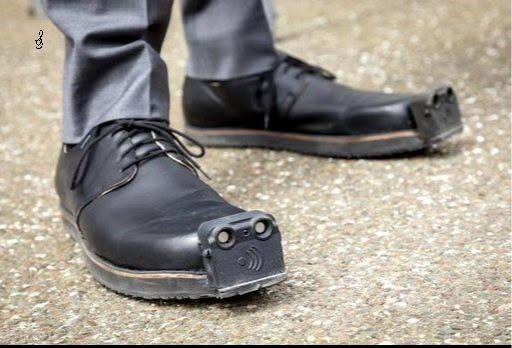
InnoMake Smart Shoes Use Sensors to Help Detect Obstacles While Walking
A New Kind of Footwear Blends Everyday Shoes With Assistive Technology
Smart technology has already transformed phones, watches, homes, and vehicles, but one unusual innovation brings that same idea all the way down to a person’s feet.
The InnoMake Smart Shoe was developed to help wearers detect obstacles while walking, offering another example of how technology can be integrated into ordinary objects to make everyday movement easier and safer.
The concept is especially focused on assisting people with visual impairments.
Instead of relying only on sight, the shoes can detect objects ahead and communicate warnings directly to the wearer.
The result is footwear that does far more than simply protect the feet.
The Technology Was Developed in Austria
The smart-shoe project was created by Austrian company Tec-Innovation in collaboration with Graz University of Technology.
The goal was to develop footwear capable of identifying obstacles and warning the person wearing it before a collision occurs.
The idea combines conventional shoe design with compact electronic components positioned near the front of the footwear.
Those components monitor the walking path and provide feedback when something is detected.
Ultrasonic Sensors Detect Objects Ahead
One of the main features of the InnoMake system is its use of ultrasonic sensors.
These sensors scan the area in front of the wearer and can detect obstacles up to approximately four meters away.
An object does not have to be moving to trigger the system.
Steps, bins, furniture, people, and other objects in the walking path can potentially be identified before the wearer reaches them.
This gives the person additional time to react and adjust direction.
The Shoes Process What the Sensors Detect
The sensors are only one part of the system.
A processing unit interprets the information they collect and determines when the wearer should receive a warning.
The electronic system can also communicate wirelessly with a smartphone.
By combining sensing, processing, and wireless connectivity, the footwear turns information about the surrounding environment into alerts the user can understand immediately.
Vibrations Can Warn the Wearer
One of the simplest forms of feedback is vibration.
When the shoe detects an obstacle, the wearer can feel a physical alert through the footwear.
This makes it possible to receive information without constantly listening to spoken directions or checking another device.
The vibration acts as a direct warning that something is located ahead.
For someone with limited vision, that immediate physical feedback can provide an additional layer of awareness while moving through an unfamiliar environment.
Users Can Also Receive Audio Feedback
Vibration is not the only available option.
The system can also provide acoustic feedback through a connected smartphone.
This gives wearers another way to receive information depending on their personal preferences.
Audio alerts can be particularly useful for someone who wants more noticeable feedback than a vibration alone provides.
Bone Conduction Headphones Offer Another Option
The system can also work with bone conduction headphones.
Unlike conventional headphones that cover or block the ears, bone conduction technology allows sound to be transmitted while leaving the ears more open to the surrounding environment.
That can be especially useful while walking because environmental sounds remain important.
Traffic, people, warning signals, and other noises may still need to be heard clearly.
The technology therefore aims to provide additional information without completely isolating the wearer from surrounding sounds.
LED Lights Add Visibility in Dark Conditions
The InnoMake shoes also include LED lights.
These lights add another practical feature when the footwear is used in darker conditions.
While the main purpose of the system is obstacle detection, the lights can provide additional visibility.
This gives the smart footwear a function that extends beyond its sensor-based warnings.
The Electronics Are Designed to Be Detachable
One of the more practical aspects of the design is that the electronic component can be removed.
The technology does not have to remain permanently built into a single pair of shoes.
A detachable device gives the wearer more flexibility and makes the system easier to manage.
It also means the smart technology itself can remain separate from the ordinary wear and maintenance associated with footwear.
The Shoes Are Made With Everyday Comfort in Mind
Despite the technology inside them, the shoes were not designed simply as an experimental gadget.
They are made from high-quality leather and intended to function as normal everyday footwear.
The design is heel-less, which contributes to comfort during regular use.
This combination of traditional materials and modern electronics helps the shoes feel less like a piece of specialized equipment and more like something that could be worn routinely.
Battery Life Can Reach Up to a Week
Portable technology is only useful when it does not need to be charged constantly.
The InnoMake system is designed with a battery that can last for up to approximately one week on a single charge.
When the battery eventually runs low, a full recharge takes around three hours.
That battery life makes the device more practical for repeated daily use.
A wearer would not necessarily need to recharge the shoes every night.
The Smart Shoe Is Primarily an Assistive Device
The most important purpose of the InnoMake project is helping people with visual impairments navigate their surroundings.
Traditional mobility tools remain essential, but smart footwear introduces another way of gathering information about obstacles ahead.
The shoes provide warnings before physical contact occurs.
That advance notice can help users react sooner when something blocks their path.
The Technology Works Quietly in the Background
One of the interesting qualities of the design is that much of the technology operates without requiring constant attention.
The sensors continuously monitor the space ahead.
The processor interprets the readings.
The wearer receives a warning only when an obstacle is detected.
This allows the system to function as an additional layer of awareness rather than something the user must actively control with every step.
It Demonstrates How Assistive Technology Can Become Less Obtrusive
Assistive devices do not always need to look highly technical.
By placing the electronics inside ordinary footwear, InnoMake demonstrates how useful technology can be integrated into objects people already use every day.
The wearer does not need to carry a separate handheld sensor simply to benefit from obstacle detection.
The equipment moves naturally with the person because it is attached directly to the shoes.
The Four-Meter Detection Range Gives Users Time to React
The ability to detect obstacles from up to four meters away is an important part of the system.
A warning that arrives only when a person is already inches away from an object would provide limited time to change direction.
Detecting something farther ahead gives the wearer more opportunity to respond.
That could mean slowing down, moving sideways, stopping, or choosing another path.
Different Feedback Options Make the System More Flexible
People do not all respond to alerts in the same way.
Some may prefer physical vibrations.
Others may find audio warnings easier to notice.
The availability of smartphone-based sound and bone conduction options gives users more freedom to choose how information reaches them.
This flexibility can make the technology easier to adapt to different situations and personal preferences.
The Shoes Show How Everyday Objects Are Becoming Smarter
The InnoMake concept also reflects a larger technological trend.
More everyday objects are being equipped with sensors, processors, and wireless connections.
Instead of technology existing only in phones or computers, it is increasingly becoming part of clothing, watches, glasses, and footwear.
Smart shoes demonstrate how even something as familiar as walking can be supported by digital systems.
The Innovation Could Influence Future Footwear
Although the InnoMake system was developed with visual impairment in mind, the idea points toward broader possibilities for footwear technology.
Shoes could eventually provide more information about the surrounding environment without requiring users to constantly look at another device.
Obstacle detection is one example of how sensors built into footwear can provide useful information exactly where movement is taking place.
A Shoe Can Become More Than Something You Wear
Traditional footwear performs a simple role.
It protects the feet and provides support while walking.
InnoMake adds another layer.
The shoes can actively monitor what is ahead and communicate with the person wearing them.
That turns footwear from a passive object into something capable of responding to the environment.
The Technology Is Designed Around Practical Daily Use
The combination of leather construction, detachable electronics, long battery life, obstacle sensors, wireless connectivity, and several feedback methods suggests that practicality was an important part of the design.
The goal is not simply to demonstrate that sensors can be placed on shoes.
The system is intended to be usable during ordinary movement.
That distinction matters because assistive technology is most valuable when it can fit naturally into everyday routines.
InnoMake Offers a Glimpse of What Smart Footwear Could Become
Smart shoes may still seem futuristic, but the basic concept is already clear.
Footwear can do more than provide comfort and protection.
With the right sensors and processing technology, it can monitor the path ahead, warn about obstacles, connect to other devices, and provide useful feedback in real time.
For visually impaired users, those capabilities can offer another tool for navigating the world.
For everyone else, the technology provides an intriguing glimpse at how ordinary clothing and accessories may evolve in the future.
A Small Step Toward a More Connected Future
The InnoMake Smart Shoe takes an everyday object and gives it an entirely new purpose.
Ultrasonic sensors watch the path ahead.
Vibrations and audio warnings alert the wearer.
LED lights add visibility.
A detachable electronics module makes the system more practical, while a battery lasting up to a week helps support regular use.
What looks like an ordinary pair of shoes can therefore function as a compact navigation aid.
For people who benefit from additional guidance while walking, that could make a meaningful difference.
And as wearable technology continues to evolve, innovations like InnoMake suggest that the future may not simply be carried in our pockets.
It may also be walking with us every step of the way.