
Which Animal Do You See First? This Visual Test Offers a Playful Look at Your Thinking Style
Why do some people feel naturally comfortable with numbers, patterns, and logical problems, while others prefer imagination, art, and creative expression?
People often describe these differences using the popular idea of left-brain and right-brain thinking. Although the concept does not accurately divide individuals into two scientific personality types, it continues to inspire entertaining visual tests.
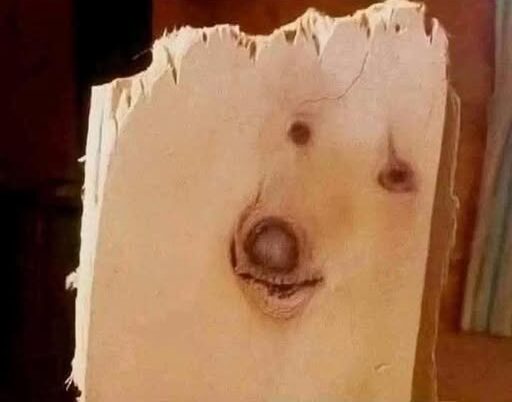
This particular challenge features an unusual wooden-looking shape containing several possible animal forms. The animal you recognize first is said to offer a playful interpretation of how you approach information, decisions, and everyday problems.
How to Take the Visual Test
Look at the strange shape for only a few seconds and notice which animal immediately enters your mind. The possible answers are a rabbit, a fish, and a dog.
Do not study every line or spend too much time searching for all three animals. The test is based on your first impression rather than a carefully considered response.
Your eyes may focus on one outline before the remaining shapes become apparent. That initial observation determines which personality description applies to you within the rules of this lighthearted challenge.
Some viewers instantly recognize long ears and see a rabbit. Others interpret the same visual elements as the body of a fish or the familiar profile of a dog.
There is no correct or incorrect answer. Each interpretation uses the same image while emphasizing a different arrangement of its lines, contours, and textures.
If You Saw a Rabbit First
Seeing a rabbit before the other animals may indicate a creative, intuitive, and imaginative approach to the world.
Rabbit viewers are described as people who often understand the overall meaning of a situation before examining every individual detail. They may quickly recognize themes, emotional signals, and broader possibilities.
This thinking style can be useful when a problem does not have one obvious solution. Instead of relying entirely on a fixed process, you may prefer to experiment with several ideas until something feels right.
You might also be naturally attracted to art, music, storytelling, design, or other activities that allow personal expression. Inspiration and originality may motivate you more than rigid instructions.
Trusting your instincts could be an important part of your decision-making process. Even when you cannot immediately explain every reason behind a choice, you may sense which direction is most promising.
Your imagination may help you notice connections between subjects that initially appear unrelated. A small observation can remind you of an old experience, produce a new idea, or lead you toward an unexpected solution.
People with this interpretation may also enjoy thinking about what could happen rather than concentrating only on what is already known. Possibilities, future plans, and unconventional approaches can hold their attention.
Detailed routines may sometimes feel restrictive, especially when they leave little space for flexibility. You may work best when you have a clear goal but still retain the freedom to determine how to reach it.
This does not mean rabbit viewers are unable to deal with facts or practical responsibilities. The interpretation simply suggests that creativity and intuition may be the first tools they use when approaching unfamiliar situations.
If You Saw a Fish First
If a fish immediately appeared within the unusual shape, the test associates your answer with logical, observant, and detail-focused thinking.
You may naturally examine information in an organized sequence. Breaking a large task into smaller steps can make it easier for you to understand and complete.
Small clues that other people overlook may quickly attract your attention. You might notice inconsistencies, changes, or specific features before considering the broader meaning of a situation.
Clear instructions and reliable facts may provide a sense of confidence. When solving a problem, you may prefer to know what information is available, what outcome is required, and which steps can connect the two.
Structure could play an important role in your daily life. Schedules, written plans, organized workspaces, and predictable routines may help you remain focused and productive.
A fish-first response may also suggest that you prefer practical solutions. Rather than spending too much time considering unlikely possibilities, you may concentrate on choices that can realistically produce results.
You might feel comfortable working with numbers, systems, categories, or tasks that have measurable outcomes. Activities that require careful comparison and accuracy may be particularly satisfying.
When making decisions, you may want to examine the evidence before reaching a conclusion. Emotional impressions and intuition can still matter, but you are likely to feel more secure when they are supported by specific information.
Your attention to detail may make you dependable in situations where precision is essential. You may be the person who detects a missing step, identifies an error, or remembers an important fact at the right moment.
This interpretation does not suggest that fish viewers lack imagination. It indicates only that logic, order, and careful observation may be the most immediate features of their approach.
If You Saw a Dog First
Viewers who recognize a dog before either the rabbit or fish receive the most balanced interpretation in the test.
The dog answer is linked to the description “whole-brained maverick.” Within this playful framework, it represents someone who can combine creative imagination with analytical reasoning.
You may be comfortable studying small details without losing sight of the larger situation. This can allow you to understand both how individual parts work and why the complete result matters.
Your approach may change depending on the challenge in front of you. A practical problem could bring out your organized side, while an open-ended project may encourage greater creativity.
Instead of relying exclusively on instinct or strict analysis, you may move between the two. You might begin with a spontaneous idea, test it carefully, and then make adjustments based on what you discover.
This flexibility can be valuable when circumstances change unexpectedly. If the original plan no longer works, you may be willing to develop another solution without abandoning the main objective.
You may also understand people who have very different working styles. Because you can appreciate both structured reasoning and imaginative exploration, you might communicate effectively with several personality types.
A dog-first viewer may enjoy projects that require invention as well as execution. Creating an idea can be exciting, but transforming it into a useful or completed result may be equally important.
The description suggests independence as well. You may listen to established rules while remaining willing to question them when another method appears more effective.
Being called a maverick does not necessarily mean rejecting every conventional approach. In this context, it suggests having enough flexibility to select the most useful combination of logic and creativity.
Why Different People Notice Different Animals
The test works because the same visual details can support several recognizable interpretations. Your brain attempts to organize unfamiliar lines into a familiar object as quickly as possible.
One person may focus on an outline resembling ears, causing a rabbit to emerge immediately. Another may concentrate on the body and tail-like elements and identify a fish.
A third viewer may arrange the contours into the form of a dog. Once one animal has been recognized, it can become difficult to understand how anyone could have initially seen something different.
After spending more time with the image, most viewers may be able to identify the other animals. However, the test assigns its personality meaning only to the shape noticed first.
Your response could also vary if you looked at the image again on another day. Changes in attention, viewing angle, screen size, lighting, or expectations may influence which pattern becomes clear first.
The Truth About Brain-Side Personality Claims
The familiar left-brain and right-brain idea is often used to explain why one person prefers logical tasks while another appears more creative.
In popular descriptions, the left side is associated with language, analysis, facts, and numerical reasoning. The right side is commonly connected with intuition, imagination, emotion, and artistic ability.
However, people cannot be accurately separated into two fixed categories based on one dominant half of the brain. Most ordinary activities require both sides to work together.
Reading, speaking, solving problems, making art, remembering experiences, and interpreting images involve connected processes rather than one isolated side operating alone.
A person can be highly creative while also enjoying mathematics and organization. Someone who prefers facts and careful plans can still possess a strong imagination.
Personal abilities are also shaped by experience, education, interests, practice, environment, and the demands of a particular situation. One visual response cannot measure all those influences.
For that reason, this animal challenge should not be treated as a scientific assessment, diagnosis, or permanent description of personality.
A Fun Reflection Rather Than a Final Judgment
The most useful part of a visual personality test may be the opportunity to reflect on your habits.
If you saw the rabbit, you might consider whether intuition and imagination genuinely guide many of your decisions. Fish viewers can think about how strongly they value details, order, and practical reasoning.
Those who noticed the dog may recognize situations in which they regularly combine creativity with structured analysis.
You may identify strongly with your result, agree with only part of it, or feel that another description suits you better. All three reactions are reasonable because the interpretations are intended for entertainment.
The animal you noticed first may simply reveal how your eyes and brain organized one unusual image during one brief moment.
Still, the challenge offers an enjoyable reminder that different people can examine exactly the same object and immediately discover something different.