
What Travelers Should Actually Check When Entering a Hotel Room
Replace Viral Fear With a Calm Inspection
After a long journey, most travelers want to put down their luggage, relax and become comfortable as quickly as possible. Inspecting the room for unusual safety or privacy concerns may not be the first thing on their minds.
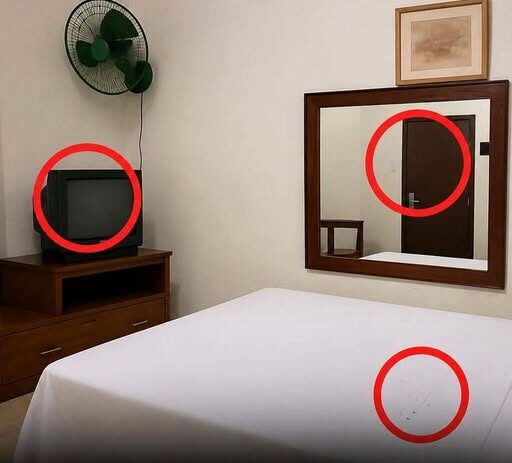
That natural desire to settle in can make alarming online warnings especially effective. Viral posts sometimes claim that travelers should immediately leave a hotel after noticing particular objects, such as a television, mirror or unexplained mark on a bedsheet.
None of these things automatically proves that a room is dangerous. Televisions and mirrors are ordinary hotel fixtures, while stains can develop for many reasons unrelated to a serious problem.
The more useful approach is to remain observant without assuming every unfamiliar detail represents a threat. A short and focused inspection can identify genuine concerns while avoiding unnecessary panic.
Begin Before Unpacking
The easiest time to inspect a hotel room is immediately after entering. Keeping luggage closed for a few minutes allows you to examine the room before your belongings are spread across the bed, floor or furniture.
This inspection does not require dismantling fixtures or searching every hidden corner. The goal is to notice clear abnormalities in the places most relevant to personal safety, privacy and cleanliness.
Start with the entrance, then examine the bed and the electronics positioned around sleeping and bathroom areas. These checks can usually be completed quickly.
If nothing unusual appears, you can settle into the room with greater confidence. If a real problem is discovered, it is easier to request a solution before unpacking.
Check the Main Door First
A hotel room’s primary security begins with the entrance. Close the door completely and confirm that it latches without requiring unusual pressure or repeated attempts.
Test the main lock and any deadbolt or security latch installed on the inside. Each mechanism should engage correctly and remain secure when gently checked.
A door that fails to close, does not latch or contains visibly damaged hardware deserves immediate attention. A broken lock is a practical security concern rather than a speculative internet warning.
Guests should not assume that a door is secure simply because it appears closed. Testing the available locks takes only a few seconds and provides useful information.
If any mechanism fails, contact hotel management and request that the problem be corrected or that another room be provided.
Look at the Television Without Assuming the Worst
Televisions are frequently highlighted in posts about hotel surveillance. Modern televisions and connected entertainment devices may contain microphones, cameras or sensors as part of their normal design.
The presence of one of these features does not automatically mean a guest is being secretly watched or recorded. Built-in components may serve legitimate functions connected to the equipment.
Instead of treating the television itself as evidence of surveillance, examine the surrounding area for specific abnormalities. Look for unfamiliar devices, unexplained wires or small openings that appear to contain a lens.
Pay attention to electronics placed in unusual positions, particularly when they are directed toward the bed, changing area or bathroom. Location and orientation can provide more useful information than the mere presence of technology.
A suspicious object may look different from the standard equipment elsewhere in the room. It could appear recently added, poorly concealed or disconnected from any obvious hotel function.
Do Not Disconnect Equipment Without a Reason
Unfamiliar wiring can raise concern, but hotel rooms may contain cables for television service, internet access, power and other ordinary functions. Not every wire requires intervention.
If something appears questionable, avoid pulling cables from walls or taking equipment apart. Damaging hotel property can complicate the situation without clarifying what the device does.
Photograph the item in its original position and ask management to identify it. A clear explanation may resolve the concern quickly.
If the response is incomplete or the object continues to resemble an unauthorized recording device, the guest can request another room or leave.
Evaluate Mirrors Using Evidence
Mirrors are another common subject of alarming hotel-room warnings. Two-way mirrors exist, but an ordinary mirror should not automatically be treated as suspicious.
Popular online demonstrations often recommend touching a fingernail to the glass and examining the space between the finger and its reflection. This “fingernail test” does not reliably identify how a mirror was constructed.
Glass thickness, reflective surfaces and other construction details can change the appearance of the reflection. Lighting conditions can also influence what the viewer sees.
A result that looks unusual during the test does not prove that someone is watching from the opposite side. Relying on that method can create fear without providing dependable evidence.
Look for Abnormalities Around the Mirror
A more practical mirror inspection focuses on the surrounding structure. Consider whether the fixture fits normally against the wall and whether anything nearby appears out of place.
Unexplained gaps, visible wiring or concealed openings deserve closer attention. An unusual space behind the mirror may also justify asking hotel management for an explanation.
The objective is not to remove the mirror or damage its mounting. Guests should observe what is visible and document anything that appears genuinely suspicious.
Most hotel mirrors are simply mirrors. Concern becomes more reasonable when several concrete warning signs appear together rather than when an unreliable online trick produces an ambiguous result.
Inspect the Bed for Practical Reasons
The bed deserves attention because it is where guests place clothing, luggage and themselves for extended periods. A short inspection before unpacking can reveal cleanliness concerns or possible signs of bed bugs.
Begin by examining the visible sheets and pillow area. A dark mark or isolated stain can have many explanations and does not independently establish an infestation.
Move beyond the center of the bedding and inspect the mattress seams and corners. Bed-frame joints and the area around the headboard also deserve attention.
Travelers should look for live insects, dark spotting, reddish stains and shed skins. A combination of these signs is more concerning than one unexplained mark.
There is no need to dismantle the entire bed. A targeted look at seams, edges and joints can provide useful information without creating unnecessary disruption.
Understand What a Stain Can and Cannot Prove
Viral warnings may present any mark on hotel bedding as evidence of a serious problem. In reality, stains can remain for numerous harmless reasons even after fabric has been cleaned.
An isolated discoloration cannot establish what caused it. Its appearance should be considered alongside the condition of the mattress, frame and surrounding area.
If several warning signs are present, avoid placing luggage on the bed and contact hotel management. Photograph the evidence before anything is cleaned or moved.
If the concern cannot be resolved satisfactorily, request a different room or leave the property. Guests should not be expected to remain in a room showing apparent evidence of an active infestation.
Keep Luggage Away During the Inspection
While checking the bed, keep bags closed and separate from the bedding. This prevents personal belongings from covering the areas that need to be examined.
Leaving luggage packed also makes changing rooms easier if a genuine concern is discovered. There is no need to reorganize clothing or repack items after management provides another accommodation.
The inspection should happen before clothing is placed in drawers or spread around the room. A few minutes of patience at the beginning can prevent additional inconvenience later.
Check the Bathroom for Objects That Seem Out of Place
The bathroom should receive a brief visual inspection because guests expect a particularly high level of privacy there. Look at electronics, vents, outlets, clocks and other objects within the space.
Many of these items may be completely ordinary. The relevant question is whether their placement or construction appears inconsistent with their expected purpose.
An unfamiliar electronic device facing a private area deserves more attention than a standard wall outlet or ventilation cover. Unexplained openings or visible wiring may also justify further examination.
Do not begin removing vents, outlets or permanent fixtures. Observe the room, take photographs of anything concerning and request an explanation.
Notice Dangerous Electrical Damage
Privacy is not the only reason to inspect hotel electronics. Damaged electrical components can create an immediate and practical safety concern.
Look for exposed wiring, broken outlets or equipment with obvious physical damage. Electronics should not appear scorched, unstable or dangerously modified.
A guest should not attempt to repair electrical problems. Avoid touching the damaged area and notify management.
If the hazard is close to the bed, bathroom or another frequently used space, request a different room rather than continuing to use the damaged equipment.
Document Genuine Concerns
When something appears seriously wrong, photograph it before the room is changed or staff members move the object. Images can preserve the condition and location of what you observed.
Documentation is useful for apparent bed-bug evidence, broken locks, dangerous electrical damage and suspected recording devices. It creates a clear record of why you requested assistance.
Photographs should be taken from a safe distance. Do not place yourself at risk to obtain a closer image of damaged wiring or unstable equipment.
After documenting the concern, contact hotel management and explain the specific problem. A clear description is more effective than a generalized claim that the entire room feels unsafe.
Ask Management to Explain Suspicious Equipment
Hotel staff may be able to identify a device as standard equipment or clarify why particular wiring is present. Giving management an opportunity to explain can prevent an ordinary fixture from becoming a source of unnecessary fear.
The explanation should make sense in relation to the object’s appearance and location. If the response does not address the concern, request that a manager inspect the room directly.
A satisfactory response may allow the guest to remain comfortably. An unresolved privacy or safety concern can justify requesting another room.
Respond Carefully to a Suspected Camera
If you believe you have discovered an unauthorized surveillance device, avoid damaging, disconnecting or removing it when possible. Changing its position could interfere with understanding what it is and how it was installed.
Photograph the device and its surroundings. The images should show where it was located and how it was directed within the room.
Contact hotel management promptly. Local authorities may also be appropriate when the object appears to be a concealed recording device rather than ordinary hotel equipment.
Your privacy deserves to be treated seriously. Remaining calm allows you to document the situation clearly and avoid destroying possible evidence.
Know When to Request Another Room
A guest should consider changing rooms when management cannot promptly resolve a broken lock, possible infestation, dangerous electrical problem or credible privacy concern.
Moving rooms may also be reasonable when the explanation for suspicious equipment remains inadequate. You should not feel pressured to ignore a genuine warning sign.
Before relocating, keep photographs and note the room where the issue occurred. Leave personal belongings packed until another room is ready.
If the hotel cannot provide a satisfactory solution, leaving the property may be the safest choice.
Avoid Treating Every Object as Dangerous
Awareness is useful, but constant suspicion can make ordinary travel unnecessarily stressful. A television can serve its normal purpose, and a mirror can be an ordinary fixture.
A mark on a sheet can have a harmless explanation. Concern should increase when specific evidence supports it, not simply because a viral post identifies the object as threatening.
The difference between awareness and panic lies in the quality of the observation. Calm travelers examine details, test practical security features and ask focused questions.
They do not assume that every unfamiliar object proves surveillance or that every stain confirms an infestation.
A Few Minutes Can Provide Peace of Mind
A useful hotel-room inspection does not need to become an exhaustive search. Begin with the door locks, glance over the bed and examine any electronics positioned toward private areas.
Check mattress seams, corners, the headboard and frame joints for multiple signs of bed bugs. Notice gaps, wiring or unusual openings around mirrors and electronic devices.
In the bathroom, look for objects whose placement does not match an obvious purpose. Remain alert for broken locks or visibly damaged electrical equipment.
If everything appears normal, unpack and enjoy the room. If a specific issue emerges, document it and give management the opportunity to respond.
The smartest approach combines attentiveness with restraint. Trust your instincts, but support concern with observable warning signs rather than internet myths.
A short, calm inspection can protect your safety and privacy while providing the peace of mind needed to enjoy the rest of your stay.