
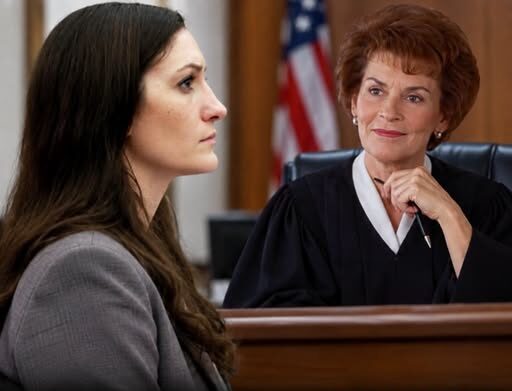
Judge Judy Weighs In After Lindsay Clancy Murder Trial Ends in Mistrial
Sheindlin Says There Could Be “Danger” in Not Retrying the Massachusetts Mother
The murder case involving Massachusetts mother Lindsay Clancy remains unresolved after a jury failed to agree on whether she should be held criminally responsible for the deaths of her three young children.
Now Judith Sheindlin, widely known as Judge Judy, has publicly weighed in on the closely watched case, arguing that prosecutors should seriously consider putting Clancy on trial again.
Sheindlin’s comments came after the trial ended in a mistrial on September 4, 2026, following seven days of jury deliberations. A mistrial is neither a conviction nor an acquittal, meaning the murder charges against Clancy remain pending. :contentReference[oaicite:0]{index=0}
The central question in the case was not whether Clancy caused the deaths of her children. Her defense acknowledged that she did. Instead, jurors were asked to determine whether she was criminally responsible given the defense’s argument that she was suffering from severe mental illness, including postpartum psychosis. :contentReference[oaicite:1]{index=1}
Judge Judy Warns Against Letting the Case End With a Hung Jury
Sheindlin was asked whether prosecutors should pursue another trial after jurors were unable to reach a unanimous decision.
Her response was direct.
“I think there’s a danger in that, in not retrying,” Sheindlin said.
She did not offer a detailed legal analysis of what a second trial should ultimately produce, but her remarks made clear that she believed allowing such a serious case to remain unresolved could have consequences. :contentReference[oaicite:2]{index=2}
When asked more broadly about Clancy’s responsibility, Sheindlin emphasized the distinction at the center of the trial.
“There’s no question, my dear, that she killed her children,” Sheindlin said. “The only question is, is there an excuse for it? Make up your own mind on that one.” :contentReference[oaicite:3]{index=3}
Her wording reflected the same legal and factual divide that dominated weeks of testimony: whether Clancy’s mental condition prevented her from being criminally responsible at the time of the killings.
The Deaths of Three Young Children Led to the Trial
Clancy, a former labor and delivery nurse, was charged in connection with the January 2023 deaths of her three children in Duxbury, Massachusetts.
The children were Cora, Dawson and Callan.
The defense did not dispute that Clancy strangled the children. Instead, her attorneys argued that severe postpartum mental illness left her unable to appreciate the wrongfulness of her actions and therefore legally not criminally responsible. :contentReference[oaicite:4]{index=4}
Prosecutors presented a sharply different interpretation.
They argued that Clancy’s actions reflected planning and deliberation rather than conduct caused by a psychotic break. The prosecution pointed to evidence surrounding her behavior before and after the killings as part of its effort to establish criminal responsibility. :contentReference[oaicite:5]{index=5}
That disagreement became the central issue jurors were ultimately unable to resolve unanimously.
The Jury Was Reportedly Divided 11-1
After a trial lasting nearly six weeks, the jury deliberated for seven days.
Jurors repeatedly indicated that they could not reach a unanimous decision, leading Judge William Sullivan to declare a mistrial on September 4.
Several jurors later said that 11 members of the panel favored finding Clancy not guilty by reason of lack of criminal responsibility, while one juror supported a guilty verdict. :contentReference[oaicite:6]{index=6}
The holdout juror, Michael P. Desronvil, later publicly defended his position.
He said he had no doubts that Clancy knew what she was doing and believed the evidence demonstrated that she deliberately killed the children. Other jurors have disputed aspects of his account of the deliberations. :contentReference[oaicite:7]{index=7}
The disagreement left the case without a final verdict.
The Mistrial Does Not End the Charges
A mistrial caused by a deadlocked jury does not mean Clancy has been cleared of the charges.
She still faces the criminal case, and prosecutors may seek another trial.
The Plymouth County District Attorney’s Office has said no final decision has yet been made about whether to retry her. A court hearing is scheduled for September 29 to address what happens next. :contentReference[oaicite:8]{index=8}
Clancy remains in custody at Tewksbury Hospital.
Her defense team has indicated that it intends to challenge any attempt to simply restart the case under the same circumstances.
The defense could also seek dismissal or pursue another legal resolution, while prosecutors must determine whether another full trial is appropriate. :contentReference[oaicite:9]{index=9}
Postpartum Psychosis Was at the Center of the Defense
The case has attracted national attention in large part because of its focus on postpartum mental illness.
Clancy’s attorneys argued that she was experiencing postpartum psychosis and had been affected by her mental condition and medication regimen.
Prosecutors maintained that the evidence showed deliberate behavior rather than an inability to understand the nature or wrongfulness of what she was doing.
The jury therefore faced a difficult legal question involving mental illness and criminal responsibility rather than a dispute over whether the children had been killed by their mother. :contentReference[oaicite:10]{index=10}
That distinction is important because a finding of not guilty by reason of lack of criminal responsibility is fundamentally different from concluding that the underlying acts never occurred.
Judge Judy Declines to Give a Simple Guilty-or-Not-Guilty Answer
When Sheindlin was asked directly for her assessment of the trial’s outcome, she resisted reducing such a complicated case to a brief answer.
“I can’t give you a two minute answer on that,” she said. :contentReference[oaicite:11]{index=11}
Her comments instead centered on the unresolved nature of the case.
She acknowledged that Clancy caused the children’s deaths while leaving the question of legal excuse or criminal responsibility to the legal process and individual judgment.
That approach reflects why the trial became so difficult for jurors.
The factual occurrence of the killings was not the primary dispute. The conflict concerned Clancy’s mental state and whether it met the legal standard necessary to excuse criminal responsibility.
Sheindlin Also Rejects Calls for a Public Execution
Sheindlin was separately asked about comments from U.S. Rep. Nancy Mace of South Carolina, who had publicly called for Clancy to be executed.
Sheindlin responded briefly.
“I think it’s ridiculous,” she said. :contentReference[oaicite:12]{index=12}
Her response drew a distinction between supporting another legal proceeding and endorsing rhetoric calling for an extreme punishment outside the unresolved questions that remain before the courts.
The Clancy case remains active, and no jury has returned a guilty verdict.
The Case Has Generated Intense Public Reaction
The mistrial did little to quiet public debate.
The reported 11-1 jury division led to intense attention on the lone holdout juror, prompting concerns about juror privacy and safety.
Judge Sullivan subsequently ordered jurors’ names to remain sealed indefinitely, citing the national attention surrounding the case and concerns about harassment or harm. :contentReference[oaicite:13]{index=13}
Desronvil’s identity later became publicly known, and he defended his decision through statements and interviews.
He maintained that his position was based on the evidence presented during the trial and rejected suggestions that he had doubts about Clancy’s criminal responsibility. :contentReference[oaicite:14]{index=14}
The other jurors who have spoken publicly have described a very different view of the evidence.
The result has extended the disagreement far beyond the courtroom.
A Retrial Could Reopen Weeks of Painful Testimony
If prosecutors decide to try the case again, many of the difficult questions explored during the first proceeding would return to court.
The prosecution could again attempt to prove that Clancy acted deliberately and understood the wrongfulness of her actions.
The defense could again present evidence supporting its argument that postpartum psychosis and other mental-health factors deprived her of criminal responsibility.
A second trial would also require those involved in the case to revisit evidence concerning the deaths of three children and the events surrounding the tragedy.
Legal experts have noted that prosecutors must weigh factors including public interest, the likelihood of obtaining a different outcome and the emotional burden another trial could create. :contentReference[oaicite:15]{index=15}
Patrick Clancy Has Been at the Center of an Unimaginable Loss
The children’s father, Patrick Clancy, has also occupied a painful position throughout the proceedings.
He testified during the trial about Lindsay Clancy’s mental-health difficulties leading up to the deaths and about discovering what had happened inside their home. :contentReference[oaicite:16]{index=16}
The case has therefore involved not only questions of criminal law but also the loss of three children within one family.
Any further proceedings will continue unfolding against that background.
The September 29 Hearing Could Clarify What Comes Next
For now, the legal process remains unfinished.
Clancy has neither been convicted nor acquitted.
Prosecutors have not publicly committed to another trial, and the defense is preparing to challenge further prosecution.
The next scheduled hearing on September 29 could provide greater clarity about whether the case will return to trial, move toward another resolution or face additional legal challenges. :contentReference[oaicite:17]{index=17}
That uncertainty is precisely what Sheindlin focused on when she warned about the possible “danger” of simply leaving the case unresolved.
A Case Caught Between Mental Illness and Criminal Accountability
The Lindsay Clancy case continues to force difficult questions about how criminal law should respond when severe mental illness is raised after the deaths of children.
The defense argues that postpartum psychosis fundamentally altered Clancy’s ability to understand her conduct.
Prosecutors have argued that her actions were calculated and that she remained criminally responsible.
Eleven jurors reportedly accepted the defense position during the first trial. One did not.
Because Massachusetts requires a unanimous jury decision, that disagreement was enough to prevent a verdict and produce the mistrial. :contentReference[oaicite:18]{index=18}
Judge Judy’s Comments Add Another Voice to an Unresolved National Debate
Sheindlin’s intervention does not determine what prosecutors will do, nor does it resolve the central question that divided the jury.
Her comments instead emphasize that, in her view, a case involving the deaths of three children should not simply disappear because the first jury could not agree.
At the same time, she rejected inflammatory calls for public execution, leaving a clear distinction between continuing the formal legal process and turning punishment into public spectacle. :contentReference[oaicite:19]{index=19}
For now, three children are dead, their mother remains in a psychiatric hospital facing murder charges, and the criminal case against her remains unresolved.
Whether another jury will eventually be asked to decide the question that divided the first one is now up to prosecutors and the courts.