
Why People Leave Coins on Gravestones and What the Tradition Can Mean
A Small Coin Can Carry a Powerful Message of Remembrance
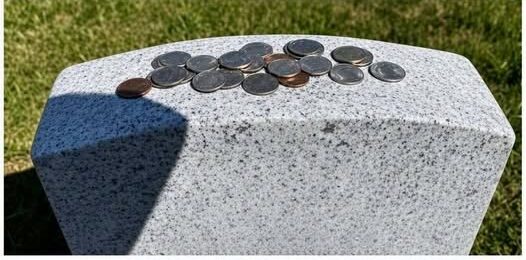
Visitors to cemeteries sometimes notice coins resting quietly on gravestones.
At first glance, a penny, nickel, dime, or quarter may seem like an ordinary object that someone accidentally left behind.
In many cases, however, the coin was placed there deliberately.
Leaving a coin on a grave can be a simple way of communicating a message that requires no written note and no spoken words.
The gesture can mean something as straightforward and meaningful as, “I remember you.”
This tradition has become especially associated with military graves, where the coins can symbolize respect, remembrance, and a continuing bond with someone who has died.
The Tradition Has Roots That Reach Far Into the Past
The idea of placing coins with the dead is not entirely modern.
Coin-related burial customs have ancient roots, showing that people have used small pieces of metal in connection with death and remembrance for generations.
Over time, however, the meaning attached to coins left on gravestones changed.
Rather than serving only as part of an ancient burial custom, coins eventually became a visible sign that someone had visited a grave.
Within military communities, that simple gesture developed additional meaning.
The coin could represent not only remembrance but also a connection between the visitor and the person buried there.
The Military Meaning Became Especially Significant
The tradition later became closely associated with soldiers honoring fallen comrades.
It became particularly connected with the Vietnam era, when veterans and others could leave coins on the graves of people they had known or served alongside.
The gesture offered a quiet way to pay respects without requiring a lengthy explanation.
A visitor could place a coin on a grave and leave knowing that the object itself communicated that someone had stopped, remembered, and cared.
For other visitors, seeing those coins could also show that the person buried there had not been forgotten.
A Penny Traditionally Means Someone Visited
Among the commonly repeated meanings associated with this custom, a penny carries the simplest message.
It means that someone visited the grave.
The visitor does not necessarily need to have served with the person or known them during a particular period of life.
The penny represents presence.
Someone came to the gravesite, paused, and remembered the person buried there.
Despite being the coin with the smallest monetary value, its symbolic meaning can be deeply personal.
Its importance comes from the act of leaving it rather than from its financial worth.
A Nickel Can Represent a Shared Beginning
A nickel traditionally carries a more specific meaning.
It can indicate that the person visiting the grave went through boot camp with the person who died.
That makes the coin a symbol of an experience shared at the beginning of military service.
Boot camp can be a formative period when service members train together, face unfamiliar challenges, and begin building relationships with the people around them.
Leaving a nickel can therefore communicate a connection rooted in those early days.
The coin becomes a reminder that the two individuals began part of their military journey together.
A Dime Represents Serving Together
A dime is associated with an even closer military connection.
Traditionally, it indicates that the visitor served alongside the person buried at the grave.
That meaning can make the dime particularly significant.
Military service can create relationships based on shared responsibilities, experiences, difficulties, and memories.
When someone leaves a dime, the gesture can represent that shared period of service without requiring the visitor to explain anything further.
The small coin silently acknowledges a connection that once existed between two people who served together.
A Quarter Carries the Most Personal Meaning
A quarter is traditionally associated with one of the most intimate meanings in the custom.
It can signify that the person leaving the coin was present when the service member died.
That meaning gives the quarter an especially emotional significance.
It represents not simply visiting, training together, or serving alongside someone, but being present during the final moments of that person’s life.
For families who recognize the tradition, finding a quarter on a grave can therefore carry a powerful message.
Someone who shared an extraordinarily difficult moment with their loved one has returned to remember them.
The Value of the Coin Is Not the Point
The tradition demonstrates how an ordinary object can carry meaning far greater than its monetary value.
A penny, nickel, dime, or quarter is worth very little in financial terms.
Placed on a gravestone, however, the same coin can represent memory, friendship, service, loss, and respect.
The gesture is meaningful precisely because it is so simple.
No elaborate memorial is necessary.
No long message needs to be written.
A single coin can communicate that someone stopped and remembered.
Coins Can Show Families That Their Loved One Is Remembered
For relatives visiting a military grave, the presence of coins can carry another layer of meaning.
They may not know every person who served with their loved one.
They may never meet the people who shared boot camp, military service, or difficult experiences with them.
Yet a coin can show that those connections still exist in memory.
A gravestone with several coins can quietly demonstrate that others continue to visit.
For a grieving family, that knowledge can be meaningful.
The person they lost is not remembered only by relatives.
Friends and fellow service members may still be carrying those memories as well.
The Tradition Allows Remembrance Without Words
Grief is not always easy to express.
Some people are comfortable speaking openly about loss, while others prefer quieter ways of remembering someone.
Leaving a coin requires no speech.
A person can walk to the grave, place the coin gently on the marker, spend a few moments remembering, and leave.
The action itself becomes the message.
This can be especially meaningful when the memories attached to the person are difficult to put into words.
Military Bonds Can Continue Long After Service Ends
The symbolism attached to gravestone coins also reflects the lasting nature of relationships formed through military service.
People may serve together for only part of their lives, but the experiences they share can remain significant long afterward.
Years or even decades may pass before one veteran visits another’s grave.
The coin can connect the present moment with those earlier experiences.
A nickel may recall the beginning of service.
A dime can recall time spent serving side by side.
A quarter can carry the memory of a final and deeply personal moment.
Each coin tells a different version of the same larger message: the person buried there is still remembered.
The Gesture Can Be Easy to Overlook
Because coins are so ordinary, visitors who are unfamiliar with the tradition may not immediately understand why they are sitting on a gravestone.
Some may assume children placed them there or that they were accidentally dropped.
Knowing the possible meaning changes the way the sight can be understood.
What appears to be loose change may actually be a personal memorial left by someone with a connection to the deceased.
The coins can therefore function as quiet markers of relationships that are invisible to anyone who does not know the story behind them.
The Custom Connects Ancient Ideas With Modern Remembrance
Although coin-related customs around death have ancient origins, the modern military interpretation gives the practice a distinct meaning.
The tradition demonstrates how old symbols can evolve over time.
A coin that once held one type of significance can later become a way for soldiers and veterans to honor people they served with.
That evolution has allowed the gesture to remain meaningful even as cultures, burial practices, and military traditions have changed.
Each Coin Can Tell a Different Story
The most memorable aspect of the tradition is that the type of coin may reveal something about the visitor’s relationship with the person buried there.
A penny says that someone came to visit.
A nickel can indicate that they shared boot camp.
A dime can represent service together.
A quarter can indicate that the visitor was there when the person died.
Four ordinary coins can therefore communicate four very different relationships.
To someone unfamiliar with the practice, they may all look the same.
To those who understand the tradition, each one can tell part of a story.
A Quiet Symbol That Continues Today
The practice of leaving coins on gravestones continues as a simple symbol of remembrance.
It does not require ceremonies, elaborate decorations, or expensive memorials.
The gesture is small enough to be almost invisible, yet meaningful enough to communicate a lasting connection.
That may explain why the custom has continued.
It transforms an everyday object into a personal sign of respect.
The Message Behind the Coin Is Ultimately About Memory
Whether the coin represents a visit, shared training, service together, or presence during a person’s final moments, every version of the tradition centers on remembrance.
Someone has chosen to stop at the grave rather than simply pass by.
They have chosen to leave behind something tangible.
Long after the visitor has gone, the coin remains.
For the next person who approaches the gravestone, it quietly communicates that someone else was there first.
Someone remembered.
Someone still cared.
And in military communities especially, that small piece of metal can become a lasting symbol of respect, connection, and the bonds that remain even after death.