
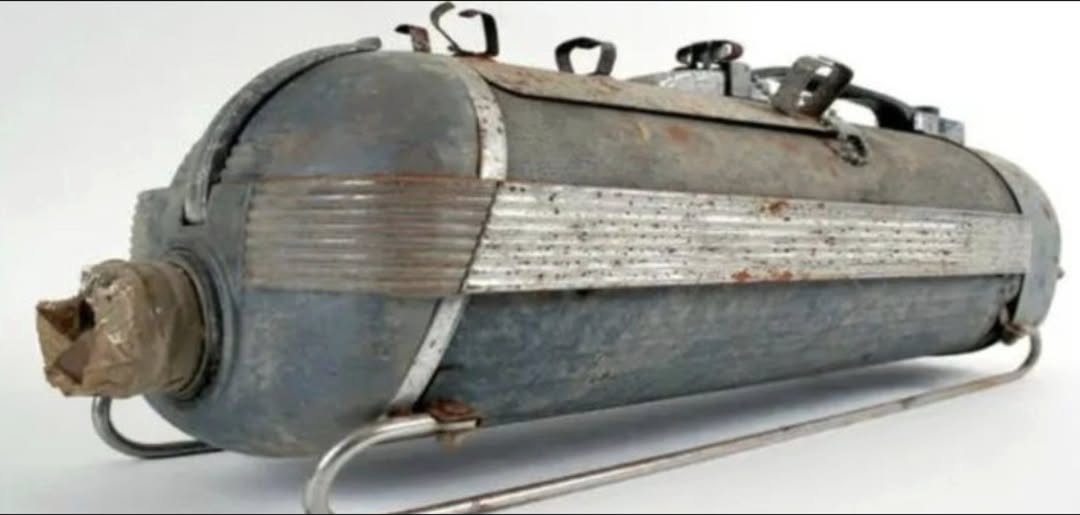
The Surprising Story Behind a Strange Online Object: A Vintage Vacuum Cleaner
A Mystery That Turned Out to Be a Household Machine
At first glance, the object looked confusing and unfamiliar. Its shape did not immediately suggest a common household tool, and its unusual design made it easy to mistake for something else entirely.
That sense of mystery is part of what made it so fascinating. What appeared to be a strange metal device from another era was, in fact, an early vacuum cleaner.
For many people, modern vacuum cleaners are so familiar that it can be difficult to imagine how different they once were. Today’s machines are designed for convenience, speed, and ease of use, but the earliest versions were much more complicated and physically demanding.
Once the object’s identity is revealed, it becomes even more interesting. What seems odd at first is actually a piece of household history that reflects a major period of change in technology and daily life.
Why Vacuum Cleaners Changed So Much Over Time
The vacuum cleaner known in homes today is the result of a long period of development. Early cleaning machines looked very different because the tools, materials, and technology available at the time were far more limited.
During the 1800s, household cleanliness became more important to many people. Growing attention to hygiene encouraged interest in new ways to clean floors, carpets, and living spaces more effectively.
At the same time, science and technology were advancing. That combination of practical need and technical progress helped create an environment in which inventors kept searching for better cleaning solutions.
The result was a series of experiments and inventions that gradually transformed how people approached one of the most basic household tasks. Vacuum cleaners did not emerge in their modern form all at once. They developed step by step through earlier designs that were often awkward and imperfect.
Household Cleanliness in the 19th Century
In the 19th century, cleanliness became increasingly valued in everyday life. People wanted living spaces that felt more orderly, healthier, and easier to maintain.
As this attitude spread, demand grew for tools that could reduce the effort required to clean homes. The desire for a tidy environment encouraged the development of devices meant to improve ordinary chores.
Even before the modern vacuum cleaner existed, inventors were already trying to create machines that could remove dust and dirt more efficiently than manual sweeping alone. These early attempts were important because they introduced the idea that cleaning could be mechanized.
Many of those first designs were far from practical by current standards. They were often large, inconvenient, and difficult to operate, yet they represented serious efforts to solve a common problem.
The Influence of the Industrial Revolution
The Industrial Revolution played a major role in shaping the tools people used at home. This period of major technological change affected industry, transportation, manufacturing, and daily domestic life.
Household work was no exception. As new manufacturing methods and mechanical ideas spread, inventors began applying them to everyday tasks, including cleaning.
This was an important turning point. Instead of relying only on traditional methods, people began imagining devices that could make domestic labor more efficient.
That shift in thinking helped lay the groundwork for the vacuum cleaner’s development. Although the earliest machines were still crude, they reflected the larger spirit of innovation that defined the era.
In many ways, these devices belonged to a time when people were beginning to believe that mechanical inventions could improve ordinary routines. Cleaning tools became part of that broader transformation.
The Era of Metal Vacuum Cleaners
Among the most notable early cleaning devices were metal vacuum cleaners. These machines did not resemble the lighter and more compact models people know today.
They were typically large canisters made of metal and designed with function in mind rather than comfort or convenience. Their appearance alone could make them seem mysterious to anyone unfamiliar with 19th-century household equipment.
These machines were manually operated, which meant they depended entirely on human effort to work. There were no electric motors to power suction and no simple push-button controls.
Instead, the user had to create the suction through physical action. A handle connected to a pump mechanism had to be operated continuously in order to draw in dirt and debris.
That process made cleaning far more labor-intensive than many people would expect from a vacuum cleaner. The machine could collect dust from floors and carpets, but it demanded constant effort from the person using it.
This makes early metal vacuum cleaners especially interesting. They represented progress, yet they also showed how much invention still had to occur before home cleaning became truly convenient.
How These Early Machines Worked
The basic concept behind these early devices was simple: create suction, then use that suction to pull in dust and loose debris. The challenge was achieving that result with the mechanical limitations of the time.
Without electricity, inventors had to rely on manually powered systems. Handles, pumps, and bellows became essential parts of the design because they allowed air movement to be generated through repeated motion.
That meant the machine’s performance depended directly on the user’s effort. To keep the suction going, the operator had to continue pumping or cranking.
While the idea was clever, the reality was tiring. Cleaning with one of these devices was not quick or effortless, and that limited its practicality for everyday home use.
Still, the important point is that these machines introduced a new method of cleaning. They moved beyond simple sweeping and began exploring the possibility of suction-based dirt removal, which would later define the vacuum cleaner.
The ‘Whirlwind’ and a Major Step Forward
One notable example from this period was the ‘Whirlwind,’ a metal vacuum cleaner patented by Ives W. McGaffey in 1869. It stands out as an important milestone in the development of cleaning technology.
The Whirlwind was a hand-cranked device. Rather than depending on electricity, it used bellows to produce suction.
That design marked a meaningful step forward because it showed a more deliberate attempt to create a machine specifically intended for suction-based cleaning. It was an inventive response to the problem of dirt removal inside the home.
At the same time, the machine still had clear limitations. It was not yet the practical, automated solution that later vacuum cleaners would become.
Its usefulness was restricted by the effort required to operate it and by the general limitations of the technology available at the time. Even so, the Whirlwind helped move the concept forward and remains one of the memorable examples of early vacuum cleaner design.
Why These Machines Still Matter
It would be easy to dismiss these old metal vacuum cleaners as clumsy or primitive. Compared with modern appliances, they certainly lacked convenience, power, and efficiency.
Yet their importance lies in what they represented. These machines were early attempts to solve a practical household problem through mechanical innovation.
They showed that inventors were already thinking seriously about how to improve domestic work. Even imperfect devices can be historically significant when they open the door to better versions in the future.
The metal vacuum cleaners of the 1800s reflected a wider spirit of experimentation. They belonged to an age when people were increasingly willing to test new ideas and apply technology to daily life.
That is what makes them more than just odd-looking antiques. They were part of the long path that turned cleaning from exhausting manual labor into a more manageable household task.
The Road Toward the Electric Age
As the 1800s drew to a close, the stage was being set for major progress in vacuum cleaner design. The late 19th century helped prepare the way for the electric age.
Once electric motors entered the picture, inventors had the opportunity to rethink how vacuum cleaners could function. Machines no longer had to depend entirely on pumping, cranking, or other forms of continuous human effort.
This change was crucial. It allowed designers to create devices that were not only more powerful but also more practical for regular use.
Electricity transformed the vacuum cleaner from an interesting but limited mechanical experiment into a far more useful household appliance. That shift would define the next stage of development.
The earlier machines still mattered because they had established the essential idea. What changed in the early 20th century was the ability to make that idea work in a more efficient and commercially viable way.
The Breakthrough of 1901
Significant progress arrived in the early 20th century. In 1901, Hubert Cecil Booth created the first commercially successful electric vacuum cleaner.
This moment marked a major turning point in the history of home cleaning. With electric power and more practical design, the vacuum cleaner became far closer to the appliance people would eventually recognize.
The difference between these newer machines and the earlier metal canisters of the 1800s was substantial. Instead of relying on constant manual effort, electric models offered a more effective approach to producing suction and collecting dirt.
That made them far more suitable for broader use. What had once been an experimental and demanding device was becoming a realistic household solution.
The success of the 1901 electric vacuum cleaner did not erase the importance of what came before it. Rather, it built directly on those earlier inventions and brought their central idea into a more practical form.
From Curious Object to Fascinating History
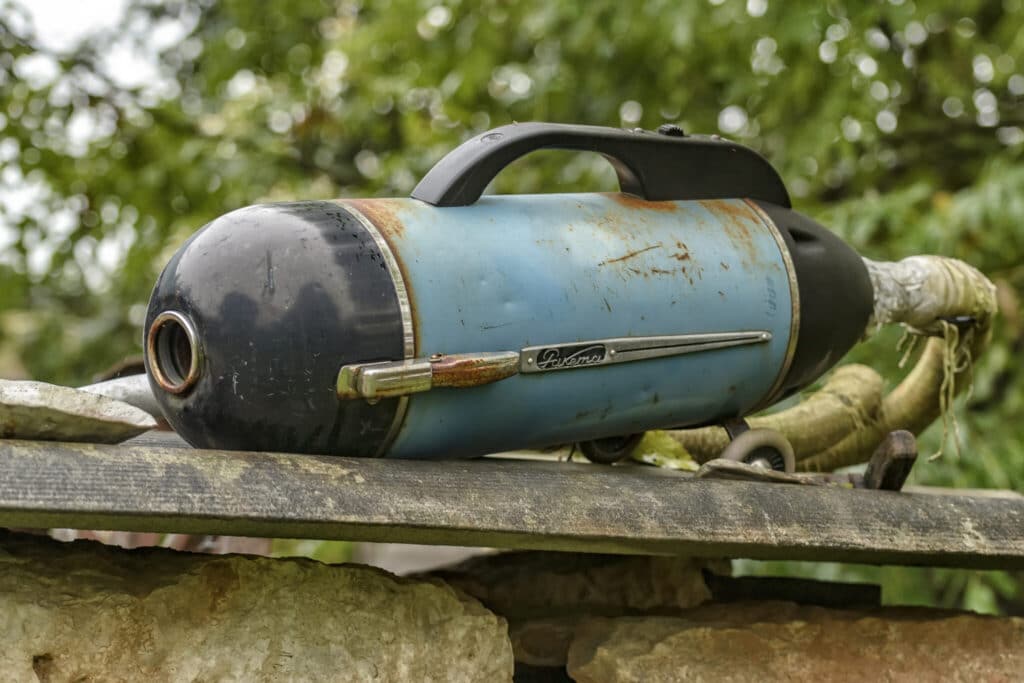
What began as a puzzling online image turns out to tell a much larger story. The strange object was not merely an outdated machine. It was a reminder of how much everyday technology can change over time.
Vacuum cleaners are now such ordinary household appliances that their early history can seem surprising. Seeing one of the old metal models makes it easier to appreciate how much effort and experimentation went into creating the versions used today.
The transition from bulky hand-operated canisters to electric vacuum cleaners reflects larger changes in society as well. It shows how new ideas, changing expectations about hygiene, and advances in technology can reshape even the most routine parts of life.
Objects like this also reveal something important about innovation itself. Many inventions begin in awkward, difficult, or incomplete forms. Their earliest versions may look strange or impractical, but they often contain the first real expression of an idea that later becomes common.
That is certainly true here. Early metal vacuum cleaners may seem unusual now, but they helped define the path toward a household appliance that would become essential in homes around the world.
So the mystery object was more than just a curiosity. It was a vintage vacuum cleaner, and behind its unusual appearance is a story of invention, persistence, and the steady transformation of domestic life.
What first looked like an unrecognizable relic becomes much more impressive once its purpose is understood. It stands as a small but meaningful chapter in the larger history of technology, cleanliness, and the everyday tools people depend on without always thinking about how they began.