
White House Media Dispute Disrupts Trump Helipad Ceremony as Networks Suspend Pool Coverage
Trump’s Remarks Were Difficult to Hear During White House Event
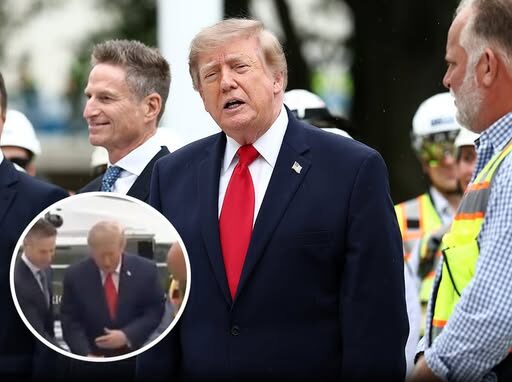
President Donald Trump appeared at a ribbon-cutting ceremony for the White House’s new helipad on September 21, 2026, but viewers watching available video of the event encountered an unusual problem: there was no clear audio of the president’s remarks.
The disruption came amid an escalating dispute between the Trump administration and several major news organizations over access to the White House. Major television networks had suspended their participation in presidential television-pool coverage after CNN was prevented from carrying out a scheduled pool assignment.
The White House continued to provide its own video from the helipad ceremony, but the absence of the usual television-pool equipment meant Trump’s comments were not captured in the normal way.
The event demonstrated the practical importance of the television pool, which provides shared camera, audio and technical coverage that can be distributed among news organizations when every outlet cannot independently attend a presidential event.
The Dispute Began With a Ban on Three News Organizations
Trump announced on September 18 that CNN, MS NOW and Politico would no longer be allowed access to the White House.
He accused the organizations of publishing what he described as false reporting and said additional news outlets could face similar treatment.
By the following morning, journalists working for the three organizations were being denied entry to White House grounds, and their credentials had been disabled or taken away.
The White House has characterized access to the complex as a privilege rather than an unrestricted right and has defended the administration’s authority to determine who receives credentials.
The affected organizations have rejected that position as applied to their exclusion, arguing that the administration acted because it objected to their journalism.
CNN, MS NOW and Politico Filed a Federal Lawsuit
On September 21, CNN, MS NOW and Politico filed suit against the Trump administration in federal court in Washington, D.C.
The organizations argue that excluding their journalists because of the content of their reporting violates the First Amendment and constitutional due-process protections.
They are seeking emergency court intervention to restore their access while the litigation proceeds.
In their joint statement, the organizations said they brought the case to defend both their First Amendment rights and the broader principle that government officials should not determine what news organizations are permitted to report or publish.
They also said the credentials were revoked without adequate notice or a process through which the organizations could challenge the decision before losing access.
The Television Networks Responded Collectively
The dispute soon extended beyond the three organizations directly affected by the ban.
The White House television pool normally includes ABC News, CBS News, CNN, Fox News and NBC News, with participating networks rotating responsibility for providing footage and technical coverage that is shared with other outlets.
When CNN was unable to perform one of its assigned pool duties because of the White House restriction, the other networks declined to step in as a replacement and suspended their television-pool participation.
The networks said their position concerned the public’s ability to receive independent coverage of presidential activities and opposition to excluding individual organizations from the pool because officials object to their reporting.
The result was immediately visible during the White House helipad event.
The New Helipad Ceremony Went Forward Without Normal Pool Coverage
Trump formally opened the new White House helipad during the September 21 ceremony on the South Lawn.
The White House itself published video showing the president cutting the ribbon and inaugurating the facility.
However, without the standard network television pool in place, the available coverage lacked the usual audio setup.
Viewers could see Trump speaking, but his words were difficult or impossible to hear clearly. Nearby helicopter noise added to the problem. Contemporary coverage of the ceremony noted that the lack of conventional pool equipment directly affected the broadcast.
Newsmax, which carried footage from the event, also acknowledged on air that the missing pool cameras and microphones meant viewers could not properly hear what the president was saying.
Why the White House Television Pool Matters
The White House press pool exists because many presidential settings cannot accommodate every journalist, photographer and television crew that wants to attend.
Instead, a smaller rotating group covers the president and distributes its reporting, photographs, video and audio more broadly.
For television networks, that arrangement reduces duplication while ensuring that presidential events can still be captured with professional audio and camera equipment.
The system becomes particularly important during smaller events, presidential travel or situations where space and security restrictions prevent large numbers of journalists from attending.
The helipad ceremony offered a concrete example of what can happen when that cooperative structure is interrupted.
The Lawsuit Centers on Press Access and Viewpoint Discrimination
The legal dispute is broader than the technical problems at one White House ceremony.
CNN, MS NOW and Politico contend that government officials cannot revoke access because they dislike the tone or substance of a news organization’s coverage.
Their complaint argues that the ban constitutes viewpoint-based retaliation and that the organizations were denied procedural protections before their credentials were removed.
The Trump administration maintains that the president is targeting what he considers inaccurate reporting rather than the free press generally.
Trump has repeatedly described CNN, MS NOW and Politico as “fake news” and has accused them of publishing false information about his administration.
The competing arguments are now before a federal court, where the news organizations are seeking immediate restoration of their White House access.
The Conflict Could Affect Additional News Organizations
Trump has also suggested that the restrictions may not remain limited to the three organizations already excluded.
When announcing the policy, he indicated that additional outlets could face similar action and subsequently mentioned The New York Times and The Washington Post while criticizing media coverage.
No comparable White House ban against those two organizations had been announced as of September 22.
The possibility of broader exclusions has added significance to the lawsuit because the outcome could influence how much discretion the White House has when determining access for organizations whose coverage the administration strongly opposes.
Previous Trump-Era Access Disputes Have Reached Federal Court
The current case is not the first time disputes over White House credentials have produced constitutional litigation.
During Trump’s first term, federal courts intervened in disputes involving White House access for journalists, including former CNN correspondent Jim Acosta.
The current lawsuit has been assigned to U.S. District Judge Timothy Kelly, who was also involved in earlier litigation over the revocation of Acosta’s credentials.
Those earlier cases form part of the legal background for the current disagreement, although the facts and scope of each dispute are not identical.
Trump made his first remarks without the TV pool and it is impossible to hear him through the White House feed. He is doing an unveiling of the new helipad just before Xi’s visit.
Nothing but static for 9 minutes and Trump is wheels up. https://t.co/xpMqvA7SSJ
— Sophia Cai (@SophiaCai99) September 21, 2026
White House Relations With the Press Have Become Increasingly Contentious
The latest confrontation follows a series of changes in how the Trump administration manages press access during the president’s second term.
The administration has taken a more direct role in determining who participates in the White House press pool and how seats and access are allocated.
The White House has also expanded its own direct video distribution, including a government-operated streaming channel intended to present administration events and achievements without relying exclusively on traditional media organizations.
Supporters of direct presidential communications argue that administrations should be able to communicate with the public without relying entirely on news organizations.
News organizations and press-freedom groups, however, distinguish between the government distributing its own material and excluding independent journalists from events because officials disagree with their coverage.
The Helipad Event Made the Practical Effects Visible
Much of the dispute involves constitutional questions that will ultimately be addressed through litigation.
But during the helipad ceremony, the immediate consequences were comparatively straightforward.
The president appeared before cameras and spoke at an official White House event, yet viewers relying on the available feed could not clearly hear his comments.
The normal technical infrastructure provided through the television pool was missing because of the wider conflict over press access.
The ceremony therefore became an unusual illustration of how disputes between the White House and the press can affect not only individual journalists but also the mechanics through which presidential remarks reach the broader public.
The Legal Fight Remains Unresolved
As of September 22, CNN, MS NOW and Politico remain engaged in federal litigation challenging their exclusion from the White House.
The organizations argue that the administration punished them for their reporting, while the White House continues to defend its authority over access and Trump continues to criticize the outlets’ coverage.
The court has not yet issued a final ruling on whether the bans violate the Constitution.
Meanwhile, the decision by major television networks to suspend pool participation has introduced a separate practical problem for presidential coverage.
The September 21 ribbon cutting showed that without the traditional television pool, even an official White House event can reach viewers without the audio, camera positioning and shared technical coverage that audiences normally take for granted.
What began as a dispute over three news organizations has therefore become a broader confrontation involving press access, presidential communications, constitutional protections and the system used to document the activities of the president for the public.