
Part 2 of 2
Many small white bumps on the lips or intimate area are harmless.
But the safest approach is to pay attention to how they look, feel and change over time.
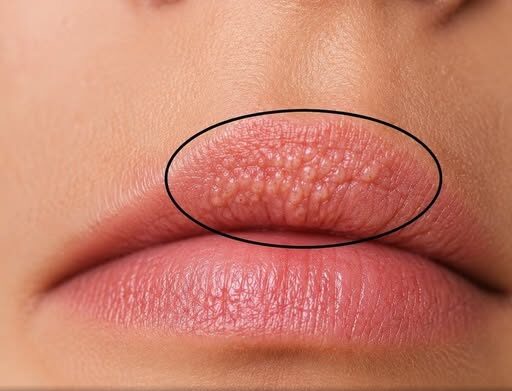
Fordyce spots, for example, are usually small, painless and stable.
They may appear white, pale yellow or skin-colored.
They often occur in clusters and can remain present for years without causing problems.
If bumps have looked the same for a long time and are not painful, itchy or changing, they are more likely to be benign.
Irritation-related bumps may behave differently.
They can appear after shaving, sweating, friction, new skincare products, fragranced soaps or tight clothing.
In these cases, the surrounding skin may also feel tender, itchy or irritated.
Removing the trigger and allowing the skin to recover may help.
But some symptoms deserve medical attention.
New bumps that spread quickly should be checked.
So should bumps that become painful.
Blisters, open sores, crusting or bleeding are also reasons to seek evaluation.
Other warning signs include swelling, pus, unusual discharge, fever or significant redness around the area.
Any new genital lesion after sexual contact is also worth discussing with a healthcare professional because several infections can cause bumps or sores that may initially look similar to harmless skin changes.
That does not mean every genital bump is a sexually transmitted infection.
Far from it.
But appearance alone is not always enough to tell the difference.
One of the biggest mistakes people make is trying to squeeze or pop the bumps.
This can make inflammation worse.
It can also damage delicate skin and introduce bacteria.
In sensitive areas, squeezing may lead to swelling, pain, infection or scarring.
Trying strong acne treatments without knowing what the bumps are can also create problems.
Products containing acids, retinoids or other irritating ingredients can be too harsh for the lips or genital skin.
Likewise, home remedies involving alcohol, peroxide or essential oils may cause burns or irritation.
Gentle care is usually safer.
Use mild, fragrance-free cleansing products.
Avoid excessive scrubbing.
Wear breathable clothing if friction is contributing to the problem.
And stop using any new product that seems to trigger irritation.
If shaving is making the bumps worse, giving the skin time to recover can help.
For Fordyce spots specifically, treatment usually is not medically necessary.
Some people seek cosmetic treatment because the spots bother them, but that should be discussed with a qualified dermatologist rather than attempted at home.
Another useful clue is time.
A minor irritation may improve after the trigger is removed.
Harmless Fordyce spots may remain unchanged.
But a bump that keeps growing, changing shape, spreading or becoming more uncomfortable deserves professional attention.
The same applies if you simply are not sure what you are looking at.
Doctors and dermatologists can often distinguish between normal oil glands, irritation, follicle problems and infections much more reliably than photographs or online comparisons can.
So while small white bumps are often harmless, they should not be ignored if they are changing or causing symptoms.
The best rule is simple: do not squeeze them, do not assume what they are based on appearance alone, and get them checked if they are new, painful, spreading or persistent.