
Part 1 of 2
For many families, a day trip means packing snacks, charging a phone and deciding where to stop for lunch.
For Izaiah Rizzo’s family, even a simple outing can require far more planning.
Izaiah lives with WOREE syndrome, an extremely rare neurological disorder associated with changes in the WWOX gene.
The condition can involve severe developmental and medical challenges.
For Izaiah, those challenges affect nearly every part of daily life.
He uses a wheelchair.
He also relies on specialized medical equipment that has to travel with him wherever he goes.
His family has described bringing respiratory support equipment, suction supplies, feeding equipment, emergency items and other essentials on trips outside the home.
That means even an ordinary drive can require the kind of preparation most families would associate with a much larger journey.
But Izaiah’s parents did not want those challenges to mean he never experienced the world beyond hospitals, appointments and home.
So they began finding ways to travel with him.
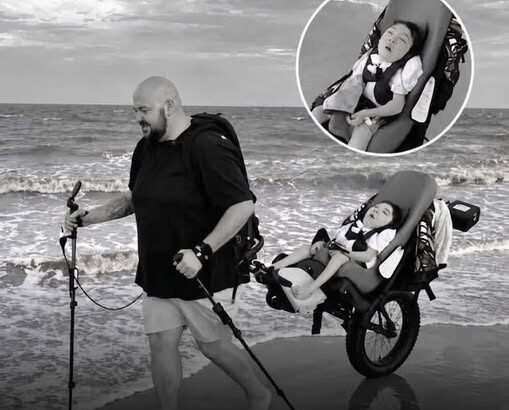
The family shares their adventures under the name Found Nomads.
Their posts show beaches, road trips and other destinations across the United States.
But behind every photograph is a level of preparation that is easy to miss.
Before leaving, the family has to think about much more than where they are going.
Will the location accommodate Izaiah’s wheelchair?
Can his medical equipment travel safely?
Will there be enough room for his supplies?
What happens if he needs respiratory support during the trip?
Is the destination physically accessible once they arrive?
Those questions can turn something as simple as visiting a beach into a carefully coordinated effort.
Still, the family keeps going.
Their goal is not to pretend that traveling with complex medical needs is easy.
It is to make room for experiences alongside those needs.
The family has documented trips across numerous states and has shared plans involving national parks and other destinations that can be difficult to navigate with mobility and medical equipment.
For Izaiah, that can mean seeing places that might otherwise feel unreachable.
For his parents, it means planning around accessibility without allowing his medical needs to become the only thing their family life revolves around.
That mindset is also what led them to begin raising money for additional equipment and a more suitable vehicle.
Their current transportation setup has made it difficult to carry everything Izaiah needs while still accommodating the rest of the family.
His medical equipment alone takes significant space.
Then there is his wheelchair.
Emergency supplies.
Feeding equipment.
And all the ordinary things a family needs on the road.
The Rizzos have described their vehicle as having to function almost like a small medical support space whenever they travel.
A more accessible van could make those journeys easier to organize and more comfortable for Izaiah.
But the family’s story is about more than transportation.
It is about the difference between simply keeping a medically fragile child safe and also finding ways for that child to experience new places.
Their travels have given Izaiah opportunities to see beaches, parks and landscapes far beyond the routines of medical care.
And those trips have created memories his parents clearly value.
For the Rizzo family, the next destination is never just about getting there — it is about figuring out how to bring Izaiah safely into the experience with them.