
Researchers Drill Into Mysterious Boat-Shaped Formation Near Mount Ararat as Noah’s Ark Debate Continues
New Core Samples From Turkey’s Durupınar Formation Could Offer Fresh Clues About a Site That Has Been Linked to Noah’s Ark for More Than 60 Years
For generations, the story of Noah’s Ark has remained one of the Bible’s most recognizable accounts.
In eastern Turkey, a strange geological formation has kept one extraordinary question alive for decades.
Could something beneath the ground be connected to the legendary Ark?
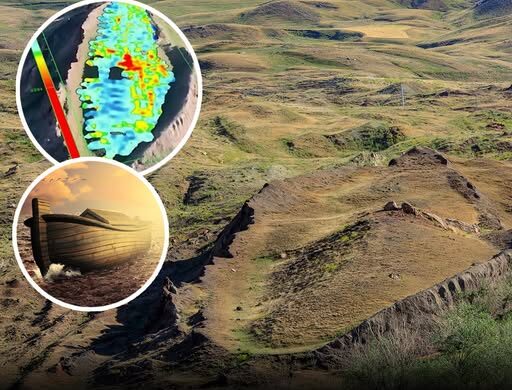
The site, known as the Durupınar formation, has attracted attention because of its remarkable boat-like appearance and its location near Mount Ararat.
Now researchers are investigating it again using modern scanning technology and direct drilling.
For the first time in decades, core samples are being extracted from deep inside the formation.
Some samples reportedly contain material rich in organic matter, while drilling has also encountered underground cavities containing mud and water.
But researchers are emphasizing an important point.
No ancient wood has been identified, no laboratory dating results have yet established the age of the recovered material, and the new work has not proved that Durupınar is Noah’s Ark.
The Mysterious Formation Was Spotted From the Air
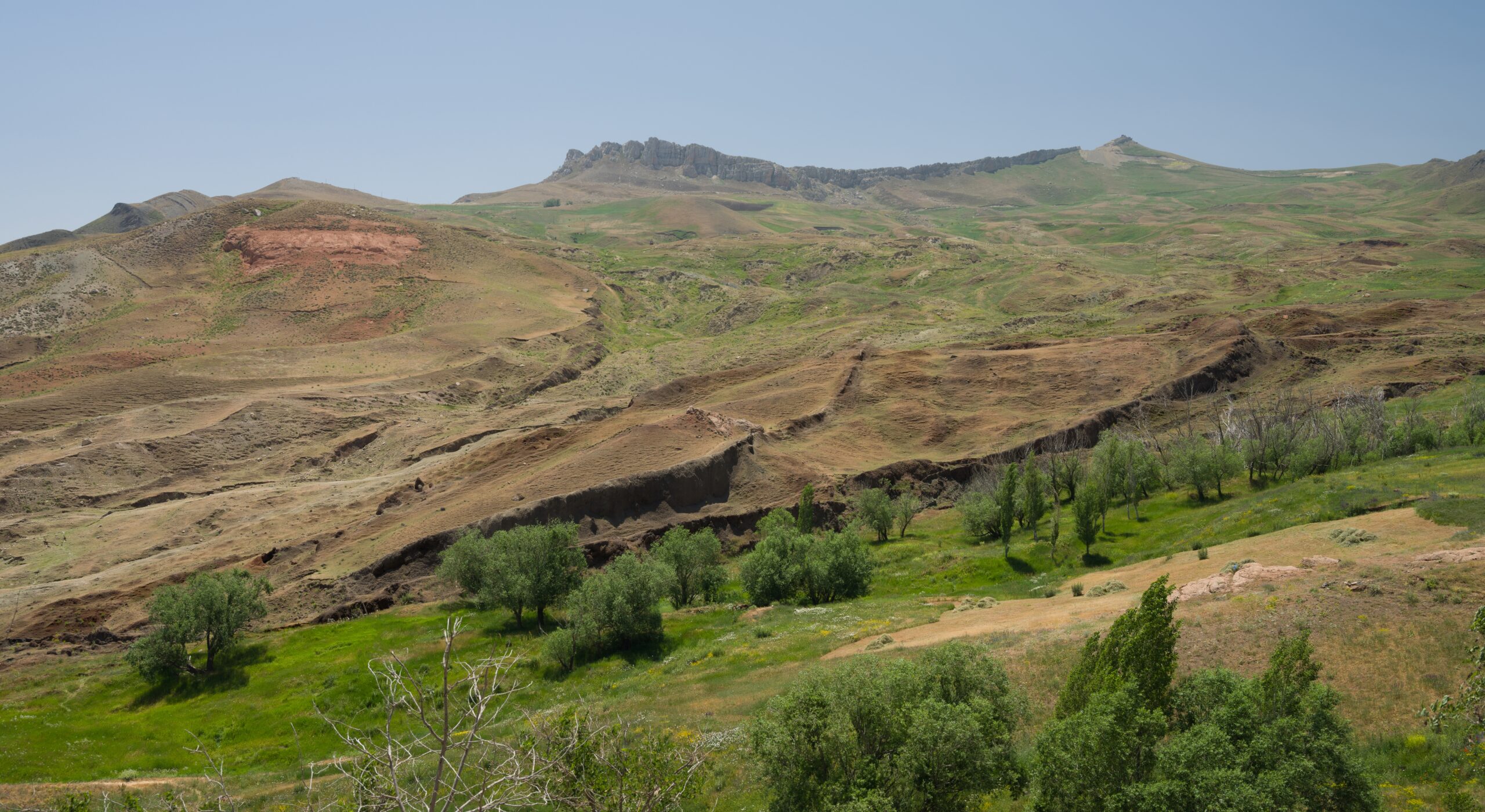
The Durupınar formation is located in eastern Turkey near Mount Ararat.
Its unusual shape has played a major role in the fascination surrounding the site.
Viewed from above, the formation resembles the outline of a large boat.
It was first spotted from the air in 1959.
Since then, the formation has repeatedly been connected with theories surrounding Noah’s Ark.
For supporters of those theories, its appearance is difficult to ignore.
For many geologists, however, the boat-like shape alone is not evidence that a human-made vessel lies beneath the surface.
That disagreement has followed Durupınar for more than six decades.
Researchers Are Now Drilling Directly Into the Site
The latest investigation is being led by archaeologists and geologists from Sivas Cumhuriyet University and Noah’s Ark Scans.
Turkish authorities have approved the project.
The researchers are using several modern techniques to investigate what exists beneath the surface.
Those methods include ground-penetrating radar, electrical scans, LiDAR and core drilling.
The drilling is particularly significant because researchers can physically recover material from below ground rather than relying only on images or scan interpretations.
The team says core samples have now been collected from depths reaching approximately 18 meters.
Those samples can potentially provide researchers with more information about how the formation developed and what kinds of materials exist inside it.
Some Samples Are Reportedly Rich in Organic Material
According to the researchers, some of the recovered material contains significant organic matter.
That finding has naturally attracted attention because of the long-running theory that the formation could conceal remnants of a large ancient structure.
However, the presence of organic material does not by itself establish that the formation contains the remains of a wooden vessel.
The drilling has also encountered cavities containing mud and water.
Researchers now need to examine the recovered material in greater detail.
Laboratory analysis will be especially important in determining what the samples actually contain and potentially establishing their age.
Until those results are available, interpretations remain preliminary.
Earlier Scans Revealed Unusual Underground Features
Interest in drilling did not develop from the boat-like surface shape alone.
Earlier scans reportedly detected several unusual features beneath the ground.
These included straight lines, right angles and elongated empty spaces.
Some researchers and supporters of the Noah’s Ark hypothesis believe those features could resemble corridors, chambers or structural divisions.
If such patterns were eventually shown to be artificial, they could dramatically change how the site is interpreted.
But unusual geometric shapes appearing in underground scans do not automatically demonstrate that a human-built structure exists there.
The latest drilling is therefore intended to help researchers investigate what those anomalies actually represent.
The Formation Is Approximately 515 Feet Long
The dimensions of Durupınar have also contributed to decades of speculation.
The formation measures approximately 157 meters, or 515 feet, in length.
Supporters of the Noah’s Ark theory have pointed to what they describe as similarities between this measurement and dimensions associated with the Ark in the biblical account.
That comparison has helped make Durupınar one of the most discussed locations among people searching for possible physical evidence connected with Noah’s Ark.
Yet matching or similar dimensions alone cannot establish the identity of the formation.
The more important question is what the formation is physically made of and how it developed.
That is where the new core samples could become particularly valuable.
Researchers Have Not Identified Ancient Wood
Despite dramatic claims circulating around the site, the researchers themselves have been more cautious about what has actually been discovered.
Andrew Jones, founder of Noah’s Ark Scans, said that no recovered material has yet been identified as ancient wood.
He also said its age has not yet been established because laboratory results are still pending.
During drilling inside the formation, however, the team encountered something unexpectedly hard.
At a depth of approximately four to five meters, a drill bit broke after striking a hard layer.
Researchers do not yet know exactly what the drill encountered.
One possibility being considered is heavily mineralized or petrified wood.
Another possibility is much simpler: the drill may have struck a hard rock block embedded within the surrounding material.
The Hard Underground Layer Remains Unidentified
The broken drill bit has become another intriguing detail in the investigation.
But researchers cannot determine the identity of the hard layer based solely on the fact that drilling equipment encountered resistance.
The material must be properly examined.
Jones has stressed that descriptions involving possible remains of the Ark represent a hypothesis being tested rather than a confirmed discovery.
That distinction is especially important because the Durupınar site has repeatedly generated dramatic claims.
Finding an unidentified hard layer underground is interesting.
Identifying that material scientifically is the next step.
Until testing is completed, multiple explanations remain possible.
Claims That Noah’s Ark Has Been Confirmed Go Beyond the Evidence
Some supporters have gone much further than the researchers themselves.
Claims have circulated suggesting that the site has been completely confirmed as Noah’s Ark.
The current evidence does not establish that conclusion.
The latest work has identified material and underground features that researchers want to study further.
It has not produced definitive proof that the formation is the remains of an ancient vessel.
Even the researchers exploring the Ark hypothesis are continuing to test possibilities rather than announcing a final identification.
That leaves Durupınar in the same fascinating position that has surrounded it for decades.
There are unusual features worth investigating, but their origin remains disputed.
Geologists Have Long Offered a Natural Explanation
Not everyone studying or discussing Durupınar believes the site has anything to do with Noah’s Ark.
Geologists have long argued that the formation is natural.
Under this explanation, limestone, volcanic material and geological processes created the unusual shape over a long period of time.
A naturally produced formation can still develop patterns that appear strikingly familiar to human observers.
The boat-like outline therefore does not necessarily mean that a boat once existed there.
This geological interpretation remains an important part of the debate.
The challenge for the latest research is to determine whether the underground evidence supports a natural geological explanation or reveals something requiring further investigation.
The Core Samples Could Provide Important New Evidence
Unlike visual comparisons of the formation’s outline, physical samples can be examined directly.
Researchers can study the composition of material recovered from different depths.
They can investigate the organic matter.
They can examine the geological layers.
They can also attempt to understand the cavities detected beneath the surface.
Laboratory testing may eventually help establish whether particular materials are natural deposits, remnants of vegetation, mineralized substances or something else.
The results could also help researchers compare what they physically recover with the anomalies previously detected by radar and electrical scans.
That makes the current drilling campaign one of the more important recent attempts to understand the formation itself rather than relying only on its appearance.
The Underground Cavities Have Added to the Mystery
During the drilling, researchers found cavities containing mud and water.
Combined with previous reports of elongated spaces beneath the formation, these discoveries have increased interest in its internal structure.
Supporters of the Ark theory may interpret such spaces as possible chambers or corridors.
Geological processes, however, can also create cavities and irregular underground spaces.
The critical question is whether the shapes, materials and arrangement can be shown to have an artificial origin.
At present, that has not been established.
Further analysis of the drilling results will therefore be necessary before stronger conclusions can be supported.
More Findings Are Expected in 2027
The current investigation is not expected to provide every answer immediately.
Material recovered during the drilling must undergo additional examination.
Researchers are studying what they have brought to the surface, and more findings are expected in 2027.
Those results could help clarify the nature and age of the materials inside Durupınar.
They may also provide additional information about the underground features that have fueled speculation.
For now, however, the research remains ongoing.
No laboratory result has established that ancient wooden remains exist at the site.
And no evidence currently proves that the formation is the remains of Noah’s Ark.
After More Than 60 Years, the Mystery Remains Unresolved
Durupınar has survived decades of debate because it combines several features that continue to capture attention.
Its outline resembles a boat.
Its dimensions have been compared with descriptions associated with Noah’s Ark.
Scans have revealed unusual underground patterns.
Drilling has now recovered material containing organic matter and encountered unidentified hard layers and underground cavities.
For supporters of the Ark hypothesis, these details justify continued investigation.
For skeptics and many geologists, they still fall far short of demonstrating that an ancient vessel is buried there.
The difference between those positions may become clearer as laboratory testing continues.
The Drilling Could Finally Reveal What Lies Beneath Durupınar
More than six decades after the boat-shaped formation first attracted attention, researchers are now physically examining material from deep beneath its surface.
That represents an important change in the investigation.
Instead of relying only on photographs, dimensions and underground scans, scientists now have core samples that can be analyzed directly.
Those samples may strengthen the natural geological explanation.
They may reveal unexpected materials requiring additional investigation.
Or they may leave some of the site’s biggest questions unresolved.
What they have not done yet is prove that Noah’s Ark has been found.
For now, the Durupınar formation remains what it has been for decades: an unusual boat-shaped site near Mount Ararat surrounded by extraordinary claims, competing explanations and a mystery that researchers are still trying to understand.