
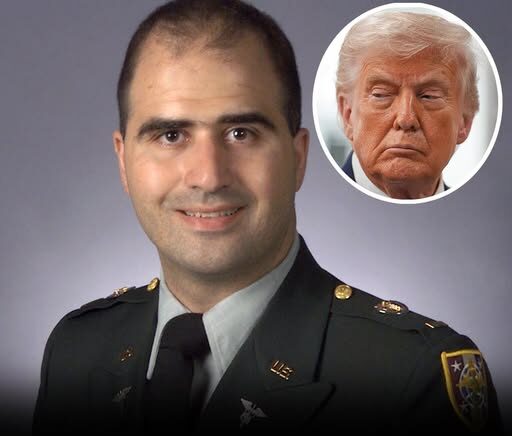
U.S. Army Prepares for Possible Military Executions for the First Time Since 1961
An Internal Army Plan Outlines Preparations That Could Be Used if President Donald Trump Approves Military Death Sentences
For more than six decades, the U.S. military has not carried out an execution.
Now, preparations for the possible executions of prisoners currently on military death row have brought renewed attention to capital punishment within the military justice system.
An internal planning document reportedly instructs Army officials to prepare for possible executions if President Donald Trump gives the required approval.
The plan, called Operation Resolute Justice, was reportedly issued in February.
Four prisoners are currently identified as being on military death row: Ronald Gray, Hasan Akbar, Timothy Hennis and Nidal Hasan.
However, preparations do not mean that executions have been scheduled.
The process would only move forward when the necessary legal requirements and presidential authorization are in place.
The U.S. Military Has Not Carried Out an Execution in More Than 60 Years
The last U.S. military execution occurred in 1961.
Army Pvt. John Bennett was put to death after being convicted of raping and attempting to murder an 11-year-old girl in Austria.
Bennett remains the most recent U.S. service member to have been executed through the military justice system.
More than six decades have passed without another military execution.
That long gap makes the current preparations particularly significant, even though no new execution date has been announced.
Operation Resolute Justice Details How the Process Could Work
The internal planning document reportedly lays out procedures that could be followed if a military death sentence receives the necessary presidential approval.
According to reports, the plan includes transferring condemned prisoners from the U.S. Disciplinary Barracks at Fort Leavenworth, Kansas, to the federal execution facility in Terre Haute, Indiana.
The Terre Haute facility was previously used for a series of federal executions during Trump’s first presidency.
The internal plan reportedly directs several Army organizations to be prepared to facilitate an execution within a specific period following presidential approval.
The document reportedly calls for preparations that could allow an execution to take place no later than 150 days after such approval.
The Army Says Execution Exercises Have Been Conducted for Years
Despite the attention surrounding the planning document, Army officials have described preparations for possible executions as part of longstanding contingency planning.
Army spokesperson Cynthia Smith said exercises connected with the operation have been conducted regularly for approximately 20 years.
“Exercises regarding this operation have been conducted regularly for the past 20 years. These drills are a standard component of our continued planning and preparation if the president approves a death sentence,” Smith said.
At the time of that statement, Smith said no direct orders had been received from the president regarding the relevant death sentences.
That distinction is important because preparing for a possible execution is not the same as ordering one.
Trump Has Made His Position on Capital Punishment Clear
President Donald Trump made capital punishment an early priority after returning to the White House.
On his first day back in office, Trump signed an executive order directing the Justice Department to pursue capital punishment more aggressively in qualifying federal cases.
The move followed a period in which federal executions had been paused under the Biden administration.
Federal executions had also stopped during Barack Obama’s presidency.
During Obama’s time in office, he commuted the death sentence of military prisoner Dwight Loving to life imprisonment without the possibility of parole.
Loving had been convicted of murdering two soldiers in 1988.
Four Prisoners Are on Military Death Row
According to the Army’s May 2026 legal review, four prisoners are currently under military death sentences.
They are Ronald Gray, Hasan Akbar, Timothy Hennis and Nidal Hasan.
Each man’s case has a different history, and their death sentences are not necessarily at the same procedural stage.
Presidential involvement is an important part of the military execution process.
That means the existence of a military death sentence does not automatically result in an execution.
Nidal Hasan Was Sentenced to Death for the Fort Hood Shooting
One of the most widely known prisoners currently on military death row is former Army psychiatrist Maj. Nidal Hasan.
Hasan was convicted in connection with the 2009 shooting at Fort Hood in Texas.
Thirteen people were killed, and 32 others were wounded.
Hasan was convicted by a general court-martial in 2013 and sentenced to death.
His case has received renewed attention as officials have discussed the possibility of moving forward with his death sentence.
Pete Hegseth Has Called for Hasan’s Death Sentence to Be Carried Out
Secretary of War Pete Hegseth publicly expressed support for carrying out Hasan’s death sentence.
“I am 100 percent committed to ensuring the death penalty is carried out for Nidal Hasan. This savage terrorist deserves the harshest lawful punishment for his 2009 mass shooting at Fort Hood. The victims and survivors deserve justice without delay,” Hegseth said in a statement.
Even with that position from the Pentagon leadership, the military death-penalty process still requires the necessary legal steps and presidential action.
Ronald Gray Has Been on Military Death Row for Decades
Another prisoner is former Army specialist Ronald Gray.
Gray served as a cook with the 82nd Airborne Division at Fort Bragg, North Carolina.
He was convicted in 1988 of premeditated murder, attempted murder and three counts of rape.
Gray’s case is particularly notable because his execution has previously received presidential approval.
President George W. Bush approved Gray’s execution in July 2008.
An execution date was initially scheduled for December of that year.
However, a federal judge later stopped the execution.
Another judge eventually lifted that stay in 2016.
Despite the earlier presidential approval, Gray remains on military death row.
Timothy Hennis Also Faces a Military Death Sentence
Former Master Sgt. Timothy Hennis is another of the four prisoners.
Hennis was convicted of raping and killing a woman and murdering her two young daughters.
He was subsequently sentenced to death through the military justice system.
His case remains among those that could be affected if military executions eventually resume.
Hasan Akbar Was Sentenced to Death After a 2003 Attack
The fourth prisoner is former Army Sgt. Hasan Akbar.
Akbar was convicted of killing two officers and attempting to murder 16 others during a 2003 attack.
He was sentenced to death by a general court-martial in 2005.
Like the other prisoners, his presence on military death row does not by itself establish when or whether an execution will ultimately occur.
Any Execution Would End a Gap Dating Back to 1961
The possibility of military executions has drawn attention largely because of how long it has been since the United States military last carried one out.
No service member has been executed through the military justice system since John Bennett in 1961.
If one of the current military death sentences is ultimately carried out, it would end a gap lasting more than six decades.
But several important steps would have to occur before that happens.
Presidential approval, military procedures and any remaining legal proceedings could all affect what happens next.
Preparation Does Not Mean the Executions Are Certain
The Army’s reported planning demonstrates that procedures exist for carrying out military death sentences if the required authorization is given.
It does not establish that all four prisoners will be executed.
The individual cases have different legal histories, and decisions surrounding military capital punishment can involve presidential action as well as additional court proceedings.
For now, Ronald Gray, Hasan Akbar, Timothy Hennis and Nidal Hasan remain the four prisoners identified on military death row.
Whether any of their sentences ultimately result in an execution remains dependent on the legal and presidential process.
If an execution does eventually take place, it would mark the first carried out by the U.S. military since 1961.