
High School Students Build Accessible Bus Shelter for 5-Year-Old Wheelchair User
Every School Morning Began With a Difficult Trip
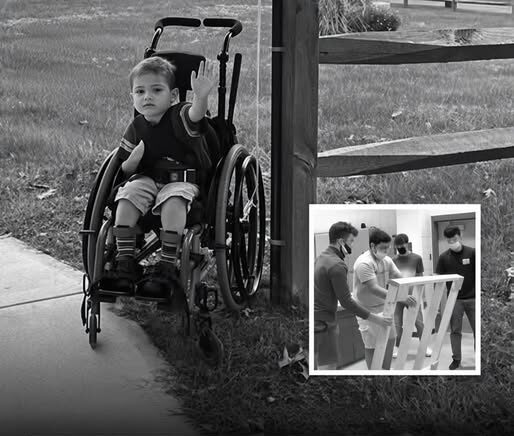
For five-year-old Ryder Kilam, getting to the school bus was much harder than it was for most children his age.
Ryder, a wheelchair user from Connecticut, had to be pushed about 75 feet from his home to the place where his bus stopped.
That distance may not sound large, but winter weather, rain, wind and cold could turn it into a difficult daily routine.
Once Ryder reached the bus stop, there was another problem.
There was no proper shelter designed for him.
His Family Used a Patio Umbrella
To help protect Ryder from the weather, his family relied on a patio umbrella.
It offered some protection, but it was never intended to serve as an accessible bus shelter.
Each morning, Ryder still had to wait outside while exposed to cold air, rain and whatever conditions the day brought.
His father knew there had to be a better solution.
Ryder’s Father Asked the Community for Help
Instead of accepting the situation as something the family simply had to live with, Ryder’s father reached out.
He asked whether anyone in the community might be willing to help build something safer and more practical for his son.
That request eventually reached students at Westerly High School.
What happened next turned a simple request into a project that meant far more than anyone first expected.
Construction Technology Students Stepped In
Students from Westerly High School’s Construction Technology program decided to build Ryder a proper accessible bus shelter.
The idea was practical from the beginning.
Ryder needed a place large enough for his wheelchair.
It needed to offer protection from the weather.
And it needed to be sturdy enough to remain useful throughout the school year.
Three Classes Worked Together
The project was not handled by one student working alone.
Three Construction Technology classes became involved.
Students contributed their time, skills and effort to turn the idea into something real.
For many of them, it was a chance to apply what they had learned in class to a project that would immediately improve someone’s daily life.
Senior Mason Heald Helped Lead the Construction
Senior Mason Heald took a leading role in the project.
He helped guide the construction as the shelter moved from an idea to a finished structure.
The students had to think about dimensions, accessibility, materials and the practical details required to make the shelter useful for Ryder.
It was not simply a classroom exercise.
A five-year-old child would depend on what they built.
The Project Had a Clear Purpose
That purpose helped make the work meaningful.
Every measurement mattered.
Every board had a reason for being there.
The students were building something that Ryder would use repeatedly, not something that would disappear after receiving a grade.
The finished shelter needed to function in real weather and in a real family’s daily routine.
Home Depot Donated Materials
The community effort extended beyond the school.
Home Depot donated about $300 worth of materials for the project.
That contribution helped the students obtain what they needed without placing the full cost on Ryder’s family.
The donation turned the project into a wider example of local cooperation.
A family had asked for help, students had offered their labor, and a business helped provide the materials.
A Former Student Helped With Transportation
Even after the shelter was constructed, another problem remained.
The finished structure still had to reach Ryder’s home.
A former student stepped in to help transport it.
That contribution may have seemed small compared with the construction itself, but without it, the project would not have been complete.
Every part of the effort depended on someone deciding to help.
The Students Wanted It Finished Before Winter
Timing mattered.
Cold weather would soon make Ryder’s morning wait even more difficult.
The students worked to complete the shelter before winter arrived.
That meant Ryder would not have to spend another season waiting beneath a patio umbrella while snow, rain or cold air surrounded him.
The Shelter Was Designed Around Ryder’s Needs
The project was not simply about putting a roof over a bus stop.
It needed to work for a wheelchair user.
Accessibility was central to the design.
Ryder needed enough room to enter comfortably, position his wheelchair and wait safely until the bus arrived.
The students were building around the child rather than expecting the child to adapt to the structure.
That Difference Matters
Accessibility is often most meaningful when it is built into something from the beginning.
A space may technically provide shelter, but if a wheelchair cannot enter easily, it does not solve the real problem.
The students understood that their project needed to work for Ryder specifically.
That practical focus transformed a construction assignment into an exercise in empathy.
Then Came the Moment Everyone Had Been Waiting For
Once the shelter was delivered and placed near Ryder’s bus stop, the students finally had a chance to see the result of their work.
Ryder entered his new shelter.
His reaction made the entire project worthwhile.
He smiled.
Not a polite smile for a photograph.
A huge, unmistakable smile from a child who immediately understood that this new space had been made for him.
Ryder Quickly Made the Shelter His Own
The structure was supposed to be a practical place where Ryder could wait for his school bus.
But to him, it became something more.
His family jokingly began referring to it as his new “fort.”
That nickname says a great deal about how quickly Ryder became attached to the shelter.
What had started as a solution to bad weather became a place he actually enjoyed using.
For Ryder, the Morning Routine Changed Completely
Instead of being pushed to an exposed waiting area and sitting beneath an umbrella, Ryder now had a proper place to wait.
The shelter gave him protection from the weather.
It also gave the morning routine a sense of stability.
The bus stop was no longer simply an uncomfortable place he had to endure.
It was his space.
The Students Saw the Immediate Impact of Their Work
Construction students often spend time learning techniques that may not show their full value until years later in a professional career.
This project was different.
The students could see the result almost immediately.
They saw Ryder sitting inside the shelter.
They saw his smile.
They saw a family relieved to have one daily challenge made easier.
That Reaction Changed the Meaning of the Project
A shelter is made from ordinary materials.
Wood.
Fasteners.
Roofing.
Measurements and careful construction.
But the meaning of a structure depends on what it does for the person using it.
For Ryder, those materials meant warmth, protection and greater comfort.
For the students, they represented proof that practical skills could directly help someone.
It Became More Than a School Assignment
The students were not just practicing construction techniques.
They were solving a real problem.
That difference can change the way a lesson feels.
Instead of asking whether a wall was straight because a teacher would inspect it, they knew the answer mattered because Ryder would be using the shelter in real life.
The responsibility was personal.
Mason Heald’s Leadership Helped Bring It Together
As a senior, Mason Heald helped lead younger students through the construction process.
That gave the project another dimension.
Students were not only helping Ryder.
They were learning how to cooperate, communicate and complete a shared goal.
The project required teamwork at every stage.
Three Classes Became One Team
Normally, different classes work separately.
On Ryder’s shelter, those boundaries mattered less.
Students across three classes contributed toward the same result.
Some may have worked on framing.
Others contributed to finishing or assembly.
What mattered was that the final structure belonged to the group effort.
The Project Showed What Vocational Education Can Do
Construction Technology programs teach practical skills.
Students learn how materials work, how structures are assembled and how to solve problems safely and efficiently.
Ryder’s shelter demonstrated another benefit.
Those skills can be used to strengthen a community.
A student does not have to wait until graduation to make something valuable.
A Small Community Project Can Have a Large Impact
From the outside, the shelter may look modest.
It is not a hospital.
It is not a major public building.
It is simply a protected place beside a road.
But for one child who used to wait outside every morning, it changed an important part of everyday life.
Scale does not always determine significance.
The Family’s Original Request Was Simple
Ryder’s father did not ask the community for something extravagant.
He wanted a safe, accessible place where his son could wait for the bus.
That need could easily have been overlooked.
Instead, people listened.
Once they understood the problem, they found a way to solve it.
The Story Shows Why Asking for Help Matters
Families sometimes hesitate to ask others for assistance.
They may worry about being a burden.
But communities cannot respond to needs they do not know exist.
Ryder’s father spoke up.
That single decision connected the family with students who had exactly the kind of skills needed to help.
The Students Also Received Something Valuable
Ryder received a shelter.
The students received an experience that could not be recreated easily inside a classroom.
They saw the human consequence of craftsmanship.
A well-built project was not simply attractive or technically correct.
It made someone’s life easier.
That Lesson May Stay With Them for Years
Long after the students forget individual assignments or tests, they may remember Ryder’s shelter.
They may remember carrying materials.
They may remember solving construction problems.
Most of all, they may remember Ryder’s face when he saw the completed project.
Moments like that can influence the kind of professionals people later become.
Accessibility Became Something Concrete
It is easy to discuss accessibility as an abstract idea.
This project made it physical.
The students had to consider how wide the shelter needed to be.
They had to think about how Ryder would enter.
They had to create enough protected space for a wheelchair.
Accessibility became something they could measure, build and improve.
The Shelter Also Gave Ryder More Independence
Ryder still needed assistance getting to the bus stop.
But once he reached the shelter, he had a space designed around his needs.
That can create a greater sense of independence and belonging.
Instead of feeling as though the environment had been built for everyone else, Ryder now had something created specifically with him in mind.
Winter Would No Longer Mean the Same Thing
Before the shelter, winter mornings presented an obvious challenge.
Cold temperatures and bad weather could make waiting for transportation particularly uncomfortable.
Finishing the structure before winter meant the family could face the colder months with one less concern.
That practical timing made the gift even more meaningful.
Home Depot’s Donation Helped Make the Plan Possible
The approximately $300 in donated materials showed how a business could contribute without needing to take over the project.
The students still performed the work.
The school still provided the skills and organization.
The company helped remove a financial obstacle.
Each group contributed something different.
A Former Student Completed the Chain of Help
The involvement of a former student also showed how school communities can extend beyond current classrooms.
After construction was finished, transportation was still necessary.
A former student helped deliver the shelter to Ryder’s home.
The project succeeded because people kept solving the next problem as it appeared.
No One Person Had to Do Everything
Ryder’s father identified the need.
The school provided students and instruction.
The students provided labor.
Mason helped lead the build.
Home Depot provided materials.
A former student helped with delivery.
Together, relatively small contributions produced something one family could use every day.
Ryder’s Smile Became the Best Measure of Success
The students could have judged the project by dimensions, materials or construction quality.
Those things mattered.
But the clearest sign of success came from Ryder himself.
He loved it.
His huge smile inside the finished shelter gave the students an immediate answer to whether their effort had been worthwhile.
His “Fort” Was Built From Kindness as Much as Wood
Calling the shelter a “fort” turned a practical structure into something personal.
Children have a way of transforming ordinary spaces through imagination.
For Ryder, the place where he waited for the school bus became his own small space.
That may be one of the sweetest details in the entire story.
A Daily Problem Inspired a Lasting Solution
The situation began with something repetitive and frustrating.
Every morning, a five-year-old wheelchair user needed to travel about 75 feet and then wait outside with inadequate protection.
Instead of continuing indefinitely, his family asked whether the situation could be improved.
The answer came from a group of teenagers willing to build something.
The Students Proved That Help Does Not Have to Be Complicated
Sometimes helping someone requires specialized services or major funding.
Other times, it requires recognizing a problem and using skills that are already available.
These students knew construction.
Ryder needed a structure.
The connection was straightforward.
The impact was significant.
The Shelter Became a Symbol of What Community Can Look Like
Community support is often discussed in broad terms.
Ryder’s shelter provides a very simple example of what it can look like in practice.
A parent asks for help.
Students listen.
Teachers organize.
A business contributes.
A former student helps.
And a child ends up with something that makes every school morning better.
The Best Part Was Never the Structure Itself
The shelter solved an accessibility problem.
But the emotional heart of the story came when Ryder saw what had been created for him.
His reaction reminded everyone involved why they had spent the time and effort.
For the students, that smile turned lumber and construction work into something much larger.
One Small “Fort” Made a Big Difference
Ryder Kilam once waited for his school bus beneath a patio umbrella after being pushed about 75 feet from his home.
Now he has a proper accessible shelter built by students who decided his daily challenge was worth solving.
Three Construction Technology classes helped make it happen.
Senior Mason Heald helped lead the work.
Home Depot contributed materials.
A former student helped deliver the finished structure.
And before winter arrived, Ryder had his new favorite place.
His family calls it his “fort.”
For the students who built it, however, it became something else too: proof that the skills learned in a classroom can become kindness someone else can actually use.