
If You Spot This Strange Shiny Creature in Your Garden, Here’s What You Should Know Before Touching It
A Mysterious Visitor That Could Be Hiding in Your Garden
Finding an unfamiliar creature moving across a garden path can be surprising, especially when its appearance is unlike anything commonly seen among flowers, soil, and fallen leaves. One unusual visitor attracting attention is the blue garden flatworm, a smooth, glossy creature whose distinctive coloring and unusual movement make it particularly noticeable.
At first glance, it might resemble an ordinary worm. However, a closer look reveals several characteristics that distinguish it from the creatures gardeners commonly encounter.
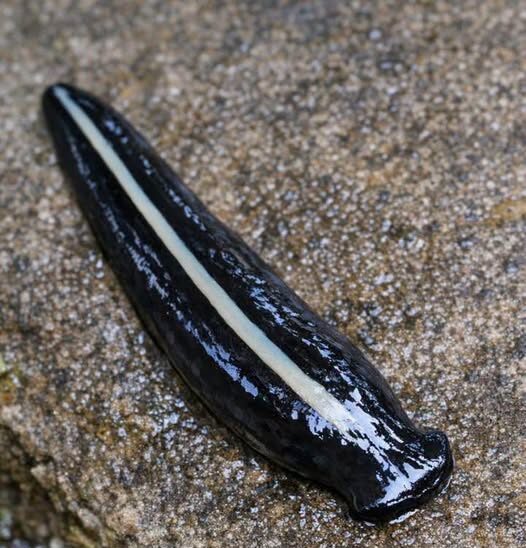
Its body can appear dark and unusually shiny, with a pale stripe extending along the center of its upper surface. Beneath that darker exterior is a blue underside, another feature associated with this distinctive species.
Perhaps its most surprising characteristic is the way it travels. Instead of moving like an earthworm, it appears to glide smoothly over the ground.
Although its appearance may seem alarming, discovering one does not automatically mean that a garden is in danger. Understanding what the creature is, how it arrived, and whether it belongs in the local environment is far more useful than reacting with fear.
Before attempting to pick it up or move it, gardeners should consider several important details about identification, ecological effects, and responsible handling.
What Exactly Is the Blue Garden Flatworm?
The creature is known scientifically as Caenoplana coerulea and is commonly called the blue garden flatworm.
It is native to Australia, but it has been introduced into other regions through the movement of plants, soil, and related gardening materials.
This means that a garden outside its native range may occasionally become home to a species that did not originally occur in that environment.
Transported plants and soil can provide opportunities for small organisms to travel unnoticed between locations. When gardening materials reach a new destination, creatures living within them may arrive as well.
For the blue garden flatworm, this movement helps explain why identifying where a specimen was found matters.
A sighting in its native range has a different ecological context from a sighting in a region where the species has been introduced.
That geographical distinction is important because the presence of a nonnative organism does not necessarily have the same implications everywhere.
Gardeners who encounter a suspected blue garden flatworm should therefore avoid making assumptions based on appearance alone.
Correct identification and local guidance provide a more reliable basis for deciding what to do.
The Distinctive Appearance That Helps Identify It
One of the most recognizable characteristics of Caenoplana coerulea is its unusual combination of colors.
The upper surface is dark and glossy, creating a smooth appearance that can stand out against soil, stones, or vegetation.
A pale stripe runs along the middle of the body, providing an additional identification feature.
The underside is blue, a characteristic that contributes to the species’ common name.
Together, these markings offer useful clues when distinguishing the animal from other wormlike creatures found outdoors.
However, no single visual detail should automatically be treated as proof of identification.
Other organisms may share some similar features, and observations made outdoors can be affected by lighting, moisture, and the position of the animal.
A clear photograph showing the upper surface and its central stripe can help someone familiar with local wildlife examine the specimen.
If the underside can be documented without handling or disturbing the creature, that information may also assist identification.
The important goal is to gather enough visual information for a knowledgeable person or responsible service to assess the sighting.
Why This Creature Seems to Glide Across the Ground
One of the most unusual aspects of the blue garden flatworm is its smooth movement.
Someone seeing it for the first time may wonder how the creature travels without the obvious body movements associated with familiar earthworms.
The explanation involves tiny structures called cilia.
These microscopic structures beat in coordinated movements, allowing the flatworm to travel across a thin layer of mucus.
The combination produces a remarkably smooth gliding motion.
Rather than moving through a series of visibly pronounced contractions, the animal may appear to slide along the surface beneath it.
This behavior can make the creature seem especially unfamiliar, even to someone who regularly works with soil and garden plants.
The mucus layer is an important part of its movement, providing the surface across which the cilia operate.
Its unusual way of traveling is therefore a natural biological characteristic rather than a sign that the animal is injured or behaving abnormally.
Recognizing this movement can help gardeners understand why the creature looks so different from ordinary worms.
What Does the Blue Garden Flatworm Eat?
The blue garden flatworm is a predator of small invertebrates.
Its known prey includes woodlice, millipedes, and snails, organisms that may already be present in ordinary garden environments.
This feeding behavior is one reason the species attracts ecological interest.
Gardens contain many small animals that interact with soil, vegetation, and other living organisms. Introducing another predator into that environment can create questions about its relationship with existing wildlife.
However, it is important to describe the species’ feeding habits accurately.
Blue garden flatworms should not automatically be characterized primarily as predators of earthworms.
That description can confuse Caenoplana coerulea with other introduced flatworm species that have different feeding behaviors.
Distinguishing between species is important when discussing potential ecological effects.
Different animals can have different diets, and those differences influence how they interact with their surroundings.
For this reason, identifying a flatworm correctly is essential before drawing conclusions about which garden organisms might be affected.
Could It Cause Problems in Your Garden?
The discovery of an unfamiliar predator naturally raises questions about whether it could disturb the local garden environment.
In the case of the blue garden flatworm, the answer depends partly on where the animal has been found.
Because the species is native to Australia and introduced elsewhere, its ecological significance cannot be assessed in exactly the same way in every location.
Local conditions, the organisms already present, and the species’ status in a particular region all matter.
The fact that a flatworm eats small invertebrates does not, by itself, establish that a particular garden has suffered ecological damage.
Likewise, seeing a single animal does not provide enough information to determine whether it has become established in the surrounding area.
A locally informed assessment is therefore preferable to broad assumptions about its impact.
Wildlife and biosecurity services may be able to clarify whether the species is considered native, introduced, or of particular concern in the area where it was discovered.
Their guidance can also help gardeners understand whether a sighting should be formally reported.
What You Should Do If You Find One
If a suspicious-looking flatworm appears on a garden path, in a flowerbed, or near a plant container, the first step is to observe it without immediately touching it.
There is usually no reason to respond impulsively simply because the creature looks unusual.
Instead, document the sighting as clearly as possible.
Taking photographs can preserve useful details about its appearance, including the dark upper surface and pale central stripe.
It is also helpful to record the date and exact location where the animal was discovered.
These basic details can assist a local wildlife or biosecurity service in evaluating the observation.
If the species has not been confirmed, requesting expert identification is an appropriate next step.
A photograph alone may not resolve every uncertainty, but it can provide valuable information without requiring unnecessary contact with the animal.
Once identification has been established, gardeners can follow recommendations that are appropriate for their region.
Why You Should Avoid Handling It With Bare Hands
Although discovering an unfamiliar creature can create curiosity, picking it up is not necessary for identification.
Direct handling may disturb the animal and complicate efforts to document it in its original location.
It is therefore sensible to avoid touching the blue garden flatworm with bare hands.
The same caution applies when deciding whether to move it somewhere else.
Relocating an organism without knowing its identity or status could unintentionally contribute to its spread.
This concern is particularly relevant when dealing with species that have already been transported beyond their native geographical range.
Gardeners should also avoid cutting the creature or attempting improvised control methods.
Such actions are not a substitute for informed management and may create unnecessary problems.
The most responsible approach is to leave the identification and appropriate response to locally relevant guidance.
Taking careful photographs and recording the sighting can be more useful than attempting to physically intervene.
How Plants and Soil Can Help Unfamiliar Species Spread
The movement of plants and soil is an important part of understanding how blue garden flatworms can appear outside Australia.
Gardening materials are frequently transported from one place to another, sometimes carrying small organisms that are difficult to notice.
A plant container may contain more than the visible plant itself. Its soil and surrounding materials can provide temporary shelter for creatures living close to the ground.
When these materials are moved, some organisms may be transported with them.
That possibility makes simple inspection an important precaution.
Before transferring pots, plants, or soil to another location, gardeners should examine the materials for unfamiliar animals.
Careful inspection does not require sophisticated equipment or indiscriminate treatment of the entire garden.
It begins with paying attention to what may be present in the soil and around containers.
This practice is particularly valuable when moving gardening materials between properties or locations where the ecological status of a species may differ.
Preventing accidental transportation can be more straightforward than addressing an introduced organism after it has reached a new environment.
Why Using Pesticides Immediately Is Not the Best Response
Some gardeners may feel tempted to apply pesticides as soon as they discover an unfamiliar animal.
However, an unidentified organism should not automatically trigger widespread chemical treatment.
Indiscriminate pesticide use can affect other living creatures in the garden, including organisms unrelated to the suspected flatworm.
It may also fail to address the actual concern if the species has not been identified correctly.
A more measured response begins with establishing what the animal is and whether local guidance recommends any particular management action.
Gardens contain many interacting organisms, and unnecessary interventions can disturb more than the intended target.
For that reason, broad pesticide application is not an appropriate first step simply because a creature appears unfamiliar.
Responsible management considers both the organism in question and the wider garden environment.
When Should a Blue Garden Flatworm Be Reported?
Reporting may be appropriate when the blue garden flatworm is found in a region where it is not native.
Local wildlife or biosecurity services can advise whether the sighting is relevant to existing monitoring or management efforts.
The information most useful for an initial report generally includes the location, date, and photographs showing the animal’s distinguishing characteristics.
These details can help specialists assess the report without requiring gardeners to make assumptions about the creature’s identity.
Because ecological conditions vary between regions, official local recommendations should take priority over generalized advice.
A species that is familiar in its native environment may require different attention when encountered somewhere it has been introduced.
Reporting is not necessarily a sign that immediate harm has occurred. It can simply contribute to a better understanding of where an organism has been observed.
By supplying accurate information, gardeners can help responsible services make informed assessments.
Understanding the Difference Between Curiosity and Concern
The blue garden flatworm’s glossy appearance and smooth movement can make an ordinary garden encounter seem mysterious.
But unusual appearance alone is not evidence that a creature poses an immediate threat.
What matters is its identity, its natural behavior, and its relationship with the local environment.
The species is recognized by its dark upper body, pale central stripe, and blue underside. Its movement is powered by microscopic cilia working across mucus, while its diet includes several types of small invertebrates.
These characteristics help explain why it may appear different from the worms and other animals commonly encountered in gardens.
They also demonstrate why accurate identification matters before considering ecological effects.
Confusing one introduced flatworm with another could lead to inaccurate claims about its diet or impact.
Careful observation allows gardeners to separate the animal’s striking appearance from questions that require expert assessment.
A Careful Response Can Help Protect the Garden
Finding a blue garden flatworm does not require panic, but it does justify thoughtful attention.
The creature’s introduction into regions beyond its native Australia makes location an important part of understanding any sighting.
Rather than touching, cutting, or relocating the animal, gardeners can document its appearance and seek confirmation from an appropriate local service.
Inspecting plants and soil before transporting them elsewhere can also help reduce the chance of unintentionally moving unfamiliar organisms.
Avoiding indiscriminate pesticide use protects other garden inhabitants from unnecessary disturbance.
These precautions provide a practical balance between curiosity, environmental responsibility, and informed action.
The next time a dark, glossy creature with a pale stripe appears to glide across a garden path, there is no need to assume the worst.
Take a closer look without handling it, preserve the details of the sighting, and seek locally appropriate advice.
Sometimes the most effective way to protect a garden is not to act immediately, but to understand exactly what has appeared there before deciding what should happen next.