
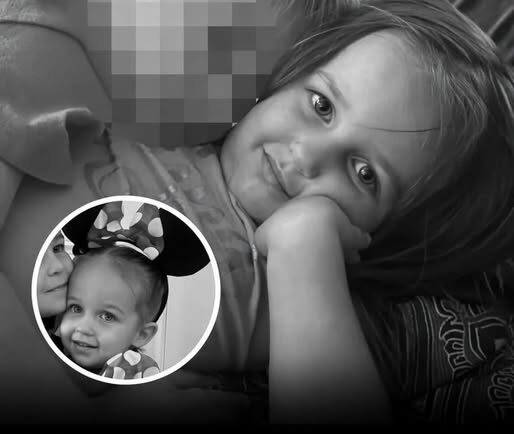
3-Year-Old Girl Dies After Getting Trapped in a Toy Kitchen at Babysitter’s Home—Police Reveal What Happened
Briella Holmes Was Playing at a Home in Boynton Beach, Florida, When She Became Trapped in a Wooden Kitchen Playset. Four Days Later, Her Family Received Devastating News, and Investigators Began Examining a Toy Purchased Through Facebook Marketplace.
A Florida family is mourning the heartbreaking loss of a 3-year-old girl after an ordinary day at a babysitter’s home ended in tragedy.
Little Briella Holmes had been spending time with her sibling at a residence in Boynton Beach, Florida, on July 23, 2026.
The children were playing downstairs while an adult caregiver remained elsewhere in the home.
At some point, several toys reportedly fell into a wooden play kitchen.
According to investigators, Briella apparently tried to retrieve them.
But something went terribly wrong.
The little girl became trapped inside the playset.
When the adult caregiver discovered her, Briella was unresponsive and not breathing.
Emergency services were called immediately.
Police officers and firefighters rushed to the home and attempted to save her.
She was transported to a hospital in critical condition.
For four days, her family faced an unimaginable ordeal.
Then, on July 27, authorities confirmed that Briella had died.
She was only three years old.
The tragedy prompted questions about the wooden play kitchen, how the child became trapped, and whether the incident could reveal a hazard that other families should recognize.
Police subsequently released a photograph of the toy involved.
Investigators also revealed that it had been purchased secondhand through Facebook Marketplace and carried no visible markings identifying its manufacturer or model.
Later, the medical examiner determined that Briella’s death was an accident caused by probable positional asphyxia.
But several questions about the exact circumstances remained unanswered.
What Happened on July 23, 2026?
The incident occurred in the Meadows of Boynton Beach community, a residential area in Palm Beach County, Florida.
Briella and her sibling had been left at a babysitter’s home.
According to information released by the Boynton Beach Police Department, the babysitter temporarily left the residence.
During that period, the children remained under the care of the babysitter’s spouse.
The spouse was upstairs while the children played downstairs.
Police said the adult periodically checked on the children and brought them snacks.
At some point during that time, Briella became trapped in a wooden kitchen playset.
The incident was not immediately discovered.
By the time the caregiver found her, she was unresponsive.
Her Sibling Helped Investigators Understand What Happened
One of the most important details in the preliminary investigation came from Briella’s sibling.
According to police, the sibling explained that toys had fallen inside the wooden play kitchen.
Briella apparently tried to get them back.
Investigators believe she became stuck while attempting to retrieve the fallen toys.
Authorities did not initially establish exactly how her body became positioned inside the playset.
They also did not publicly confirm how long she had been trapped before she was discovered.
The sibling’s account helped police reconstruct the likely sequence of events.
But the full circumstances required further investigation.
The Caregiver Found Her During a Check
The babysitter’s spouse eventually returned downstairs to check on the children.
It was during that visit that the adult discovered Briella.
Police said her head had become stuck in the play kitchen.
She was not responding.
She was also not breathing.
The caregiver removed her from the toy and began lifesaving measures.
Emergency responders were contacted.
The scene quickly became a medical emergency.
What had begun as a normal period of children’s play had turned into a race to save a young life.
Police Received an Emergency Call Shortly After 11 A.M.
Boynton Beach police officers responded to the residence shortly after 11 a.m. on July 23.
The emergency report involved a child who was unresponsive and not breathing.
Officers immediately began or continued lifesaving efforts.
Boynton Beach Fire Rescue personnel arrived to provide emergency medical assistance.
Given the child’s critical condition, she needed hospital treatment.
Rescuers transported Briella to a nearby medical facility.
Her condition was described as critical.
The emergency response was immediate once authorities were notified, but the medical crisis was already severe.
Briella Was Taken to the Hospital in Critical Condition
Following the emergency response, Briella was hospitalized.
Medical professionals attempted to treat the consequences of the incident.
The case later became the subject of reporting involving St. Mary’s Medical Center.
The family faced several days of uncertainty.
For parents and relatives, waiting for news about a critically ill child can be devastating.
Public reports provide only a limited account of Briella’s hospital treatment.
They do not disclose every medical decision or the family’s private experiences during those days.
What authorities eventually confirmed was that she did not survive.
Four Days Later, Briella Died
On July 27, 2026, Briella Holmes died.
She was just three years old.
The news devastated her relatives and shocked people who later learned the circumstances of the incident.
The death drew widespread attention because the object involved was not an obviously dangerous piece of equipment.
It was a children’s play kitchen.
Such toys are commonly found in homes, daycare spaces, and playrooms.
Many families use them to encourage imaginative play.
The fact that an ordinary-looking toy was involved in a fatal incident made the case especially alarming.
Her Family Identified Her as Briella Holmes
Initial police reports did not publicly identify the child by name.
Her family later identified her as Briella Holmes through a fundraising page and statements shared with local media.
Photographs showed a young girl whose life had ended far too soon.
Family members described her as a joyful child who brought happiness to the people around her.
In one public remembrance, her loved ones described Briella as a bright light in many lives.
The family’s tributes emphasized the person they had lost rather than the circumstances surrounding her death.
For them, Briella was not simply the subject of a police investigation.
She was a beloved child whose absence would be felt every day.
Investigators Turned Their Attention to the Wooden Play Kitchen
After the incident, the playset became a central part of the investigation.
Police examined the wooden structure and gathered information about how it had been obtained.
The toy resembled a miniature household kitchen.
It included features representing a sink, stove, and storage compartments.
The structure also contained openings and enclosed areas.
According to police, Briella had become trapped while interacting with the toy.
Investigators needed to determine which features had contributed to the incident and how the child became unable to free herself.
The Toy Had Been Purchased Through Facebook Marketplace
One important detail emerged when officers asked about the playset’s history.
The kitchen had not been purchased new immediately before the incident.
It had been obtained secondhand through Facebook Marketplace several years earlier.
Facebook Marketplace allows individuals to buy and sell used household items, furniture, toys, and other products.
Many families use resale platforms to purchase children’s equipment at lower prices.
However, buying secondhand can make it more difficult to determine a product’s age, original configuration, and recall history.
That challenge became relevant in Briella’s case.
Police Could Not Identify the Manufacturer From the Toy
Investigators reported that the wooden kitchen had no visible markings identifying its brand, manufacturer, or model.
Without those details, confirming its exact origin was difficult.
A product’s brand and model information can help investigators locate assembly instructions and identify original components.
It can also make it easier to check whether a product has ever been subject to a safety recall.
In this case, the absence of identifying marks became a significant complication.
Police therefore released photographs of the playset to show the object involved in the investigation.
The Police Photograph Revealed a Possible Missing Part
On August 5, 2026, the Boynton Beach Police Department released a photograph of the wooden kitchen.
The picture attracted attention from local journalists who began comparing it with similar toys advertised online.
One product appeared to closely resemble the playset.
It was marketed under the name “Country Living Kitchen.”
The photographed toy appeared to have a space where a removable sink insert might ordinarily sit.
Some reports noted that an apparently matching product included a bowl or sink component in that location.
The police photograph seemed to show an opening where that component was absent.
However, investigators did not establish that the apparent missing insert caused Briella’s death.
Was the Play Kitchen Missing Its Sink?
Comparisons with online product images suggested that the kitchen might have been missing a removable toy sink.
Without the insert, an opening was visible in the upper surface.
But the presence of that opening does not establish that it was where Briella became trapped.
Authorities had not publicly confirmed the exact location where her head became stuck.
Nor had they established whether the toy had originally been sold in the same configuration.
The missing-sink theory remained an observation based on photographic comparisons.
It should not be treated as a confirmed explanation for the accident.
Several Questions About the Playset Remained Unanswered
After the photograph was released, important questions persisted.
Which specific opening had trapped Briella?
How had she entered the space?
How long had she been unable to move?
Was the kitchen fully assembled?
Had any parts been removed or replaced before it was sold secondhand?
And did the product have any design features requiring additional examination?
Police had not publicly established all those details in the reporting reviewed.
That uncertainty is important because photographs alone cannot provide a complete reconstruction of the incident.
The Medical Examiner Later Revealed the Cause of Death
Early news coverage reported that Briella’s official cause of death had not yet been released.
But subsequent reporting provided an important update.
The Palm Beach County Medical Examiner’s Office determined that her death resulted from probable positional asphyxia.
The manner of death was classified as an accident.
Those findings were reported by local news outlets and later obtained by national publications.
The determination explained the medical mechanism believed to have caused her death.
However, it did not answer every question about the playset’s construction or the supervision circumstances.
What Is Positional Asphyxia?
Positional asphyxia occurs when the body’s position interferes with normal breathing.
It can happen when a person becomes trapped or compressed in a way that prevents adequate movement of the chest or otherwise compromises respiration.
Young children may be particularly vulnerable because they have limited ability to recognize and escape certain hazards.
They may also be unable to free themselves if their heads or bodies become wedged in an opening.
In Briella’s case, the medical examiner concluded that positional asphyxia was the probable cause of death.
The finding was specific to the medical evidence reviewed in her case.
Why an Ordinary-Looking Toy Can Present Hidden Risks
Children’s toys are designed for play, exploration, and learning.
But their safety depends on factors such as construction, dimensions, age suitability, and condition.
Some toys contain openings that could create entrapment hazards.
Others have removable components that need to remain properly installed.
Damage or incomplete assembly can sometimes alter a product’s original configuration.
These are general safety considerations, not conclusions about what specifically caused Briella’s accident.
The tragedy demonstrates why caregivers should inspect toys carefully, particularly when their history is unknown.
Why Secondhand Toys Deserve Extra Attention
Used toys can provide families with affordable options and extend the useful life of products.
But secondhand purchases may come without packaging, manuals, or identifying labels.
Buyers may not know whether parts are missing.
They may also be unaware of previous repairs or modifications.
In some cases, a toy may have been recalled before it was resold.
Checking the manufacturer’s information and searching official recall databases can help identify known safety concerns.
When a toy lacks identification or cannot be assembled safely, parents should consider whether it is appropriate to keep using it.
Facebook Marketplace Was the Source of the Used Toy
Police confirmed that the wooden kitchen involved in Briella’s death had been purchased through Facebook Marketplace.
That fact identifies the resale platform used for the transaction.
It does not establish that the platform itself caused the accident.
Nor does it prove that the person who sold the kitchen knew about any possible hazard.
Used-product safety depends on several factors, including the original product design, its condition, any modifications, and how it is used.
In this case, investigators had not publicly identified a specific manufacturing defect or confirmed a product recall connected to the toy.
Children Often Explore Spaces Adults Overlook
Young children are naturally curious.
They explore objects by touching, reaching, climbing, and examining openings.
A toy compartment that appears too small or inconvenient to an adult may attract a child’s attention.
Children may also try to retrieve objects from spaces without recognizing that they could become trapped.
Briella’s sibling told investigators that toys had fallen into the play kitchen.
According to that account, she attempted to reach them.
The reported behavior was consistent with an ordinary child’s attempt to recover something during play.
What followed was an unexpected and devastating accident.
The Supervision Arrangement Became Part of the Investigation
Police also examined who had been responsible for the children at the time.
According to their preliminary findings, the babysitter had left the residence.
The babysitter’s spouse was watching the children during that period.
The adult remained upstairs while Briella and her sibling played downstairs.
Police said the spouse checked on the children periodically and brought them snacks.
The adult discovered Briella during one of those checks.
Those circumstances became part of the investigation.
But public reporting did not establish that the caregiver had committed a criminal offense.
No Criminal Charges Had Been Announced
In the reports released during August 2026, authorities said no charges had been filed.
The Boynton Beach Police Department continued examining the circumstances.
A medical examiner’s classification of an accidental death is not the same as a legal determination about whether anyone acted negligently.
Those are separate questions involving different standards and evidence.
It would therefore be inaccurate to declare a specific individual legally responsible based only on the preliminary information released to the public.
The investigation needed to consider the available evidence before any further conclusions could be made.
The Family’s Grief Became the Center of the Story
As the investigation continued, Briella’s relatives were grieving the loss of a very young child.
Family members shared photographs and memories through a public fundraising appeal.
They described the devastation of losing Briella unexpectedly.
Their message emphasized the happiness she had brought into their lives.
Friends and community members offered condolences.
Others contributed support as the family faced arrangements and expenses following her death.
For the people closest to Briella, no investigation could replace the child they had lost.
Remembering Briella as a Child, Not Just a News Story
When tragedies involving children receive national attention, headlines often focus on the unusual circumstances.
In Briella’s case, the play kitchen became a central part of the reporting.
But her identity was much larger than the accident.
She was a daughter.
A sibling.
A little girl loved by her family.
Her relatives remembered her personality and the joy she brought to ordinary moments.
Their loss deserves compassion and sensitivity.
Remembering Briella respectfully means acknowledging her life without reducing her story to the circumstances of her death.
Police Released the Photograph to Provide More Information
In early August, police released an image of the kitchen playset.
The picture allowed journalists and the public to see the object under investigation.
It showed a wooden structure with compartments and several openings.
The photograph helped explain why investigators had questions about the manufacturer’s identity.
It also allowed comparisons with toys being sold under similar product descriptions.
However, the photograph did not establish every relevant fact.
It could not show precisely how Briella became trapped or whether the apparent missing component contributed to the tragedy.
The Similar “Country Living Kitchen” Product Drew Attention
Reporters identified a toy kitchen sold online that appeared similar to the object shown in the police photograph.
The product was described as a Country Living Kitchen playset.
Some reports connected similar products with Anatex Enterprises.
The resemblance helped journalists explore the toy’s possible origin.
But an apparent match does not conclusively identify the exact product involved.
Police had said the kitchen itself lacked visible markings confirming its brand or model.
That distinction matters because products may resemble one another without being identical.
What Parents Can Learn About Toy Inspection
The incident has prompted broader attention to household play equipment.
Parents and caregivers can reduce some risks by inspecting toys before children use them.
They should look for broken panels, missing components, loose hardware, damaged doors, and unusual openings.
They can also confirm that a product is appropriate for the child’s age.
Manufacturer instructions may contain important safety information.
When a toy is secondhand and the instructions are missing, the manufacturer may be able to provide a replacement manual.
If the product cannot be reliably identified or safely assembled, continuing to use it may be unwise.
Checking for Recalls Is Important
In the United States, the Consumer Product Safety Commission maintains information about recalled consumer products.
Families can search its public database using a product’s brand, model, or other identifying details.
Recalls may involve hazards such as choking, entrapment, tip-over risks, or other safety problems.
However, not every incident involving a product means that a recall has been issued.
There was no verified finding in the reporting reviewed that the particular playset involved in Briella’s death had been recalled.
Recall checks are a general safety measure, not proof that a known manufacturing defect caused this tragedy.
Household Play Equipment Should Be Checked Regularly
Even toys that were safe when first purchased can change over time.
Frequent use may loosen fasteners.
Wooden pieces may become damaged.
Components may be lost during moves or storage.
And older products may no longer have their original instructions attached.
Regular visual inspections can help adults notice problems before children encounter them.
Any damaged or incomplete toy should be removed from play until its safety can be properly assessed.
Why Entrapment Hazards May Be Difficult to Notice
Some hazards become apparent only when a child interacts with an object in an unexpected way.
A storage opening may look harmless from an adult’s perspective.
But a young child may try to crawl through it or reach into it.
Children may be unable to recognize that an opening is too narrow to allow them to withdraw safely.
This is why safety standards consider how children of different ages interact with products.
Appropriate design, complete assembly, age suitability, and supervision all contribute to safer play environments.
No single precaution eliminates every possible risk.
Supervision Is One Part of Child Safety
Caregivers face many responsibilities when looking after young children.
They must consider the environment, the activities available, and the needs of the children in their care.
Close, age-appropriate supervision is particularly important where young children can access objects with openings, compartments, or moving parts.
But supervision also works alongside other safety measures.
A play area should be inspected for potential hazards.
Toys should be suitable for the child.
And adults should know how to respond to emergencies.
In Briella’s case, police documented the supervision arrangement, but the available reports did not establish criminal responsibility.
Families Should Know How to Respond to an Emergency
When a child is unresponsive or not breathing normally, immediate emergency action is critical.
In the United States, caregivers should call 911 and follow the dispatcher’s instructions.
Training in pediatric CPR can help adults respond during a medical emergency.
Organizations such as the American Red Cross and American Heart Association offer appropriate training programs.
Such preparation cannot prevent every tragedy.
But it can help caregivers act more effectively when a child suddenly requires lifesaving assistance.
The Case Attracted National Attention
Local coverage of Briella’s death soon reached national news outlets.
ABC News, CBS, PEOPLE, and other organizations reported on the circumstances.
The story attracted attention because a familiar children’s toy had been involved in an unexpected fatal incident.
Many readers expressed concern about play kitchens and similar household items.
Others asked whether the secondhand purchase or missing markings might be significant.
Investigators had not publicly resolved every question about the toy.
But the case contributed to broader public discussion about children’s play environments.
The Medical Examiner’s Ruling Clarified an Important Question
On August 20, additional reports described the medical examiner’s findings.
The official cause of death was probable positional asphyxia.
The manner of death was accidental.
This update was important because earlier coverage had described the cause as pending.
Readers encountering those early articles might not realize that a subsequent determination had been made.
Including the later finding provides a more accurate understanding of the case.
However, the ruling did not establish that the apparent missing sink component was responsible for the incident.
The Difference Between an Accident Ruling and an Investigation
Medical examiners determine causes and manners of death based on medical evidence.
Police investigations examine the circumstances surrounding an event.
Those processes can overlap, but they address different questions.
A death classified as accidental may still be examined to determine whether any laws were violated.
Likewise, an accident ruling does not automatically establish that a manufacturer, seller, or caregiver is legally responsible.
Those conclusions require separate evidence and legal analysis.
In Briella’s case, the publicly reported police investigation continued after the medical determination was announced.
Why the Exact Timeline Matters
The incident occurred on Thursday, July 23, 2026.
Briella was discovered unresponsive at the babysitter’s home.
Emergency personnel transported her to a hospital in critical condition.
She died on Monday, July 27.
Police released more details about the incident in early August.
They also published a photograph of the play kitchen on August 5.
The medical examiner’s accidental-death determination was reported during August.
These dates help distinguish the initial emergency from the later investigation and medical findings.
A Tragedy That Raises Questions About Everyday Objects
Many parents carefully consider obvious hazards such as pools, roads, hot surfaces, and sharp objects.
But some risks are less immediately recognizable.
Children’s furniture and play equipment can include spaces where a young child might become stuck.
Parents may be unaware of such risks, particularly when the product is incomplete or its history is unknown.
Briella’s death has highlighted the importance of examining even familiar-looking play equipment.
Still, the case should not be used to assume that every wooden play kitchen is dangerous.
Product safety depends on the specific design, condition, assembly, and intended use.
Her Family Continues to Face an Irreplaceable Loss
While public discussion has focused on toy safety, Briella’s loved ones are living with the consequences of the tragedy.
The family has shared memories of the young girl they lost.
They have received messages of sympathy from people who heard her story.
Some community members have offered financial and emotional support.
But public attention cannot change what happened.
A little girl who was playing at a babysitter’s home did not return to her family.
For her relatives, that absence is the most painful reality of the case.
What Is Known About Briella Holmes’s Death
The confirmed facts establish a heartbreaking sequence of events.
On July 23, 2026, Briella Holmes was at a babysitter’s home in Boynton Beach, Florida, with her sibling.
The babysitter had left the residence and placed the children in the care of a spouse.
The adult remained upstairs and checked on the children periodically while they played downstairs.
According to the sibling, toys fell inside a wooden play kitchen.
Briella apparently tried to retrieve them and became trapped.
When the caregiver discovered her, she was unresponsive and not breathing.
The adult removed her from the playset and began lifesaving efforts.
Police and fire rescue personnel responded, and Briella was taken to a hospital.
She died four days later, on July 27.
Investigators established that the play kitchen had been purchased secondhand through Facebook Marketplace.
It had no visible manufacturer or model markings.
Photographs suggested it resembled a Country Living Kitchen playset, but the exact model was not conclusively confirmed.
Later medical examiner findings attributed her death to probable positional asphyxia and classified it as accidental.
No criminal charges were reported in the reviewed coverage.
Remembering Briella Holmes
Briella Holmes was only three years old when her life ended following a tragic incident involving a wooden play kitchen.
The young girl had been spending time with her sibling at a babysitter’s home.
According to investigators, she became trapped while apparently trying to recover toys that had fallen inside the playset.
Emergency responders worked to save her.
She was hospitalized in critical condition.
But four days later, her family received the devastating news that she had died.
The medical examiner subsequently determined that probable positional asphyxia caused her death and classified it as an accident.
The tragedy raised difficult questions about the playset, its missing identifying information, and the circumstances of the incident.
Investigators released photographs and continued examining the available evidence.
For parents and caregivers, the case is a reminder that children’s play equipment should be carefully inspected, particularly when purchased secondhand.
For Briella’s family, however, the story is about far more than a toy.
It is about the loss of a daughter and a sibling whose life had barely begun.
Her loved ones described her as a joyful presence who brought happiness to those around her.
And while the public may remember the unusual circumstances of her death, the people who knew Briella will remember the child herself.
The tragedy underscores the importance of child safety, emergency preparedness, and responsible investigation without assigning blame before the evidence supports it.
Above all, it is a reminder of how precious a young life is—and why Briella deserves to be remembered with dignity, compassion, and love.