
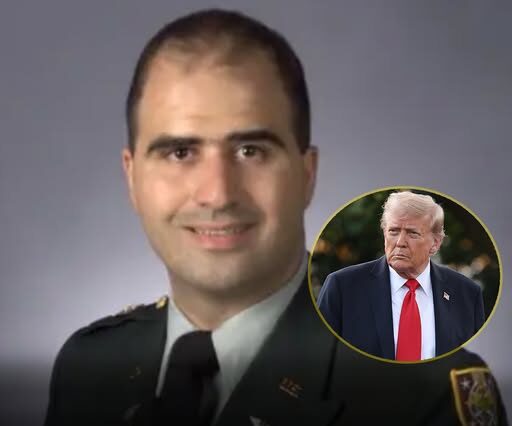
U.S. Military Plans First Execution in 65 Years—and Pentagon’s Livestream Announcement Sparks Major Debate
Former Army Major Nidal Hasan, Convicted of Killing 13 People at Fort Hood in 2009, Is Scheduled to Face a Firing Squad on December 3, 2026. But a Pentagon Announcement About Broadcasting the Execution Has Raised New Legal and Ethical Questions.
For more than six decades, the United States military has not carried out a criminal execution.
That could change on December 3, 2026.
Former Army Major Nidal Malik Hasan, who was convicted of killing 13 people and injuring 32 others during a 2009 shooting at Fort Hood, Texas, is scheduled to be executed at the same military installation where the attack occurred.
The sentence will be carried out by firing squad if the execution proceeds as planned.
But it is not only the execution itself that has drawn national attention.
The Pentagon has announced plans to livestream the event.
The decision has generated debate among legal experts, military officials, human rights advocates, and political figures.
Supporters have argued that public access could demonstrate accountability and make the government’s actions more transparent.
Critics question whether broadcasting an execution would turn a solemn act of military justice into a public spectacle.
The announcement has also raised concerns about the effects on victims’ families, military personnel involved in carrying out the sentence, and viewers who may encounter the footage online.
Nearly 17 years after the attack, Hasan’s case has returned to the center of national discussion.
And although the execution has an official date, important legal and practical questions remain unresolved.
President Trump Approved the Death Sentence
According to an official announcement from the U.S. Army, President Donald Trump approved Hasan’s death sentence on October 2, 2026.
Presidential approval is required before a military death sentence can be carried out.
On October 6, Acting Secretary of the Army Adam Telle directed the execution to proceed.
The Army publicly announced the date and location the following day.
Hasan is scheduled to be executed on Thursday, December 3, at 1 p.m. Central Time.
The location is Fort Hood in Texas.
That decision is particularly significant because Fort Hood was the site of the attack for which Hasan was convicted.
The execution would be the first carried out by the U.S. military since 1961.
The Pentagon Announced a Livestream
On October 8, Pentagon officials confirmed that the execution was intended to be livestreamed.
The announcement followed remarks from Defense Secretary Pete Hegseth, who had discussed making the execution public.
Speaking during a visit aboard the aircraft carrier USS Abraham Lincoln, Hegseth said that people would be able to watch.
His comments suggested the administration wanted the execution to be visible beyond the witnesses normally permitted at such events.
The Pentagon subsequently confirmed the livestream plan.
However, officials had not fully explained how the broadcast would operate.
Questions remained about the platform, public access, safeguards, and whether legal challenges could affect the arrangement.
Pete Hegseth’s Remarks Drew Immediate Attention
Hegseth spoke about the execution while visiting the crew of the USS Abraham Lincoln.
During the discussion, he emphasized that the military intended to carry out the death sentence publicly.
He was also asked whether Hasan had made final requests or attempted to communicate with the administration.
Hegseth dismissed the question and referred to the scheduled December 3 date.
His response attracted attention because of the seriousness of the planned execution.
Some observers interpreted his comments as an expression of determination to complete the long-delayed sentence.
Others criticized the tone and questioned the decision to promote public viewing.
The disagreement became part of a wider debate about how military executions should be conducted.
Why This Execution Would Be Historically Significant
The U.S. military has maintained a separate system of criminal justice for service members throughout much of American history.
That system includes courts-martial, military appellate courts, and procedures governing the most serious sentences.
Although military law permits capital punishment for certain offenses, executions have been extremely rare in the modern era.
The last execution carried out by the U.S. military occurred on April 13, 1961.
That means more than 65 years would separate the previous execution from Hasan’s scheduled date.
The proposed method, a firing squad, also carries historical significance.
The military has not used that method of execution since World War II.
The Last Military Execution Took Place in 1961
Army Private John A. Bennett was the last person executed under the U.S. military justice system.
He was convicted by court-martial of rape and attempted murder.
His sentence had been approved during the presidency of Dwight D. Eisenhower.
President John F. Kennedy subsequently declined to commute it.
Bennett was executed by hanging at Fort Leavenworth, Kansas, on April 13, 1961.
No military execution has been carried out since then.
Although other military personnel have received death sentences, the long appellate process and other legal developments have prevented additional executions.
Hasan’s Case Goes Back to November 5, 2009
The events that led to Hasan’s conviction occurred on November 5, 2009.
Hasan was serving as an Army psychiatrist at Fort Hood, a major military installation in Texas.
That afternoon, he entered the Soldier Readiness Processing Center.
The building was used by military personnel preparing for deployment and completing medical requirements.
Service members were waiting for vaccinations, examinations, and administrative processing.
Hasan opened fire inside the facility.
Thirteen people were killed.
Thirty-two others were injured.
The attack became one of the deadliest shootings at an American military installation.
The Victims Had Been Preparing for Military Duties
Many of those present at the Soldier Readiness Processing Center were completing routine preparations for deployment.
They had gathered for medical and administrative requirements associated with military service.
Some were preparing to leave the country.
Others were assisting with the processing operation.
The sudden attack transformed an ordinary military workday into a devastating tragedy.
Families lost loved ones.
Survivors sustained physical injuries.
And many others who were present experienced emotional trauma.
The effects extended far beyond the 13 people who died and the 32 who were wounded.
The Attack Had a Lasting Impact on Fort Hood
The shooting shocked the military community.
Service members and their relatives faced the loss of colleagues, friends, and family members.
Memorials and remembrance ceremonies followed.
Questions also emerged about how warning signs had been handled before the attack.
Federal agencies and military officials reviewed the circumstances surrounding Hasan’s actions.
The case became an important subject in discussions about security, internal threats, and the responsibilities of military institutions.
For the families of victims, however, the central issue remained the lives that had been lost.
Hasan Was Wounded During the Shooting
Law enforcement officers responded to the attack.
Hasan was shot by police during the confrontation and survived.
His injuries left him paralyzed from the waist down.
He has subsequently used a wheelchair.
Following the shooting, he faced military criminal proceedings for the deaths and injuries.
The case required extensive investigation and eventually moved through the court-martial system.
The Court-Martial Took Place in 2013
Hasan was tried by a military court in 2013.
He faced 13 counts of premeditated murder and 32 counts of attempted murder.
The trial included testimony from numerous witnesses and detailed evidence about the shooting.
Hasan represented himself after choosing to dismiss his defense attorneys from their original role.
Standby counsel remained available during proceedings.
On August 23, 2013, the court-martial panel found him guilty.
Five days later, the panel sentenced him to death.
The conviction began a lengthy period of mandatory appellate review.
Why the Legal Process Took So Many Years
Death sentences in the U.S. military are subject to extensive review.
The military justice system contains procedures intended to examine the legality of convictions and sentences before an execution can occur.
These safeguards can require many years.
Hasan’s conviction and death sentence were reviewed through the military appellate system.
In March 2025, the U.S. Supreme Court declined to review his court-martial conviction.
That decision allowed the military process to move closer to its final stages.
But additional legal options may still be available in civilian federal courts.
Presidential Approval Was a Necessary Step
Under military law, a death sentence cannot be executed without presidential approval.
This distinguishes the military process from many state criminal justice procedures.
The president reviews a recommendation that moves through senior military and civilian leadership.
In Hasan’s case, President Trump gave approval on October 2, 2026.
The Army then proceeded with scheduling.
Acting Secretary Adam Telle directed the execution on October 6.
The official date was announced for December 3.
Army regulations establish a time window for scheduling following presidential approval.
The Execution Is Scheduled for Fort Hood
The location adds another dimension to the case.
Fort Hood is where Hasan committed the attack in 2009.
It is also where the Army plans to carry out his sentence.
The choice has attracted attention because of the direct connection between the location and the crime.
For families affected by the shooting, the base remains associated with memories of the attack.
For military leaders, the planned execution marks the final stage of a court-martial that began more than a decade earlier.
However, the scheduled date remains subject to possible legal intervention.
Military Lawyers Say Important Questions Remain
Legal experts have described the livestream proposal as highly unusual.
Military attorney Amy Bateman, who completed legal training at Fort Hood, told KVUE that she could not predict exactly how the execution would unfold in practice.
The military has not carried out a firing squad execution since World War II.
And modern livestream technology presents issues that did not exist when previous military executions were conducted.
Those issues include public access, security, legal restrictions, and potential effects on the people involved.
Lawyer John Mills Questioned the Legal Ground
Attorney John Mills, who works on death penalty cases, discussed the proposed broadcast with the BBC.
He described the plan as unprecedented in the modern era.
He also expressed uncertainty about its legal basis.
Those concerns reflect the difference between allowing limited witnesses at an execution and broadcasting the event to an unrestricted audience.
Military regulations were not developed around modern social media and online streaming platforms.
As a result, the proposed broadcast raises questions that may require further legal examination.
Could the Execution Be Delayed?
Yes.
Although the Army has set an official date, legal specialists say Hasan may still have avenues to challenge the execution through civilian federal courts.
A habeas corpus petition could seek judicial review of legal issues related to his detention or sentence.
Such proceedings could delay the December 3 execution.
Military legal specialist Eugene Fidell has suggested that litigation might extend well beyond the currently scheduled date.
The Death Penalty Information Center has also emphasized that federal review remains an important possibility.
Therefore, an announced date does not guarantee that the execution will occur as scheduled.
Hasan’s Legal Representation Has Also Become an Issue
Another concern involves access to legal counsel.
Attorney John Galligan, who previously represented Hasan in civil matters, said questions arose about whether an attorney was present when Hasan was informed of the execution approval.
Galligan raised concerns about compliance with military procedures.
An Army spokesperson disputed the suggestion that the military had ignored its obligations.
The Army said efforts had been made to contact appropriate defense attorneys and maintained that Hasan was not being prevented from communicating with counsel.
The disagreement illustrates how procedural questions may continue even after the underlying conviction and sentence have survived appellate review.
Why the Livestream Is So Controversial
The central controversy concerns whether the public should be able to watch a government execution remotely.
Executions in the United States have generally been conducted with limited witnesses rather than unrestricted public viewing.
Those witnesses may include designated family members, lawyers, officials, and media representatives, depending on the jurisdiction.
A livestream could make the event accessible to a much larger audience.
That change raises difficult questions.
Would broader access improve transparency?
Could it create unnecessary public spectacle?
How would online platforms handle recordings and redistribution?
And what protections would be available to people who do not wish to encounter the footage?
Some Experts See Transparency as a Benefit
Not all legal specialists oppose the idea of public access.
Fordham University law professor Deborah Denno has argued that increased transparency could help the public understand how the death penalty is administered.
From this perspective, government executions should not be entirely hidden from public scrutiny.
Allowing greater observation could provide information about the procedures used and how they are implemented.
Supporters of this argument distinguish transparency from entertainment.
They contend that public accountability can be valuable when the government exercises its most severe criminal punishment.
Other Experts Warn Against Turning an Execution Into a Spectacle
Critics argue that livestreaming an execution introduces serious ethical concerns.
They question whether a public broadcast respects human dignity.
Some are concerned that the execution could become a widely circulated piece of online content.
Others worry that government promotion of the event could shift attention away from the victims and the legal process.
Elisabeth Semel, a death penalty expert at the University of California, Berkeley, has raised questions about the purpose and implications of the plan.
The disagreement reflects broader debates about capital punishment and the limits of public punishment.
Public Executions Have a Long and Controversial History
Executions were once commonly carried out in public in the United States.
During earlier periods of American history, large crowds sometimes gathered to witness them.
Over time, public attitudes and government procedures changed.
Executions increasingly moved behind prison walls.
One of the last major public executions in the United States occurred in Kentucky in 1936.
Thousands of spectators attended that hanging.
The event became associated with the broader movement away from public executions.
A modern livestream would differ from those historic gatherings, but some critics see troubling similarities in the idea of making an execution available for mass viewing.
Modern Technology Creates New Questions
A livestream can reach audiences far beyond the location where an event takes place.
It can be recorded.
Clips can be copied and circulated.
Footage can be shared on platforms in countries around the world.
Those possibilities make a modern broadcast very different from a limited in-person viewing arrangement.
Officials have not yet clearly explained which platforms would be involved or how the footage would be controlled.
The uncertainty has become one of the central concerns surrounding the Pentagon’s announcement.
Experts Have Raised Concerns About Children Encountering the Footage
The possibility of an execution being livestreamed has also prompted warnings from child development and mental health specialists.
They have expressed concern that graphic footage could spread online and reach children unexpectedly.
Repeated exposure to disturbing material can affect some viewers, particularly those who are already vulnerable.
Experts have encouraged parents to discuss the issue calmly and in age-appropriate ways if children encounter news about it.
The concern is not limited to people who deliberately seek out the broadcast.
Social media can expose users to material they never intended to watch.
Religious Leaders Have Also Responded
Archbishop Timothy Broglio, who oversees the Roman Catholic Archdiocese for the Military Services, USA, has criticized the planned livestream.
He has urged Catholic personnel assigned to a firing squad to consider seeking exemption.
His position reflects Catholic Church opposition to the death penalty.
The archbishop also questioned the moral implications of broadcasting an execution.
His remarks added a religious and conscience-based dimension to the debate.
They also raised questions about the responsibilities of military personnel who may have personal objections to participating.
A Military Lawyer Raised Concerns for the Soldiers Involved
Amy Bateman discussed another aspect of the planned execution that has received less public attention.
She expressed concern about the military personnel who would be required to participate directly.
Her comments focused on the importance of providing appropriate care and support to those involved.
Carrying out a death sentence is a serious responsibility.
It may also create psychological and moral challenges for participating personnel.
Bateman said she hoped military leaders were considering how to support those individuals before and after the event.
The Families of the Victims Remain Central to the Case
The execution announcement has revived memories of the November 2009 shooting.
Thirteen people lost their lives.
Dozens more were wounded.
Many witnesses and family members experienced lasting effects.
For some people affected by the attack, carrying out the sentence may represent an important moment of legal accountability.
Others may have different feelings about the execution or the proposed public broadcast.
There is no single reaction that can be attributed to every survivor or family.
Grief and responses to punishment are personal experiences that vary considerably.
The Impact Extended Beyond Those Physically Injured
Bateman also emphasized that the harm caused by the attack extended beyond the official casualty figures.
Hundreds of people were connected to the events through their presence at the base, relationships with victims, or involvement in the emergency response.
Those experiences can have lasting consequences.
Families may continue carrying the emotional effects of sudden loss.
Survivors may face ongoing physical or psychological challenges.
The official number of people killed and wounded does not capture every individual affected by the shooting.
Hasan Was Convicted of Murder and Attempted Murder
Although the Fort Hood attack has frequently been discussed in relation to terrorism, Hasan was convicted through the military justice system of murder and attempted murder.
The court-martial found him guilty of 13 counts of premeditated murder and 32 counts of attempted murder.
Amy Bateman noted that the distinction between those criminal convictions and a separate terrorism charge is legally important.
Public descriptions of an attack may differ from the exact offenses listed in a criminal conviction.
For legal accuracy, the charges and findings of the court-martial should be stated precisely.
Why the Attack Has Been Discussed in the Context of Terrorism
Hasan described ideological motivations for his actions and made statements about military deployments to Afghanistan.
Those statements contributed to extensive discussion of the attack’s nature and motivation.
However, the criminal case proceeded under the offenses charged in the military court.
That difference is important because legal terminology has specific consequences.
The established outcome is that Hasan was convicted of the murders and attempted murders committed at Fort Hood.
The court-martial sentence was death.
That sentence was subsequently upheld through the military appellate process.
Only a Small Number of Military Prisoners Face Death Sentences
Hasan is one of four individuals reported to be on U.S. military death row.
Military capital punishment is therefore exceptionally rare.
Most serious criminal cases involving military personnel do not result in a death sentence.
Even when capital punishment is imposed, the review process can extend over many years.
The small number of prisoners and the absence of executions since 1961 demonstrate how infrequently the military has used this punishment in recent decades.
Another Military Death Sentence Was Approved in 2008
Hasan’s case is not the first military death sentence to receive presidential approval during the modern era.
In 2008, President George W. Bush approved the execution of Ronald Gray, a former Army soldier convicted of serious crimes.
Gray had been on military death row since the late 1980s.
However, his execution did not take place.
Legal proceedings continued.
That history demonstrates why presidential approval does not automatically mean an execution will occur on the announced timetable.
December 3 Is a Scheduled Date, Not a Guaranteed Outcome
The Army has officially established December 3, 2026, as Hasan’s execution date.
The planned location and method have also been announced.
But the legal process may not be finished in every respect.
Civilian federal court proceedings could delay the execution.
Additional litigation could also raise questions about the proposed livestream.
As of October 14, the Pentagon had not publicly resolved all details of how the broadcast would be conducted.
Readers should therefore distinguish between what officials intend to do and what has actually occurred.
What Happens Between Now and December 3?
Several developments could affect the case before the scheduled execution.
Hasan may pursue further judicial review.
Courts could be asked to consider legal challenges.
The Pentagon may release additional information about the livestream.
Military officials may also provide more details about the procedures governing the execution.
Any of those developments could change the circumstances surrounding the currently announced plan.
For now, the official schedule remains in place.
The Livestream Announcement Has Created a National Debate
The proposed broadcast has drawn attention because it combines two unusual circumstances.
First, the U.S. military is preparing for its first execution in more than 65 years.
Second, officials have announced plans to make that execution available through modern livestream technology.
The combination raises questions that go beyond Hasan’s individual case.
What role should public viewing play in capital punishment?
How should governments balance transparency with dignity?
And how should institutions manage the effects of widely distributing such footage?
Legal experts and public officials have expressed differing views.
Those questions remain unresolved as the scheduled date approaches.
The Military Must Also Consider Its Own Personnel
Military executions are conducted within a chain of command and according to specific legal procedures.
Personnel involved have official responsibilities.
But the unusual circumstances of this case have prompted discussion about training, psychological support, and conscientious objections.
Military leadership must also consider safety, legal compliance, and the welfare of participants.
Those concerns are separate from the question of whether Hasan’s conviction was legally upheld.
They involve how the government implements a sentence after the criminal process.
Public Reactions Remain Divided
Supporters of the execution have emphasized accountability for the 2009 attack.
Some view the proposed livestream as a demonstration that the military is carrying out the sentence openly.
Critics have questioned whether broadcasting an execution serves any legitimate purpose beyond spectacle.
Others are concerned about how the footage might circulate online.
These disagreements reflect broader views about capital punishment, government power, and public access to criminal justice proceedings.
The debate is likely to continue as officials release more information.
What We Know About the Planned Execution
Several central facts have been confirmed.
Nidal Malik Hasan was convicted in 2013 of killing 13 people and attempting to murder 32 others during the 2009 shooting at Fort Hood.
He was sentenced to death by a military court-martial.
President Donald Trump approved the death sentence on October 2, 2026.
Acting Secretary of the Army Adam Telle directed the execution on October 6.
The Army announced that it is scheduled for December 3, 2026, at Fort Hood, Texas.
The planned method is a firing squad.
The Pentagon has also announced that it intends to livestream the event.
However, the precise broadcasting arrangements remain unclear.
And additional legal challenges could delay the scheduled execution.
A Case That Continues to Affect Families Nearly 17 Years Later
The 2009 shooting at Fort Hood remains one of the most devastating attacks in the history of American military installations.
Thirteen people were killed.
Thirty-two were wounded.
The consequences extended to relatives, colleagues, witnesses, and emergency responders.
Hasan’s conviction was secured in 2013.
Years of legal review followed.
Now the military has announced a date for carrying out the death sentence.
For the people affected by the attack, the renewed attention may bring difficult memories.
Some may view the execution as a long-awaited final step in the legal process.
Others may be concerned about the public broadcast or the renewed publicity surrounding the case.
Those different responses deserve respect.
America’s First Military Execution in 65 Years Could Become a Historic Turning Point
On December 3, 2026, the U.S. Army plans to carry out the execution of former Army Major Nidal Malik Hasan at Fort Hood, Texas.
If it proceeds, it will be the first U.S. military execution since 1961.
It will also mark the military’s first execution by firing squad since World War II.
But the historical significance goes beyond the method and the long gap between executions.
The Pentagon has announced plans to livestream the event, creating questions about transparency, legal authority, public access, and ethical responsibility.
Military lawyers have warned that the proposed broadcast enters largely untested territory.
Some experts argue that public viewing could increase accountability.
Others believe it could turn a serious act of government punishment into an inappropriate spectacle.
Concerns have also been raised about the soldiers required to participate, the victims’ families, and the potential impact of widely shared footage.
Hasan was convicted of killing 13 people and injuring 32 others in the November 5, 2009, attack at Fort Hood.
His death sentence was upheld through the military appellate process, and President Trump approved it on October 2, 2026.
But the scheduled execution may still face further legal challenges.
The exact arrangements for the livestream have also not been fully disclosed.
As the December date approaches, the case remains an important test of how the U.S. military administers capital punishment after decades without carrying out an execution.
For many Americans, the debate concerns the boundaries of government power and public accountability.
For the families affected by the Fort Hood attack, it remains connected to a tragedy that changed their lives nearly 17 years ago.
And until the remaining legal and practical questions are resolved, one crucial distinction remains.
The military has announced what it plans to do on December 3, but the final outcome has not yet been determined.