
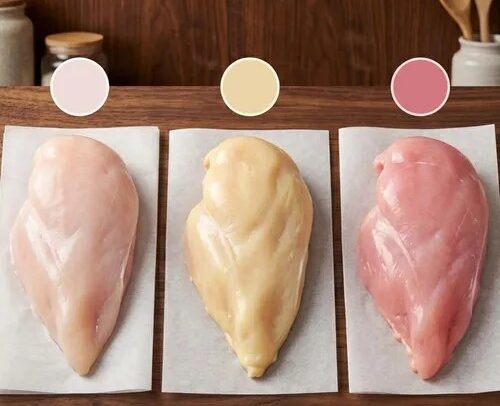
What Chicken Color Really Means: Understanding Pale vs Yellow Meat
Why Chicken Color Can Be Confusing
When shopping for chicken, many people notice differences in color and wonder what those variations mean.
Some pieces appear pale or slightly pink, while others have a deeper yellow tone.
At first glance, it may seem like one option is healthier or more natural than the other.
However, color alone is not a reliable indicator of quality or freshness.
Several factors influence how chicken meat looks, and understanding them can help you make better choices.
What Causes Differences in Chicken Color
The color of chicken meat is influenced by multiple elements, including diet, environment, and farming practices.
These factors affect both the appearance and, in some cases, the texture of the meat.
Rather than focusing only on color, it is important to consider the conditions in which the chicken was raised.
This broader perspective provides a more accurate understanding of the product.
Each factor plays a role in shaping what you see at the store.
Pale Chicken and Modern Farming Practices
Pale chicken meat is commonly associated with large-scale farming operations.
In these systems, chickens are typically raised indoors under controlled conditions.
Their diets are designed to promote rapid growth and consistent production.
This approach helps keep costs lower and ensures a steady supply.
As a result, the meat often appears lighter in color.
Living Conditions and Their Impact
Chickens raised in indoor environments usually have limited space to move around.
They are provided with formulated feed rather than a varied natural diet.
These conditions can influence both the color and texture of the meat.
While this method is efficient, it may result in a milder flavor profile.
Understanding these conditions helps explain why pale chicken is so common.
Yellow Chicken and Natural Diets
Chicken with a yellowish hue is often linked to birds that consume diets rich in natural pigments.
These pigments, such as carotenoids, are found in foods like corn, grass, and certain plants.
When chickens consume these nutrients, the color of their skin and fat can take on a yellow tone.
This is a natural process and not necessarily an indicator of superior quality.
It simply reflects what the birds have been eating.
The Role of Outdoor Access
Chickens raised in environments with access to outdoor space often have more varied diets.
They may forage for insects, seeds, and plants in addition to their feed.
This increased activity can contribute to differences in texture and appearance.
Such conditions are often associated with terms like free-range or pasture-raised.
These labels provide additional context beyond color alone.
When Color Can Be Misleading
While yellow chicken can be linked to natural diets, it is not always a guarantee of farming quality.
Some producers may adjust feed to enhance color, even in controlled environments.
This means that appearance alone does not tell the full story.
Consumers should be cautious about relying solely on visual cues.
Looking deeper into product information is essential.
Understanding Food Labels
Labels can offer valuable insight into how chicken is raised and processed.
Terms like “organic,” “free-range,” and “pasture-raised” provide information about farming practices.
Each label has specific standards that producers must meet.
Reviewing these details can help you make informed decisions.
It is often more reliable than judging by color alone.
How to Assess Freshness
Freshness is an important factor when selecting chicken.
Rather than focusing on color, pay attention to smell and texture.
Fresh chicken should have a neutral scent and firm consistency.
Any strong or unpleasant odor may indicate spoilage.
Texture and appearance together provide better clues than color by itself.
Balancing Cost and Quality
Different types of chicken are available at a range of price points.
Mass-produced options are typically more affordable and widely accessible.
Alternatives raised under different conditions may come at a higher cost.
Your choice will depend on your priorities and preferences.
Understanding the differences can help you decide what works best for you.
Considering Flavor and Texture
Some people notice differences in taste and texture based on how chickens are raised.
More active birds may develop firmer meat.
Diets can also influence flavor, though preferences vary.
These factors are subjective and may differ from person to person.
Trying different options can help you determine what you prefer.
The Bigger Picture
Chicken color is just one small part of a larger story.
It reflects aspects of diet and environment, but not the full picture of quality.
By considering multiple factors, you can gain a better understanding of what you are buying.
This approach leads to more informed and confident choices.
It also helps avoid common misconceptions.
Making Informed Decisions
When selecting chicken, take the time to look beyond surface appearance.
Check labels, evaluate freshness, and consider your personal priorities.
These steps provide a more complete view of the product.
They also help ensure that your choice aligns with your needs.
Being informed makes the decision-making process easier.
Conclusion
The color of chicken meat can vary for many reasons, but it does not determine quality on its own.
Pale and yellow chicken each reflect different factors, particularly diet and farming methods.
Understanding these differences allows you to make more thoughtful choices.
By focusing on labels, freshness, and overall conditions, you can select the option that suits you best.
In the end, knowledge is the most reliable guide when it comes to food decisions.