
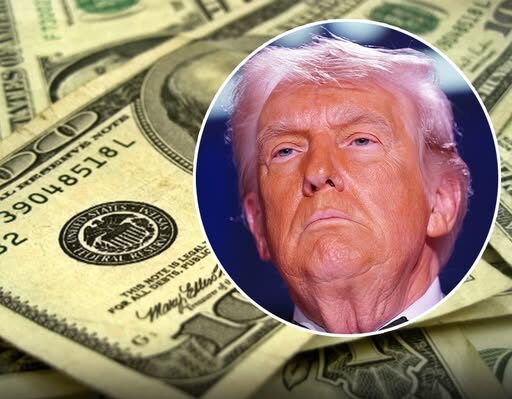
Trump’s Proposed $2,000 Tariff Checks Still Face Major Obstacles
Debate Continues Over Possible Payments to Americans
The idea of sending $2,000 payments to Americans through a proposed tariff dividend program is once again drawing public attention, but there is still no confirmed plan, no approved legislation, and no timeline guaranteeing when any money could actually be distributed.
For months, discussions surrounding the proposal have circulated widely as Americans waited for more concrete details about the possibility of receiving direct payments funded through tariff revenue.
The concept was introduced by President Donald Trump, who described the payments as a “tariff dividend” tied to revenue collected from tariffs on imported goods.
In a post shared on Truth Social on Nov. 9, Trump wrote, “A dividend of at least $2000 a person (not including high income people!) will be paid to everyone.”
That statement quickly fueled speculation that a large-scale payment program could eventually become reality.
No Official Payment Schedule Exists
Despite repeated public discussion about the proposal, there is currently no official payment date tied to the program.
The timeline surrounding the potential checks has shifted multiple times since the idea was first mentioned.
At one point, Trump suggested the funds could be distributed by mid-2026. Later comments appeared to move that estimate further back.
More recently, Trump reportedly questioned when he had made the original promise during an exchange with a reporter, adding more uncertainty to the situation.
Predictions generated through AI analysis of Trump’s public statements estimated that the earliest possible timeframe for payments could fall between June and August of 2026.
Even those projections remain speculative because there is still no finalized framework for the proposal.
At this stage, no checks have been scheduled, no payment system has been approved, and no federal agency has announced plans for distribution.
Congressional Approval Remains a Major Issue
One of the biggest obstacles facing the proposal is the lack of congressional approval.
Currently, there is no law authorizing the federal government to issue the proposed tariff dividend payments.
There are also no finalized eligibility rules outlining exactly who would qualify or how payments would be calculated.
Without approval from Congress, the plan cannot officially move forward under the normal legislative process.
Questions also remain regarding how the program would be administered and whether the government could legally distribute the money without additional legislation.
Trump has repeatedly defended the concept publicly, arguing that tariff policies are generating large amounts of revenue while also helping strengthen American manufacturing and industry.
However, converting those claims into a nationwide payment program involves financial, legal, and political challenges that have not yet been resolved.
Questions Surround the Cost of the Proposal
The financial scale of the proposal is another major source of debate.
Estimates suggest that sending $2,000 payments to qualifying Americans could cost somewhere between $300 billion and more than $500 billion.
Those figures have led many observers to question whether tariff revenue alone could realistically support such a large program.
Even with increased tariff collections, experts have raised concerns that the available revenue would not currently be enough to fully fund payments on that scale.
The uncertainty surrounding the funding mechanism has contributed to skepticism about whether the proposal can move beyond the discussion stage.
As a result, the idea continues to generate attention without producing any concrete implementation plan.
Trump Suggests Alternative Funding Paths
During an interview with The New York Times, Trump suggested that congressional approval might not ultimately be necessary for the payments to happen.
He stated that he believed the funds could potentially come from “other sources.”
Trump did not explain what those sources would be or provide detailed information about how such a process would work.
The lack of specifics has added to the uncertainty surrounding the proposal and left many questions unanswered.
During a Jan. 20 press briefing, Trump again discussed the possibility of distributing money directly to Americans.
“We will be able to make a very substantial dividend to the people of our country. I believe we can do that without Congress,” he said.
Those remarks intensified debate about whether an alternative path could exist for implementing the payments.
At the same time, no formal explanation has been released outlining how such a process could legally or financially operate.
Public Interest Remains High
The possibility of direct payments has continued to generate widespread public interest as many Americans closely follow developments connected to the proposal.
The discussion has also led to confusion because the idea has been mentioned repeatedly over several months without any official action being finalized.
Some people interpreted earlier statements as indications that checks were already being prepared, while others viewed the proposal as an early-stage concept that still faces substantial barriers.
The repeated changes in timing have further complicated public understanding of the situation.
At this point, the proposal remains under discussion rather than implementation.
No federal announcement has confirmed a rollout plan, and there is still no verified date tied to potential payments.
Financial Planning Advice Continues to Circulate
Even though the proposed checks remain uncertain, some financial experts have discussed how Americans could potentially use the money if payments were ever approved.
Suggestions have included placing the funds into high-yield savings accounts to earn additional returns over time.
Others have pointed to paying down high-interest debt as another possible use for the money.
Those discussions remain hypothetical because there is still no guarantee that the payments will ultimately happen.
Without finalized legislation or an approved funding system, the proposal remains subject to political negotiations and future decisions.
Uncertainty Continues Around the Tariff Dividend Proposal
The proposed $2,000 tariff rebate checks continue to attract attention because of their potential financial impact on millions of Americans.
However, major questions remain unresolved.
There is currently no approved law, no official eligibility system, no confirmed funding structure, and no payment timeline.
While Trump has continued to publicly support the concept and insist that substantial payments could eventually be distributed, the proposal still faces significant financial and legal hurdles.
For now, Americans waiting for clarity on the issue are left with continued uncertainty as discussions surrounding the tariff dividend proposal remain ongoing.