
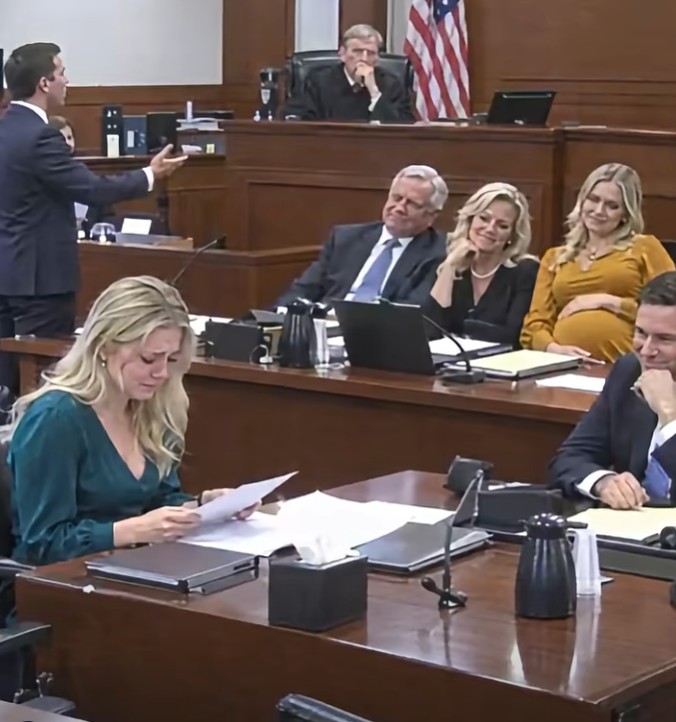
My Parents Tried to Take Control of My Fortune by Declaring Me Incompetent — But One Question in Court Exposed Their Entire Plan
Cassidy Vale Thought Her Family Wanted to Help Her Manage Her Finances. Then She Discovered They Were Trying to Gain Legal Control Over Her Assets. When Their Star Witness Took the Stand, Her Attorney Asked a Question That Changed Everything.
This is a fictional family and courtroom drama about financial betrayal, personal independence, and the importance of protecting private information. Legal procedures and conservatorship requirements vary by jurisdiction.
I never imagined that the people who raised me would one day sit across from me in a courtroom, trying to convince a judge that I could no longer manage my own life.
But there they were.
My mother sat with her hands folded neatly in her lap.
My father wore the serious expression he always used when he wanted people to believe he was acting responsibly.
And my sister, Brittany, sat beside them, occasionally whispering into our mother’s ear.
They looked like a concerned family.
They wanted the judge to believe they were protecting me.
But I knew something they didn’t.
The financial documents they had submitted contained information that had never appeared in my real accounts.
And my attorney, Evelyn Kensington, had spent weeks discovering exactly how those documents had been created.
As their witness prepared to testify, Evelyn leaned toward me.
“Cassidy,” she whispered, “whatever happens next, stay calm.”
I nodded.
Then she added something that made my heart race.
“They’re about to explain where they got those records.”
It Started With a Conversation About Money
My name is Cassidy Vale, and for most of my adult life, I believed my family respected my independence.
I had worked hard to build a successful career.
Over the years, I saved carefully, invested cautiously, and eventually accumulated enough assets to feel financially secure.
I owned my home.
I maintained my own accounts.
And I had a long history of paying my obligations on time.
My parents knew I was comfortable financially, but I rarely discussed exact figures with them.
That changed after my father asked me for help with a business problem.
He described a temporary shortage of cash and assured me that a loan would solve everything.
At first, I wanted to help.
But when I asked to review the financial records, his attitude changed.
“We’re family, Cassidy,” he told me. “You shouldn’t need paperwork to trust your father.”
I explained that I wasn’t comfortable lending a large amount without understanding how it would be repaid.
He didn’t appreciate my answer.
Neither did my mother.
And Brittany made it clear that she believed I was being selfish.
I thought the disagreement would eventually pass.
I had no idea it was only the beginning.
My Family Suddenly Became Very Interested in My Finances
Over the following weeks, my parents began asking questions they had never asked before.
How much was my house worth?
Did I have investment accounts?
Was my money managed by a financial adviser?
Did I have any outstanding loans?
At first, the questions seemed merely intrusive.
Then they became persistent.
My mother began suggesting that I was working too hard.
My father told relatives that I had become unusually secretive.
And Brittany started making comments about my judgment.
“You make everything so complicated,” she told me during one family dinner.
“Maybe you need someone to help you make decisions.”
I laughed because I assumed she was joking.
She wasn’t.
A month later, I received legal papers.
My parents were asking a court to appoint someone to manage my financial affairs.
They Claimed I Was No Longer Capable of Managing My Life
When I first read the petition, I thought there had been a mistake.
My parents alleged that I was financially irresponsible and incapable of protecting my own assets.
They claimed I had accumulated dangerous debts.
They described investments I supposedly didn’t understand.
And they suggested that my behavior had become increasingly concerning.
The petition asked the court to place my finances under a conservatorship.
My father was proposed as the person who would take control.
In practical terms, if the request succeeded, I could lose significant authority over decisions involving my own property and money.
I read the documents again.
Then a third time.
I recognized the names of some financial institutions.
But I didn’t recognize several of the loans listed in the supporting records.
According to the documents, I had borrowed heavily against investment accounts.
I had supposedly missed payments.
And my assets were allegedly at risk.
None of it matched the records I kept.
That was when I called Evelyn Kensington.
My Attorney Noticed Something Strange
Evelyn was an experienced attorney who understood disputes involving financial control and family relationships.
During our first meeting, I placed the petition and its attachments on her desk.
She read them without interrupting.
Then she asked a question.
“Cassidy, have you ever authorized your parents to access your investment accounts?”
“No.”
“Have you signed any documents allowing them to borrow against those accounts?”
“Absolutely not.”
She examined one of the financial statements.
“And this account number?”
I leaned forward.
It resembled one of my real account numbers.
But several digits were different.
“That’s not mine.”
Evelyn made a note.
Then she turned to another page.
“We need records obtained directly from the institutions.”
She looked at me carefully.
“And we need to find out who created these.”
The Name That Kept Appearing Was Jamal Price
Jamal Price had been a family acquaintance for years.
He was confident, well-spoken, and frequently described himself as someone who understood financial matters.
My father trusted him.
Brittany admired him.
And whenever the family discussed money, Jamal seemed to have an opinion.
During a gathering several months earlier, he had spent a surprising amount of time asking about my investments.
I remembered telling him that I preferred to keep my financial affairs private.
He had laughed.
“Nothing wrong with a little professional advice,” he’d said.
At the time, I thought nothing of it.
But when I saw his name listed as a witness in the conservatorship case, I became suspicious.
Jamal was apparently prepared to testify that he had reviewed evidence of my alleged financial instability.
That was interesting.
Because I had never asked him to review anything.
Then I Remembered the Family Gathering
One afternoon, while reviewing the case with Evelyn, I remembered something that had happened months earlier.
My parents had hosted a family dinner.
I had brought a folder containing paperwork I intended to review later that evening.
It included ordinary financial correspondence and some account summaries.
At one point, I left the folder in a spare room while helping my mother in the kitchen.
When I returned, the folder was on a different chair.
I assumed someone had moved it while tidying the room.
But now I wondered.
Could someone have looked through it?
I told Evelyn what I remembered.
She didn’t jump to a conclusion.
Instead, she asked me to describe exactly what had been inside.
Then she compared my recollection with the documents attached to the petition.
Some of the information appeared to come from genuine correspondence.
Other details had been changed.
And the alleged loan balances were inconsistent with the official statements we obtained.
Something was wrong.
Very wrong.
The Day of the Hearing Finally Arrived
I barely slept the night before the hearing.
It wasn’t because I doubted my financial records.
It was because I couldn’t understand how my family had allowed things to reach this point.
My parents had raised me.
They had attended my school events.
They had celebrated my achievements.
And now they were asking a judge to give them control over the assets I had spent years building.
When I entered the courtroom, they were already seated.
Brittany glanced at me and quickly looked away.
My father whispered something to their attorney, Mr. Caldwell.
My mother avoided my eyes.
Evelyn placed a folder on the table in front of us.
“Remember,” she said quietly, “the documents matter more than their accusations.”
I took a deep breath.
Then the hearing began.
Jamal Took the Stand With Complete Confidence
When Jamal Price was called to testify, he walked toward the witness stand as though he had rehearsed every step.
He adjusted his jacket.
He answered the preliminary questions calmly.
And when Caldwell began asking about my finances, Jamal sounded certain of himself.
He claimed I had taken out multiple margin loans against investment accounts.
He suggested that I had failed to understand the financial risks.
And he described the alleged borrowing as evidence that I needed someone else to oversee my affairs.
I wanted to interrupt.
Every statement felt like another attempt to rewrite my life.
But Evelyn gently placed her hand on the table.
She had warned me not to react.
So I sat quietly.
And waited.
Then Evelyn Asked One Simple Question
When Jamal finished his testimony, Evelyn stood.
She approached the witness stand with a calm expression.
“Mr. Price, you mentioned several margin loans.”
“That’s correct.”
“Can you identify the specific accounts involved?”
Jamal nodded.
“They’re listed in the documents.”
Evelyn held up one of the statements.
“And where did these documents come from?”
“Various sources.”
“Were they obtained directly from the financial institutions?”
Jamal hesitated.
“They were compiled from information available to us.”
Evelyn looked down at the page.
“That wasn’t my question.”
The courtroom became quiet.
“Did you obtain these statements directly from the institutions?”
Jamal shifted in his chair.
“Not personally.”
Evelyn nodded.
Then she asked the question that changed everything.
“Mr. Price, did you access Cassidy Vale’s private financial correspondence without her permission?”
For the First Time, Jamal Couldn’t Find an Answer
Jamal looked toward Caldwell.
His confidence had disappeared.
“I was trying to help the family,” he said.
Evelyn remained composed.
“That doesn’t answer whether you accessed her private information.”
Jamal swallowed.
“I may have seen some documents.”
“At a family gathering?”
He looked down.
“Possibly.”
“Without Ms. Vale’s authorization?”
Caldwell stood to object to the form of the questioning.
Judge Whitman considered the objection and directed Evelyn to continue with specific questions.
She held up the disputed statement again.
“Mr. Price, are you aware that the account number on this document does not match the number confirmed by the financial institution?”
Jamal stared at the paper.
“I don’t know anything about that.”
“And are you aware that the institution has no record of the loan described here?”
He said nothing.
I looked toward my parents.
My father’s face had gone pale.
The Official Records Told a Completely Different Story
Evelyn asked the court to consider the authenticated financial records we had obtained.
They showed that my investment accounts were in good standing.
The alleged margin loans were not reflected in the institutions’ records.
My actual liabilities were documented.
And there was no evidence of the financial crisis my family had described.
Evelyn also submitted evidence concerning my ongoing management of ordinary financial responsibilities.
I had maintained my property.
Paid my obligations.
Communicated with financial professionals.
And continued making decisions about my affairs.
These records did not establish that every decision I had ever made was perfect.
But they directly contradicted the picture of financial incapacity presented in the petition.
Judge Whitman reviewed the material carefully.
Then he turned toward Caldwell.
“Counsel, how do you explain the discrepancies between these records and the documents supporting your petition?”
Caldwell requested time to review the new evidence.
For the first time that morning, my parents looked genuinely worried.
My Father’s Expression Told Me Everything
I had spent weeks wondering whether my father truly believed I was incapable of managing my money.
Perhaps, I had told myself, he had been misled.
Perhaps someone had exaggerated my financial circumstances.
Perhaps he genuinely thought he was helping.
But as the official records were discussed, I watched him closely.
He wasn’t confused.
He wasn’t shocked.
He looked frightened.
Not frightened for me.
Frightened that the case was falling apart.
That realization hurt more than I expected.
My mother leaned toward him and whispered something.
He shook his head sharply.
Brittany stared at the floor.
And Jamal sat silently, no longer making eye contact with anyone.
The Judge Refused to Give My Family Control
After considering the evidence and arguments, Judge Whitman announced his decision.
The petitioners had not established sufficient grounds for the requested conservatorship.
The disputed financial documents raised serious reliability concerns.
And the authenticated records did not support the claim that I lacked the ability to manage my financial affairs.
The court denied the petition.
My parents would not receive control over my assets.
I remained responsible for my own financial decisions.
For several seconds, I could barely move.
I had imagined hearing those words so many times.
But now that the moment had arrived, I felt strangely overwhelmed.
Evelyn leaned toward me.
“Cassidy,” she whispered, “you can breathe.”
And for the first time in weeks, I did.
But the Judge’s Decision Wasn’t the End
Judge Whitman made one point clear.
The court’s decision about the conservatorship did not resolve every question concerning the disputed documents.
There were still serious allegations about how private financial information had been obtained and whether records had been altered.
Those matters would require appropriate investigation rather than assumptions based solely on testimony.
Evelyn had already advised me to preserve every document, message, and record connected to the case.
We intended to report the suspected misuse of my personal information through the proper channels.
Jamal had not been convicted of anything.
Nor had the hearing established every person’s role in preparing the documents.
But the discrepancies could no longer be ignored.
And my family’s attempt to take control of my finances had failed.
My Mother Tried to Stop Me Outside the Courtroom
When the hearing ended, I gathered my belongings and followed Evelyn toward the exit.
My parents remained seated for a moment.
Then I heard my mother calling my name.
“Cassidy, wait.”
I stopped.
She approached with tears in her eyes.
“Please don’t leave like this.”
I looked at her.
“How did you expect me to leave?”
She reached for my arm.
“We were worried about you.”
I stepped back.
“You told a court I couldn’t manage my own life.”
“We thought you needed help.”
“Then why didn’t you ask me what kind of help I wanted?”
She opened her mouth.
But no words came.
I looked past her toward my father.
He was standing near the courtroom doors.
For once, he had nothing to say.
Then Brittany Said Something I Hadn’t Expected
As I turned to leave, Brittany hurried toward me.
“Cassidy, please.”
I stopped again.
“What is it?”
She looked over her shoulder to make sure our parents weren’t close enough to hear.
“There’s something you should know.”
Evelyn stepped beside me.
“If it concerns the case, you should be careful about what you say here,” she advised.
Brittany nodded nervously.
“I know.”
She looked at me.
“Dad was going to use the money for more than the business.”
My stomach tightened.
“What do you mean?”
Brittany swallowed.
“He was talking about selling your house.”
I stared at her.
“My house?”
She nodded.
“He said it would be easier once he had authority over your finances.”
For a moment, everything around me seemed to go quiet.
I had known my family wanted control.
But hearing that my home had already become part of their plans made the betrayal feel even more personal.
We Discovered the Plan Had Gone Further Than I Realized
Over the following days, Evelyn helped me organize the information we had gathered.
We reviewed communications, financial records, and the documents my family had submitted.
We also took steps to protect my accounts and personal information.
I contacted my financial institutions.
I changed passwords.
I reviewed account permissions and security settings.
And I arranged to receive alerts about unusual account activity.
Evelyn also helped me determine how to report the suspected misuse of my information.
What troubled me most was the realization that the conservatorship petition had not been a spontaneous decision.
My family had discussed it for some time.
They had made plans around the possibility of controlling my assets.
And they had apparently assumed that I would be too frightened or embarrassed to challenge them.
They were wrong.
My Father Finally Admitted Why He Wanted Control
Two weeks after the hearing, my father asked to speak with me.
I agreed to a brief conversation with Evelyn present.
He arrived looking older than I remembered.
For several minutes, he talked about family obligations and the pressure he had been under.
Then I asked him directly.
“Did you plan to use my money to solve your financial problems?”
He stared at the table.
“I thought I could straighten everything out.”
“With my money?”
He didn’t answer.
“Without asking me?”
He finally looked up.
“You wouldn’t help.”
Those three words told me more than any long explanation could have.
He had decided that my refusal to lend him money justified trying to take control of it.
He didn’t see my boundaries as something to respect.
He saw them as an obstacle.
“You Didn’t Want to Protect Me. You Wanted My Permission to Stop Mattering.”
I looked at my father for a long time.
Part of me wanted to shout.
Part of me wanted to ask how he could have done something so cruel.
But I was tired of arguing.
“Dad,” I said quietly, “you could have told me the truth about your financial situation.”
He looked away.
“You could have asked for advice. You could have worked with someone to find another solution.”
My voice trembled.
“Instead, you tried to convince a judge that I couldn’t make my own decisions.”
He sighed.
“I thought it was best for the family.”
I shook my head.
“You didn’t want to protect me.”
I paused.
“You wanted my permission to stop mattering.”
He didn’t respond.
And for the first time, I understood that I might never receive the apology I wanted.
I Made a Decision My Family Never Expected
After the meeting, I told Evelyn I needed to make some changes.
Not because I wanted revenge.
And not because I wanted to punish my family for disagreeing with me.
I needed to protect my independence.
I reviewed my estate-planning documents with qualified professionals.
I made sure the people authorized to assist me were individuals I trusted.
I updated my emergency contacts.
And I documented my wishes regarding financial and personal decisions.
I also established clear boundaries with my parents and Brittany.
They would no longer receive private financial information simply because we were related.
Any future conversations about money would happen on terms I was comfortable with.
And I would not be pressured into lending, gifting, or transferring assets.
For the first time in months, I felt that I was taking control of my life again.
Then an Unexpected Letter Arrived
About a month later, I received a handwritten letter from Brittany.
At first, I considered leaving it unopened.
Our relationship had become strained long before the hearing.
She had sided with our parents.
She had repeated their accusations.
And she had watched as they tried to take control of my finances.
But I opened the envelope.
The letter was short.
Brittany admitted that she had allowed herself to believe our father’s version of events because she expected the family to benefit financially.
She wrote that she had been afraid to challenge him.
And she apologized for failing to ask me what was actually happening.
Then came the sentence that stayed with me.
“I kept telling myself we were helping you because it was easier than admitting we were hurting you.”
I read it twice.
It didn’t erase what she had done.
But it was the first time anyone in my family had acknowledged the truth without making excuses.
Forgiveness and Trust Were Not the Same Thing
I eventually replied to Brittany.
I thanked her for acknowledging her role.
But I also explained that rebuilding trust would take time.
I wasn’t ready to pretend everything was normal.
And I wasn’t willing to return to the family dynamic that had allowed the situation to happen.
She accepted that.
Our relationship remained distant for a while.
But our conversations slowly became more honest.
With my parents, things were different.
My father continued to insist that he had acted out of concern.
My mother wanted everyone to forget the hearing and move forward.
Neither seemed prepared to fully acknowledge what the petition had done to me.
So I kept my distance.
It was painful.
But protecting my peace no longer felt like something I needed to apologize for.
The Investigation Continued Beyond the Courtroom
The questions surrounding the disputed documents did not disappear when the conservatorship petition was denied.
The appropriate authorities could examine whether anyone had unlawfully accessed financial information or falsified records.
Those issues required evidence and due process.
Evelyn reminded me that I should not assume every allegation would automatically lead to criminal charges or a conviction.
My responsibility was to preserve the information I had and cooperate with legitimate requests.
So that was what I did.
I provided the relevant records through the appropriate channels.
I maintained copies of important correspondence.
And I allowed the process to continue without turning it into a public confrontation.
For me, the most important outcome had already occurred.
My family had not succeeded in taking away my financial independence.
The First Morning I Finally Felt Free
Several weeks after the hearing, I woke up early on a Saturday.
The house was quiet.
Sunlight was coming through the kitchen window.
I made coffee and sat at the table where I usually reviewed my bills.
For months, every envelope and financial notification had made me anxious.
I worried that another document would arrive.
Another accusation.
Another attempt to question my judgment.
But that morning felt different.
I opened my laptop.
Reviewed my accounts.
Paid an ordinary household bill.
And closed the computer.
It was such a simple thing.
But I sat there smiling.
Because I had nearly lost the right to make those decisions for myself.
And now I understood how valuable that independence truly was.
What the Experience Taught Me About Family and Money
Before everything happened, I believed that family disagreements could always be resolved through patience.
I thought that if I explained myself clearly enough, my parents would eventually understand.
But I learned that some conflicts are not caused by misunderstandings.
Sometimes people understand your boundaries perfectly well.
They simply don’t want to accept them.
I also learned that financial privacy matters, even within families.
Trust does not require giving someone unrestricted access to your accounts or personal information.
And love does not entitle anyone to control another adult’s assets.
When someone genuinely needs help managing financial affairs, appropriate safeguards and professional guidance can be important.
But concerns about a person’s decision-making ability should be evaluated through reliable evidence and lawful procedures, not unsupported accusations or pressure from relatives.
My Parents Thought the Courtroom Would Be Their Victory
I sometimes think back to the morning of the hearing.
My parents arrived believing the case would end in their favor.
Jamal took the stand with complete confidence.
Caldwell presented the financial records as though their accuracy could not be questioned.
And I sat quietly beside Evelyn, wondering how people I loved could have brought me to that moment.
But the case changed when the documents were examined.
The official records did not support the accusations.
Jamal could not provide a clear explanation for the source of the disputed information.
And the court refused to give my family control over my finances.
The outcome did not repair every relationship.
It did not erase the emotional damage.
And it did not answer every question about what had happened behind the scenes.
But it protected something essential.
My right to make decisions about my own life.
The Most Important Thing I Took Away From That Courtroom
For years, I measured my success through practical achievements.
My career.
My home.
My savings.
The security I had worked hard to create.
But after the hearing, I realized that the greatest thing I had protected was not a bank account.
It was my autonomy.
My family had tried to turn my financial success into something they could control.
They had expected me to remain quiet because confronting them would be painful.
And they had assumed that being my parents gave them authority over decisions that belonged to me.
They were mistaken.
I could love my family without surrendering my independence.
I could acknowledge their struggles without making myself responsible for solving them.
And I could protect my future without feeling guilty for saying no.
The Final Conversation That Changed Everything
Months later, my mother called.
We hadn’t spoken in several weeks.
Her voice was quieter than usual.
“Cassidy,” she said, “do you think our family will ever be the same again?”
I looked out the window before answering.
“No, Mom.”
She began to cry softly.
I waited.
Then I continued.
“But maybe that’s not a bad thing.”
She didn’t understand.
So I explained.
“I don’t want us to go back to pretending everything is fine when it isn’t.”
“I don’t want to be afraid of saying no.”
“And I don’t want love to mean that I have to give up control of my life.”
My mother was silent for a long time.
Then she whispered, “I understand.”
I didn’t know whether she truly did.
But for the first time, I wasn’t desperate to convince her.
My life no longer depended on her approval.
They Tried to Take My Fortune — But I Found Something More Valuable
When my parents filed their petition, they believed they were taking the first step toward controlling my assets.
They expected the court to accept their accusations.
They expected their witness to support their version of events.
And they expected me to be too overwhelmed to fight back.
Instead, I found an attorney who took my concerns seriously.
We obtained reliable records.
We challenged the evidence.
And I defended my ability to make decisions for myself.
The experience changed how I viewed my family.
It also changed how I viewed myself.
I stopped believing that setting boundaries made me unkind.
I stopped confusing obedience with respect.
And I stopped thinking that keeping everyone else happy was more important than protecting my own well-being.
My parents walked into that courtroom hoping to gain control of my fortune. I walked out knowing that my independence was worth defending, even when the people challenging it were the ones who had raised me.
Because sometimes the hardest people to stand up to are the people you once trusted most.
And sometimes the most important victory isn’t winning an argument.
It’s finally understanding that your life belongs to you.
If your own family tried to take control of your money by claiming you couldn’t manage it, would you ever be able to trust them again? Share your thoughts in the comments.