
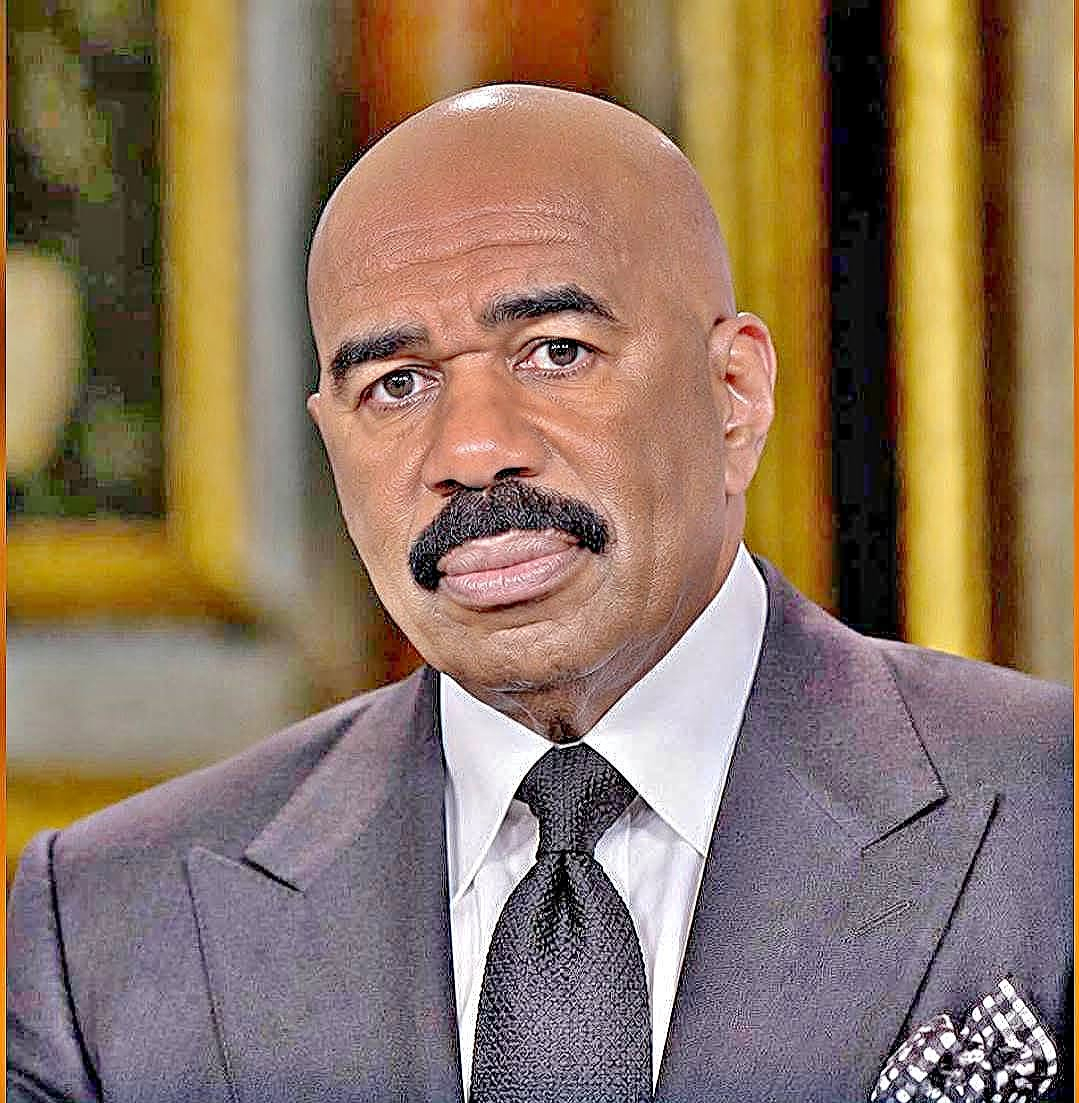
Was Steve Harvey Fired From Family Feud? The Truth Behind the Fake CNN Story and Oprah Winfrey Scandal
A Viral Advertisement Claimed Steve Harvey Lost His Television Job After a Shocking Interview With Oprah Winfrey—but the Story Concealed a Celebrity Endorsement Scam
A sensational claim about Steve Harvey began spreading across Facebook in May 2024, leaving some viewers wondering whether the longtime television personality had suddenly been fired from Family Feud.
The advertisements suggested that Harvey had become involved in an embarrassing public controversy, with some versions claiming he had made inappropriate remarks during a television interview.
Other versions implied that a private disagreement had erupted into a scandal serious enough to end his career on the popular game show.
Some advertisements even featured Oprah Winfrey, making the supposed controversy appear more significant.
But the story was not what it seemed.
The alleged firing, the dramatic interview, and the celebrity endorsement at the center of the controversy were fabricated.
Behind the attention-grabbing headlines was an advertising scheme designed to promote CBD gummies by exploiting the identities of recognizable television personalities.
How the Steve Harvey Firing Rumor Began
In early May 2024, social media users began encountering advertisements claiming that Steve Harvey had abruptly lost his position on Family Feud.
The advertisements used photographs of Harvey alongside dramatic headlines that suggested his television career had taken an unexpected turn.
Some versions presented the alleged firing as the result of an embarrassing conversation.
Others suggested that Harvey had revealed something controversial that television executives did not want audiences to hear.
The headlines were designed to provoke curiosity before readers had an opportunity to verify the claims.
For viewers familiar with Harvey’s work, the suggestion that he had suddenly been removed from a major television program was naturally attention-grabbing.
However, the advertisements did not provide legitimate evidence supporting the supposed dismissal.
A Fake CNN Article Made the Story Look Real
One of the most important elements of the scheme was a webpage designed to imitate CNN.
When users clicked certain advertisements, they were directed to a page that resembled a genuine news article.
The website copied visual features commonly associated with established news organizations, including familiar formatting, photographs, and headline styles.
At first glance, a visitor might reasonably believe they were reading a legitimate report.
But the webpage was not published by CNN.
The supplied account identifies the unrelated domain pastadibern.pro as one address used for the imitation article.
That detail was a significant warning sign.
A website does not become an authentic CNN publication simply because it uses a similar appearance or displays recognizable news branding.
The Fabricated Oprah Winfrey Interview
The fake article claimed that Harvey had participated in an interview with Oprah Winfrey.
According to the invented narrative, Harvey supposedly revealed personal information about erectile dysfunction and described a CBD product as the solution to his difficulties.
The article portrayed the conversation as uncomfortable and controversial.
It suggested that Winfrey reacted negatively and that the discussion contributed to a professional dispute.
None of those events was established as genuine.
The supposed interview did not take place as described, and the dialogue presented in the advertisement was fabricated.
By combining two familiar television personalities in one dramatic story, the creators attempted to make the advertisement appear more credible.
Why the Fake Story Mentioned CBD Gummies
The alleged television scandal was not the ultimate purpose of the advertisement.
It was a way to attract visitors to a commercial promotion.
The fake article introduced a product called Canna Labs CBD Gummies and falsely suggested that Harvey had personally used and endorsed it.
The invented interview was constructed around the claim that the product had produced remarkable results for him.
That supposed endorsement was important because a recognizable celebrity can influence how consumers perceive a product.
Someone who trusts or admires Harvey might be more inclined to consider a product if they believe he recommends it.
In this case, however, the endorsement was part of the deception.
The supplied account does not establish that Harvey promoted Canna Labs CBD Gummies or made the medical claims attributed to him.
Why Oprah Winfrey’s Name Was Included
Oprah Winfrey is one of the most recognizable figures in American television.
Her name has long been associated with interviews, personal stories, and discussions about health and lifestyle.
Including her in the fabricated narrative made the alleged controversy more attention-grabbing.
It also created the impression that the supposed conversation had occurred in a recognizable media setting.
The advertisement depended on readers accepting that impression without independently checking whether the interview existed.
But a famous person’s name or photograph is not evidence that they participated in an event.
In this instance, the Oprah interview was part of the fictional advertising narrative.
How Celebrity Endorsement Scams Work
Fraudulent celebrity promotions often follow a similar structure.
First, an advertisement introduces a dramatic claim involving a well-known personality.
The celebrity may supposedly have been fired, publicly embarrassed, silenced, or involved in an unexpected controversy.
Next, the reader is directed to a website that resembles a legitimate news source.
The page then presents a fabricated story explaining the supposed scandal.
As the narrative develops, a commercial product becomes increasingly important.
Eventually, the celebrity is portrayed as having discovered or endorsed the product.
The purpose is to convert curiosity about a famous person into interest in a purchase.
The Steve Harvey advertisement followed this general pattern.
The Product Was the Real Focus of the Advertisement
The fake firing story created the initial emotional reaction.
The imitation news page attempted to establish credibility.
The invented interview supplied the dramatic explanation.
And the CBD gummies became the commercial offer.
Each part supported the next.
The alleged scandal encouraged readers to click, while the fabricated endorsement attempted to make the product seem trustworthy.
Without the celebrity narrative, the advertisement would have been an ordinary product promotion.
By adding a recognizable television host and an invented controversy, its creators gave readers a reason to keep reading.
Why the Website Address Was an Important Clue
One of the simplest ways to evaluate a suspicious news article is to examine its actual web address.
The fake Steve Harvey page resembled CNN, but it was hosted on an unrelated domain.
That mismatch mattered more than the page’s visual design.
Scammers can reproduce logos, colors, navigation menus, and other design elements from legitimate publications.
They can also use familiar photographs and realistic-looking headlines.
However, copying those elements does not establish an authentic relationship with the news organization being imitated.
Readers should check the domain carefully rather than relying on a familiar logo at the top of a webpage.
Why Paid Facebook Advertisements Helped Spread the Rumor
The misleading story was promoted through social media advertisements.
Paid advertising can place content directly into users’ feeds, including people who might never visit the advertiser’s website independently.
A recognizable celebrity photograph can make an advertisement particularly noticeable.
Someone familiar with Family Feud may stop scrolling when they see Harvey’s face beside a headline suggesting he has been fired.
The advertisement then relies on curiosity to encourage a click.
Once readers reach the imitation news page, the fabricated story attempts to keep their attention.
The fact that content appears as a sponsored social media post does not mean the underlying claims have been independently verified.
Why Dramatic Celebrity Headlines Are So Effective
The advertisements relied on emotionally charged language.
Claims involving sudden dismissals, shocking confessions, and unexpected scandals can produce immediate reactions.
Readers may feel surprised, concerned, or curious about what happened.
Those reactions can encourage people to open an article before examining its source.
The fake Harvey story combined several attention-grabbing elements: a famous television host, a popular game show, Oprah Winfrey, a supposed health confession, and an unexpected firing.
Each detail increased the apparent significance of the story.
But dramatic presentation is not evidence that an event occurred.
Similar Fake Steve Harvey CBD Stories Had Appeared Before
The supplied account notes that fraudulent CBD-related claims involving Harvey had been identified before the May 2024 advertisements.
It specifically references earlier fact-checking by Snopes dating back to 2022.
Although individual versions of these advertisements may differ, the underlying approach remains similar.
A celebrity is presented as having discovered or endorsed a product.
A dramatic event is invented to explain why the supposed endorsement became public.
Readers are then encouraged to visit a commercial website.
The repeated use of a familiar celebrity demonstrates how the same misleading advertising concept can be repackaged into different stories.
Other Celebrities Have Been Targeted by Similar Promotions
Harvey is not the only public figure whose identity has reportedly been used in misleading health-product advertisements.
The supplied material identifies Oprah Winfrey, Mayim Bialik, Dr. Phil McGraw, and Tom Selleck among personalities whose names have appeared in similar schemes.
These advertisements exploit the familiarity that audiences develop with television personalities.
A viewer may have watched someone for years and therefore feel a degree of trust toward them.
Fraudulent marketers attempt to borrow that trust by placing the celebrity’s image beside a product.
However, a person’s appearance in an advertisement does not prove that they approved the promotion.
Fake Customer Testimonials Can Make the Deception Stronger
Some misleading product websites include supposed customer reviews and testimonials.
These may describe dramatic improvements after using a supplement or other health product.
In fraudulent promotions, such testimonials can be fabricated or presented without adequate evidence.
Before-and-after photographs may also be misleading.
They can create the impression that a product has been independently tested or that its benefits are widely established.
But customer stories do not replace reliable scientific evidence.
When a product is promoted through a fabricated celebrity endorsement, any accompanying medical claims deserve particular scrutiny.
Why Miracle Health Claims Should Raise Questions
Health-related advertising requires careful evaluation because consumers may make decisions that affect their physical well-being.
Claims that a product can dramatically improve sexual health, cause rapid weight loss, or treat serious medical conditions should be supported by appropriate evidence.
A celebrity’s alleged personal experience does not establish that a product is safe or effective.
And if the celebrity endorsement is fabricated, the advertisement has already demonstrated that it is not presenting information reliably.
Consumers should not substitute promotional claims for advice from qualified healthcare professionals.
That is particularly important when a product is marketed as a remarkable solution to a medical problem.
Countdown Timers and Limited-Time Offers Can Create Pressure
Some fraudulent sales pages use urgency to discourage careful decision-making.
A website may claim that only a small quantity remains available.
It may display a countdown timer or warn that a special discount is about to expire.
These techniques can make visitors feel that they must act immediately.
But urgency does not establish that an offer is legitimate.
When a sales page combines dramatic celebrity claims with pressure to purchase, readers should examine the source and terms before entering payment information.
Why Free Trials Can Become Expensive
Some deceptive product promotions advertise free or heavily discounted trials.
A consumer may believe they are paying only a small shipping fee or purchasing a single introductory order.
However, the terms may include recurring subscriptions or additional charges.
In other situations, consumers may encounter delivery problems or difficulty obtaining refunds.
These risks make it important to review payment conditions carefully.
Before purchasing from an unfamiliar website, consumers should verify the seller’s identity, examine the subscription terms, and look for independent information about the business.
How to Check Whether a Celebrity News Story Is Genuine
A few straightforward checks can help readers evaluate sensational celebrity claims.
Start by examining the website’s domain rather than relying on its appearance.
If the page claims to be published by a major news organization, verify that it appears on the organization’s legitimate website.
Next, search the main allegation independently.
A significant event involving a prominent television personality would ordinarily attract reporting from established entertainment and news publications.
Readers can also look for statements from the celebrity or their authorized representatives.
When a supposed scandal appears only on unfamiliar websites that immediately promote a product, that is a strong reason for caution.
Why Sharing an Unverified Headline Can Spread the Scam
Misleading advertisements can have consequences beyond the products they promote.
Someone may see a headline claiming that Harvey was fired and share it without opening the article.
Other users may repeat the claim in comments or videos.
Eventually, the false allegation can circulate independently of the original advertisement.
Even if the fraudulent website disappears, screenshots and reposts may remain available.
That is one reason verifying a sensational claim before sharing it matters.
A misleading story can continue influencing public understanding long after its original source has been removed.
What Was Actually True About the Steve Harvey Scandal?
The central claims in the May 2024 advertising story were false.
There was no genuine CNN article documenting the alleged scandal.
The Oprah Winfrey interview described in the promotion was fabricated.
The supposed Canna Labs CBD Gummies endorsement was not authentic.
And the allegation that Harvey had been fired from Family Feud because of that invented interview was not true.
The advertisements used the appearance of celebrity news to direct attention toward a commercial product.
That distinction is the key to understanding the entire episode.
The Real Lesson Behind the Fake Family Feud Headlines
The Steve Harvey rumor illustrates how easily recognizable names and familiar news designs can be combined to create a convincing but false story.
The advertisement used Harvey’s public identity to attract attention.
It included Oprah Winfrey to make the alleged controversy appear more significant.
It imitated CNN to create an impression of journalistic credibility.
And it introduced CBD gummies as the supposed explanation for the scandal.
Once those elements were examined, the deception became clear.
The supposed firing was not legitimate entertainment news.
It was part of a misleading commercial promotion.
Final Verdict: Steve Harvey Was Not Fired Over the Alleged Oprah Interview
The viral May 2024 story claiming that Steve Harvey lost his Family Feud job after a controversial interview with Oprah Winfrey was fabricated.
The supposed interview never occurred as described, and the celebrity endorsement used to promote CBD gummies was not genuine.
The imitation CNN webpage helped the advertisement appear credible, but its unrelated domain revealed an important inconsistency.
The broader lesson extends beyond this particular celebrity rumor.
A dramatic headline, familiar photograph, or recognizable news logo does not guarantee that an online story is authentic.
Before trusting or sharing a sensational claim, examine the source, verify the domain, and look for independent confirmation.
In this case, the real story was not a television host losing his job after a shocking confession.
It was a fabricated scandal designed to make a product advertisement look like breaking news.