
What Happens to Your Body When You Sleep on Your Left Side? 7 Potential Benefits You Should Know
From Reducing Nighttime Acid Reflux to Improving Comfort During Pregnancy, Your Sleeping Position May Affect More Than You Realize—but Some Popular Health Claims Need a Closer Look
Most people spend little time thinking about which side of their body they sleep on. After a long day, finding a comfortable position and getting enough rest usually feels far more important.
However, your sleeping position can influence certain aspects of your health, particularly digestion, nighttime heartburn, breathing, and physical comfort.
Left-side sleeping has attracted considerable attention because of claims that it can improve digestion, support circulation, reduce snoring, and even help the brain clear waste products.
Some of these potential benefits are supported by research, while others remain preliminary or have been exaggerated in popular health articles.
Understanding the difference can help you make better decisions about your sleep without expecting one position to solve every health problem.
Here are seven potential benefits of sleeping on your left side, what the evidence actually suggests, and when another position may be more appropriate.
1. Sleeping on Your Left Side May Help Reduce Acid Reflux
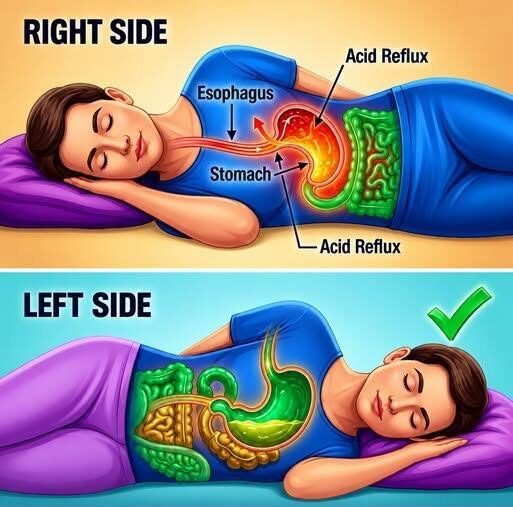
One of the best-supported advantages of left-side sleeping involves gastroesophageal reflux, commonly called acid reflux.
Acid reflux occurs when stomach contents move backward into the esophagus, the tube connecting the mouth to the stomach.
This can produce a burning sensation in the chest, an unpleasant taste in the mouth, coughing, or discomfort that becomes worse when lying down.
The anatomical relationship between the stomach and esophagus helps explain why sleeping position matters.
When someone lies on their left side, the stomach’s position relative to the esophagus can make it more difficult for acidic contents to flow backward.
Research involving people with nighttime reflux has found that left-side sleeping can reduce esophageal acid exposure compared with sleeping on the right side.
For people who frequently experience heartburn at night, this may be a useful adjustment.
However, sleeping on the left side is not a cure for gastroesophageal reflux disease, also known as GERD.
People with persistent symptoms may also benefit from avoiding large meals shortly before bedtime, elevating the head of the bed, and following medical advice about appropriate treatment.
2. It May Make Nighttime Digestion More Comfortable
Left-side sleeping is often promoted as a way to improve digestion.
There is some anatomical reasoning behind this suggestion, particularly for people who experience reflux after eating.
The stomach is positioned mainly in the upper-left portion of the abdomen, and changes in body position can influence how stomach contents interact with the esophagus.
For someone prone to nighttime heartburn, lying on the left side may therefore feel more comfortable.
However, claims that left-side sleeping automatically accelerates digestion or improves the flow of pancreatic digestive juices are not firmly established.
Digestion is a complex process controlled by muscular contractions, digestive secretions, hormones, and the nervous system.
It continues regardless of whether someone sleeps on the left side, right side, or back.
Although body position can affect certain digestive symptoms, there is not enough evidence to conclude that everyone digests food more efficiently when sleeping on the left.
If you frequently experience bloating, abdominal pain, or indigestion, identifying the underlying cause is more important than relying on sleep position alone.
3. Side Sleeping May Help Reduce Snoring
Snoring happens when airflow causes tissues in the upper airway to vibrate during sleep.
For some people, sleeping on the back makes snoring worse because gravity can encourage the tongue and surrounding tissues to shift backward.
This may narrow the airway and increase vibration as air passes through.
Sleeping on either side can help reduce this effect in some individuals.
As a result, changing from back sleeping to side sleeping may decrease snoring frequency or intensity.
However, there is limited evidence that the left side is consistently better than the right side for ordinary snoring.
The main advantage often comes from avoiding the back-sleeping position rather than choosing one particular side.
Snoring can also be associated with obstructive sleep apnea, a condition involving repeated interruptions in breathing during sleep.
If snoring is accompanied by gasping, choking, witnessed breathing pauses, morning headaches, or significant daytime sleepiness, medical evaluation is important.
Changing sleeping positions may help some people, but it should not replace appropriate treatment for sleep apnea.
4. Left-Side Sleeping May Be Comfortable During Pregnancy
Sleeping position becomes particularly important during pregnancy as the uterus grows and physical comfort changes.
Many pregnant people find side sleeping more comfortable than lying flat on their backs, especially later in pregnancy.
Historically, left-side sleeping has frequently been recommended because it may reduce pressure on major blood vessels and support comfortable circulation.
However, current guidance generally emphasizes sleeping on either side rather than insisting that the left side is the only safe option.
For example, the UK’s National Health Service advises pregnant people to go to sleep on their side during the third trimester, whether left or right.
If someone wakes up on their back, they do not need to panic. They can simply turn onto their side again.
Pregnancy pillows or ordinary pillows placed between the knees, beneath the abdomen, or behind the back may also improve comfort.
Anyone experiencing dizziness, breathing difficulty, or other concerning symptoms while lying down should discuss them with their maternity care professional.
5. Sleeping Position May Influence the Brain’s Waste-Clearing System
One of the most intriguing claims about left-side sleeping involves the brain’s glymphatic system.
The glymphatic system is a network of fluid transport pathways involved in clearing certain waste products from brain tissue.
Scientists have investigated how sleep and body position may affect this process.
Animal research has suggested that lateral, or side-lying, positions may support certain aspects of glymphatic transport more effectively than some other positions.
These findings have generated interest because the accumulation of particular proteins in the brain is associated with neurodegenerative conditions, including Alzheimer’s disease.
However, several important distinctions are necessary.
First, much of the research examining the relationship between body position and glymphatic clearance has been conducted in animals rather than humans.
Second, findings about side sleeping do not establish that the left side is uniquely superior to the right.
Third, researchers have not demonstrated that sleeping on the left side prevents Alzheimer’s disease or meaningfully reduces a person’s risk of developing dementia.
Sleep itself plays an important role in brain health, but the relationship between sleep position, glymphatic function, and long-term neurological outcomes remains an active area of investigation.
Getting adequate, high-quality sleep is a more established goal than trying to prevent neurological disease through a particular sleeping position.
6. Side Sleeping May Support More Comfortable Breathing
Body position can influence breathing during sleep.
For some people, lying on the back increases upper-airway obstruction or makes breathing feel less comfortable.
Side sleeping may help by changing the position of the tongue and surrounding airway tissues.
This can be particularly relevant for individuals with positional obstructive sleep apnea, whose breathing disturbances occur more frequently when they sleep on their backs.
Positional therapy, which encourages sleeping in a non-supine position, is sometimes used as part of managing this condition.
However, the effectiveness of positional therapy depends on the individual and the severity of their sleep apnea.
It is also important to understand that sleeping on the left side does not guarantee that the airways will remain open.
People with significant sleep apnea may require treatments such as continuous positive airway pressure, oral appliances, or other interventions recommended by a qualified clinician.
For those without a diagnosed breathing disorder, choosing a comfortable side-sleeping position may simply help them rest more peacefully.
7. It May Help Some People Sleep More Comfortably
Sleep quality depends on numerous factors, including physical comfort, stress, temperature, noise, health conditions, and sleep habits.
For people who experience reflux or positional snoring, changing to a side-sleeping position may reduce nighttime disturbances.
Fewer awakenings from discomfort could potentially contribute to better perceived sleep quality.
However, not everyone finds left-side sleeping comfortable.
Some people experience shoulder pressure, hip discomfort, neck stiffness, or numbness when remaining on one side for too long.
Others may have medical conditions that make a different sleeping position preferable.
For example, people with certain heart conditions may experience more discomfort when lying on the left side.
In these situations, forcing the body into an uncomfortable position is unlikely to improve sleep.
The most useful position is generally one that allows comfortable breathing, minimizes symptoms, and supports sufficient uninterrupted rest.
Does Left-Side Sleeping Improve Heart Health and Circulation?
Claims about circulation are common in discussions of left-side sleeping.
Some articles suggest that sleeping on the left side improves blood flow, lowers blood pressure, and reduces the risk of hypertension.
However, these statements are broader than the available evidence supports.
Body position can influence circulation and cardiovascular measurements under certain circumstances, but that does not mean left-side sleeping universally improves heart health.
There is insufficient evidence to recommend left-side sleeping as a general strategy for preventing hypertension or cardiovascular disease.
In fact, people with some forms of heart failure may prefer sleeping on their right side because the left-side position can feel uncomfortable.
For long-term cardiovascular health, established measures such as managing blood pressure, exercising regularly, following a balanced diet, avoiding smoking, and obtaining adequate sleep remain far more important.
If a medical condition affects which position feels comfortable, individualized medical advice should take priority over general online recommendations.
Is Sleeping on the Right Side Bad for You?
Not necessarily.
Right-side sleeping is comfortable and appropriate for many people.
Although it may increase nighttime acid exposure compared with left-side sleeping in people prone to reflux, this does not mean it is unhealthy for everyone.
Some individuals may find the right side more comfortable because of shoulder pain, heart-related symptoms, or other physical factors.
Pregnant people are also generally advised that either side can be an appropriate sleeping position.
For many people, the difference between left-side and right-side sleeping may be much less important than the quality and duration of their sleep.
There is no universal sleeping position that is best for every person or every medical condition.
What About Sleeping on Your Back or Stomach?
Back sleeping can be comfortable for people who need support for their spine or prefer to distribute body weight more evenly.
However, it can worsen snoring and obstructive sleep apnea in susceptible individuals.
It may also be less comfortable for people with nighttime acid reflux unless the upper body is appropriately elevated.
Stomach sleeping is another option, but it can place strain on the neck because the head usually remains turned to one side for prolonged periods.
Some stomach sleepers also experience lower-back discomfort depending on mattress support and body position.
Neither position is automatically harmful for every adult.
Personal comfort, existing health conditions, and symptoms during sleep are important considerations.
One critical exception concerns infants: babies should be placed on their backs for every sleep, following safe-sleep recommendations. Side sleeping is not recommended for infants because they can roll onto their stomachs.
How to Make Left-Side Sleeping More Comfortable
If you want to try sleeping on your left side, a few simple adjustments may make the position easier to maintain.
Start by choosing a pillow that keeps your head and neck aligned with your spine.
A pillow that is too high or too flat can contribute to neck discomfort.
Placing another pillow between your knees may help maintain a more neutral position for your hips and lower back.
If your shoulder becomes uncomfortable, experiment with pillow height and mattress support rather than placing excessive pressure directly on the joint.
People who experience acid reflux may benefit from elevating the head of the bed or using an appropriate wedge pillow.
Simply stacking several ordinary pillows beneath the head may bend the body in a way that is less comfortable and does not provide the same elevation.
It is also helpful to avoid large meals close to bedtime, especially if reflux is a recurring problem.
Remember that changing position naturally during sleep is normal.
You do not need to remain perfectly still on your left side throughout the night.
How Much Sleep Do Adults Actually Need?
While sleeping position can affect certain symptoms, sleep duration remains a fundamental part of overall health.
Most adults are advised to obtain at least seven hours of sleep per night, although individual needs vary.
Consistently insufficient sleep has been associated with numerous health problems, including impaired concentration, mood changes, and increased risks of certain chronic conditions.
Sleep quality also matters.
Someone who spends eight hours in bed but repeatedly wakes because of reflux, pain, or breathing disturbances may not feel well rested.
For that reason, the goal should be to create conditions that support both adequate sleep duration and good sleep quality.
A comfortable sleeping position can contribute to that goal, but it is only one part of a healthy sleep routine.
When Should You Speak to a Doctor About Your Sleeping Position?
Occasional discomfort while sleeping is common, but persistent symptoms deserve attention.
Frequent nighttime heartburn, difficulty swallowing, or reflux that continues despite lifestyle changes may require medical evaluation.
Loud snoring accompanied by breathing pauses, gasping, or excessive daytime sleepiness can be a sign of sleep apnea.
Ongoing shoulder, hip, neck, or back pain may indicate that your sleeping arrangement needs adjustment or that an underlying condition requires treatment.
People who experience breathlessness when lying flat, chest pain, or new cardiovascular symptoms should seek appropriate medical care rather than attempting to manage the problem by changing sides.
Sleep position can sometimes reduce symptoms, but it should not be used to delay diagnosis or treatment of a medical condition.
So, Should You Start Sleeping on Your Left Side Tonight?
For many adults, trying left-side sleeping is a reasonable and simple adjustment.
It may be particularly helpful if you experience nighttime acid reflux or heartburn.
Side sleeping in general may also reduce snoring or positional breathing disturbances for some individuals.
During pregnancy, side sleeping is commonly recommended later in gestation, although either the left or right side may be suitable.
Claims that left-side sleeping prevents Alzheimer’s disease, dramatically improves circulation, or lowers blood pressure in everyone are not established by current evidence.
That distinction is important because health advice should reflect what research actually demonstrates.
You can experiment with the position and observe whether it improves your comfort, but there is no need to force yourself to remain on your left side if it causes pain or interrupts your rest.
The Bottom Line: A Small Sleep Habit That May Make a Difference
Sleeping on your left side may offer meaningful advantages for certain people, particularly those dealing with nighttime acid reflux.
It can also be part of a comfortable side-sleeping routine that helps some individuals reduce snoring and sleep-related discomfort.
But the idea that left-side sleeping automatically improves brain function, prevents neurological disease, or protects everyone from cardiovascular problems goes beyond what the evidence currently shows.
The healthiest approach is to choose a sleeping position that suits your body and any medical conditions you may have.
Combine that choice with consistent sleep hours, a comfortable bedroom environment, and appropriate treatment for symptoms that interfere with rest.
Sometimes a small adjustment to your sleeping position can make nights more comfortable.
And while left-side sleeping is worth trying, the most important goal remains the same: getting enough restorative sleep to support your health and well-being.