
Ever Wondered Why It’s Called an Eggplant? The Surprising Truth Behind Its Name Is Hiding in Plain Sight
Before Purple Eggplants Became Popular, These Unusual White Varieties Looked So Much Like Chicken Eggs That They Inspired a Name We Still Use Today
Walk through almost any supermarket, and you will probably recognize an eggplant immediately. Its glossy purple skin, elongated shape, and distinctive appearance make it one of the easiest vegetables to identify in the produce section.
But have you ever stopped to wonder why it is called an eggplant?
After all, the familiar purple vegetable looks nothing like an egg. It is usually much larger, darker, and shaped more like a pear than something a chicken might lay.
The answer becomes surprisingly obvious when you see a different variety of the same plant.
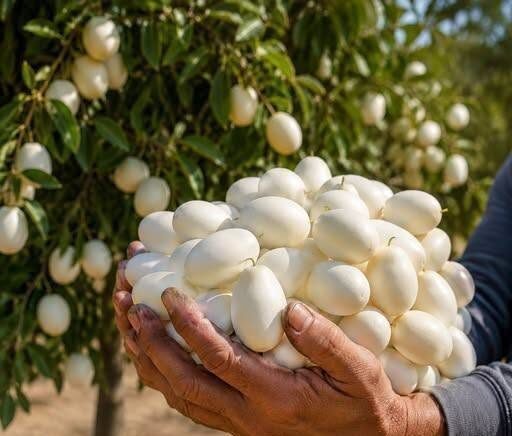
White eggplants, which are still grown today, can produce small, pale fruits that look remarkably similar to chicken eggs hanging from branches.
And that unusual resemblance helps explain one of the most curious names in the vegetable world.
The Original Eggplants Looked Very Different From What We Buy Today
Although purple eggplants dominate modern supermarket shelves, the plant has existed in many shapes, sizes, and colors throughout its long history.
Some traditional varieties produce small, round, or oval fruits with white or pale yellow skin. When growing among green leaves, these fruits can look surprisingly similar to eggs.
That resemblance is closely connected to the origin of the English name “eggplant.”
The term became associated with varieties whose appearance reminded growers of eggs, particularly the small white forms cultivated in earlier centuries.
Over time, larger purple varieties became more familiar to consumers in many parts of the world, but the original name remained.
Today, someone seeing a white eggplant for the first time might finally understand why this vegetable has such an unusual name.
White Eggplants Still Exist — And They Really Do Look Like Eggs
Despite their unfamiliar appearance, white eggplants are not a newly invented vegetable or an artificial variation.
They are naturally occurring cultivated varieties of eggplant, scientifically known as Solanum melongena.
Depending on the cultivar, white eggplants may be small and oval, nearly round, or elongated like the purple varieties commonly sold in grocery stores.
Their skin ranges from bright white to creamy ivory, sometimes developing a yellowish tint as the fruit matures.
When young white eggplants grow in clusters among green foliage, the resemblance to chicken eggs can be especially striking.
This appearance has made photographs of white eggplants popular online, where people sometimes mistake them for eggs growing directly from a plant.
Of course, they are not animal eggs at all. They are the fruits of a flowering plant, just like the more familiar purple eggplants.
Why Most Eggplants Are Purple Today
Eggplants have been cultivated for centuries, and growers have selected different varieties based on flavor, appearance, productivity, and suitability for local growing conditions.
The deep purple varieties familiar to many shoppers became widely popular because of their distinctive appearance and usefulness in cooking.
However, eggplants can also be green, striped, lavender, pale yellow, or white.
Some varieties are small enough to fit comfortably in the palm of a hand, while others grow considerably larger.
The shape can also vary dramatically, from almost perfectly round fruits to long, narrow varieties.
This diversity reflects generations of cultivation across different regions and culinary traditions.
Although the purple eggplant may be the most recognizable version in many Western supermarkets, it represents only one part of the plant’s remarkable variety.
Do White Eggplants Taste Different From Purple Ones?
One of the first questions people ask after discovering white eggplants is whether they taste the same as the purple varieties.
The answer depends partly on the cultivar, its maturity, and how it is prepared.
White eggplants are often described as having a mild, slightly sweet flavor and a delicate texture when cooked properly.
Some varieties have thicker skin than common purple eggplants, which means peeling may be preferable for certain recipes.
Purple eggplants, meanwhile, are known for their soft flesh and ability to absorb the flavors of sauces, herbs, oils, and spices.
Both types can develop bitterness, particularly when the fruit becomes overly mature, although many modern cultivated varieties have been selected for milder flavor.
Cooking transforms the spongy flesh into a tender texture, making eggplant suitable for a wide range of dishes.
White Eggplants Can Be Cooked in Many of the Same Ways
If you find white eggplants at a farmers market or specialty grocery store, there is no need to search for an entirely different cooking method.
They can generally be prepared using the same techniques as purple eggplants.
Roasting brings out their natural flavor and softens the flesh. Grilling adds a smoky taste, while sautéing allows them to absorb seasonings and sauces.
White eggplants can also be baked, stuffed, fried, or added to vegetable casseroles.
In Mediterranean and Asian cuisines, eggplant is frequently paired with tomatoes, garlic, olive oil, herbs, and spices.
Because eggplant readily absorbs oil, cooks may want to adjust the amount used during frying or sautéing.
Overcooking can also make the flesh excessively soft, so preparation time should be adapted to the fruit’s size and variety.
Eggplant Is Actually a Fruit, Not a Vegetable
Here is another surprising fact: although eggplant is treated as a vegetable in the kitchen, it is botanically classified as a fruit.
More specifically, eggplant is a type of berry because it develops from a flower’s ovary and contains seeds within its fleshy interior.
This places it in the same broad botanical category as several other foods commonly used in savory dishes.
Eggplant belongs to the nightshade family, Solanaceae, which also includes tomatoes, potatoes, and peppers.
These plants share certain botanical characteristics, although their edible parts and culinary uses differ considerably.
The distinction between fruits and vegetables often depends on whether the discussion concerns botany or cooking.
In everyday culinary language, eggplant is usually called a vegetable because it is used in savory meals rather than desserts.
The History of Eggplant Goes Back More Than a Thousand Years
Eggplant has a long history of cultivation, particularly in Asia, where it became an important ingredient in regional cuisines.
Historical references to eggplant appear in early Chinese agricultural writings, including accounts dating to the sixth century.
Over time, cultivation spread through different parts of Asia, the Middle East, North Africa, and Europe.
As the plant traveled, different communities developed their own names, growing methods, and recipes.
In British English, the vegetable is commonly called an aubergine, a name that developed through a different linguistic history.
In American English, the term eggplant became established, preserving the connection to the older white, egg-shaped varieties.
The different names reflect the plant’s movement through languages and cultures over many centuries.
Can You Grow White Eggplants in Your Own Garden?
White eggplants can be grown in home gardens under conditions similar to those required by purple varieties.
They generally prefer warm temperatures, fertile soil, consistent moisture, and plenty of sunlight.
Like other eggplants, they are sensitive to frost and typically perform best during warm growing seasons.
Gardeners can choose from several white cultivars, including varieties that produce small, egg-shaped fruits and others that develop larger, elongated eggplants.
Seeds may be available from specialty gardening suppliers, particularly those offering heirloom or unusual vegetable varieties.
Harvesting at the appropriate stage is important because overripe fruits can become tougher and develop more noticeable seeds.
For gardeners interested in growing something unusual, white eggplants can be both productive and visually distinctive.
Why Photos of White Eggplants Surprise So Many People
Photographs showing small white eggplants hanging from branches often attract attention because the fruits appear almost identical to eggs.
For people who have only encountered large purple eggplants, the images can seem confusing at first.
Some viewers even question whether the photographs show a real plant.
But the appearance is entirely possible with certain white eggplant varieties.
The surprise comes from how strongly people associate the word eggplant with one particular shape and color.
Once that familiar image is challenged, the name suddenly makes much more sense.
It is a simple example of how modern food habits can hide the history behind everyday words.
The Surprising Truth Behind the Name Eggplant
The next time you see a glossy purple eggplant at the grocery store, remember that its name tells a story much older than the vegetable’s familiar appearance.
Long before many people associated eggplants with large purple fruits, small white varieties were being cultivated that closely resembled eggs.
Those unusual forms helped inspire the English name that continues to be used today.
White eggplants have never completely disappeared. They remain part of the plant’s diverse family of cultivated varieties and can still be found in gardens and specialty markets.
What seems like a strange name for a purple vegetable becomes perfectly understandable when you see the pale, oval fruits growing among green leaves.
And perhaps that is the most fascinating part of the story: sometimes the explanation for an everyday mystery has been hiding in nature all along.
Have you ever seen a white eggplant growing before, or did you think the photos showed actual eggs on a plant? Share your reaction in the comments!