
The Booker–Patel Clash Shows Why Senate Oversight Needs More Than a Viral Moment
A Heated Judiciary Committee Exchange Raises Questions About Substance, Procedure, and Accountability
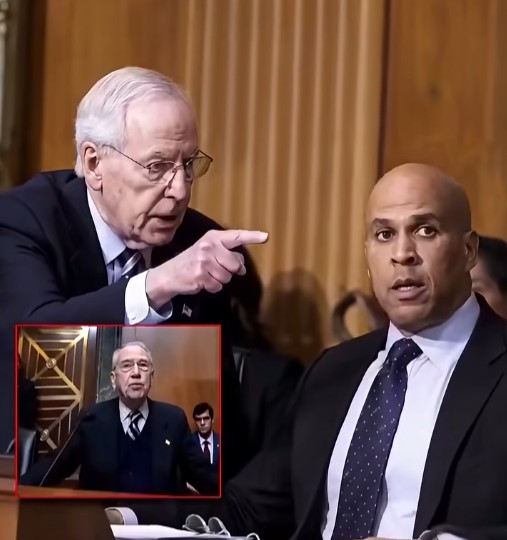
The confrontation between Senator Cory Booker and FBI Director Kash Patel offered the ingredients of a widely shared political clip: sharp accusations, a personal comeback, and a committee chairman struggling to move the hearing forward. Senator Chuck Grassley’s blunt intervention supplied the line most likely to outlast the discussion that preceded it.
Yet the exchange deserves attention beyond its entertainment value. When a congressional hearing becomes a contest over who can deliver the strongest insult, the public can lose sight of whether meaningful oversight is taking place.
That concern applies to lawmakers and witnesses alike. Senators have a responsibility to pursue useful answers, while agency leaders have a responsibility to respond to legitimate scrutiny. Neither obligation is fulfilled by winning a confrontation on social media.
A Confrontation With Several Competing Interpretations
During the September Senate Judiciary Committee hearing, Booker criticized Patel and continued speaking after Grassley said his allotted time had expired. The disagreement expanded into a dispute about the chairman’s handling of the hearing and the director’s willingness to answer questions.
Booker argued that the committee was failing to secure adequate responses. Grassley sought to conclude the exchange and move to the next senator. Patel participated in the confrontation, answering criticism with criticism of his own.
The sequence gave different audiences material for different conclusions. Viewers sympathetic to Booker could see a senator pressing an uncooperative witness. Patel’s supporters could see a director responding forcefully to personal attacks. Others could focus on Grassley’s effort to restore order.
A short clip can accommodate all those interpretations while revealing little about what the hearing actually established. The more useful question is what information emerged and what remained unanswered.
Strong Criticism Still Needs a Specific Purpose
Booker’s criticism was forceful and personal. His remarks expressed a clear judgment about Patel’s leadership, but expressing a judgment and establishing a factual record are different tasks.
A hearing gives senators limited time to identify an issue, present relevant evidence, and seek a response. Extended commentary can explain why an issue matters, but it also consumes the time available for questions and follow-up.
That trade-off becomes especially significant when a witness disputes the premise of a question or declines to provide a direct answer. The senator must then decide whether to narrow the question, identify the missing information, request a written response, or continue arguing.
Anger does not automatically make questioning ineffective. The test is whether the questioning gives the committee something it can examine: a clear answer, a documented contradiction, a specific refusal, or a commitment that can later be checked.
An Agency Director’s Comeback Is Not an Answer
Patel’s response turned the confrontation into an exchange of personal judgments. After Booker called him a mockery, the director returned the accusation and added a criticism of another senator.
Supporters may find such a response satisfying, particularly when they believe a witness is being treated unfairly. But satisfaction should not be confused with the production of useful information.
An agency director appears before Congress because the agency’s conduct requires examination. A personal insult does not explain a disputed decision, clarify an internal policy, or establish whether requested information has been provided.
The same standard should apply regardless of the director’s political affiliations. A witness can challenge an inaccurate premise and defend the agency’s work while still addressing the substance of the question. Personal retaliation moves the exchange further from that purpose.
The Chairman’s Responsibility Goes Beyond Keeping Time
Grassley’s intervention highlighted the procedural demands of a hearing. A committee cannot give every member unlimited time, and a chairman must eventually bring an extended exchange to a close.
Time limits protect the opportunity of other senators to participate. Without an enforceable structure, the most persistent speaker can determine the committee’s agenda simply by refusing to yield.
However, fair procedure also requires attention to how allotted time is used. Interruptions, lengthy responses, and disputes about whether a question has been answered can complicate a chairman’s task.
The challenge is to preserve both order and meaningful scrutiny. Ending an exchange may be necessary, but the quality of the hearing also depends on whether unresolved questions remain identifiable and can be pursued afterward.
Why Consistency Matters to the Committee’s Credibility
Rules are most credible when participants can understand how they are applied. If additional time is granted, the reason should be clear. If a senator is required to stop, comparable circumstances should receive comparable treatment.
In this exchange, Booker disputed the fairness of the time limits and criticized Grassley’s handling of Patel’s responses. Grassley maintained that Booker had already continued beyond his allotted period.
Those competing claims illustrate why procedural arguments can quickly overwhelm substantive questioning. Once participants begin debating the fairness of the hearing itself, attention shifts away from the agency under examination.
Consistent chairmanship helps prevent that shift. It gives senators a predictable framework for asking questions and witnesses a clear understanding of what is expected of them.
The Difference Between Attention and Oversight
A viral exchange can draw attention to a hearing that might otherwise receive little notice. That attention has potential value when it encourages people to examine the underlying issue.
The difficulty comes when the memorable exchange becomes the entire story. An insult can circulate without the question that prompted it, the answer that preceded it, or the evidence needed to assess either participant’s claims.
Viewers may then be encouraged to judge the hearing as a victory or defeat for a political team. That framing rewards confidence, aggression, and timing more readily than precision.
Oversight requires a different measure of success. The committee needs to determine what happened, who made relevant decisions, what records exist, and whether further action is warranted. Those results may be less dramatic, but they are more useful.
Specific Questions Create a More Durable Record
A focused question tied to a document can be more consequential than a broad accusation. It identifies a claim that the witness must confirm, dispute, explain, or decline to address.
That structure also makes follow-up easier. If the response does not resolve the question, the committee can state exactly what remains missing and request the relevant material.
By comparison, a general exchange about competence can continue indefinitely without producing an answer capable of verification. Each participant can reject the other’s judgment, leaving the audience with little more than competing assertions.
Precision does not eliminate disagreement. It gives disagreement a defined subject and helps create a record that remains useful after the hearing ends.
Accountability Continues After the Cameras Move On
The public hearing is only one part of congressional scrutiny. Records requests, written questions, and examination of agency responses can determine whether an unresolved issue receives sustained attention.
This work often lacks the visibility of a confrontation. A request for a particular document may attract less interest than an angry exchange, even when the document could answer a more important question.
That imbalance creates an incentive problem. Political attention arrives immediately, while the value of patient investigative work may become apparent only later.
Committee members can address that problem by making their follow-up clear. Identifying the unanswered question and the information being sought helps the public distinguish continued oversight from a dispute that ended with the clip.
What the Exchange Ultimately Demonstrates
The Booker–Patel confrontation should be assessed on more than the sharpness of its language. Booker’s criticism, Patel’s response, and Grassley’s intervention each played a part in an exchange that became increasingly focused on the participants themselves.
Effective scrutiny requires senators to pursue answers that can be evaluated. It requires witnesses to engage with legitimate questions. It also requires a chairman to protect a process in which both can happen.
The strongest result would be a clearer public record: relevant evidence examined, disputed claims tested, and unanswered questions preserved for further investigation.
That work gives a hearing lasting value. Long after the most memorable remark has stopped circulating, the record should still help explain what the government did and whether it met its responsibilities.