
A Retired Military Dog Broke Free at a Veterans Event—and Stopped at the Wheelchair of a Man Who Thought He Was Dead
James Recognized the Dog He Had Trained Years Earlier, but Their Unexpected Reunion Was Only the Beginning
When the Belgian Malinois jumped from the stage, chairs scraped across the ballroom floor. Guests pulled back as the dog ran between the tables, his handler following with the loose leash.
Renee stepped in front of her father’s wheelchair. James Cole caught her sleeve and asked her to move.
The dog stopped directly before him, lowered his chest to the carpet, and rested his muzzle on James’s knee.
James stared at the gray around the animal’s face. Then he touched an ear and found the tiny notch he remembered from a young dog he had trained almost a decade earlier.
“Reed?”
The dog’s tail struck the carpet. James bent forward, and the carefully managed charity luncheon fell silent around them.
A Lunch James Had Reluctantly Agreed to Attend
James had never liked events built around speeches about sacrifice. At seventy, he preferred practical assistance: housing support, benefits advice, transportation, and wheelchair repairs.
Those were among the services supported by the Veterans Forward luncheon at a San Antonio convention center. Renee had persuaded him to attend for two hours and had insisted on a sport coat instead of his usual windbreaker.
His wheelchair often prompted assumptions he disliked correcting. He had not lost mobility in combat. Spinal problems, surgical complications, and progressive nerve damage had changed his life long after his military career.
He had served twenty-four years in the Army, including work in logistics and working-dog training support. After retirement, he continued helping younger handlers and evaluating dogs.
That was where Reed entered his life.
The Young Dog Who Demanded Consistency
Reed had been an energetic, difficult Malinois with little patience for unclear instructions. He learned quickly but trusted slowly, responding better to quiet repetition than raised voices.
James became his first regular training handler before the dog moved to an operational team. He remembered the training lanes, the rubber ball, and Reed pressing his head against his thigh after a long session.
Years later, they crossed paths during an overseas advisory rotation. For six weeks, James worked around the team to which Reed had been assigned.
Then a heart rhythm problem sent James to hospital and eventually home. By the time he recovered enough to ask about the dog, units and personnel had moved.
He followed incomplete information through old contacts until someone suggested Reed had probably died from an overseas illness. There was no official confirmation, but eventually James stopped asking.
A Different Name on the Program
At the luncheon, James noticed a retired working-dog presentation listed in the program. The handler was Daniel Ortiz. The dog was called Ranger.
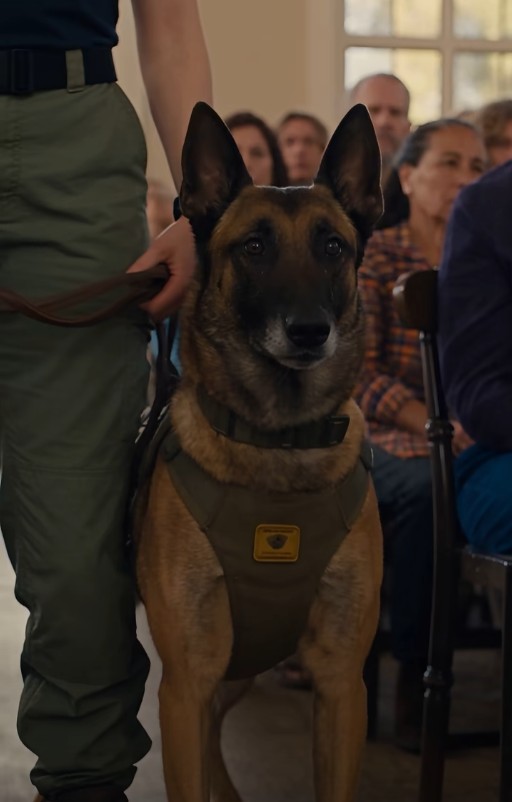
Across the room, a gray-muzzled Malinois lay beside Daniel. Something about the animal’s head and the way he looked up at a command caught James’s attention.
Renee noticed immediately. James resisted the possibility before she could finish suggesting it.
The resemblance meant little, he insisted. Reed was gone, and many Malinois looked alike.
When Daniel brought Ranger onto the stage, he explained that the dog was twelve and had been retired for fourteen months. James stopped moving his coffee cup.
The age matched.
The Moment Ranger Left the Stage
Daniel spoke about retirement routines, joint care, and the adjustments working dogs needed when their duties ended. Ranger turned his head toward James.
Then he stood. Daniel asked him to sit, but the dog remained focused on the tables.
A sudden pull loosened Daniel’s grip. Ranger jumped from the low stage and crossed the room, stopping at James’s chair before the startled guests understood what was happening.
Daniel approached and apologized. Then he saw the dog leaning into James and heard the old call name.
Renee explained that her father had trained a dog named Reed. Daniel asked when, opened the retirement file on his phone, and began searching.
The earlier designation appeared in the record: R-17 Reed. An old photograph showed a young Malinois with enormous ears, and James’s name appeared in the training history.
The Records Confirmed Their Shared Past
James studied the screen while Ranger remained pressed against him. The file confirmed what the familiar notch and the dog’s response had already suggested.
Daniel asked whether James had been Reed’s first handler. James carefully explained the distinction between early training work and an operational assignment.
He wanted that history understood accurately. Other handlers had shared the dog’s working life, including Daniel, who had cared for him through his final assignments and retirement.
James thanked him for that care. Daniel answered that Ranger had taken care of him too.
The luncheon paused while they sat together. For James, the most extraordinary part was also the simplest: the dog’s head was warm and heavy on his knee.
A Reunion Did Not Change Where Ranger Belonged
Renee photographed James, Daniel, and Ranger together. In James’s favorite picture, he was laughing as the dog turned toward him.
The story spread, bringing attention neither man had expected. Some viewers began insisting that Daniel should give Ranger to James because the dog had chosen him.
James called Daniel as soon as he saw those comments. He wanted to make clear that he was asking for no such thing.
Daniel knew Ranger’s current routines, veterinary needs, food, and home. Remembering James did not erase that relationship.
“He can remember you and still come home with me.”
Daniel’s words expressed exactly what James wanted people to understand.
They Built a Relationship Beyond the Video
The following week, they met at a quiet park with Renee. Daniel released Ranger from the van only after securing the leash, and the dog walked straight to James.
There was no startled audience this time. Ranger rested his head on the familiar knee while James scratched behind his ears.
Daniel brought a paper copy of the retirement timeline. Together, they traced the transfers that had made the dog’s history so difficult for James to follow.
There had been no death. Reed had continued working, changed assignments, acquired another name, and eventually retired with Daniel.
James felt anger at the mistaken information, followed by regret that he had stopped searching. Renee reminded him that he could not have known what nobody had reliably told him.
Ordinary Visits Became More Important Than the Reunion
They began meeting twice a month. Sometimes they walked paved trails; sometimes Daniel brought Ranger to James’s house.
The dog inspected the rooms and settled near a doorway. James kept approved treats in a sealed container, respecting Daniel’s feeding rules.
Stories moved between the men. Daniel learned about Reed’s impatience as a young dog, while James discovered that Ranger still loved water.
At a shallow creek, the old Malinois stepped in and briefly seemed younger. James laughed, and this time he let Renee record it.
The visits gradually became less about recovering the past. They became part of everyone’s present life.
Retirement Needed Care, Not Repeated Performances
When the charity invited them to recreate the reunion, James and Daniel declined. They later agreed to a small educational session about retired working dogs.
Daniel discussed medical needs, household suitability, and the importance of predictable routines. James explained why recognition should not be treated as ownership.
Ranger could remember an earlier handler while remaining securely attached to the person caring for him now. Both relationships deserved respect.
As the dog aged, public appearances became less appropriate. Daniel declined a large ceremony even when organizers suggested Ranger could simply lie onstage.
His retirement increasingly consisted of quiet visits, shaded yards, and comfortable places to sleep.
Age Changed the Visits
Ranger’s arthritis progressed. Walks shortened, turns became more cautious, and Daniel added a ramp when jumping into the van became difficult.
James noticed every change. His own mobility needs were increasing, and he was learning to accept more help from Renee and a caregiver, Tasha Greene.
Later, Ranger sometimes seemed confused after waking. One morning, he entered James’s living room and paused before approaching the wheelchair.
James waited until the dog sniffed his hand and leaned against him. The recognition was slower, but the familiar greeting remained.
That visit led to a difficult conversation. James asked Daniel not to prolong Ranger’s suffering for the sake of their reunion or the people who knew the story.
Choosing the Dog’s Comfort
When Ranger stopped eating normally, veterinary examinations revealed a mass on his spleen. Surgery carried substantial risks at his age, and there were concerns about possible spread.
Daniel asked for James’s opinion. James first acknowledged that the decision belonged to Daniel, then asked what the veterinarian believed would give Ranger the best remaining days.
They chose comfort care. Medication, short outings, appealing food, and long periods of rest replaced the old routines.
Daniel brought him to visit when the journey would not be exhausting. James sometimes remained almost motionless while Ranger slept against his wheelchair.
The veterinarian helped Daniel monitor comfort and daily functioning. Over time, the good days became fewer.
A Goodbye Over the Telephone
Daniel called before dawn one Saturday from an emergency veterinary clinic. Ranger was bleeding internally, and the veterinary team had made him comfortable.
James wanted to come, but reaching the clinic would require time and transport arrangements. He asked whether waiting might cause Ranger more suffering.
When Daniel could not reassure him, James said not to wait. Instead, Daniel put the telephone on speaker.
James used both names as he spoke to the dog. He remembered the stolen glove, the impatient training sessions, and the love of water.
“You did good, Ranger.”
Daniel remained beside Ranger through the end. James listened from home, grieving the dog he had lost once through uncertainty and now through age.
A Useful Memorial
When Daniel later offered him Ranger’s collar, James asked him to keep it. The tag carried the dog’s retirement name and Daniel’s telephone number.
Daniel had also brought a copy of the old R-17 training card bearing James’s initials. James accepted that record of their earlier chapter.
They declined several public memorial proposals before agreeing to something practical: a fund supporting veterinary care for retired working dogs.
Its assistance covered needs such as arthritis treatment, dental procedures, mobility equipment, and comfort-care consultations. Recipients were not required to provide photographs or make their private experiences public.
Daniel continued visiting James. Their friendship had begun through Ranger, but it lasted beyond him.
The Part of the Story the Camera Missed
Years later, James returned to the charity hall when the retirement fund became part of a broader assistance program. Daniel spoke about what happened after the famous reunion.
He described visits, changing health, and decisions made around Ranger’s present needs. The dog had been allowed to retire rather than repeat a moment an audience wanted to see.
As James grew older, he kept the laughing photograph in his room and the training card in his desk. When his health declined, Daniel brought news of veterinary grants helping other retired dogs.
James wanted to know what the money paid for. Hearing that it made ordinary days easier was enough.
A Photograph and a Page of Expenses
After James died, Renee kept the reunion photograph. Behind it, she placed a copy of an early report from the fund.
The picture showed recognition: an old dog, an older man, and a younger handler brought together unexpectedly. The report recorded what followed in practical terms—examinations, medication, ramps, and care.
When James’s great-grandson Caleb later found them, he read the expenses before returning to the photograph.
Renee smiled at that order. Her father would have appreciated it.