
Albanian MPs Clash in Parliament as Student Protests Intensify in Tirana
Parliamentary Guards Separated Rival Lawmakers After a Dispute Over Voting Cards Turned Physical
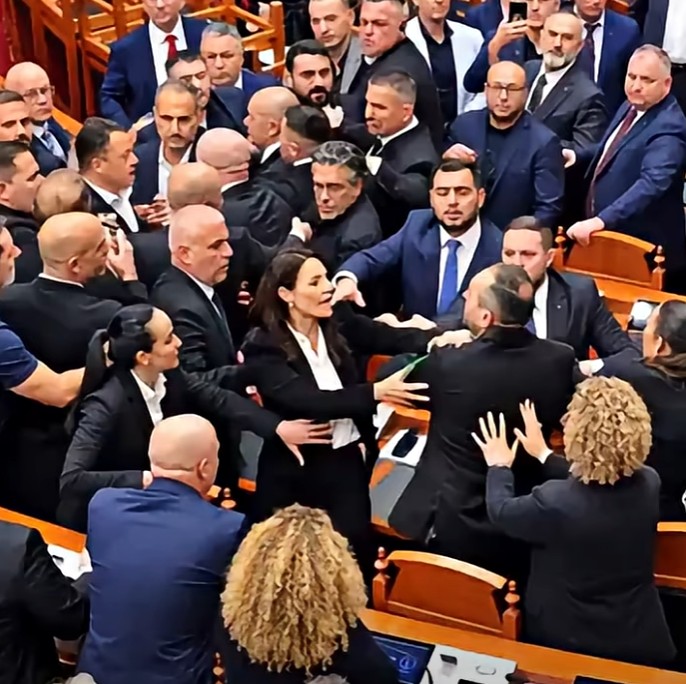
A session of Albania’s parliament descended into shoving on Thursday, October 22, 2026, as lawmakers from the governing Socialist Party and the opposition Democratic Party confronted one another in the chamber. Colleagues and parliamentary guards stepped in to separate them.
The confrontation came during a week of anti-government demonstrations in Tirana. High school and university students had been demanding lower tuition and greater investment in education, while a broader protest movement called for Socialist Prime Minister Edi Rama to resign.
Inside parliament, the immediate dispute centered on the conduct of the session and access to voting cards. The clash later led to suspensions for six opposition lawmakers.
A Dispute Over Voting Cards Escalated on the Chamber Floor
Tensions rose after opposition MPs blocked the parliamentary podium and moved toward the governing party’s benches. Reports described several confrontations involving voting cards as lawmakers crowded around one another.
A 53-second video shared on X captured part of the disorder. It opened with a two-handed shove, and a green voting card was thrown seconds later. Other lawmakers moved between the men as the confrontation continued.
Democratic Party MP Fidel Kreka shoved Socialist MP Ervin Hoxha during the exchange. Another confrontation involved Democratic MP Flamur Noka. Parliamentary guards intervened as colleagues tried to separate the lawmakers.
The clip captured only part of the session. The physical clash followed a longer dispute over the podium and the voting process, both of which later featured in the governing party’s request for disciplinary action.
Six Opposition Lawmakers Received 60-Day Suspensions
The Socialist parliamentary group sought disciplinary measures against 20 Democratic Party MPs. Its request accused opposition lawmakers of obstructing proceedings, disrupting voting, and damaging equipment. It sought suspensions of up to 60 days.
On October 24, parliament’s Secretariat for Procedures, Voting and Ethics suspended six Democratic Party lawmakers from plenary sessions and committee work for 60 days. The six were Flamur Noka, Belind Këlliçi, Fidel Kreka, Edi Paloka, Besart Xhaferri, and Luçiano Boçi.
The disciplinary body also upheld warnings against 14 other opposition MPs. The penalties addressed the conduct of lawmakers during the session, while demonstrations in Tirana continued to put pressure on the government.
Students Brought Education Demands Into a Wider Protest Movement
Two days before the parliamentary clash, police used tear gas and water cannons against demonstrators in Tirana. Tuesday marked the eighth consecutive day of violent anti-government protests. During the unrest, some protesters threw rocks, fireworks, and other projectiles at officers.
Students called for lower tuition, increased public investment in education, and action against corruption. Their demands became part of a larger movement seeking Rama’s resignation after 13 years in power.
The demonstrations had also drawn on anger over a proposed luxury tourism development on Albania’s southern coast. Protests against that project had taken place for months before the October clashes, and the movement had broadened to include concerns about education, jobs, and the cost of living.
Opposition lawmakers brought some of that anger into the chamber by displaying photographs they said showed injuries sustained by demonstrators. The images brought the police response into the parliamentary dispute as tensions over the session itself escalated.
A Student Activist Described the Work Behind the Demonstrations
Sidorela Vatnikaj, a 27-year-old master’s student and activist, described mornings spent checking where groups planned to gather and what help they needed. That could mean finding a lawyer, arranging first aid supplies, or checking whether friends and relatives had made it through a protest safely.
Vatnikaj linked her participation to the frustration she had seen in her parents’ generation. She said they had worked for years hoping to live in a democracy where they could be treated with dignity, and she felt that promise had gone unfulfilled.
She expressed discomfort with protesters throwing stones at police and said she understood the anger behind those actions. She blamed police tactics for escalating the violence. Her account described a movement in which participants could share grievances while disagreeing about how to express them.
Rama Rejected Calls to Yield to Violence
Rama said his government would resist any effort to remove it through violence. He characterized attacks on police as an attempt to force a change in government and argued that organizers were exploiting concerns about living costs, housing, and opportunities for young people.
Protesters continued to press their demands after the parliamentary session. On October 24, police again used tear gas and water cannons in Tirana as demonstrators threw stones and set a fire at the entrance to the agriculture ministry.
That was the same day parliament imposed its 60-day suspensions. The disciplinary decision set out who would be barred from the chamber, while the students’ demands for education reform and the wider calls for Rama’s resignation remained unresolved.