
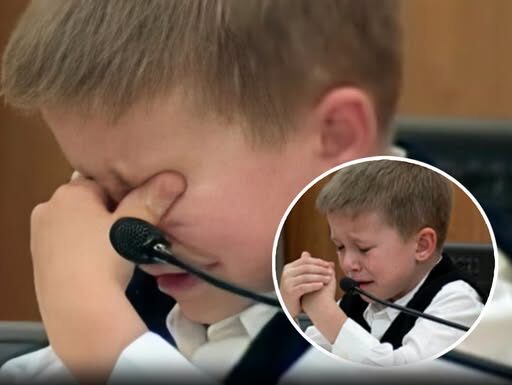
He Testified Against His Mother at 7. Now A.J. Hutto Is Telling His Story.
Seventeen Years After the Trial, A.J. Remembers the Sister He Called His Best Friend
A.J. Hutto remembers how nervous he was when he testified in a Florida courtroom in 2008. He was seven years old, strangers were watching him, and he had been asked to explain what he saw the day his sister, Adrianna, drowned. He told the court that their mother, Amanda Lewis, had held Adrianna’s face underwater.
Seventeen years later, A.J. spoke publicly about the trial and what it took to revisit that part of his childhood. In an interview at age 24, he said no one had coached him and that he stood by what he told the court. He also spoke about what he remembered of Adrianna beyond the day she died: she was his best friend.
Investigators Initially Believed the Drowning Was an Accident
On August 8, 2007, Lewis returned home from working a night shift at a nursing home. She later said she planned to rest briefly while the children watched cartoons before taking them shopping for school supplies.
According to Lewis, the children asked to swim in the family’s aboveground pool. She said she told them they could play outside while she got ready but could not go into the pool. A.J., who was six at the time, soon came back inside and told her Adrianna was in the water.
Lewis said she initially thought he meant his sister was near the pool. When she looked outside, she saw him reaching into the water. She ran out and found Adrianna face down. The seven-year-old was airlifted to a hospital, where she died.
Lewis later recalled kissing and hugging her daughter after a doctor told her Adrianna was gone. Authorities initially believed the drowning was accidental. A.J.’s account to investigators gave them a different explanation for what had happened.
A.J. Used a Drawing to Explain What He Saw
A.J. told investigators that his mother had become angry with Adrianna and had “dunked” her in the pool. When he testified about six months later, he used a drawing to show where everyone had been. He drew himself near a tree and placed two figures by the pool.
Prosecutors asked him to identify the figures and explain what his mother was doing. A.J. said she was killing his sister. Asked how, he replied, “Putting her hand over her face.”
Lewis’s account was that she had gone outside to help after A.J. alerted her. The jury found her guilty of first-degree murder and aggravated child abuse. She was sentenced to life in prison without the possibility of parole.
A.J. said he did not fully understand the significance of his testimony at the time. That understanding came in his teenage years. What he remembered most clearly about being in court was how nervous he felt with everyone looking at him, and how relieved he was when it was over.
He Built a Life Away From the Case
After the trial, A.J. was adopted and began living under a different name, which remains private. He went on to become a firefighter. In his interview, he described the warmth and happiness he found with his adoptive family and recalled a childhood before his adoption in which he said both he and Adrianna had been physically abused.
Looking back at the courtroom testimony, he said, “I just told them exactly what I saw word for word.” He said he still believed Lewis was “100% guilty.”
A.J. said he had not seen Lewis since testifying and wanted to keep that distance. He explained that seeing her again would bring back feelings and memories he had worked to leave behind. He also described the conflicting emotions he felt after the trial: she was still his mother, and he was relieved that what he and Adrianna had been going through had finally ended.
The courtroom footage captures a few minutes of A.J.’s childhood. His interview offered something the footage could not: his own account of the years that followed, and a chance to remember Adrianna as his sister and closest friend.