
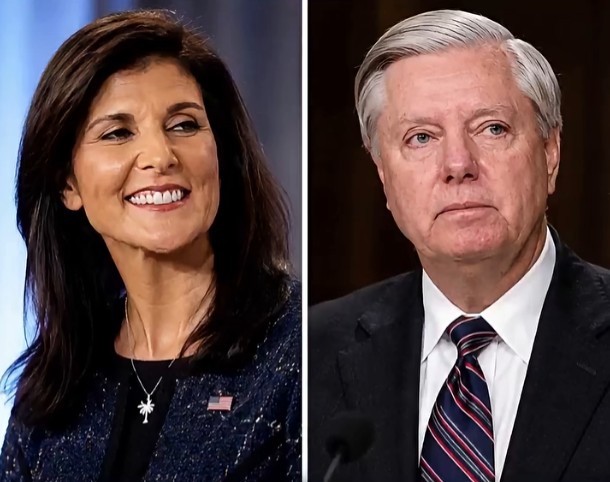
Nikki Haley Responds to Calls to Run for Lindsey Graham’s Senate Seat
The Former South Carolina Governor Declined a Bid as Other Republicans Considered Their Next Steps
Nikki Haley ruled out running for Lindsey Graham’s Senate seat after his death in July 2026, despite public encouragement from supporters who wanted the former South Carolina governor to enter the race.
Graham’s death prompted tributes from colleagues and constituents while raising questions about who would succeed him. Haley’s experience as governor, United Nations ambassador and presidential candidate quickly made her a prominent name in those discussions.
However, a spokesperson said she did not plan to run. Her decision narrowed the speculation surrounding one of South Carolina’s most recognizable Republican figures, while leaving other potential candidates to consider their options.
Haley Paid Tribute to Graham’s Service
Before attention turned to a possible campaign, Haley shared a personal remembrance of Graham. Her message emphasized his connection to South Carolina, his military service and his commitment to American allies.
“There was never a day he stopped fighting for the people of our state. Through his military service and years in public office, he gave his all to protect America and our freedom-loving allies,” she wrote.
Haley also offered condolences to Graham’s family, including his sister, Darline.
“He was truly one of a kind. Michael and I are lifting up Darline and his entire family in prayer during this difficult time.”
Some people responding to the tribute encouraged Haley to seek his seat. Her previous leadership of the state and experience in international affairs made the suggestion understandable, particularly given Graham’s longstanding focus on national security.
Nevertheless, the encouragement did not lead to a campaign announcement. Her spokesperson’s response made clear that public speculation did not reflect her plans.
Nancy Mace Left the Possibility Open
Representative Nancy Mace took a different position when asked whether she would consider running. Speaking on Fox News Live shortly after Graham’s death, she acknowledged the possibility while emphasizing that her immediate priority was remembering her colleague.
“I’m never going to shut the door,” Mace said.
“I love the state of South Carolina. You only live once, and you know, if the people of South Carolina would like me to serve in that capacity, I’ll certainly take a look at it. But right now, I just want to focus on him and his legacy.”
Her remarks expressed openness rather than a formal decision. At that stage, she had not used the interview to announce a campaign, name a campaign team or present an election platform.
The distinction mattered as political attention accelerated. Haley had declined a run, while Mace had left herself room to consider one. Neither response justified treating speculation as a confirmed candidacy.
A Vacancy After More Than Two Decades in the Senate
Graham was first elected to the Senate in 2002 and began serving in 2003. Before that, he represented South Carolina in the House of Representatives for four terms.
During his Senate career, he became a prominent Republican voice on military policy, national security and international affairs. His support for Ukraine and his relationship with President Donald Trump were among the most closely followed aspects of his later political career.
His death therefore created a significant opening in South Carolina politics. The question of succession involved both the immediate responsibility of filling a vacancy and the longer process of allowing voters to choose a senator.
South Carolina’s process provided for the governor to appoint a temporary replacement, followed by a special election. In the immediate aftermath of Graham’s death, officials began outlining the steps needed to fill the seat.
Remembering Graham While Considering What Came Next
The initial responses illustrated how quickly mourning and political decisions can overlap after the death of a serving senator. Public tributes continued even as reporters asked potential candidates whether they intended to run.
For Haley, the answer was that she would not seek the seat. For Mace, the possibility remained open, accompanied by a request to keep the immediate focus on Graham’s life and service.
Those statements captured the opening days of the succession discussion in July 2026. They reflected the positions the two Republicans expressed at that moment, rather than establishing the eventual outcome of the race.