
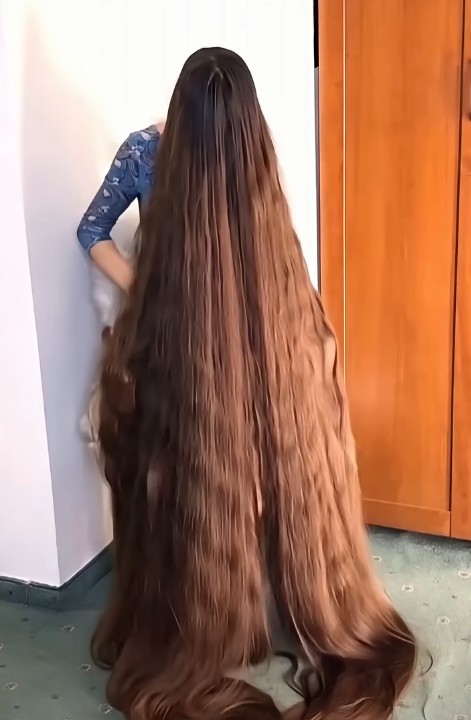
Rosa Ramirez Grew Her Hair for 25 Years. When She Finally Cut It, She Planned to Give It Away
Her Hair Had Reached More Than Four Feet Before She Chose a Shoulder-Length Style
For 25 years, Rosa Ramirez kept the long hair that friends, neighbors and relatives had come to recognize as her signature. It reportedly grew to more than four feet. Her husband had encouraged her to try a different style, but Rosa waited until she felt ready. When she finally made a salon appointment, she wanted her hair cut to about shoulder length.
She also had a purpose in mind for the hair she was about to lose. Rosa reportedly planned to donate it for possible use in wigs for children experiencing medical hair loss. The length she had spent years washing, brushing and styling would give her plenty to set aside when the stylist began cutting.
Four Feet of Hair Had Become Part of Her Daily Routine
People who knew Rosa could recognize her by her hair. They saw the result of years of growth whenever she wore it long. Rosa also knew the work behind that familiar appearance, from washing and drying it to brushing out tangles and deciding how to wear it each day.
A routine like that develops gradually. As hair gets longer, there is more to wash, more to dry and a greater length to work through with a brush. The weight can also affect how comfortable a style feels during ordinary activities. What might look extraordinary to someone seeing Rosa for the first time had become a regular part of how she got ready.
That familiarity helps explain why a shorter haircut was a decision she took her time making. She had lived with her signature style through many stages of her life. Her husband could suggest a change, and she could imagine what it might be like. Choosing an appointment and deciding how much length to remove were steps she took when she wanted a different look for herself.
She Went to the Salon With a Specific Length in Mind
Rosa decided on a cut that would leave her hair around her shoulders. The length gave her a concrete way to picture the result before she sat down. For friends and family accustomed to seeing her with hair that extended several feet, the change would be immediately apparent.
The decision also changed what the stylist was there to do. A trim would have preserved a look Rosa already knew how to manage. Cutting it to shoulder length meant giving the hair a different shape and removing much of the growth she had maintained over the years. When the stylist began, the distance between the old length and the new one became something Rosa could see for herself.
The everyday changes would become more apparent after she left the salon. A shorter style meant less hair to work through when she washed or brushed it. Familiar ways of putting it up might feel different, and she could see how the ends fell around her shoulders. After 25 years with exceptionally long hair, even those ordinary details offered something new to get used to.
Rosa Had Plans for the Hair the Stylist Removed
Anyone who makes a dramatic change at the salon has to decide how much hair they’re comfortable losing. In Rosa’s case, there was also a question about where the removed length would go. She reportedly intended to donate it so it could potentially be used to make wigs for children whose hair loss was related to a medical condition or treatment.
A wig can offer a child another choice about how they want to look while going through a period of hair loss. For some children, having that choice can bring comfort or help them feel more confident. Each recipient will have their own preferences, and the donation is one contribution toward making more options available.
Rosa’s plan gave the appointment a second purpose. She had already decided that she wanted shorter hair. By setting aside the length the stylist removed, she could also offer something she had taken care of for years to a program that helps children. Her decision to donate was part of what made people remember the haircut beyond the visible change.
Donation Requirements Vary From One Program to Another
Organizations that use donated hair for wigs have their own acceptance requirements. One program may ask for a different minimum length from another. Rules can also vary for colored or chemically treated hair, and a program may consider the hair’s condition when deciding whether it can use the donation.
The length that matters to a donation program is the portion being removed. That gives someone considering a donation two measurements to think about before a haircut. One is the length they want to keep. The other is the length the organization requires. Looking at both can help the person and their stylist see whether a planned cut meets the program’s guidelines.
Checking the requirements before an appointment gives a donor time to choose an organization that can accept the hair they plan to give. Someone who has colored their hair can look for the program’s policy on coloring. Someone who wants to keep the ends at a particular point can discuss that preference with the stylist before the first cut. Those details can determine whether the hair is suitable for the intended donation.
Her New Style Changed Something People Had Known About Her for Years
When the haircut was finished, the woman people recognized for more than four feet of hair had a style that ended around her shoulders. For those who had known Rosa a long time, it was a striking difference. For Rosa, being able to see the new shape was the beginning of finding out how it would feel in the routines she knew best.
A familiar hairstyle can become part of how someone recognizes themselves. The weight, the time it takes to care for it and the way it feels when it’s brushed all become ordinary through repetition. Changing that length can take some adjustment, even when the person has looked forward to the result and chosen it carefully.
Rosa had heard suggestions about cutting her hair before. What made this appointment possible was her own decision that she was ready. She could decide how much she wanted to keep and what purpose she hoped the rest would serve. Both choices were hers by the time she sat down in the stylist’s chair.
After 25 years, Rosa left the salon with the shoulder-length hair she had come for. The length she had spent all those years caring for was now set aside for donation, where it could help give a child dealing with hair loss a choice of their own.