
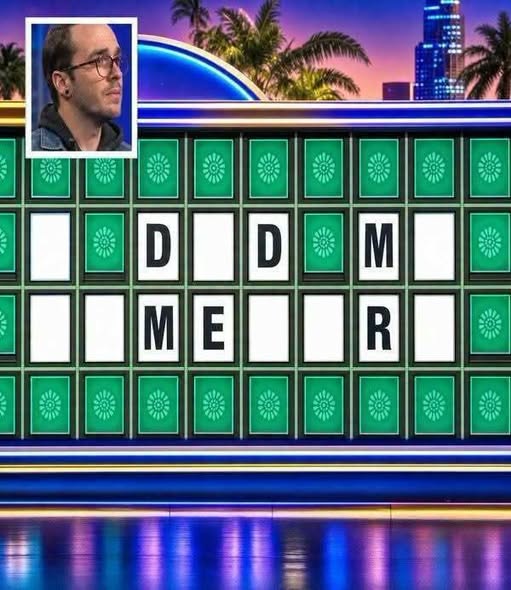
Conner Kemmsies Missed Out on $40,000. Wheel of Fortune Fans Questioned the Final Puzzle
The Valentine’s Day Bonus Round Sparked a Debate About What Makes a Puzzle Fair
Conner Kemmsies made it to the bonus round of Wheel of Fortune on Valentine’s Day with an additional $40,000 within reach. The category was “Phrase,” and the answer remained unsolved when the buzzer sounded. His chance at the extra prize ended there. For viewers discussing the episode online, the debate was just beginning.
Some fans thought the puzzle was unusually difficult and questioned whether Kemmsies had been given a reasonable chance to solve it. Others had a broader concern about the game they had watched for years. Ryan Seacrest had taken over as host after Pat Sajak’s departure, and the episode became another occasion for longtime viewers to compare the show with the version they remembered.
The $40,000 Was an Additional Prize
Kemmsies had already played his way into the final round. The $40,000 was the amount he stood to add by solving the last puzzle. That detail matters because a bonus-round loss can sound like money was taken away. In this case, the buzzer ended his chance to earn an additional prize.
The appeal of the round comes partly from how quickly it narrows the game. A contestant who has made it through the earlier rounds has one last answer to find. The category gives the search a direction, but “Phrase” leaves room for many possibilities. As the clock winds down, settling on one interpretation can make it harder to see another.
Viewers experience that pressure at a distance. They can call out a guess from home, change it a second later or wait to see the answer. Kemmsies had to work within the time he was given. When it ran out, the amount at stake gave people a clear sense of what one more correct answer would have meant.
Why a Phrase Can Seem Obvious Once It’s Revealed
A phrase puzzle often depends on recognizing how words fit together. One familiar word might suggest a whole expression, but it can also take the search in the wrong direction. Once a contestant starts imagining a particular phrase, the remaining spaces may look as though they ought to fit it. Finding a different possibility under the clock takes a quick change of mind.
That is one reason the reveal can make a puzzle feel easier in hindsight. Once the answer is visible, every part of it seems to belong in the place where it appears. A viewer can suddenly recognize an expression they would use or understand in conversation, even if it never occurred to them while the clock was running. Recognizing the completed phrase and finding it from an incomplete board are different experiences.
The reverse can happen too. A phrase may still strike some viewers as unfamiliar after the reveal. That reaction helps explain why fans can disagree so sharply about a single puzzle. One person recognizes a common expression as soon as it appears. Another sees a combination of words they would rarely encounter together. They watched the same round, but they brought different language habits to it.
Fans Were Asking How Difficult a Bonus Round Should Be
Some of the discussion focused on the expectation that a final puzzle should be challenging. The additional prize is substantial, and part of the suspense comes from seeing whether a contestant can make the last connection in time. A round that seems demanding can still feel satisfying when viewers can follow how someone might have reached the answer.
The objections centered on where that difficulty crosses into frustration. For viewers who thought Kemmsies’ puzzle was too tough, the issue was whether the available clues gave him a workable starting point. A challenge can feel different when a player appears to have several plausible ways forward but too little time to explore them.
Fairness and difficulty also invite different kinds of judgments. A viewer can reasonably find one answer hard to recognize and question how it was chosen. Drawing a conclusion about whether the show has become less fair would take a wider comparison across episodes. The Valentine’s Day result shows that Kemmsies was unable to finish this particular puzzle in time. The broader question explains why fans kept discussing it.
The Debate Came During Ryan Seacrest’s First Chapter as Host
Pat Sajak’s departure changed one of the most familiar parts of Wheel of Fortune. Longtime viewers had grown used to the person who guided contestants through each round and was there when the final answer was revealed. With Seacrest in that role, viewers could still recognize the game while noticing differences in the experience of watching it.
That history shaped some of the reaction to Kemmsies’ loss. For fans already thinking about how the show felt after Sajak’s exit, a disappointing bonus round could become part of a much larger discussion. Memories of past episodes set expectations about the pacing, the puzzles and how a close finish ought to feel.
The host change supplies context for those reactions. It leaves the specific question about Kemmsies’ puzzle open to its own examination. A viewer can have a preference about who presents the show and a separate opinion about whether a particular phrase was too difficult to solve. Online, those two judgments often surfaced in the same conversation.
One Buzzer Brought Years of Expectations Into View
Game shows give people a chance to play along, and that is part of why a loss can feel personal to someone sitting at home. A viewer may spend the final seconds willing a contestant to say the answer they think they see. Another may be struggling to find any answer at all. When the time runs out, one remembers how close the contestant seemed. The other remembers how little there was to go on.
The social media debate extended that feeling beyond the broadcast. Viewers could revisit the outcome and say where they thought the round had gone wrong. Some reactions began with sympathy for Kemmsies. Others began with an opinion about the show’s direction. Both found a point of focus in the same unsolved “Phrase” puzzle and the $40,000 he could have added.
For Kemmsies, the moment ended with the buzzer. For fans, it lasted because it put a familiar expectation into words. They want the final round to be hard enough that a win feels earned, with an answer that still feels reachable while the clock is running. The debate over his Valentine’s Day puzzle showed how differently viewers can draw that line, even when they are all watching the same board.