
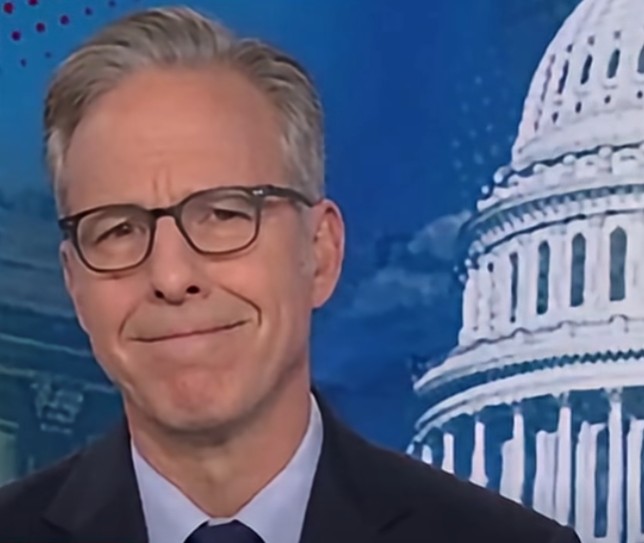
Trump’s Call to Put CNN on a “Normal Path” Draws Scrutiny After Jake Tapper Interview
The President’s Remark Prompted Questions About CNN’s Editorial Independence and How Tapper Ended the Call
President Donald Trump’s choice of words during a Sunday phone interview with CNN anchor Jake Tapper drew attention to the relationship between the White House and the news organizations that cover it. As the call drew to a close, Trump said, “We’re trying to have CNN go on a normal path, and we’ll do that.”
Tapper answered, “Well, I’m on a normal path right here, sir, and I appreciate your time. And thank you for calling in,” before ending the interview. Some viewers questioned why he signed off without asking Trump what he meant or what his administration was doing to bring about the change he had described.
The Remark Came at the End of a Narrowly Focused Interview
Trump had called in to discuss news concerning Senator Lindsey Graham and declined to take questions on other subjects, including recent U.S. strikes on Iran. Tapper closed the call by saying, “we would love to have you back sometime.”
By then, Trump had introduced a subject separate from the stated purpose of the interview. His use of “we’re trying” suggested an effort was underway, but he gave no examples of what that effort involved. He also left “normal path” undefined. The exchange ended without establishing whether he meant CNN’s reporting, its leadership, its corporate direction, or something else.
That ambiguity was at the center of the reaction. Viewers could hear the president describe a desired change at the network. What they could learn from the call about any actions behind his words was limited to the statement itself.
Some Viewers Wanted Tapper to Ask a Follow-Up
On social media, some viewers called Tapper an “enabler” and a “sycophant.” Others addressed Trump’s remark more directly, arguing that the president has no role in choosing the direction of an independent news organization. One viewer summed up their interpretation in five words: “Admitting they are trying to control the media.”
Much of the criticism centered on how Tapper handled the closing seconds. He responded to the phrase by saying he was already on a normal path, then thanked Trump for his time. The answer offered a brief objection to the president’s characterization of his work. It left the larger claim about what Trump and his administration were trying to do unexplored.
A follow-up could have focused on the most concrete question the remark raised: what steps, if any, had the administration taken regarding CNN? An answer might have clarified the difference between a president expressing dissatisfaction with a network and an administration taking action that could affect it. Viewers were left to interpret the language without that clarification.
The Ownership Deal Added Weight to the Exchange
The comments came amid a reported Justice Department approval of Paramount Skydance’s acquisition of Warner Bros. Discovery, CNN’s parent company. That corporate context helped explain why some viewers heard the president’s remark as more consequential than an ordinary complaint about television coverage. A federal decision involving CNN’s owner was already part of the backdrop.
The approval and the network’s editorial decisions involve different kinds of authority. The Justice Department’s role concerns the ownership transaction. Decisions about what CNN covers and how its journalists pursue a story belong to the newsroom. Trump’s comment prompted questions about whether the administration saw a connection between those areas.
The call itself supplied no details linking the reported approval to any request about CNN’s coverage. Trump did not describe a condition attached to the transaction or identify a story he wanted changed. The timing made the question relevant, while the content of the exchange left it unanswered.
Tapper Had Previously Described CNN’s Responsibility on Air
Months earlier, Tapper had said CNN’s job “is not to try and please the president or only report the statements he likes.” That earlier remark became a point of comparison for viewers evaluating how he responded when Trump brought up the network’s direction on its own airwaves.
The two exchanges addressed related issues under different circumstances. Tapper’s earlier statement was a general account of the network’s responsibility. On Sunday, he was ending a live call with a president who had limited the subjects he was willing to discuss and had just made a broader remark about CNN. Critics wanted Tapper to use that moment to ask the president to explain himself.
Tapper’s response and Trump’s statement can both be read in full without settling what happened beyond the call. Tapper challenged the suggestion that he personally needed to change course. Trump gave the impression that he expected the network’s direction to change. Neither elaborated on what a change would look like in practice.
Why the Question of Editorial Independence Remains
Presidents can object to coverage, dispute a story, or decline interview questions. Journalists can press for answers and report what officials say, including statements that raise questions about the government’s relationship with the press. The issue here turns on whether Trump was voicing a preference or referring to specific steps by his administration.
Establishing that would require details beyond the exchange. A documented request to corporate executives, a condition tied to a regulatory decision, or a particular attempt to influence coverage would each give the public something concrete to assess. The call offered a broad statement without identifying any such action.
It also left a question about how to interview an official who agrees to discuss one subject and then introduces another. The limits Trump had placed on the conversation explained why questions about Iran went unanswered. His decision to raise CNN’s future nevertheless created a new opening for a question about his own words.
What viewers heard was a president saying his administration was trying to move CNN in a direction he called normal, followed by an anchor saying he was already on that path. The most consequential question remained open when the call ended: what, specifically, did Trump mean when he said, “we’ll do that”?