
My Grandmother Showed Me Why the Dryer Vent Deserves a Closer Look
Cleaning the Lint Screen Is Part of Laundry Day, but Lint Can Collect Farther Down the Vent
The first time my grandmother showed me how she cleaned a clogged dryer vent, I expected the job to involve tools I’d never seen. She had a vacuum with a hose and a long, flexible brush. What stayed with me was where she looked first. I was used to pulling lint off the screen. She wanted me to see what could collect behind the dryer and inside the duct.
That part of the appliance was easy to forget because I rarely saw it. When clothes took too long to dry, I was more likely to blame the size of the load or run the dryer again. My grandmother’s routine gave me another place to look and helped me understand why getting warm air out of the dryer matters as much as getting it warm in the first place.
What Happens When Lint Restricts Airflow
A dryer needs a clear path to exhaust warm, moist air. As lint collects in the vent, it can restrict that flow. Towels that used to dry in a single cycle may still feel damp when the machine stops, or an ordinary load may take longer than it once did.
Running an extra cycle can get the laundry dry, but it leaves the underlying problem in place. Additional drying time uses more electricity or gas, depending on the appliance, and adds to the amount of work the machine does. A longer cycle can have several causes, so a change in drying performance is a reason to check the vent rather than assume the duct is clogged.
Lint buildup is also a fire hazard. That is the part of the lesson I took more seriously once I understood that a vent could gradually narrow without any obvious change to the outside of the dryer. Nothing about the appliance had to look different for airflow to be affected.
The Vacuum and Brush Do Different Jobs
My grandmother started with the lint she could reach. With the dryer off and unplugged, she accessed the vent connection behind the appliance and used the vacuum hose to collect loose lint near the opening. Starting there gave her a clearer view of what she was dealing with before she tried to reach farther into the duct.
The flexible brush was for lint that clung to the inside of the vent beyond the opening. She worked it gently to loosen the buildup, then went back with the vacuum to collect what the brush had brought within reach. The brush freed the lint, and the vacuum removed it. Using the tools in that order made more sense once I watched the loose material come out.
Access varies from one home to another. A dryer that is difficult to move or a vent with sections you cannot reach can turn a simple cleaning into a different job. With a gas dryer, leave the gas connection undisturbed. If reaching the vent would require moving or disconnecting the gas line, arrange for qualified service.
The Outside Opening Is Part of the Same Vent
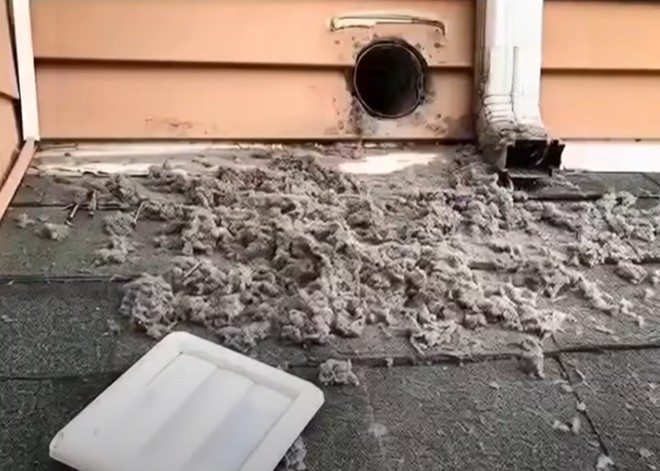
My grandmother’s routine also took her outside to the point where the dryer exhaust leaves the house. It was a useful reminder that the opening behind the appliance is only one end of the duct. Lint can collect near the exterior outlet as well, and that outlet needs to open freely when the dryer is running.
She sometimes used a leaf blower during her own cleanings. Whether any powered tool is appropriate depends on the dryer and the duct layout, so the appliance manufacturer’s instructions are the right place to check before using one. If the duct remains obstructed after accessible lint has been removed, professional cleaning can address sections a household vacuum and brush cannot reach.
The same principle applies when inspecting the exterior outlet. An outlet you can reach easily is straightforward to look at. One that requires unsafe access is a reason to have the vent checked professionally. The goal is to clear the full exhaust path without damaging the duct or creating a new problem behind the appliance.
What to Look For After Reconnecting the Dryer
Once the cleaning was finished, my grandmother made sure the vent was securely connected before putting the dryer back into position. That step deserved the same attention as brushing out the lint. A duct that gets crushed or sharply bent while the dryer is pushed back can restrict airflow even after it has been cleaned.
She then ran a test cycle. A check at the exterior outlet can show whether air is coming through while the dryer runs. Over the next few loads, it is also possible to see whether drying times return to what is normal for that machine and the kinds of laundry it handles.
If clothes still come out damp after their usual cycle, the vent may need a closer inspection, or the appliance may have another issue. A test cycle is useful because it gives you something to observe after cleaning. It cannot tell you by itself what is causing a problem that continues.
Making Vent Checks Part of Home Maintenance
My grandmother treated vent cleaning as something to remember before a blockage interrupted laundry day. A once- or twice-yearly check can serve as a reminder, with the timing guided by the dryer’s instructions, how often it is used, and whether drying performance changes between checks.
Cleaning the lint screen and checking the vent serve different purposes. The screen is the part people see and empty during ordinary use. The duct carries exhaust beyond the appliance and is easy to overlook for months at a time. Understanding where each one sits in that path made the routine easier for me to remember.
I still think about that first lesson when a load of towels takes longer than I expect. My grandmother had shown me how much of the job came down to paying attention to a part of the house I barely noticed. I learned where the dryer’s air was supposed to go, what could get in its way, and why a change in an everyday chore was worth investigating.