
Police Emergency Warnings: Why Restricted Areas Must Remain Clear
Understanding a Warning When Details Are Still Limited
A police instruction to avoid an area can interrupt an ordinary day with immediate uncertainty. Residents may be unable to use familiar streets, commuters may encounter diversions, and people nearby may see emergency vehicles without knowing what prompted the response.
However, a warning cannot be treated as a specific, current public alert unless it identifies the affected location and the authority issuing the instructions. Without those details, it is not possible to establish which streets are restricted, who needs to take action, or whether an operation remains underway.
The guidance here concerns how to respond when local authorities issue an identifiable emergency warning. It does not establish that a particular neighborhood is currently unsafe or subject to restrictions.
During an actual incident, the most useful information is practical: where the boundary lies, whether people should leave or remain indoors, which routes are available, and when another update is expected.
Some of those details may take time to establish. Emergency personnel may still be assessing conditions, coordinating their response, or deciding whether existing precautions need to change.
People do not need a complete explanation of an incident to respect a clearly communicated safety boundary. They do, however, need accurate information about where that boundary applies and what officials are asking them to do.
Why Officers Close Streets and Limit Access
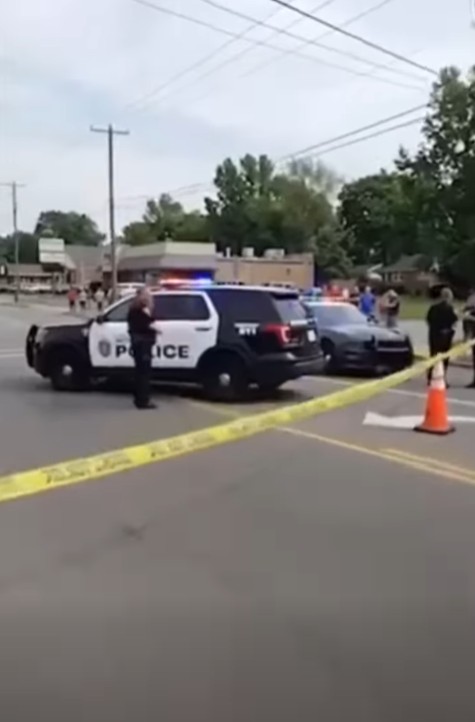
An emergency perimeter creates separation between the public and an area where responders need to work. Its purpose can include protecting people from a potential hazard, maintaining access for emergency vehicles, and preventing crowds from interfering with operations.
Depending on the circumstances, officers may close roads, restrict footpaths, redirect vehicles, or control entry at designated points. The arrangements can vary considerably between incidents.
A small closure may affect a single street or entrance. A larger operation may require restrictions across several surrounding routes, particularly when responders need additional space or conditions remain uncertain.
The size of the perimeter does not, by itself, explain what has happened. It should not be used as a basis for guessing the cause of an incident or assuming that a particular type of threat exists.
Likewise, a quiet street beyond a barrier is not necessarily open for use. Officers may need to keep it available for arriving vehicles, equipment, or other operational requirements.
Approaching the boundary to investigate can create another problem for personnel already managing the scene. Even people who intend no interference can obstruct access by gathering near gates, junctions, or emergency entrances.
Respecting the closure helps keep those spaces usable. It also reduces the chance that someone will enter an area before responders have completed their assessment.
Different Services May Have Different Responsibilities
A substantial emergency response can involve several agencies working in the same area. Police, firefighters, medical personnel, and specialist teams may each have responsibilities that support the overall operation.
Police may control access and manage surrounding traffic. Other responders may need to assess conditions, provide medical assistance, or address hazards within the restricted zone.
The presence of several services does not establish the cause of an emergency. Emergency vehicles show that personnel are responding; they do not provide a complete account of the situation.
Coordination also affects how restrictions are managed. An entrance may need to remain clear for one service even when another team has finished its immediate work nearby.
As information develops, the response can change. Officers may extend a boundary, introduce a diversion, or ask people to move farther away while additional checks are carried out.
Those changes can be inconvenient, especially for people who have already adjusted their plans. Nevertheless, an earlier instruction should not be assumed to remain current when authorities have issued a replacement.
Following the latest applicable direction allows responders to manage the space around the incident more effectively. It also prevents people from relying on arrangements that may no longer reflect conditions at the scene.
Travel Disruption Requires Practical Adjustments
Road restrictions can affect journeys well beyond the immediate perimeter. Traffic diverted from one street may increase congestion on nearby routes, while access to homes, workplaces, or appointments may temporarily become more difficult.
Public transportation can also be affected. Depending on the location and circumstances, operators may divert services, bypass stops, or suspend parts of a route.
These are possible effects of an emergency operation, rather than confirmation that any particular service has changed. Travelers should check announcements that identify their actual route and the relevant time period.
Drivers should follow approved diversions and avoid trying to pass through barriers or use closed streets as shortcuts. A navigation suggestion does not override an access restriction being enforced at the scene.
People who can avoid the surrounding area can help reduce congestion by choosing another route. Those who must travel nearby may need to allow additional time and accept that the most direct journey is temporarily unavailable.
Stopping near emergency vehicles to watch or record the response can create further delays. Keeping moving where permitted, and leaving access points clear, helps preserve space for personnel who need it.
When restrictions eventually end, transportation may still take time to return to its usual pattern. A road reopening and a full restoration of service are not necessarily simultaneous.
Residents Need Instructions That Apply to Their Location
For someone living close to an emergency scene, the most pressing concern may be whether it is safe to remain at home or return there. General descriptions of a police operation cannot answer that question for a particular address.
Residents should pay attention to directions issued for their location. An instruction to avoid a street is different from an evacuation order or a request to remain indoors.
Those directions should not be substituted for one another. People need to follow the action actually specified by the responsible local authority rather than drawing conclusions from the scale of the response.
If access to a home or workplace is restricted, attempting to cross the perimeter can place both the individual and responders in a difficult position. The absence of visible activity immediately beyond a barrier does not establish that entry is permitted.
Updates may explain which entrances remain available, whether particular routes can be used, or when residents can expect further information. Until then, existing restrictions continue to matter.
People should also avoid treating a warning from another place or an earlier incident as an instruction for their own neighborhood. Location and timing are essential parts of any useful public safety message.
A notice that omits those details may raise concern without giving readers enough information to act appropriately.
Separating Useful Updates From Speculation
During an unfolding incident, photographs and short videos may circulate before a detailed explanation becomes available. Such material can show a genuine response while leaving its cause and current status unclear.
A row of police vehicles does not establish why officers are present. A clip showing people leaving a building does not necessarily explain whether they were instructed to evacuate or what restrictions remain afterward.
Eyewitness descriptions may also reflect only one part of a larger scene. Someone standing at a particular junction may accurately describe what they see without knowing what is happening elsewhere.
That limitation makes it important to distinguish observation from explanation. Seeing a road closure is different from knowing why it was imposed.
Unverified claims can create unnecessary fear, particularly when they involve allegations about the cause of an emergency or suggestions that additional locations are affected. Repeating them can make practical instructions harder to find.
The most relevant updates are those that clearly identify the issuing authority, affected area, and instructions currently in force. Transportation announcements are similarly useful when they specify the services and stops involved.
Sharing those concrete details helps other people make decisions. Adding guesses about motives, injuries, or threats introduces information that the visible response alone cannot establish.
Returning Only After Restrictions Are Lifted
People naturally want to know when they can resume their normal routines. The answer depends on what responders still need to assess, address, or secure before reopening the area.
Some restrictions may be brief. Others can remain in place while further examination or safety checks continue, even after the most visible activity has reduced.
A smaller police presence does not automatically mean the perimeter has ended. Nor does the departure of one emergency vehicle establish that every nearby route is available.
Returning should therefore be based on a clear reopening announcement or directions from personnel managing access. Assumptions based on appearance can lead people back toward a location that remains restricted.
The same care applies to businesses, appointments, and travel arrangements. People may need separate confirmation that a destination is accessible and that the route serving it has resumed normal operation.
Throughout an emergency, the public’s most useful contribution is often straightforward: keep restricted spaces clear, follow instructions that apply to the location, and avoid circulating explanations that have not been established.
Accurate warnings should make those actions easier by identifying where the issue is occurring and what people need to do. Clear information and respect for the perimeter help both the public and emergency personnel navigate an uncertain situation.