
Michelle Knight Recalls Her Captor’s First Words and the Rescue That Ended Nearly 11 Years of Captivity
A Familiar Face Concealed a Terrible Danger
Michelle Knight was trying to reach an appointment concerning custody of her young son when she accepted a ride from someone she recognized. She was 21, had become lost, and believed the offer would help her get where she needed to go.
Instead, the encounter led to almost 11 years of captivity inside a Cleveland, Ohio, home. Ariel Castro, the man who offered her the ride, imprisoned her and later abducted Amanda Berry and Gina DeJesus.
Knight, who also uses the name Lily Rose Lee, has continued speaking about her experiences and the long process of rebuilding her life. In a podcast conversation, she recalled the warning Castro gave her on the first day.
“You’ll never see home again,” he told her.
Those words became part of the intimidation she endured throughout her captivity. Yet they did not become the final truth of her story: on May 6, 2013, Knight and the other women were rescued.
Her account encompasses the violence she survived, the help she gave others while imprisoned, and her determination afterward to prevent Castro’s actions from defining the remainder of her life.
The Ride That Became an Abduction
On August 23, 2002, Knight stopped at a store to ask for directions after losing her way to the appointment. There, she encountered Castro, the father of one of her friends.
She had met him at family gatherings. That familiarity gave her a reason to trust him when he offered to drive her.
Castro said he first needed to stop at his house to collect his daughter. The explanation concealed his intention to prevent Knight from leaving.
Once inside, he led her upstairs, pushed her into a room, and told her she would never return home. He restrained her and began the abuse that would continue for years.
He also searched her purse and found a photograph of her young son. Knight recalled that Castro tore the photograph in front of her, turning an image of the person she desperately wanted to reach into another means of intimidation.
Her concern for her son remained central throughout her captivity. She had been trying to attend an appointment connected to his custody when she disappeared, and she continued wondering whether she would ever see him again.
At the beginning, she could not have known how long she would remain inside the house. What she understood immediately was that someone she had recognized and trusted had deliberately taken away her freedom.
Surviving Alongside Amanda Berry and Gina DeJesus
Knight endured repeated violence, deprivation, and abuse during her imprisonment. She has described lasting physical injuries, including the loss of sight in one eye and hearing in one ear.
Berry and DeJesus were also abducted and held inside Castro’s home. Each woman had her own experience of captivity, while their lives became connected through the same place and the same captor.
Knight tried to protect the others when she could. She described intervening to shield DeJesus, sometimes exposing herself to violence in the process.
Another critical moment occurred when Berry went into labor. Knight was forced to help deliver the baby while Castro threatened her.
When the newborn was not breathing, Knight helped resuscitate her. In circumstances where she had little control over her own safety, she nevertheless helped save the child’s life.
These experiences form an important part of Knight’s account. Alongside what was done to her, she remembers the efforts she made to help the people imprisoned with her.
Her actions did not remove the danger surrounding them. They did, however, demonstrate the care she continued offering others despite the extreme limitations and fear imposed on her.
May 6, 2013: An Opportunity to Call for Help
The captivity ended after Castro left the property on May 6, 2013. A door had been left unlocked, creating an opportunity for Berry to reach the outside.
She managed to break through an outer door and call for assistance, drawing the attention of neighbors. Police arrived and entered the house, where Knight and DeJesus were also found.
For Knight, the arrival of officers was initially difficult to comprehend. After years of confinement, the sounds of someone forcing entry did not immediately feel like rescue.
She recalled fearing that a break-in was taking place. Even hearing someone identify themselves as police was not enough at first to convince her that help had finally arrived.
“I was like, nah, anybody can just say, ‘Police.’ I didn’t think she actually was, till I heard the walkie-talkie. Once I’d seen a police badge, and police lady, I just ran out of the door and jumped into her arms and grabbed hold of her and wouldn’t let her go,” Knight recalled.
The recognition came through concrete details: the sound of the radio, the badge, and the officer standing in front of her. What had seemed impossible was suddenly happening.
“I didn’t think it was real. I turned round and saw Gina and my mind was spinning like heck, and I said, ‘Hey, do you know what we’re doing? We’re going home, we’re going home!’”
Freedom Was Followed by Urgent Medical Care
Leaving the house ended Knight’s confinement, but it did not end the physical consequences of what she had endured. She was taken to the hospital for treatment.
Doctors discovered a serious C. diff infection. Her condition was sufficiently severe that there were fears she might have only days to live.
Knight survived that medical crisis. Her recovery became another part of the transition from captivity to a life in which her health and safety could finally receive attention.
The rescue and hospitalization also show why freedom cannot be understood as an immediate end to trauma. The women were no longer inside Castro’s house, but the effects of their imprisonment remained.
For Knight, rebuilding involved both the injuries she carried and the emotional weight of years separated from her son. The passage of time could not be reversed by the opening of a door.
Nevertheless, rescue created possibilities that captivity had denied her. She could receive care, speak publicly in her own words, and begin making decisions about how she wanted to move forward.
Knight Addresses Castro Before His Sentencing
Castro pleaded guilty to 937 charges, including aggravated murder, kidnapping, rape, and assault. On August 1, 2013, he was sentenced to life imprisonment without parole, plus 1,000 years.
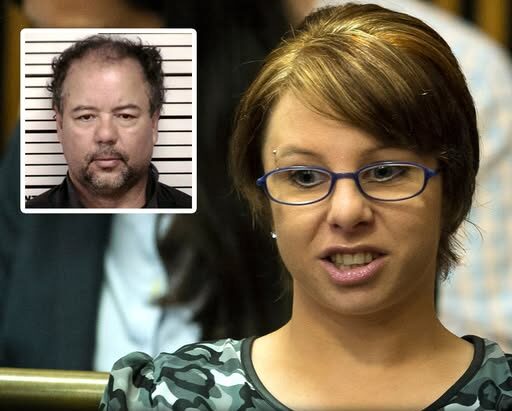
Before the sentence was imposed, Knight addressed the court. Castro sat behind her as she described the years he had taken from her and the pain of being separated from her child.
“Good afternoon. My name is Michelle Knight. And I would like to tell you what 11 years was like for me. I missed my son every day. Iwondered if I was ever going to see him again. He was only two-and-a-half years old when I was taken… Days turned into nights. Nights turned into days. The years turned into eternity,” she said.
Her statement also looked beyond the crimes and toward the identity she intended to reclaim. She made clear that surviving Castro did not mean allowing him continued authority over her future.
“I spent 11 years in hell, and now your hell is just beginning,” she continued. “I will overcome all this that happened, but you will face hell for eternity. From this moment on, I will not let you define me or affect who I am… I can forgive you, but I will never forget.”
Castro died by suicide in prison in September 2013. Knight has continued discussing her experiences and her decision to forgive, explaining that she does not want the abuse to determine the rest of her life.
Forgiveness, in her account, does not erase responsibility or the lasting consequences of his actions. Her courtroom words held both positions together: she remembered what happened while asserting that her future belonged to her.
The threat she heard on the first day remains a painful part of that history. Her rescue, survival, and willingness to speak have ensured it is not the ending.