
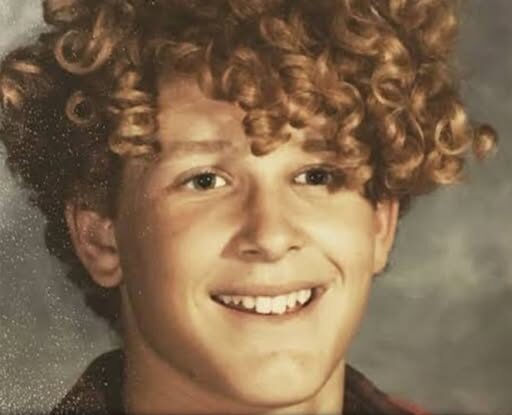
Cole Hauser’s Journey From Living on a Boat to Becoming Yellowstone’s Rip Wheeler
A Familiar Television Cowboy With an Unconventional Beginning
Cole Hauser’s commanding performance as Rip Wheeler made him a familiar face to Yellowstone audiences. Behind the role, however, is a personal history shaped by frequent moves, an unusual introduction to his father, and a determination to pursue acting despite an uncertain start.
Before establishing himself in film and television, Hauser spent part of his teenage years living alone on a docked boat in Marina del Rey. It was far removed from the comfortable Hollywood beginning that his family’s entertainment connections might suggest.
His mother’s family had ties to Warner Bros., and his father, Wings Hauser, was an actor. Yet Cole’s account of his early career centers on long journeys to auditions, practical lessons learned on set, and the responsibility of finding his own way.
His childhood also gave him an early familiarity with horses and ranch life. Years before Yellowstone, he had experienced the open spaces that would eventually become central to his best-known character’s world.
The path between those childhood experiences and television success was neither direct nor predictable. It unfolded through relocation, independence, and a growing interest in a profession he initially encountered for much less serious reasons.
Early Years on Ranches in California and Oregon
Hauser was born on a ranch north of Santa Barbara, where horses and open pastures formed part of his early surroundings. His first experiences of the countryside came through everyday life rather than preparation for an acting role.
At four, he moved with his mother to a 1,500-acre ranch outside Eugene, Oregon. He later remembered that period as the happiest time of his life.
The property offered room to explore and a sense of freedom that stayed with him. His recollections included carrying a BB gun and spending time outdoors, with the landscape providing the setting for childhood adventures.
That settled period did not last. His mother, who described herself as a vagabond and hippie, continued a more nomadic life, and another move took them to Clearwater, Florida.
Hauser found the transition difficult. He later described it as something he “wouldn’t wish on anyone,” a sharp contrast with his memories of the Oregon ranch.
The family eventually returned to California. By then, moving between places had become part of his upbringing, exposing him to very different environments without providing a straightforward sense of permanence.
At twelve, he entered an acting class. His initial attraction was not a carefully developed ambition to become a performer.
“There were good-looking girls, and you do a few plays.”
What began casually became more important as he participated. Acting developed into an interest he wanted to pursue seriously, changing the direction he imagined for himself.
View this post on Instagram
Family Connections Did Not Replace the Audition Process
When Hauser told his mother that he wanted to act professionally, she explained the family’s connection to the Warner name. The revelation placed his new ambition within a history he had not fully understood.
Discovering that background did not mean he could bypass the difficult parts of beginning a career. His mother expected him to demonstrate that he was willing to work for the opportunity.
Auditions required a five-hour bus journey to Los Angeles. Once there, he would walk to the casting studio, spend a short time auditioning, and then make the same lengthy trip home.
The contrast was considerable: hours of travel could lead to only a few minutes in an audition room. Repeating that routine required commitment before there was any certainty that it would produce a job.
Those journeys became part of his practical introduction to the industry. Family history could explain a connection to filmmaking, but it could not perform an audition or make the travel less demanding.
His understanding of his father’s work developed separately. Long before they met in person, he encountered Wings Hauser through a television appearance and recognized his name in the credits.
He was around nine or ten at the time. The experience prompted a conversation with his mother about the actor he had just watched.
Seeing His Father on Television Before Meeting Him
Hauser later recalled waiting until the film ended so he could read the credits. Seeing the name Wings Hauser led him to ask his mother a question that opened a much more personal discussion.
“I waited for the finish of the film, and I saw Wings Hauser [in the credits]. So, I went into my mom’s room, and I said, ‘Hey, Mom. I just saw a guy on TV, his name’s Wings Hauser.’ And she looked at me and went, ‘Wow!’ And I said, ‘Yeah, I saw this guy.’ And she goes, ‘Yeah, well, let’s talk about that.’”
At fifteen, Cole finally met his father and moved to Los Angeles to live with him. The move also brought him closer to the industry he hoped to enter.
The reunion did not provide the stable beginning he had imagined. In Cole’s account, his father’s struggles with substance abuse complicated their living situation, and he soon needed to become more independent.
He eventually lived alone on a docked PT boat in Marina del Rey. Although that arrangement might sound isolating, he remembered it through the freedom it gave him.
“That was an awesome time because it meant freedom,” he recalled.
He continued pursuing auditions while taking odd jobs. His family connections remained part of his background, but his immediate concerns were practical: supporting himself and finding opportunities to work.
School Ties Provides an Early Professional Education
A significant opportunity arrived with the 1992 film School Ties. Hauser appeared alongside performers including Matt Damon and Ben Affleck, taking an important step from aspiring actor to working professional.
He was still learning the technical requirements of a film set. Cinematographer Freddie Francis helped him understand practical essentials such as hitting marks and blocking scenes.
Those lessons were different from simply delivering a performance. They involved understanding how an actor’s movements fit the camera’s position and the organization of a scene.
The experience gave Hauser guidance at a point when he needed it. Rather than arriving with every skill already developed, he learned through the work and from people with considerably more experience.
His career continued through films including Dazed and Confused, Good Will Hunting, and 2 Fast 2 Furious. Each became part of a body of work built over years rather than through one immediate breakthrough.
That long progression eventually led to Rip Wheeler. By the time Yellowstone brought him widespread recognition, Hauser had already spent substantial time developing his screen career.
The role connected his professional experience with something much older: the horses, ranches, and outdoor surroundings he remembered from childhood.
Preparing for Rip Wheeler and Building His Own Family Life
Hauser did not treat his childhood familiarity with horses as sufficient preparation for Yellowstone. To portray the loyal, hard-edged ranch foreman, he undertook further training in riding and roping.
The preparation helped him approach Rip as someone whose abilities belonged to a working life on the land. Childhood memories supplied familiarity, while training addressed the demands of the character.
His performance also became a source of pride for his father. When asked whether Wings appreciated his work, Cole answered directly.
“Absolutely,” Cole said. “Yeah, he’s a huge fan of the show and is obviously very proud of what I’ve done in it.”
The comment offered a warmer view of a relationship whose beginnings had been complicated. It acknowledged his father’s support without suggesting that their earlier difficulties had never existed.
Family history later drew Hauser and his eldest son to Montana to explore their roots, including the family connection to Samuel T. Hauser. The trip brought a personal dimension to a state already closely associated with his work.
As a father himself, Hauser has built a family life alongside his career. His experiences of moving, working, and becoming independent remain part of the background to the life he now shares with his children.
Rip Wheeler may be the character most closely associated with his name, but the journey to that role began long before Yellowstone—with a childhood on ranches, demanding trips to auditions, and a teenager finding freedom aboard a docked boat.