
Lip Reader Offers Different Interpretation of Erika Kirk’s Viral Moment With J.D. Vance
An Emotional Onstage Exchange Draws Online Scrutiny
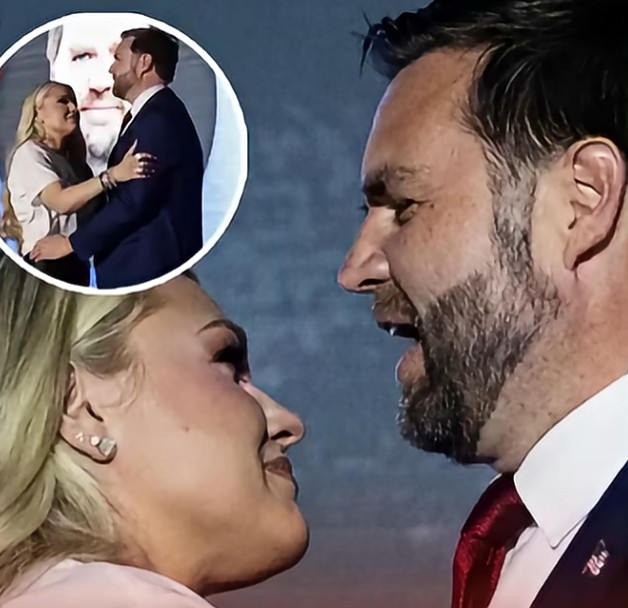
An embrace between Vice President J.D. Vance and Erika Kirk at a Turning Point USA event prompted widespread discussion online, with some viewers questioning the interaction. A professional lip reader’s interpretation, however, suggests the moment may have involved words of encouragement and an expression of grief.
Nicola Hickling offered an interpretation of several apparent exchanges surrounding Erika’s appearance at Ole Miss in Mississippi on Wednesday, October 29. The words she identified have been presented as an interpretation of visible speech, rather than an authenticated recording of the conversation.
That distinction matters because brief footage cannot establish every word spoken or explain the intentions of the people involved. The embrace generated substantial speculation, but the interaction itself does not establish a romantic relationship or any change in Vance’s marriage.
Erika’s appearance came more than a month after her husband, Charlie Kirk, was fatally shot in the neck at a similar event. Now serving as CEO of his organization, she addressed the audience while acknowledging the emotional difficulty of returning to that setting.
Her speech, the hug that followed, and her later comments about public scrutiny have drawn attention to the pressure surrounding her appearances as both a grieving widow and an organizational leader.
What the Lip Reader Believes Was Said
Hickling’s interpretation begins before Erika stepped onto the stage. She believes Erika expressed hesitation to an assistant as she prepared to face the audience.
“I can’t do this, I don’t want to do it,” Erika allegedly said, followed by, “Give me a second.”
If accurate, those words would suggest that the appearance was difficult for her before the public portion began. They would also provide context different from the assumptions some viewers later attached to the embrace.
After gathering herself, Erika delivered her remarks honoring her late husband. When Vance subsequently hugged her, Hickling interpreted his apparent words as, “I’m proud of you.”
Erika’s apparent response was interpreted as, “It’s not gonna bring him back.”
Those phrases describe encouragement followed by a painful acknowledgment of loss. However, lip reading alone cannot conclusively verify the exchange, and the interpretation should not be treated as a confirmed transcript.
It also cannot reveal everything either person was feeling. Even with an interpretation of the words, a short public interaction remains an incomplete basis for conclusions about a private relationship.
The most direct context available is the occasion itself: Erika had just spoken publicly about her husband after his death, and Vance was appearing at an event organized by the group she now leads.
Erika’s Speech Explains the Emotional Setting
During her remarks, Erika openly described the occasion as emotionally demanding. She also explained that the decision to invite Vance had involved personal reflection.
“When our team asked my dear friend, Vice President J.D. Vance, to speak today, I really prayed on it because, obviously, it’s a very emotional, emotional day,” she began.
She then described drawing reassurance from what she imagined her husband would have encouraged her to do.
“But I could just hear Charlie in my heart. I could just hear him say, ‘Go reclaim that territory, babe.’ The battle’s already won. God’s love conquers. And that’s why I’m here today. No one will ever replace my husband — but I do see some similarities in J.D.”
The final comparison became a particular focus of online discussion. Some viewers interpreted it together with the embrace, while her statement that nobody could replace her husband received less attention in those reactions.
Her remarks placed the comparison within a speech about bereavement, faith, and continuing to appear publicly after Charlie’s death. They did not announce a relationship with Vance or indicate that either person intended one.
Preserving that context is important. A sentence drawn from an emotional speech can take on a different meaning when separated from the explanation surrounding it, particularly when viewers are already responding to a widely circulated image.
Criticism Extends Beyond the Embrace
Online reactions focused on details of the hug, including Vance’s hand at Erika’s waist and her hand against the back of his head. Some commenters described the interaction as overly familiar.
Others criticized Erika’s clothing, including her leather pants, or questioned why she had compared Vance with her husband. These responses reflected viewers’ judgments about the appearance rather than evidence of misconduct.
Some posts went further, making unsupported predictions about Vance’s marriage and repeating baseless allegations connected to Charlie’s death. Neither the embrace nor the speech provides a factual basis for those claims.
A public gesture can be discussed without treating speculation as established information. The distinction becomes especially important when commentary moves from questioning an interaction to alleging private plans or serious wrongdoing.
Hickling’s interpretation offers one possible explanation for the exchange, but it does not make every detail certain. Likewise, viewers’ discomfort with a gesture does not verify their assumptions about what it meant.
For Erika, the attention formed part of a broader pattern of scrutiny that she later addressed directly. Her comments described being watched and interpreted during moments of mourning, including attention to her expressions, tears, and movements.
Erika Addresses Cameras and Public Scrutiny
In a preview of her first televised interview since her husband’s killing, Erika spoke with Jesse Watters about whether cameras would be permitted in the courtroom for proceedings involving Tyler Robinson, the man accused of killing Charlie.
The preview was for a Wednesday, November 5, episode. Erika argued that public access should extend to the courtroom after cameras had already documented so much of her family’s loss.
“There were cameras all over my husband when he was murdered,” Erika told Watters. “There have been cameras all over my friends and family, mourning.”
She continued, “There have been cameras all over me. Analyzing my every move, analyzing my every smile, my every tear. We deserve to have cameras in there. Why not be transparent? There’s nothing to hide. I know there’s not, because I’ve seen what the case is built on. Let everyone see what true evil is. This is something that could impact a generation and generations to come.”
Her remarks expressed support for courtroom transparency and frustration with the attention directed at her mourning. They did not establish what camera rules would ultimately apply or determine the outcome of the criminal proceedings.
Robinson is identified as the accused, and the allegations against him remain a matter for the court. Erika’s assessment of the case represents her own position as the victim’s widow.
The interview also places the viral embrace within a wider experience of public exposure. While the meaning of particular gestures continues to be debated, Erika’s own words emphasize grief, the difficulty of appearing publicly, and her wish for attention to extend to the legal proceedings surrounding her husband’s death.